
If you’ve ever looked at your granite countertops and thought, these are nice… but not my style, this is for you.
That was exactly how I felt about my kitchen. The countertops were new, but they felt dark, dull, and always looked dirty.
No matter how often I wiped them down, they always looked smudged or dirty. They just didn’t match the bright, clean look I wanted for our home.
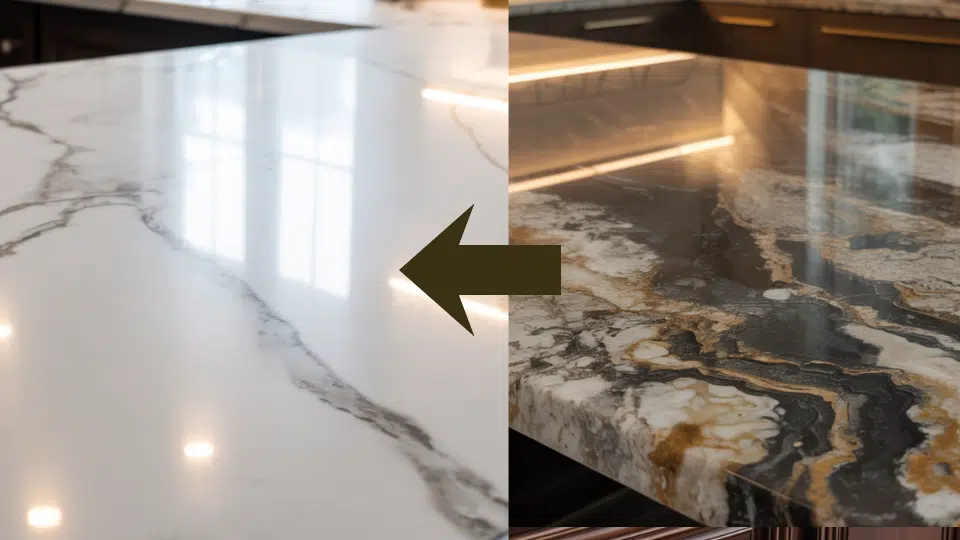
So over the summer, I decided to try something bold. I painted my granite countertops to look like marble.
I honestly expected it to be messy, stressful, and possibly a disaster. But surprisingly, it turned out to be one of my favorite home projects.
The kitchen felt completely different afterward, brighter, cleaner, and more open, and thinking about doing the same, here’s everything you should know.
Also read: How to style white cabinets with brown granite countertops?
Can You Paint Granite Countertops?
Yes, granite countertops can be painted. It sounds a little wild at first because granite is known for being tough and long-lasting.
The reason people hesitate is that granite is sealed and smooth, which makes regular paint slide right off.
That’s why countertop painting kits exist. They’re made to bond with stone surfaces and include products that help the paint stick and stay put.
As long as the surface is cleaned properly and the instructions are followed, painting granite is very doable.
Should You Paint Your Granite Countertop?
This is the part where honesty matters. Painting granite is not for everyone, but it can be a great choice depending on your goals.
Pros of Painting Granite Countertop
Much cheaper than replacing countertops
Changes the entire look of the kitchen
No advanced skills required
Can be finished over a long weekend
Cons of Painting Granite Countertop
Requires patience and planning
Counters can’t be used while curing
Heat resistance is lower than that of granite
Small flaws are possible
For me, the cost alone made it worth trying. Replacing countertops wasn’t in the budget, and I figured if I didn’t like it, I wasn’t any worse off than before.
What to Know Before Painting Granite Countertops?
This project is more about preparation than painting.
The better the prep, the better the result. Cleaning the surface correctly is the biggest factor in how long the finish lasts.
Granite holds onto oils and residue, even when it looks clean.
Another thing to know is timing. This is not a one-day project.
Between painting, drying, and curing, it takes several days. You also need to plan meals and kitchen use ahead of time since the counters shouldn’t be touched for a while.
The epoxy stage can feel intimidating, but once you start, it moves quickly and smoothly.
How Granite Countertops Are Painted?
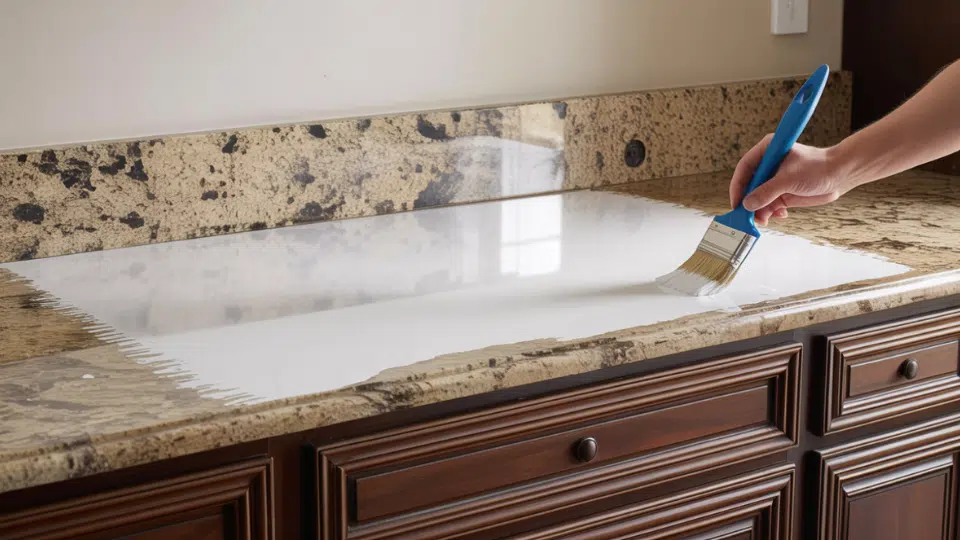
This process looks intense at first, but it’s actually very manageable when broken down.
Tools and materials needed: I used a faux marble countertop kit that cost about $200.
Everything needed came in the box except painter’s tape and lacquer thinner.
Please wear your gloves while doing this process.
Step 1: Protect and Clean the Space
Clear everything off the countertops. Tape along walls, cabinets, sink edges, and appliances.
Cover floors and nearby surfaces with plastic or drop cloths. This step prevents epoxy drips and makes cleanup much easier later.
Now, deep-clean the granite.
Clean the countertops thoroughly to remove grease and residue.
For granite, use lacquer thinner or rubbing alcohol as recommended by the kit. Let the surface dry completely before moving forward.
Step 2: Start with the Painting Process
A. Paint the base color
Roll on the base paint (usually white for a marble look) using a foam roller.
Apply thin, even coats and allow each coat to dry fully. Most projects need two to three coats for solid coverage.
B. Create the marble pattern
Lightly paint veins using a small brush. Mist with water and soften the lines using a brush or sponge.
Blend gently with the base color so the pattern looks natural and not too bold.
Step 3: Mix the Epoxy (Set a Timer)
Epoxy is the part that moves fast.
Put on gloves.
Mix Part A and Part B exactly as instructed.
Stir slowly but thoroughly (scrape the sides and bottom).
Once mixed, you usually have around 30 minutes of working time.
Now, Pour and Spread the Epoxy.Pour it over the countertops and spread it evenly, making sure edges are covered.
- Pop the air bubbles if any!!
Tip: Before mixing, double-check that everything is taped and covered. Once you start, you don’t want to stop.
Step 4: Let It Set and Cure
The epoxy levels itself, which helps create a smooth finish, but it also drips over the edges, so checking back often is important.
Remove tape at the time recommended by the kit. Avoid using the countertops for several days.
After that, it was a waiting game. Full curing usually takes about one week.
Painted your granite black? Find best cabinet colors for black granite countertops.
How Much Time Does It Take to Paint Granite Countertops?
| Stage | Estimated time |
|---|---|
| Cleaning and surface prep | 1–2 hours |
| Base coat application | 2–3 hours plus drying |
| Veining and blending | 1–2 hours |
| Epoxy application | 30–45 minutes |
| Drying before light contact | 24–48 hours |
| Full cure before normal use | 7 days |
Living With Painted Granite Countertops
Once the epoxy had set, the surface felt solid and smooth. After the full cure time, the counters could be used normally.
Clean the freshly painted granite countertop with a damp cloth or mild soap, and they wipe clean easily.
Avoid placing hot pans directly on the granite surface and never cut on it.
After three months, there won’t be any peeling or chipping. The finish still looks bright and clean, and the kitchen feels completely refreshed.
There could be a couple of tiny imperfections if you look closely, but nothing noticeable during everyday use.
Alternatives to Painting Granite Countertops
If painting granite countertops doesn’t feel like the right fit, there are a few other ways to update the look.
Professional resurfacing can refresh the surface and improve its appearance without changing the countertop itself.
Countertop overlays are another option. These sit on top of the existing granite and give the kitchen a completely new finish.
If the issue is wear rather than color, polishing or resealing may be enough to bring back a cleaner, smoother look.
All of these options usually come with a higher price tag, which is why painting felt like the most practical choice for this kitchen.
Conclusion
Painting granite countertops is not a perfect solution, but it can be a smart one when budget, timing, and style all matter.
With the right kit, careful prep, and a little patience, a dark or dated kitchen can feel lighter and more inviting without tearing anything out.
The process takes planning, but it is manageable, even without prior painting experience.
While this option does come with limits, the visual change can be dramatic for the cost.
For anyone wanting a noticeable kitchen update without committing to a full remodel, painting granite countertops can be a practical and rewarding choice.
If questions come up along the way, sharing experiences always helps others decide with confidence.

Tommy Hardy, an alumnus of the Georgia Institute of Technology with a degree in Mechanical Engineering, has been a go-to figure in residential upkeep and innovation for over 18 years. His career commenced in a leading home appliance manufacturing company, where he mastered the intricacies of household systems. Joining our platform in 2020, Tommy quickly became a reader favorite for his practical and easy-to-follow guides. He took the helm of our DIY section in 2019, consistently delivering content that empowers homeowners. Beyond his professional pursuits, Tommy is a passionate gardener and enjoys woodworking, skills enhancing his hands-on approach to home care.