
The traditional grass lawn is losing its grip on American yards. Homeowners are increasingly turning to clover as a full or partial replacement for conventional turf, drawn by promises of less maintenance, lower water bills, and a greener approach to landscaping.
This shift marks a return to older lawn practices; clover was once a standard component of lawn seed mixes before broadleaf herbicides pushed it into the “weed” category.
Today, both dedicated clover lawns and clover-grass blends are gaining traction as practical alternatives that deliver year-round green coverage with significantly less work.
So here is what clover lawns are, their advantages and drawbacks, how they compare to traditional grass, and the practical steps for planting and maintaining your own clover yard.
What Is a Clover Yard?
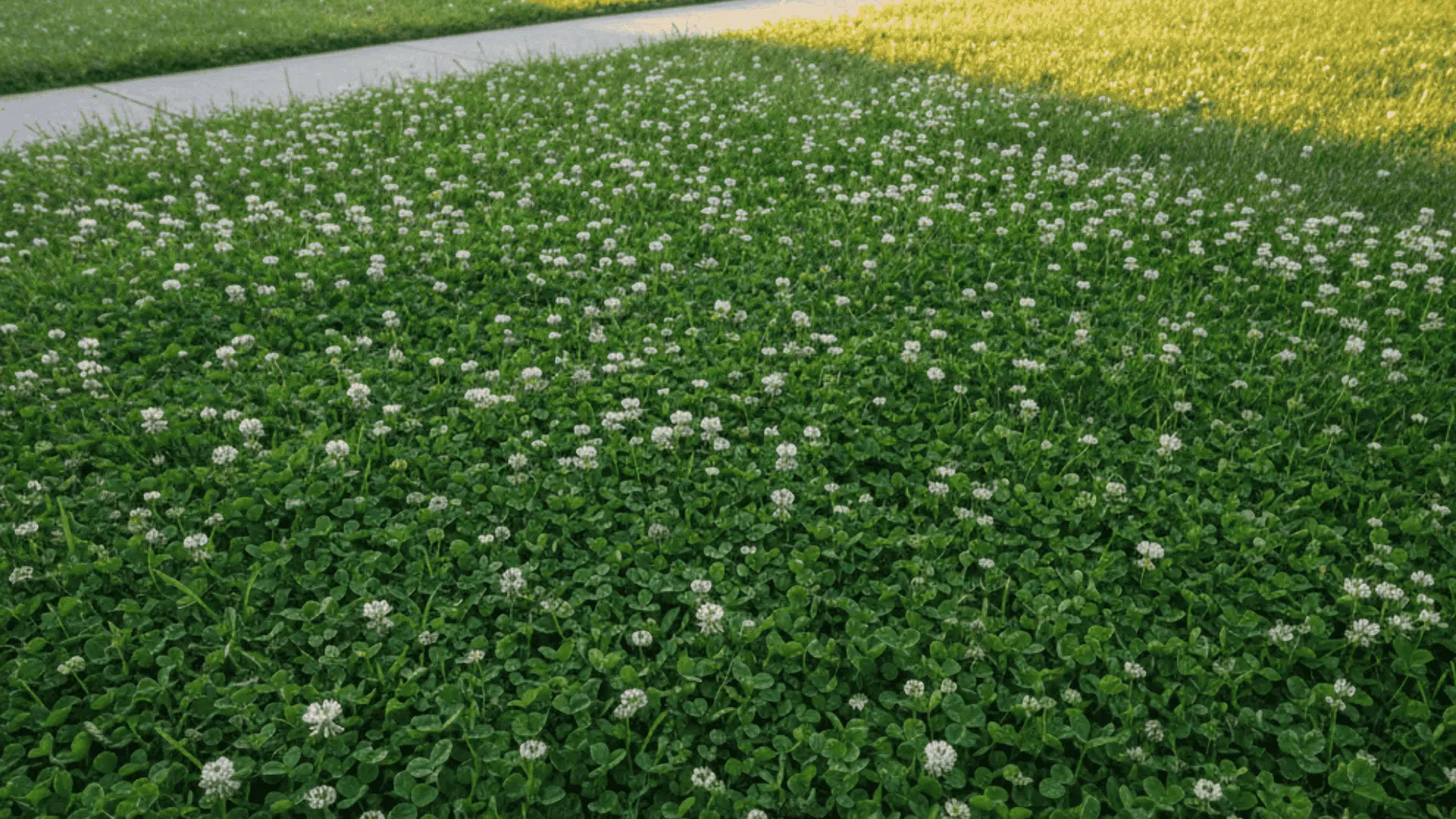
A clover yard is a lawn composed entirely or partially of clover species rather than traditional turfgrass.
The most common options are white clover (Trifolium repens) and microclover, a cultivated variety bred for smaller leaves that blends more naturally with grass.
While “clover grass” often appears in searches, it typically refers to these same clover lawn setups or mixed plantings rather than a distinct plant species.
Clover’s presence in American lawns isn’t new. Before the 1950s, clover appeared regularly in standard lawn seed mixes.
As lawn care companies promoted herbicide programs, clover gradually became classified as an unwanted weed rather than a beneficial lawn component. The current resurgence reflects renewed interest in lower-input landscaping and pollinator support.
What’s Wrong With a Traditional Grass Lawn?
Traditional turfgrass lawns demand consistent inputs to maintain their appearance. Most grass species require regular mowing throughout the growing season, frequent watering during dry periods, and scheduled fertilizer applications to sustain color and density.
Weed control adds another layer of maintenance, often involving chemical treatments.
Beyond the time investment, conventional lawns struggle in less-than-ideal conditions. Many popular grass varieties perform poorly in compacted soil, extended drought, or intense heat.
The cultural expectation of a uniform, weed-free lawn pushes homeowners toward intensive chemical programs and high water consumption.
These factors combine to make traditional grass lawns expensive and labor-intensive to maintain, particularly in regions with water restrictions or challenging growing conditions.
Advantages of a Clover Yard
Clover lawns offer multiple benefits that appeal to homeowners looking to reduce maintenance while improving their yard’s environmental performance. Here are the top nine reasons why clover is becoming a popular choice for residential landscapes.
1) Less Water Than Many Grass Lawns

Clover demonstrates notable drought tolerance compared to typical turf maintenance schedules. Its deeper root system accesses moisture below the surface, allowing it to maintain green growth with less frequent watering than most traditional lawn grasses require.
2) Less Fertilizer Because Clover Fixes Nitrogen

Clover belongs to the legume family, partnering with specialized bacteria in root nodules to convert atmospheric nitrogen into plant-available forms. This biological nitrogen fixation reduces or eliminates the need for synthetic fertilizers. In mixed lawns, this fixed nitrogen can even benefit neighboring grass plants.
3) Fewer Chemicals for Weed Control

Mature clover establishes dense growth that naturally suppresses many common lawn weeds through competition for light and space. This characteristic allows homeowners to reduce or eliminate herbicide applications, though it also means conventional broadleaf weed killers cannot be used without damaging the clover itself.
4) Fewer Mows and a Softer Look

Clover grows lower than most turfgrasses and maintains a relatively consistent height once established. While mowing frequency depends on your aesthetic preferences and whether you want to control the flowering, clover lawns typically require less frequent cutting than traditional turf programs. The growth pattern creates a softer, more informal appearance.
5) Better Performance in Poor Soil

Clover tolerates lower-fertility soils that would leave most grass varieties thin and struggling. Its nitrogen-fixing capability and less demanding nutrient requirements make it suitable for areas where soil improvement would be costly or impractical.
6) Greener Through Heat Stress and Minor Neglect

Clover maintains its color during conditions that would stress conventional lawns. It bounces back more readily from drought periods and continues growing through moderate heat without the immediate browning common to many grass species.
7) Pollinator Support

Clover flowers produce nectar and pollen throughout the growing season, providing valuable forage for honeybees, native bees, and other pollinators. This benefit contributes to local ecosystem health and supports declining pollinator populations.
8) Pet-Friendly Benefits in Real Homes

The reduced fertilizer requirements eliminate concerns about pets ingesting lawn chemicals. Clover also resists the nitrogen-burning spots that dog urine commonly creates on conventional grass lawns, though heavy pet traffic can still damage the plants themselves.
9) Lower Ongoing Cost and Time

The combined reduction in water, fertilizer, mowing, and chemical inputs translates to measurable savings in both money and labor hours. For homeowners seeking lower-maintenance landscaping, clover delivers practical cost benefits.
Disadvantages of a Clover Yard
While clover offers numerous benefits, it’s not the right fit for every yard or household. Understanding the limitations helps you decide whether Clover aligns with your landscaping needs and lifestyle.
Bee Attraction: The flowers that benefit pollinators also attract bees, creating potential issues for families concerned about stings or allergies. While not aggressive, bees will be present during flowering periods.
Limited Wear Tolerance: Clover handles light foot traffic adequately but struggles under heavy, repeated wear. High-activity areas from children’s play, sports, or large pets can thin clover coverage more quickly than durable turfgrass varieties.
Staining Potential: Bruised or crushed clover leaves can stain clothing more readily than grass, a consideration for active yards where contact with the lawn is frequent.
Spreading Habit: The plants spread through stolons and can creep into garden beds or other areas where they’re not wanted, requiring periodic edge maintenance to keep them contained.
Climate Sensitivity: Some varieties may thin or go dormant during extreme heat or cold, depending on your region. Winter appearance varies by location—clover may stay green in mild climates but brown off in colder zones.
HOA and Aesthetic Restrictions: Communities with strict lawn appearance standards may not permit clover, and the informal look differs substantially from manicured turf that many neighborhoods expect.
These drawbacks don’t disqualify clover as a lawn option, but they do highlight situations where traditional grass or a mixed approach might work better. F
Clover Yard vs Traditional Grass
Choosing between clover and traditional grass depends on your priorities, yard usage, and maintenance preferences. This comparison breaks down when each option works best and highlights the middle-ground approach that many homeowners adopt.
| Factor | Clover Lawn | Traditional Grass Lawn |
|---|---|---|
| Water Needs | Low to moderate; drought-tolerant | High; requires consistent watering |
| Fertilizer Requirements | Minimal to none (self-fertilizing) | Regular applications needed |
| Mowing Frequency | Low; can mow infrequently or not at all | High, weekly during growing season |
| Wear Tolerance | Low to moderate; struggles with heavy traffic | High; withstands sports and active play |
| Pollinator Support | High flowers attract bees | Low; provides little ecological value |
| Appearance | Informal, varied texture | Uniform, manicured look |
| Chemical Use | Minimal; avoid broadleaf herbicides | Often requires herbicides and pesticides |
| Establishment Cost | Low; inexpensive seed | Moderate to high; seed or sod |
| Best For | Low-maintenance, eco-focused yards, poor soil | High-traffic areas, formal landscapes, and sports use |
Clover lawns excel in low-input situations, environmentally focused landscapes, and areas with poor soil or limited water availability. Traditional grass remains superior for high-traffic recreational areas, sports activities, and situations requiring maximum durability.
How to Plant Your Own Clover Yard
Planting a clover lawn involves straightforward steps that work for both new installations and existing lawn conversions. Follow these methods to establish healthy clover coverage in your yard.
Option A: Overseed Into Existing Lawn
- Mow grass very short (1-2 inches)
- Remove debris, thatch, and dead material
- Rake thoroughly to create seed-to-soil contact points
- Broadcast clover seed at recommended rate (typically 2-4 oz per 1,000 sq ft for white clover)
- Keep consistently moist until germination (7-15 days) and establishment
Option B: Start From Bare Ground
- Clear existing vegetation completely
- Loosen the top 2-3 inches of soil
- Level and smooth the surface
- Spread the seed evenly across the prepared area
- Cover lightly with 1/4 inch of soil or compost
- Water gently and consistently until plants establish (3-4 weeks)
Which Clover to Choose
- White Clover: Larger leaves, prominent flowers, traditional clover lawn appearance
- Microclover: Smaller leaves, blends naturally with grass, more uniform look in mixed lawns
Success depends on consistent moisture during establishment. Plan to water daily or twice daily if conditions are dry.
How to Maintain a Clover Yard
Establishment requires consistent moisture for the first several weeks after planting. Once established, clover needs substantially less water than conventional turf maintenance programs.
Mowing frequency depends on your goals and lawn composition. Pure clover lawns can be left unmowed for a more natural look or cut periodically for a neater appearance. Mixed lawns benefit from mowing at the grass’s preferred height. Cutting before flowering reduces bee activity during high-use periods.
Weed management without broadleaf herbicides relies on maintaining dense clover coverage. Hand-pulling or spot-treating with selective products safe for legumes handles problem weeds. Overseeding thin areas prevents weed establishment by eliminating bare spots.
Reseeding patches annually or as needed maintains coverage, particularly in high-traffic zones or areas damaged by weather extremes. Dense, healthy clover naturally resists weed invasion better than sparse stands.
Conclusion
Clover lawns represent a practical shift away from high-input turfgrass toward lower-maintenance, more environmentally compatible landscaping.
The benefits, reduced water and fertilizer needs, fewer chemical applications, pollinator support, and decreased mowing, make clover worth considering for many residential settings.
The drawbacks around bee attraction, wear tolerance, and aesthetic expectations matter less for some properties than others.
Whether planted as a full lawn replacement, mixed with existing grass, or established in selected areas, clover offers a functional alternative for homeowners ready to rethink traditional lawn care.
The key is matching the approach to your specific site conditions, household needs, and maintenance preferences.

With a Master’s in Landscape Architecture from the University of Virginia, Sophia Stephenson has dedicated the last 20 years to creating and maintaining vibrant outdoor spaces. Her professional journey started in landscape design, where she gained a reputation for innovative and sustainable approaches. Sophia became a part of our editorial team as a freelancer in 2019, offering a fresh perspective on outdoor living. Since 2020, she has been the chief for our outdoor design content, blending aesthetic appeal with environmental stewardship. In her leisure time, Sophia is a keen photographer, capturing the beauty of natural landscapes, a hobby that complements her professional expertise.