
Have you ever wondered how much room you actually need around a kitchen island? I’ve seen many people choose an island they love, only to learn it doesn’t fit their space well.
That’s why understanding the right kitchen island spacing requirements matters so much. The space around the island affects how you move, cook, and use your kitchen every day.
In this guide, I’ll walk you through the key measurements, layout tips, and planning steps that make an island feel comfortable, safe, and easy to use in any home.
Kitchen Island Spacing Requirements
You need the right amount of space around your kitchen island so you can walk, turn, and work without feeling crowded. Good spacing also helps prevent bumps, spills, and safety issues while cooking.
Most kitchens feel comfortable with 36 to 48 inches of clearance on all sides. If more than one person cooks at the same time, the upper end of this range gives everyone room to move without getting in each other’s way.
If someone in the home uses a wheelchair, plan for at least 60 inches of open space. This extra room allows for smooth turning and better access to counters, drawers, and appliances.
Make sure appliance doors can open fully without blocking the walkway. Think about dishwashers, ovens, and fridges, along with how people move through the kitchen during busy times.
Room Size Needs & Layout Scenarios
It’s easier to plan your island when all room sizes and layout rules sit in one place. This table brings everything together so you can compare your options quickly:
| Category | Size / Spacing | What Fits / Why It Matters |
|---|---|---|
| Small island (no seating) | Best in 12×10 ft rooms | Works only if the walkways stay clear. |
| Medium island (2–3 seats) | Best in 12×14 ft rooms | Good balance of prep space and seating. |
| Large island (4+ seats or appliances) | Best in 15×20 ft rooms | Ideal for big or open layouts. |
| Galley kitchen | 4–5 ft walkway on both sides | Allows two people to pass easily. |
| L-shaped kitchen | 42–48 inches around the island | Keeps corners and traffic paths open. |
| U-shaped kitchen | 42 inches or more on all sides | Prevents tight spots near appliances. |
| Open-concept kitchen | Clear paths between areas | Supports smooth movement through the space. |
| 10×10 room | Too small for a full island | A small cart or peninsula works better. |
| 12×14 room | Fits a medium island | Good comfort and spacing for daily use. |
| 15×20 room | Fits a large island with seating or appliances | Great for families and busy kitchens. |
Planning & Design Tips for Kitchen Islands
Before you add an island, it helps to look at a few key details. These points make it easier to design a layout that feels open, safe, and useful every day:
- Check your space: Measure the room and make sure you can keep safe, comfortable clearances on all sides of the island.
- Pick the right size and shape: Choose an island that matches how you cook and move. Standard and counter-height islands fit most homes, while bar-height islands work well for seating and casual meals.
- Balance island size with walkway space: A wider or deeper island takes away clearance, so choose dimensions that leave enough room to move easily.
- Plan for seating needs: Add the right overhang depth and leave enough space behind each stool so people can sit, stand, and pass through without bumping into others.
- Think about utilities: Some islands need power, plumbing, or ventilation. Plan for outlets, sinks, dishwashers, or cooktops before you settle on the layout.
- Support your workflow: Place the island where it helps your cooking routine. Keep prep zones, cooking zones, and storage within easy reach to make the kitchen feel smooth to use.
Choosing the Right Island Type for Your Kitchen
| Island Type | Best For | Key Benefits |
|---|---|---|
| Standard Fixed Island | Medium and large kitchens | Supports prep, storage, and seating; works with sinks or microwaves |
| Portable / Rolling Island | Small kitchens with limited clearance | Moves when needed; flexible prep or serving space |
| Two-Tier Island | Homes with kids or open layouts | Separates cooking and seating; safer hot zone |
| Waterfall Island | Modern, open-concept kitchens | Clean look; supports seating on one side |
| Furniture-Style Island | Small kitchens needing a lighter look | Adds prep space without feeling bulky |
This table makes it easier to see how each island type fits into different layouts. Use it as a guide to choose the style that supports your space, workflow, and daily needs.
Kitchen Island Size & Appliance Clearance Guidelines
Think about island size and appliance doors at the same time. Both affect how you move, cook, and clean in your kitchen. A little extra room makes daily tasks easier. It also keeps the space safe when doors swing open.
1. Dishwasher Clearance

A dishwasher door opens low, so it’s easy to hit your legs if the space is tight. With 42 inches, you can rinse dishes, open the door, and still turn comfortably.
This space also helps when unloading. You can move plates to cabinets without shifting your stance or blocking the sink for others.
An extra room also keeps the area calm during busy moments. Someone can prep food or walk by without bumping into you or the open door.
2. Oven and Range Clearance

An oven door opens outward and gets hot fast. With 48 inches, you have enough room to open the door fully and pull out trays without twisting your body.
This spacing also gives you a safer working zone. You can check food or lift heavy pans while keeping kids, pets, and guests away from the hot area.
A wider gap helps heat and steam spread out instead of hitting someone behind you. This makes the kitchen feel calmer when multiple people are cooking.
3. Refrigerator Clearance

Refrigerator doors swing wide, so they need extra room to open. With enough space, the doors won’t bump the island or block the walkway during busy hours.
This spacing also helps when grabbing food or putting groceries away. You can step back, move bags, or bend slightly without hitting the island.
A good layout also prevents people from meeting head-on. When the fridge isn’t directly across from the island, two people can use the space at once.
4. Standard Island Dimensions

Most islands are 24–30 inches deep and around 36 inches tall. This size supports cutting, mixing, and everyday prep without feeling too bulky. Larger kitchens can handle wider or longer islands. Just remember, the island still needs enough space around it to keep movement easy.
Height matters too. A 36-inch island works for cooking and prep, while taller setups help with quick meals or dividing open spaces. Keeping the island in proportion with the room also helps with storage. You get useful cabinets without creating a heavy or crowded look.
5. Islands With Seating

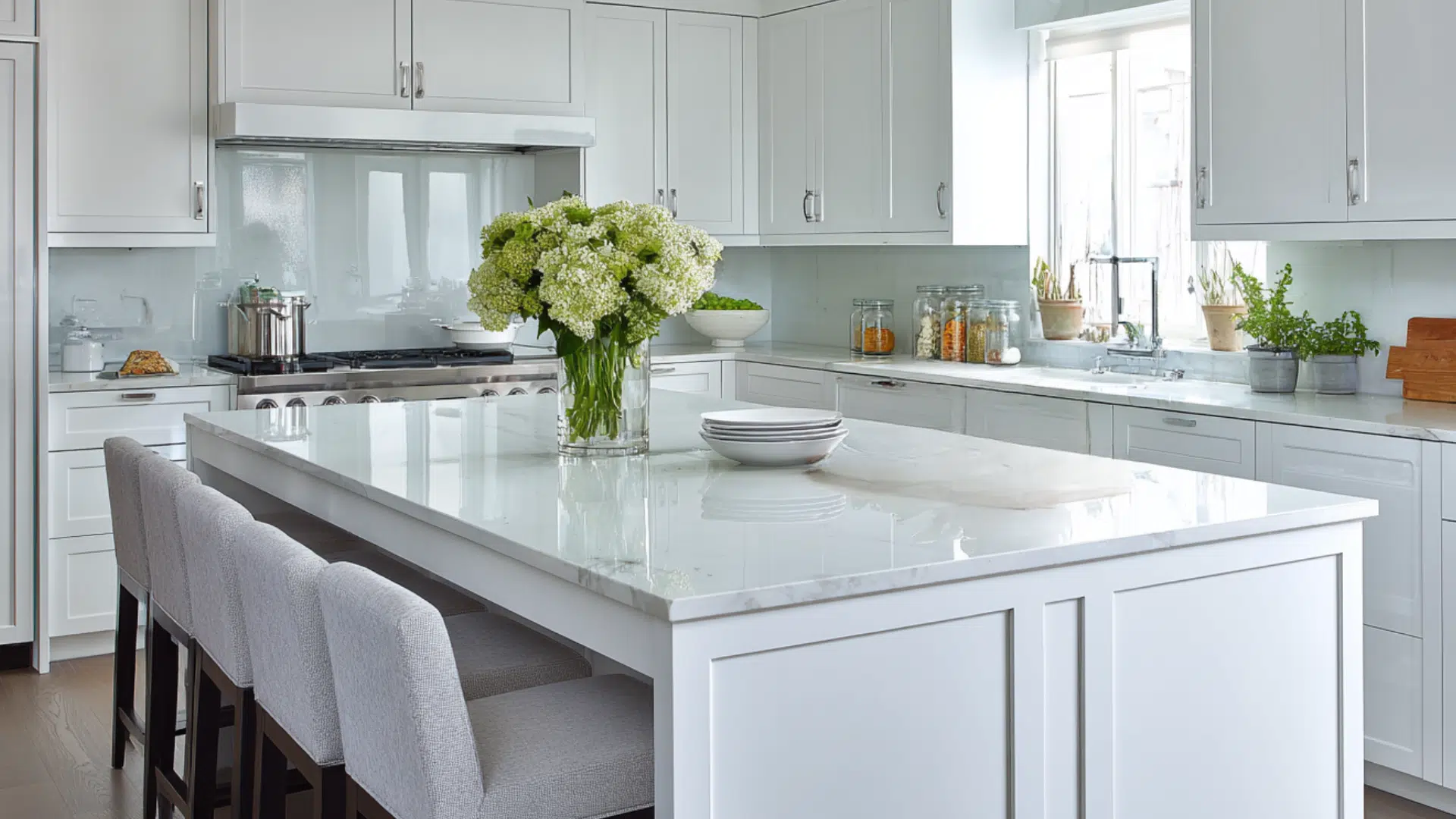
Seating feels better with a 12–15 inch overhang. This depth gives your knees enough room so you don’t feel pushed forward while sitting. You also need space behind the stools. With 36–44 inches, people can walk by even when someone is sitting or getting up.
This spacing keeps the kitchen moving well during meals or gatherings. No one has to squeeze past or slide their chair in and out repeatedly.
Measuring Your Kitchen for a Properly Spaced Island
It helps to measure your kitchen the right way before you choose an island. These simple steps make it easier to see what fits and what doesn’t:
- Measure the room width and length. Start by measuring wall to wall so you know your total space.
- Check the distance between cabinets and counters. Make sure you can keep at least 36–48 inches of clearance after adding the island.
- Measure appliance door swings. Open the dishwasher, oven, and fridge fully and note how much space they take. This prevents tight spots later.
- Plan for walkways. Keep paths wide enough for daily movement. Go wider if more than one person cooks at the same time.
- Use painter’s tape to outline the island. Mark the island size on the floor to see how it feels in the room before you commit.
Common Mistakes to Avoid When Planning Island Spacing
Many people run into the same issues when planning a kitchen island. These points help you avoid problems and keep your layout comfortable and safe.
- Island too large: Takes up walkway space and makes the kitchen feel tight.
- Ignored door swings: Dishwasher, oven, and fridge doors block movement when open.
- Poor seating layout: Not enough room behind the stools for people to sit, stand, or pass through.
- Cooktop too close to seating: Creates safety concerns and reduces comfort.
- No utility planning: Missing outlets, plumbing, or vents leads to extra costs later.
Conclusion
Getting your kitchen island spacing right makes the difference between a kitchen that just looks good and one that truly works well.
Proper clearance helps you move safely, open appliances easily, and enjoy everyday cooking without frustration. Whether your kitchen is small or open-concept, keeping 36 to 48 inches around the island ensures comfort and flow.
Always measure carefully, plan for movement, and think about how multiple people will use the space at once. If you’re designing or remodeling, take the time to map out your layout before installation.
Talk to a kitchen designer or contractor today to make sure your island fits perfectly and enhances how you live every day.

With a Master in Architectural Studies from University of Pennysylvania, Marwa Haydar has pioneered living spaces since 2005. Her expertise, initially honed in a prestigious architectural firm, is evident in her approach to creating environments. Marwa became part of our team in 2019 and has since been a driving force in our home improvement section, known for her practical yet stylish solutions. She’s been spearheading our design workshops since then, infusing her passion for teaching into her work. In her leisure time, Marwa enjoys exploring historic architecture and is an enthusiastic pottery hobbyist, further enriching her understanding of form and texture.