
A lawn can look perfect one week and torn up the next, and the fastest way to fix it is to identify the animal behind the damage.
Voles and moles both live close to the soil, but they leave very different clues and require different solutions.
Voles chew plants and travel in hidden surface runways. Moles dig tunnels and push soil upward while hunting insects.
This guide breaks down the most reliable signs, shows how to separate lawn vole vs mole damage, and gives practical, homeowner-friendly strategies to remove them and prevent them from coming back.
What Are Voles and Moles?
Voles are small rodents often called meadow mice. They stay close to cover, moving through grass and thatch in narrow “runways.”
Their feeding causes the biggest problems: they chew grass, roots, bulbs, tender stems, and the bark of young trees and shrubs.
Vole damage often gets worse in winter because snow cover protects their movement and hides their runways.
Moles are not rodents. They spend most of their lives underground, digging tunnels to hunt earthworms, grubs, and other soil insects.
Their presence is usually noticed because they disturb the lawn surface by lifting soil into ridges or creating soil mounds.
Mole damage is mostly structural: messy turf, uneven ground, and uprooted grass, rather than direct plant chewing.
How to Identify Moles vs Voles?

Voles and moles both live close to the soil, but they leave very different clues behind. This section makes identification simple by comparing what they look like, how they behave, and what their activity looks like in a yard.
1. Appearance
Quick visual differences help, but most homeowners confirm ID using yard clues. Voles look like small mice; moles look built for digging.
| Feature | Voles | Moles |
|---|---|---|
| Body shape | Small, round-bodied | Compact, cylindrical |
| Snout | Blunt | Pointed |
| Eyes | Visible, small | Tiny, hard to see |
| Ears | Small, may be hidden | Not obvious |
| Legs/feet | Small legs | Large digging front feet |
| Tail | Short | Very short/not noticeable |
2. Characteristics
These behavior differences explain why the damage patterns look nothing alike. Voles damage plants; moles disrupt soil and turf.
| Trait | Voles | Moles |
|---|---|---|
| Where they travel | Surface runways under cover | Underground tunnel systems |
| What they eat | Plants, roots, bulbs, bark | Insects, worms, soil organisms |
| Typical yard impact | Chewed plants + worn runways | Ridges + soil mounds |
| When damage shows | Often after snow melt/near cover | Often, when the soil is moist |
| Main problem area | Beds, borders, young trees | Lawn surface and leveling |
3. Identifying the Right Ones
Match the signs to the animal’s habits: chewed plants, clipped stems, or gnawed bark point to voles, while raised ridges, spongy turf, and soil mounds point to moles.
If both appear together, it often means mixed activity in the same yard.
Some Clear Signs of Voles in Your Yard
Voles leave clues that connect directly to how they live: staying hidden, moving at ground level, and chewing plants for food. Look for these signs near cover like shrubs, fence lines, mulch edges, and thick grass.
1. Surface Runways

The clearest sign of voles in the yard is a network of narrow paths through grass or thatch. Runways are often hidden until the lawn is mowed low, the grass is pressed down, or snow melts.
They look like small “tracks” where grass is flattened or missing.
2. Chewed and Clipped Plants

Voles chew low-growing plants and can clip stems cleanly near ground level. Garden beds may show missing seedlings, weakened perennials, or chewed groundcover.
This is especially noticeable near edges, fences, shrubs, and mulched borders where voles stay protected.
3. Bulb and Tuber Loss

Voles often eat underground plant parts. Tulips, crocus, and other bulbs may fail to emerge, or plants may collapse because roots and crowns were damaged.
In vegetable gardens, voles can also chew carrots and other roots.
4. Bark Gnawing and Girdling

Voles can chew bark at the base of shrubs and young trees. The most serious damage is girdling, where bark is removed around the trunk.
This interrupts water and nutrient movement and can kill a plant quickly. Girdling is common in winter under snow or mulch, where the trunk base stays hidden.
Some Clear Signs of Moles in Your Yard
Moles don’t chew plants, so their signs show up as changes in the lawn surface and soil structure. Fresh ridges and mounds usually appear where they are actively tunneling for insects, especially when the soil is moist.
1. Raised Ridges Across the Lawn

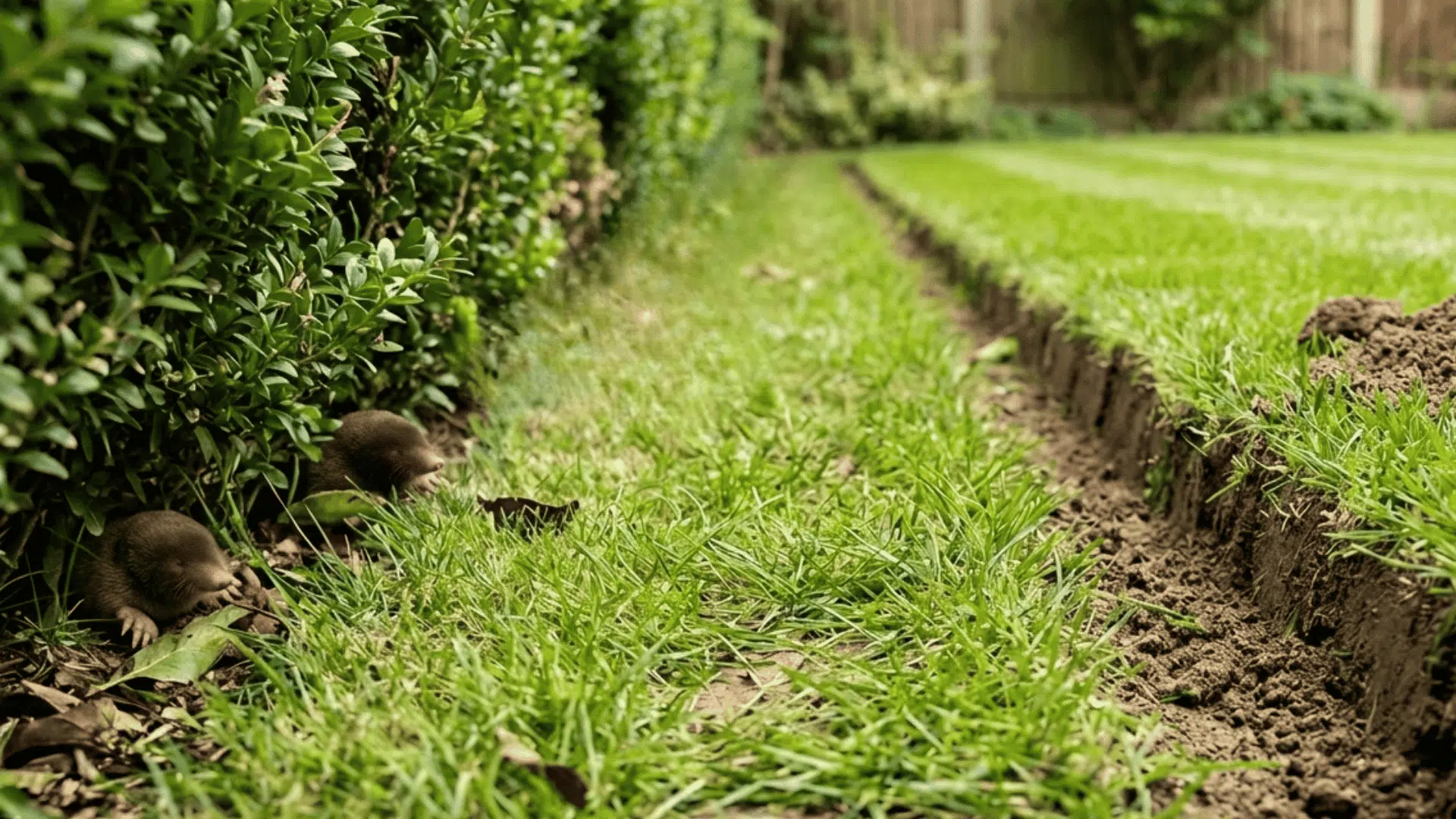
The most common mole sign is a raised ridge where a shallow tunnel runs just below the surface. The lawn may look rippled, and it often feels spongy underfoot. These ridges can run in long lines and may appear overnight.
2. Molehills

Moles also create soil piles when they excavate deeper tunnels. These mounds are often cone-shaped or volcano-like and made of loose soil.
Molehills tend to be more obvious than ridges and make mowing difficult.
3. Turf Lifting and Uneven Ground

As moles tunnel, the grass roots can be lifted, leaving the turf less anchored. Even though moles are not eating the grass, the lawn can thin or brown in spots where roots are disturbed.
The biggest issue is often the uneven surface and the mess, especially in lawns that are kept neat.
How to Get Rid of Voles and Moles

The most effective approach uses a few dependable strategies applied in the right order. These work best when paired with correct identification, because treatments for one pest often do little for the other.
1. Confirm the Culprit Before Treating
Correct ID saves time and money. Check the lawn for the most reliable clues: chewing and surface runways point to voles, while raised ridges and soil mounds point to moles. Focus on fresh activity, not old damage, so control efforts hit the right areas.
2. Reduce Cover and Hiding Places
Voles depend on protection to move safely. Keep grass cut, trim borders, and reduce thick thatch so runways are exposed. Thin heavy groundcover near beds, remove brush and cluttered edges, and keep mulch pulled back from trunks. Less cover lowers vole pressure and improves trapping success.
3. Protect High-Value Plants with Barriers and Guards
Protection prevents the most expensive losses. Use tree guards to stop bark chewing and reduce winter girdling risk.
Add hardware cloth barriers around bulbs or vulnerable bed zones where repeat damage occurs. Keep a small mulch-free ring around woody plant bases so chewing is visible early and easier to address.
4. Use Trapping as the Most Direct Removal Method
Voles: Place traps in active runways where grass is flattened. Cover traps with a small box for safety. Move traps as runways shift, and reset frequently during active periods.
Moles: Set mole traps in confirmed active tunnels, not random ridges. Choose straight, freshly raised runs. If activity stops, relocate traps to a new active section and recheck placement.
5. Manage Lawn Conditions That Encourage Tunneling
Long-term control improves when the yard is less attractive to moles. Avoid overwatering, fix soggy areas with better drainage, and maintain healthy turf so minor disturbance recovers quickly.
Moist soils and abundant soil life can increase tunneling near the surface, making mole signs more noticeable and frequent.
6. Repair Damage and Prevent Quick Return
Restoring the lawn helps spot new activity early. Flatten ridges, break down mounds, and reseed thin areas with topsoil where needed.
Keep borders clean so vole runways stand out and fresh tunneling is easier to track. Monitor weekly during active seasons and respond quickly to new signs.
Are There Any Benefits of Moles and Voles?
Moles and voles are part of the local ecosystem, even when they cause problems in a managed lawn.
Benefits of moles
- Natural insect control: They eat soil insects and larvae while hunting underground, which can lower some pest pressure.
- Soil aeration: Their tunneling loosens compacted ground and can improve airflow in natural areas.
- Better water movement: Tunnels can help water filter through heavy soils, reducing surface pooling in some spots.
- Healthy-soil indicator: Moles often show up where soils are rich in worms and insects, even if the lawn gets messy.
Benefits of voles
- Key prey species: They feed many predators like owls, hawks, foxes, and snakes, supporting local wildlife.
- Nutrient cycling: Their feeding and burrowing activity can help break down plant material in wild areas.
- Seed movement: Voles can transport and cache seeds, which may aid plant spread outside managed lawns.
- Food chain balance: Their presence helps maintain predator populations, even though they’re damaging in landscaped yards.
In a yard, voles can still cause serious plant damage, so control is usually necessary when runways and chewing are present.
Conclusion
Clear identification leads to faster results. Voles and moles affect lawns in different ways, so the signs on the surface should guide the solution.
Voles leave runways and chew plants, roots, bulbs, and bark. Moles leave ridges and mounds as they tunnel for insects.
Once the damage pattern is recognized, control becomes straightforward: reduce cover, protect valuable plants, trap in the right locations, adjust watering and drainage, and repair turf so new activity stands out quickly.
With steady cleanup and targeted action, most yards return to smooth grass and healthier garden edges.

With a Master’s in Landscape Architecture from the University of Virginia, Sophia Stephenson has dedicated the last 20 years to creating and maintaining vibrant outdoor spaces. Her professional journey started in landscape design, where she gained a reputation for innovative and sustainable approaches. Sophia became a part of our editorial team as a freelancer in 2019, offering a fresh perspective on outdoor living. Since 2020, she has been the chief for our outdoor design content, blending aesthetic appeal with environmental stewardship. In her leisure time, Sophia is a keen photographer, capturing the beauty of natural landscapes, a hobby that complements her professional expertise.