
The entryway is the first area seen when entering a home, and it quietly sets expectations for the rest of the space.
A well-planned entryway feels organized, comfortable, and easy to use.
Modern entryway ideas focus on simple layouts, useful furniture, and materials that hold up to daily use.
Many designs also borrow from mid-century modern styling, which brings warmth through wood, balanced shapes, and thoughtful details.
These ideas work across apartments, narrow hallways, and open floor plans. With the right choices, an entryway can stay clean, functional, and visually calm.
21 Modern Entryway Ideas
The following ideas cover simple ways to improve both the look and use of an entryway. Each one is designed to support daily routines while keeping the space neat and comfortable.
1. Slim Console Entryway

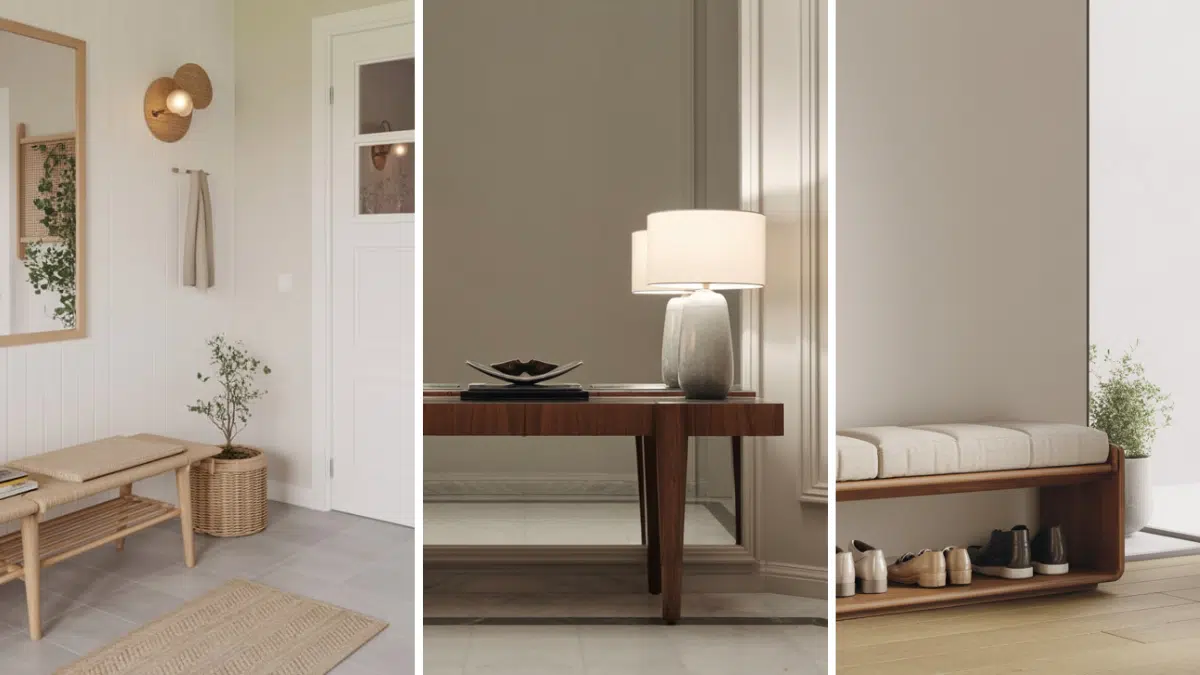
A slim console table works well in entryways where space is limited. It provides just enough surface area for everyday items like keys, mail, or a small lamp.
Narrow designs help keep walkways open and prevent the space from feeling cramped. Consoles with clean lines feel lighter and more organized.
Choosing one with a lower profile also helps maintain balance, especially in smaller or narrow entryways.
2. Mirror Entryway

Mirrors are one of the easiest ways to improve an entryway. They reflect light, which helps brighten darker spaces.
This is especially helpful in homes without windows near the door. Simple mirror shapes keep the space calm and uncluttered.
Placing a mirror near the entry also adds function, allowing quick checks before heading out while supporting a clean overall look.
3. Neutral Entryway Colors

Neutral colors help create a steady and welcoming entryway. Light shades like SW natural choice make the space feel open and easier to maintain visually.
They also allow furniture, flooring, and decor to stand out without clashing. Neutral walls work well with wood, metal, and fabric textures.
This color approach makes future updates easier since new pieces can be added without repainting.
4. Bench Entryway Seating

A bench adds comfort and practicality near the door. It gives a place to sit while putting on or removing shoes.
Benches with storage underneath help reduce clutter by keeping items out of sight. Low-height benches work well in modern spaces because they do not block sightlines.
Choosing simple shapes keeps the entryway looking open and balanced.
5. Runner Rug Entryway

A runner rug helps guide movement through the entryway. It visually connects the door to the rest of the home.
Rugs also protect floors from dirt and daily wear. Simple patterns add interest without overwhelming the space.
Choosing a durable, easy-to-clean rug makes upkeep easier, especially in high-traffic homes.
6. Lighting Choices for a Mid Century Modern Entryway

Lighting in a mid century modern entryway often focuses on simple shapes and soft brightness.
Fixtures with rounded forms or clean silhouettes work well near the front door. Wall-mounted lights can free up surface space while still providing enough illumination.
Warm lighting helps reduce harsh shadows and creates a calm transition from outside to inside.
Choosing lighting that feels balanced rather than dramatic keeps the entryway practical for everyday use.
7. Wall Hooks Entryway

Wall hooks offer an easy way to organize coats, bags, and accessories. They keep items off furniture and floors, which helps reduce clutter.
Hooks mounted at different heights work for both adults and children. Simple designs blend into modern interiors without drawing too much attention.
Proper spacing prevents overcrowding and keeps the wall looking neat.
8. Wood Entryway Details

Wood plays an important role in a mid century modern entryway because it adds warmth without feeling heavy.
Natural finishes help balance clean lines and smooth surfaces often found in modern spaces.
Wood can appear through a console table, bench legs, shelving, or even wall hooks. Lighter or medium tones tend to keep the entryway feeling open.
Using wood in small amounts helps create comfort while maintaining a tidy, structured look.
9. Minimal Entryway Decor

Minimal decor keeps the entryway calm and easy to use. Too many items can make the space feel crowded.
A small number of thoughtful pieces works better than many small decorations.
Each item should serve a purpose or add quiet interest. This approach makes cleaning easier and helps maintain a clear, organized look.
10. Floating Shelf Entryway

Floating shelves are useful in entryways with limited floor space. They provide storage while keeping the area open. Shelves can hold keys, mail, or a small plant.
Simple designs blend into the wall rather than standing out.
Mounting shelves at the right height helps keep items easy to reach without cluttering the space.
11. Front Door Entryway Focus

The front door is one of the most important elements in an entryway, yet it is often overlooked.
A clean, solid finish helps create a calm first impression before stepping inside.
Simple hardware with smooth shapes keeps the look modern and organized. The door color should connect with nearby furniture or flooring.
Keeping the area around the door free of clutter allows it to feel intentional rather than busy.
12. Patterned Floor Entryway

Flooring can quietly add personality without taking up visual space. A patterned floor works well when walls and furniture are kept simple.
Tiles or terrazzo are practical choices because they handle dirt, moisture, and daily foot traffic. Subtle patterns prevent the space from feeling flat while still staying balanced.
Choosing durable flooring also reduces long-term upkeep and keeps the entryway looking neat over time.
13. Greenery Entryway

Plants bring a natural element into an entryway, which often contains hard surfaces like wood and tile.
Even a single plant can soften the space and make it feel more welcoming. Simple planters keep attention on the greenery rather than the container.
Placing plants near natural light helps them stay healthy. Low-maintenance options are ideal for busy households where daily care may be limited.
14. Symmetrical Entryway Layout

A symmetrical layout creates a sense of order and calm as soon as someone enters the home.
Matching items on each side of a console or door helps the space feel balanced. This approach works especially well in narrow or formal entryways.
Symmetry also makes styling easier, since fewer decisions are needed. The result feels organized, steady, and visually comfortable.
15. Open Layout Entryway

Open floor plans often lack clear boundaries, which can make entryways feel undefined. Rugs help signal where the entry space begins.
Furniture placement can guide movement without blocking flow. Open shelving or low cabinets can act as gentle dividers.
These elements help create structure while still keeping the layout open and breathable.
16. Art Entryway Wall

Wall art gives an entryway character without using valuable floor space. Simple artwork works best in modern interiors because it does not overwhelm the area.
Clean frames help maintain a tidy look. Art can also connect the entryway visually to nearby rooms.
Choosing pieces with calm colors helps the space feel welcoming rather than busy.
17. Storage Furniture for a Mid Century Modern Entryway

Storage is essential in a mid century modern entryway, but it should stay visually light.
Low-profile cabinets or benches help keep shoes and bags out of sight.
Furniture with raised legs allows the floor to remain visible, which prevents the space from feeling crowded.
Storage pieces should offer function without adding bulk. This approach keeps the entryway organized while supporting a clean and structured layout.
18. Hardware Entryway Updates

Small hardware updates can quietly refresh an entryway without major changes.
Door handles, hooks, and pulls contribute to the overall look. Simple shapes work well in modern spaces.
Matching finishes help everything feel connected. These updates improve both appearance and function, making the entryway feel more thoughtful and complete.
19. Durable Entryway Materials

Entryways experience constant use, so durability matters. Strong flooring helps prevent visible wear.
Washable rugs make cleanup easier during wet or muddy seasons. Durable wall finishes reduce marks and scuffs.
Choosing practical materials helps the space stay presentable longer and lowers maintenance needs over time.
20. Layered Lighting Entryway

Using more than one light source makes an entryway more comfortable. Overhead lighting provides general brightness, while accent lights add warmth.
This setup helps avoid harsh shadows. Layered lighting also allows flexibility throughout the day.
The space feels softer in the evening and brighter when needed.
21. Personal Entryway Touches

Personal touches help the entryway feel lived-in and welcoming.
Small items like photos or meaningful objects add character. Limiting the number of personal pieces keeps the space organized.
Each item should feel intentional. A balanced approach allows personality to show without creating clutter.
The Bottom Line
An entryway works best when it quietly supports everyday life without demanding attention.
Clear pathways, useful storage, and well-placed lighting help the space function smoothly from morning to night.
Thoughtful choices, even small ones, can reduce clutter and make coming home feel easier.
Design does not need to be complex to be effective; consistency and restraint often create better results.
Over time, a well-arranged entryway becomes part of a routine rather than a problem area.
By focusing on what is needed most and removing what is not, the space can stay orderly, comfortable, and suited to daily use without constant adjustment.
With a Master in Architectural Studies from University of Pennysylvania, Marwa Haydar has pioneered living spaces since 2005. Her expertise, initially honed in a prestigious architectural firm, is evident in her approach to creating environments. Marwa became part of our team in 2019 and has since been a driving force in our home improvement section, known for her practical yet stylish solutions. She’s been spearheading our design workshops since then, infusing her passion for teaching into her work. In her leisure time, Marwa enjoys exploring historic architecture and is an enthusiastic pottery hobbyist, further enriching her understanding of form and texture.