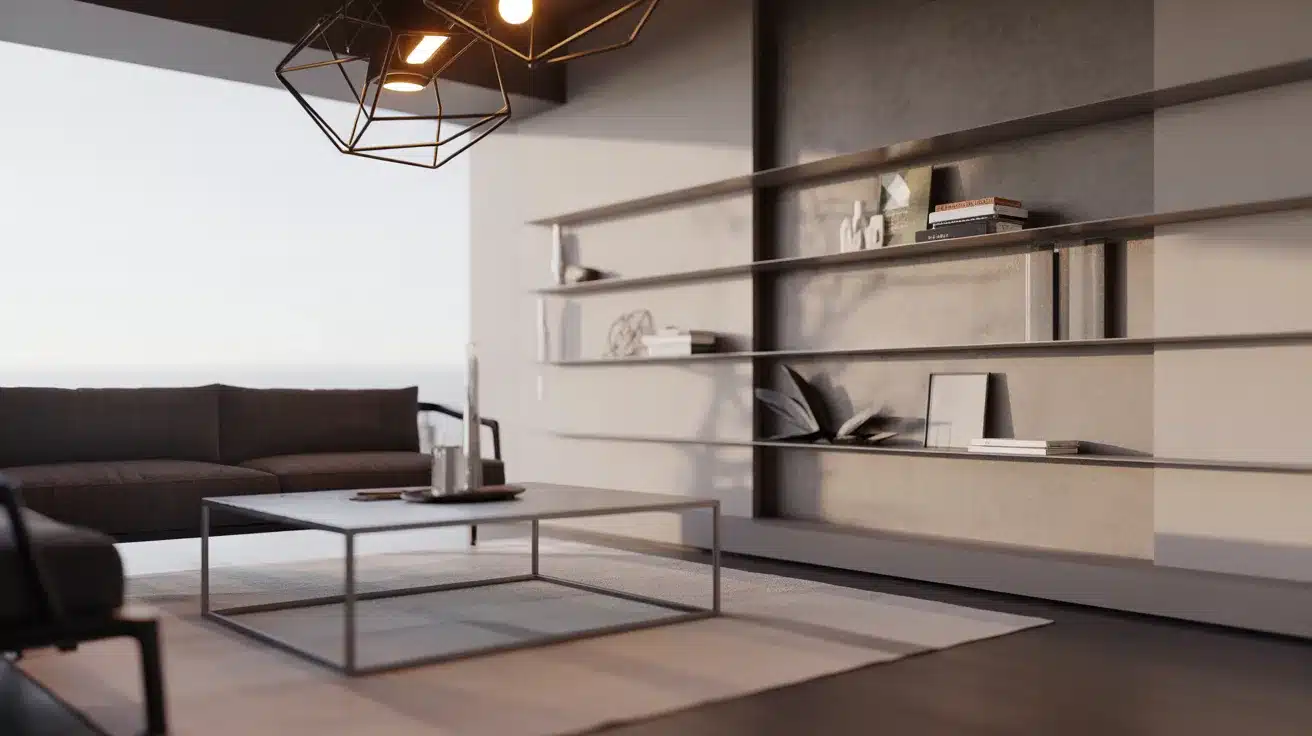

Modern industrial interior design blends strong architectural elements with a clean, lived-in feel that suits today’s homes.
Inspired by converted warehouses and old factories, this style focuses on structure rather than surface decoration.
Concrete floors, exposed brick, metal accents, and open layouts form the base, while modern furniture keeps spaces practical and comfortable.
What makes this approach appealing is its balance; it feels bold without being harsh and simple without looking unfinished.
Homes designed this way feel spacious, organized, and grounded in function.
This article breaks down what defines modern industrial interior design, the features that shape it, how it works room by room, and practical ways to use it without overwhelming the space.
What is Modern Industrial Interior Design?
Modern industrial interior design is a refined take on classic industrial spaces. It keeps the raw character of factories and lofts but introduces order, comfort, and restraint.
Instead of overly rough finishes, materials are intentional and controlled. Concrete walls are smooth, metal surfaces are matte, and wood adds warmth without excess detail.
This style values honesty in structure. Beams, ductwork, and columns are treated as visual elements rather than hidden features. At the same time, modern layouts avoid clutter.
Furniture choices remain simple, storage is purposeful, and décor is limited. The result is a space that feels strong, practical, and calm rather than cold or unfinished.
Core Features of Modern Industrial Interior Design
Certain elements consistently shape modern industrial interior design and help maintain visual balance.
1. Raw Materials and Structural Surfaces
Concrete, steel, brick, and natural wood form the backbone of this style.
Walls may be left exposed or lightly finished. Floors often feature polished concrete or wide wood planks.
Structural elements like beams and pipes remain visible, adding character without decoration.
2. Neutral and Muted Color Palette
Colors stay grounded. Shades of grey, black, white, and brown dominate most spaces.
These tones keep attention on form and material rather than color contrast. Darker shades are used in measured amounts to create depth without closing in the room.
3. Functional Furniture and Layout
Furniture focuses on clean shapes and solid construction. Sofas, tables, and shelving avoid ornamentation.
Open layouts allow rooms to breathe, with clear pathways and defined zones. Each piece serves a purpose, supporting the overall structure of the space.
Modern Industrial Interior Design Room Ideas
This style adapts easily across different rooms while keeping its core identity intact.
1. Living Rooms
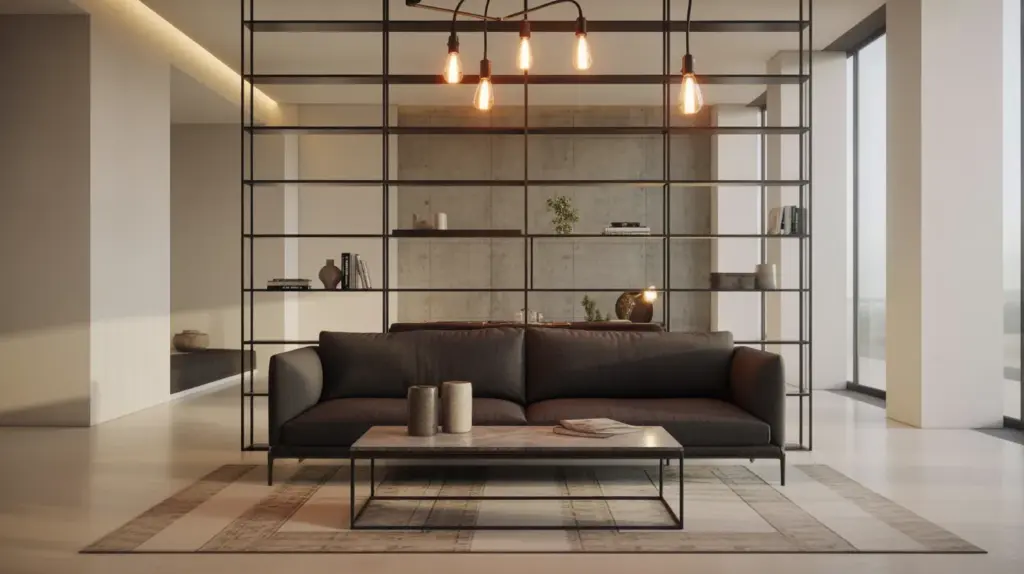
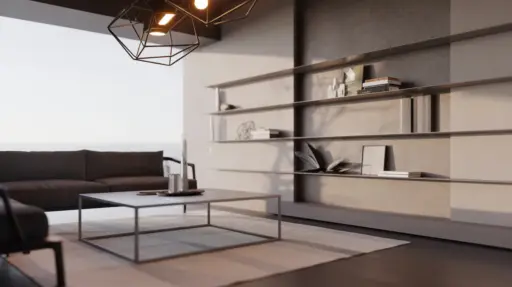
Living rooms benefit from open shelving, metal lighting fixtures, and simple seating.
A low-profile sofa paired with a metal-framed coffee table works well. Textured walls or concrete finishes add interest without needing decorative layers.
Rugs are used sparingly to soften the floor and define seating areas.
2. Kitchens
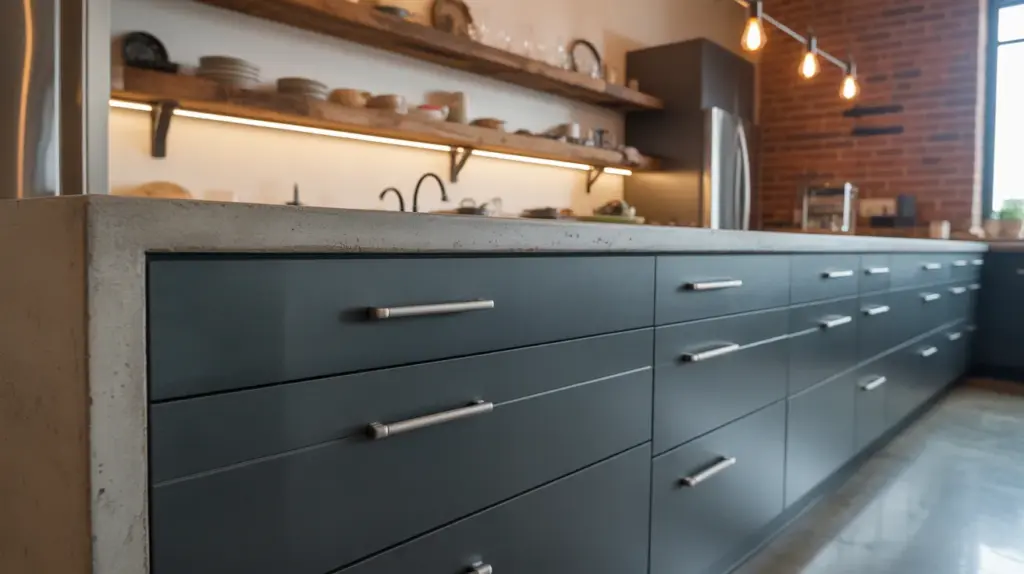
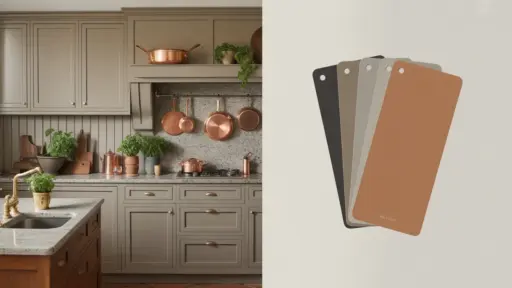
Kitchens often become the focal point in modern industrial interior design. Matte cabinets, metal handles, and concrete or stone countertops create a strong base.
Open shelves replace bulky cabinets, keeping the space lighter.
Black or brushed steel fixtures reinforce the industrial tone while staying practical.
3. Bedrooms
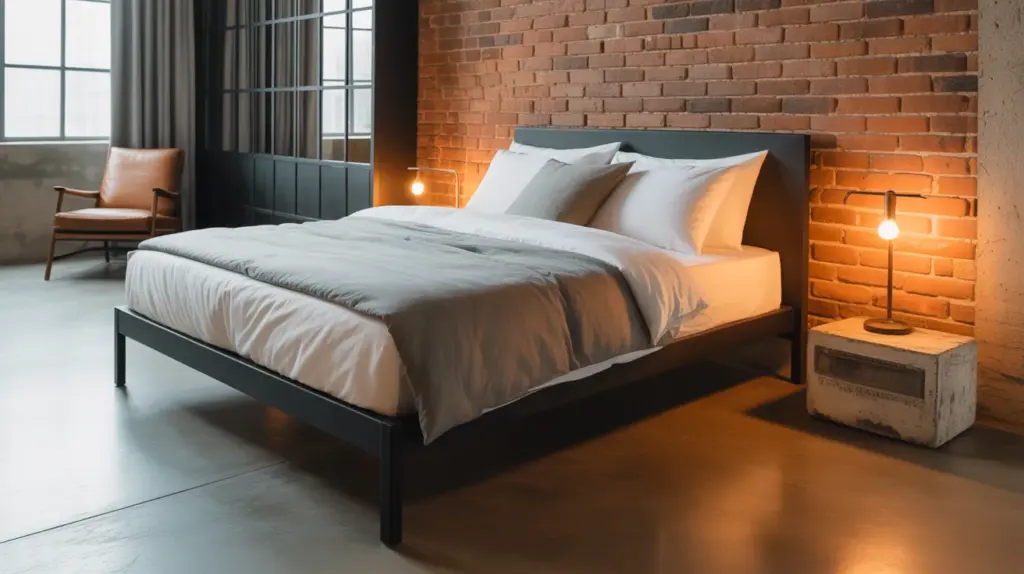
Bedrooms balance strong materials with comfort. Metal bed frames, neutral bedding, and textured walls set the tone.
Lighting is softer here, using warm bulbs to reduce the hardness of concrete or brick surfaces. Storage remains minimal to maintain a calm, open feel.
Modern Industrial Interior Design Vs Traditional Industrial Style
The modern approach refines older industrial interiors, focusing on comfort and clarity rather than raw intensity.
The table below outlines the key differences between the two styles.
| Aspect | Traditional Industrial Style | Modern Industrial Interior Design |
|---|---|---|
| Finish | Rough and heavily weathered | Controlled and refined |
| Layout | Open but often cluttered | Open with a clear structure |
| Furniture | Bulky and utilitarian | Simple and streamlined |
| Lighting | Harsh or exposed bulbs | Softened, layered lighting |
| Overall Feel | Warehouse-like | Balanced and livable |
Modern industrial interior design keeps the character while removing visual noise, making it easier to live with long term.
Tips for Using Modern Industrial Interior Design at Home
These tips help apply modern industrial interior design without overwhelming the space.
- Start with one dominant material, such as concrete or exposed brick, before adding others
- Keep furniture shapes simple and avoid decorative detailing
- Use lighting to soften hard surfaces and create warmth
- Stick to a limited color range to maintain visual order
- Choose storage that blends into walls or uses metal framing
- Leave some empty space to let materials stand out naturally
These steps help maintain balance while keeping rooms practical and comfortable.
Why Modern Industrial Interior Design Works So Well Today?
Modern industrial interior design suits contemporary living because it aligns with open-plan layouts and practical lifestyles.
Homes today often combine work, relaxation, and social areas in one space. This style supports that by keeping layouts flexible and surfaces durable.
It also responds well to smaller homes and apartments. Neutral tones make rooms feel larger, while exposed elements reduce the need for extra finishes.
Maintenance remains straightforward since materials age naturally without losing appeal.
For many homeowners, this approach offers a long-term design solution that feels stable, modern, and adaptable rather than trend-driven.
Interior Design Mistakes to Avoid in Modern Industrial Look
Even though modern industrial interior design looks simple, certain missteps can disrupt the overall balance.
Keeping the design restrained allows materials, layout, and furniture to work together instead of competing for attention.
- Using too many rough or unfinished surfaces, which can make rooms feel cold and uninviting
- Skipping soft elements like textiles, cushions, or warm lighting, leading to discomfort
- Overloading shelves and surfaces with décor, which takes away from the clean structure
- Mixing unrelated interior styles that clash with industrial elements
- Ignoring spacing results in rooms that feel cramped instead of open
- Choosing furniture that feels decorative rather than functional
Conclusion
Modern industrial interior design offers a strong yet practical approach to shaping interiors.
By focusing on structure, material honesty, and thoughtful layouts, it creates spaces that feel organized without losing character.
The blend of raw surfaces and modern restraint makes homes functional, comfortable, and visually steady.
When applied with care, this style works across living rooms, kitchens, and bedrooms without feeling repetitive or harsh.
Keeping materials limited, furniture purposeful, and lighting well planned makes all the difference.
If you are considering a design style that values function, clarity, and long-term use, modern industrial interior design remains a reliable and adaptable choice worth applying thoughtfully.

With a Master in Architectural Studies from University of Pennysylvania, Marwa Haydar has pioneered living spaces since 2005. Her expertise, initially honed in a prestigious architectural firm, is evident in her approach to creating environments. Marwa became part of our team in 2019 and has since been a driving force in our home improvement section, known for her practical yet stylish solutions. She’s been spearheading our design workshops since then, infusing her passion for teaching into her work. In her leisure time, Marwa enjoys exploring historic architecture and is an enthusiastic pottery hobbyist, further enriching her understanding of form and texture.