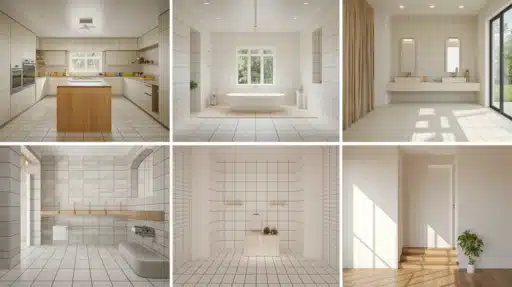
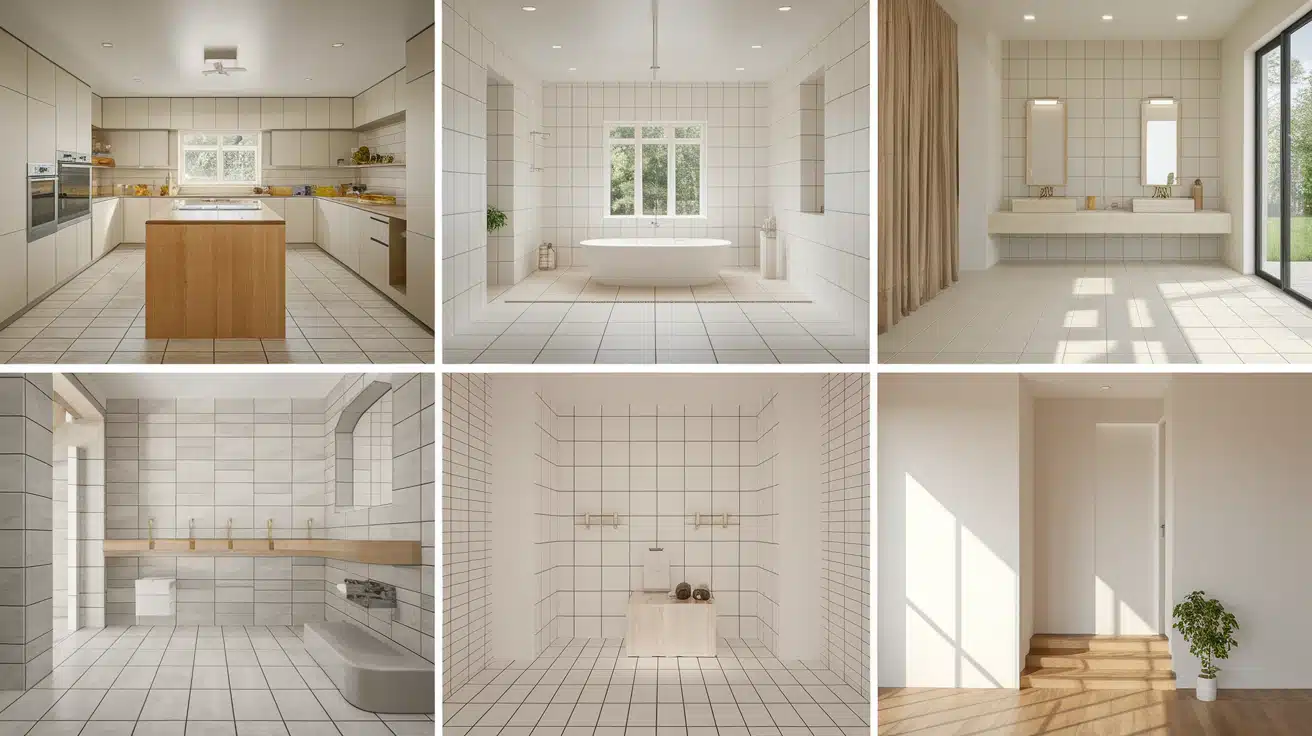

Thinking about upgrading your floors with tile often starts with inspiration, but it quickly turns into questions about cost.
Tile looks clean, lasts for years, and works well in busy areas, yet pricing can feel confusing when estimates vary so widely.
That’s a common concern for many homeowners planning a remodel.
The good news is that the tile installation cost becomes much easier to manage once the key factors are clear.
From material choices and labor to room size and preparation work, each detail plays a role in the final number.
This article breaks down what goes into tile installation pricing in 2026, what affects the cost most, and how to plan a project with confidence and fewer surprises.
What Does Tile Installation Cost in 2026?
In most homes, the total cost to install tile falls between $10 and $50 per square foot. This range includes tile material, labor, grout, adhesive, and basic surface preparation.
For full projects, homeowners usually spend anywhere from $1,500 to $10,000, depending on the size of the space and the type of tile selected.
Here’s how those numbers usually break down:
| Small spaces (bathrooms, laundry rooms): | $800–$2,500 |
| Medium spaces (kitchens, hallways): | $2,000–$6,000 |
| Large areas (open living spaces): | $5,000–$10,000+ |
A standard 200-square-foot kitchen, for example, may land anywhere between $2,000 and $7,000, based on layout and materials.
Why Tile Flooring Prices Vary So Much?
Tile flooring cost isn’t a flat number because no two homes are exactly alike. Several elements come together to shape the final price.
Key factors include:
- Tile material
- Room size and shape
- Pattern complexity
- Subfloor condition
- Removal of old flooring
- Tile installation labor cost
Understanding these pieces makes it easier to compare estimates and avoid unexpected add-ons later.
Tile Installation Cost by Material Type
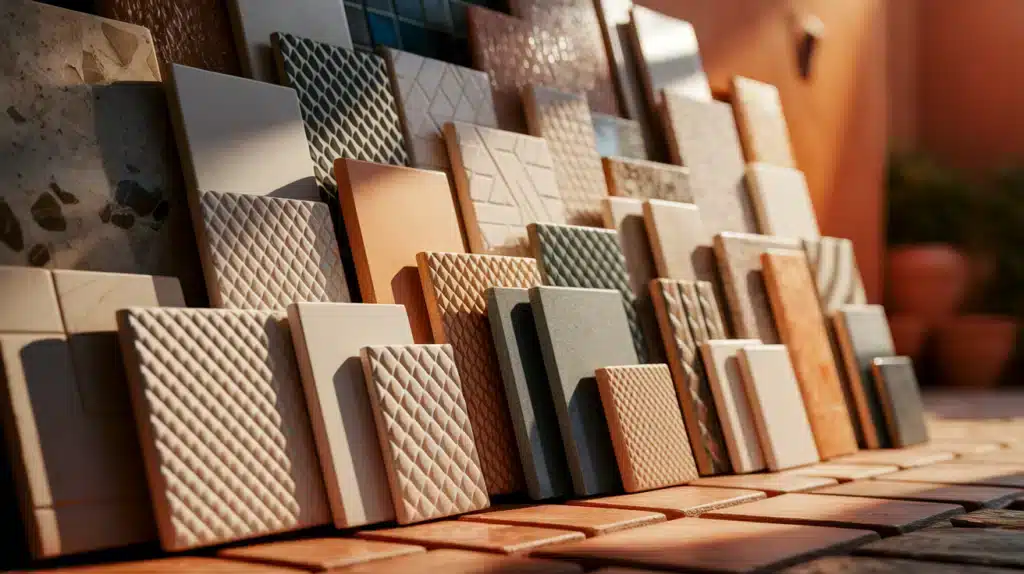
The type of tile chosen has the biggest impact on overall pricing. Some materials install quickly, while others require extra tools, time, and care.
1. Ceramic Tile
Tile material: $2–$8 per square foot. Installed price: $7–$25 per square foot |
Ceramic tile remains one of the most affordable choices for homeowners.
Ceramic works well in kitchens, mudrooms, and entryways. It cleans easily, resists stains, and comes in a wide range of colors and finishes. Glazed ceramic adds extra surface protection, which helps in areas exposed to spills.
2. Porcelain Tile
Tile material: $4–$10 per square foot Installed price: $12–$35 per square foot |
Porcelain tile is denser and absorbs less moisture than ceramic.
Because porcelain is harder to cut, labor costs are often higher. Many homeowners choose porcelain for bathrooms and high-traffic areas because of its strength and long lifespan.
3. Natural Stone Tile
Tile material: $10–$30 per square foot Installed price: $20–$50+ per square foot |
Natural stone creates a high-end look but comes with a higher price tag.
Stone tiles often need sealing and extra surface prep. Their weight and irregular edges increase tile labor cost, but the finished result adds long-term value to the home.
4. Mosaic and Small Tiles
| Installed price: $25–$100 per square foot |
Mosaic tiles are often used in showers, backsplashes, and accent areas.
Even when mounted on mesh sheets, mosaics require careful spacing and detailed grout work, which increases installation time.
Understanding Tile Installation Labor Cost

Labor makes up a large part of the tile installation cost because installers handle more than just laying tile.
The surface is measured, the layout is planned, and the subfloor is checked to make sure tiles sit flat and stay secure over time.
In most homes, tile installation labor costs range from $8 to $20 per square foot.
Pricing depends on tile size, layout style, room shape, and the number of cuts needed around edges or fixtures.
Larger tiles usually install faster, while smaller tiles and patterned layouts take more time.
Labor also covers cutting, setting, grouting, and final cleanup. Straight layouts tend to cost less, while diagonal or detailed patterns increase labor time and overall price.
Extra Costs That Can Affect the Final Price
Beyond tile and labor, a few additional items often impact the budget.
1. Subfloor Preparation: Tile requires a flat, stable surface. Cracks, dips, or uneven areas must be corrected before tile installation begins. Skipping this step can lead to cracked tiles later.
Cost: $1–$5 per square foot
2. Removing Old Flooring: Existing flooring needs to be removed before new tile goes in. Tile removal usually costs more than carpet or vinyl removal because of the adhesive and debris.
Cost: $1–$7 per square foot
3. Waterproofing and Underlayment: Bathrooms and laundry rooms benefit from moisture protection. Waterproof membranes help prevent long-term damage and protect the structure underneath.
Cost: $2–$4 per square foot
Tile Installation Cost by Room
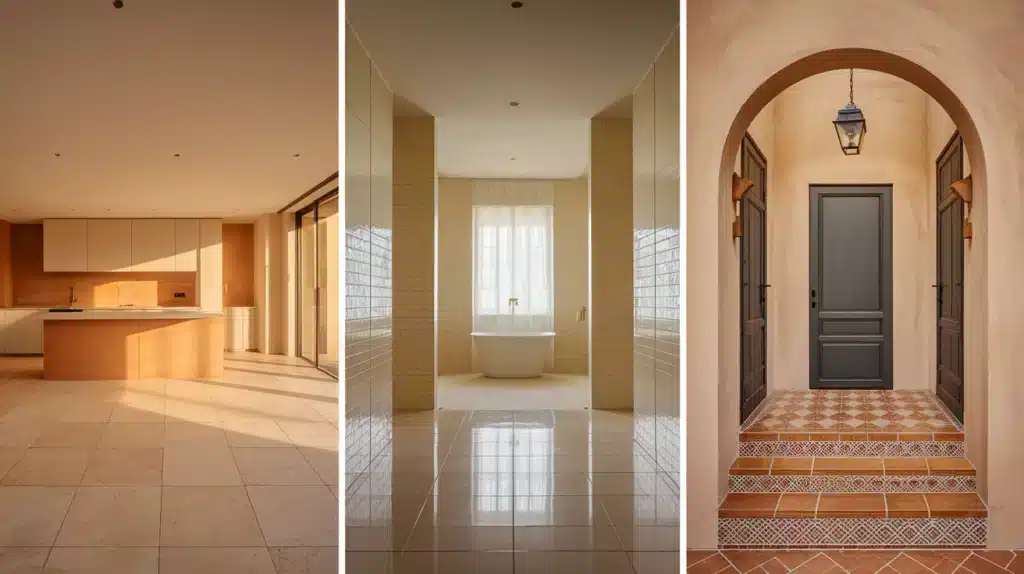
Tile installation cost often changes depending on the room because each space has different demands.
Factors such as moisture exposure, foot traffic, and layout complexity all influence pricing, even when the same tile material is used throughout the home.
Kitchen Tile Flooring Cost
Kitchen tile flooring projects usually range from $1,500 to $6,000 or more, depending on the size of the kitchen and the tile selected.
Kitchens often work well with large-format tiles because they create fewer grout lines, which makes cleaning easier and speeds up installation.
Ceramic and porcelain tiles are commonly chosen here due to their durability, water resistance, and reasonable cost.
Bathroom Tile Flooring Cost
Bathroom tile installation tends to cost more because it often includes tile on floors, walls, and shower areas.
Most bathroom projects fall between $2,000 and $8,000.
Additional steps, such as waterproofing, precise cuts around plumbing fixtures, and the use of smaller tiles, increase labor time.
Shower tile installations usually add to the overall cost because they require extra surface preparation and moisture protection.
Entryways, Hallways, and Laundry Rooms: Tile Flooring Cost
Entryways, hallways, and laundry rooms are generally more straightforward and usually cost between $1,000 and $3,000, depending on square footage.
These areas benefit from durable tile and simple layouts that hold up well under daily use.
Choosing standard ceramic tile and a straight installation pattern helps keep the overall tile installation cost under control while still delivering long-lasting results.
How to Control Tile Installation Cost Without Cutting Corners?
Saving money doesn’t always mean choosing the cheapest option. Smart decisions during planning make a big difference.
1. Choose Materials Wisely: Ceramic tile offers strong durability at a lower price point. Porcelain can mimic wood or stone while costing less than natural materials.
2. Keep the Layout Simple: Straight tile patterns reduce labor time and waste. Decorative patterns can be limited to small sections for visual interest without raising costs across the entire floor.
3. Combine Projects: Installing tile in multiple rooms at the same time often lowers the price per square foot because setup and materials are shared.
4. Work With Skilled Installers: Experienced installers help prevent mistakes that lead to repairs later. Proper prep and placement protect the investment long term.
Conclusion
Tile installation cost depends on several factors, including the type of tile, labor rates, surface preparation, and the layout of the room.
While prices can vary from one project to another, having a clear understanding of these elements makes budgeting more predictable and less stressful.
Tile flooring continues to be a practical choice because it offers durability, moisture resistance, and long-term value when installed properly.
With thoughtful planning, the right material selection, and skilled installation, tile can serve a home well for many years.
If there are questions about pricing, materials, or planning a tile project, feel free to share them in the comments below.

Veronica Lee holds a Master’s degree in Landscape Architecture from Cornell University and has dedicated more than 15 years to transforming outdoor areas into artistic and sustainable spaces. Her career took off in a renowned landscape design firm, where she excelled in creating visually stunning and environmentally responsible designs. In 2019, Veronica brought her expertise to our platform, quickly becoming a key contributor to our outdoor design and sustainability sections. As the lead of our landscape innovation series ever since joining, she has inspired readers with her forward-thinking and practical approach. When not drafting designs, Veronica enjoys pottery and participates in local conservation efforts, activities that complement her professional ethos of blending art with nature.