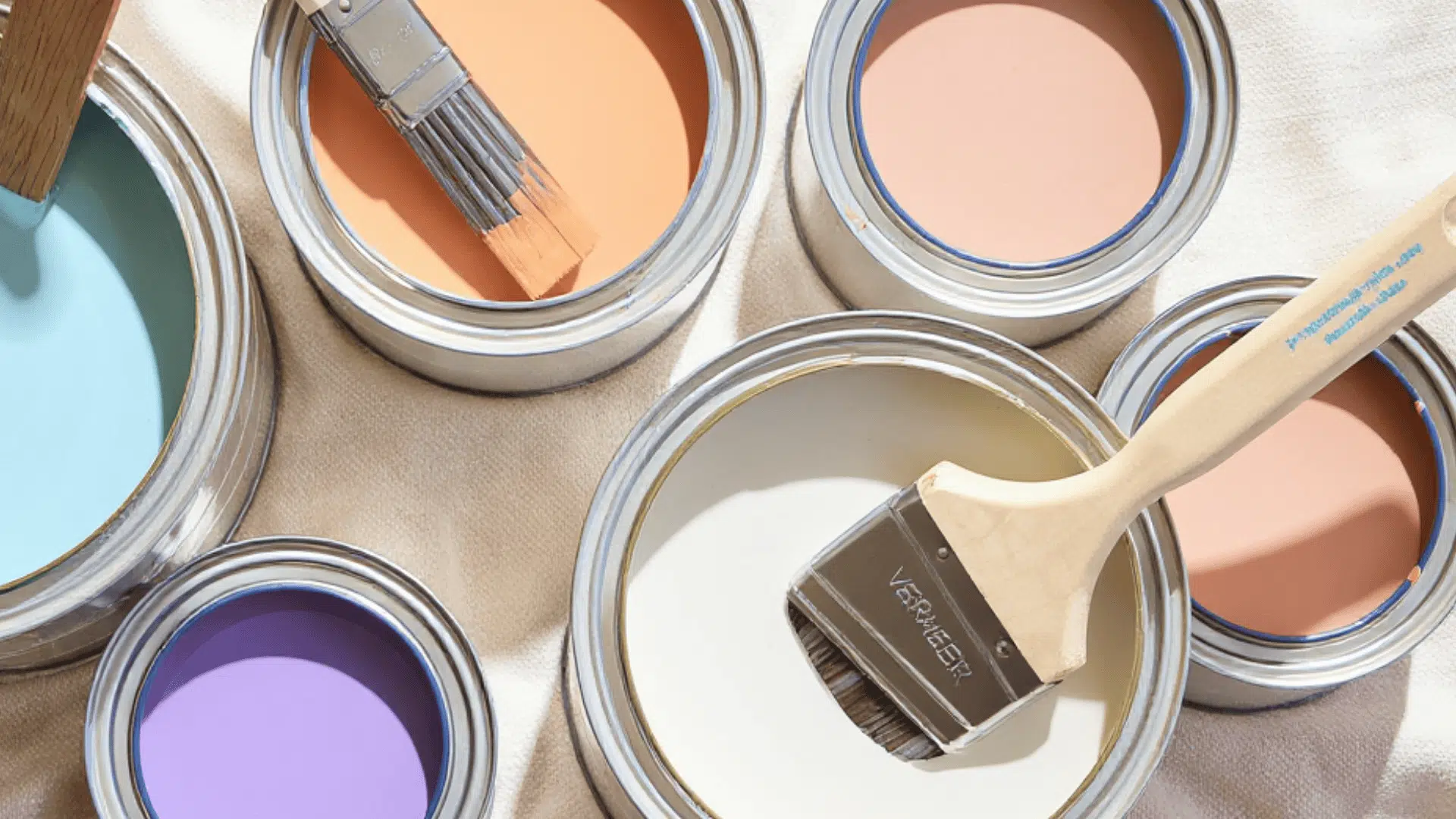

Paint has the ability to change how a surface feels, functions, and endures over time, yet its impact often goes unnoticed until the results fall short.
Behind every smooth wall or resilient coating lies a careful choice that affects appearance, upkeep, and performance.
The many types of paint available today are designed to respond differently to light, moisture, movement, and surface materials.
Some focus on durability, others on finish, and a few serve highly specific purposes.
Understanding these variations reveals why certain paints succeed where others fail.
How to Choose the Right Paint for a Project?
Paint selection plays a direct role in how a finished surface looks and how well it holds up over time.
Different projects place different demands on paint, depending on location, surface condition, and expected use.
Making the right choice at the planning stage helps avoid early wear, uneven coverage, or the need for frequent touch-ups.
Key factors to consider:
- Surface texture and absorption level
- Exposure to moisture, heat, or sunlight
- Expected frequency of cleaning
- Desired visual consistency after drying
- Compatibility with existing coatings
Selecting paint that aligns with these factors supports stable application and reliable results.
Thoughtful evaluation before painting helps ensure the coating performs as intended throughout its service life.
Types of Paint Based on Paint Base
Paint base refers to the primary liquid component that carries pigments and binders, influencing drying time, surface bonding, and overall performance.
Understanding paint base types helps in selecting options that suit surface conditions, environmental exposure, and maintenance expectations:
1. Water-Based Paint
Water-based paint uses water as its main carrier, which allows faster drying and easier cleanup compared to heavier formulations.
It produces lower odor during application and is commonly used on walls and ceilings, including many Sherwin-Williams paint options designed for residential interiors.
This paint type supports flexibility after drying, helping reduce cracking over time. It performs well in areas where ventilation is limited and frequent repainting may be required.
2. Oil-Based Paint
Oil-based paint relies on solvent-based liquids that create a dense and smooth coating once cured.
It offers strong surface attachment, making it suitable for areas that experience frequent contact or friction.
Drying takes longer, which allows better leveling and fewer brush marks. This paint type is often chosen for surfaces requiring added resistance to wear and moisture exposure.
3. Enamel Paint
Enamel paint forms a firm, sealed layer after drying, resulting in a hard surface that withstands regular cleaning.
It is available in different base formulations and is commonly used where durability matters more than flexibility.
The coating resists stains and minor impacts, making it practical for functional surfaces. Proper surface preparation is important to maintain long-lasting results.
When selecting a paint base, consider drying time and ventilation first. Faster-drying options suit quick updates, while slower-curing paints may offer smoother results on high-contact surfaces.
Types of Paint Based on Finish
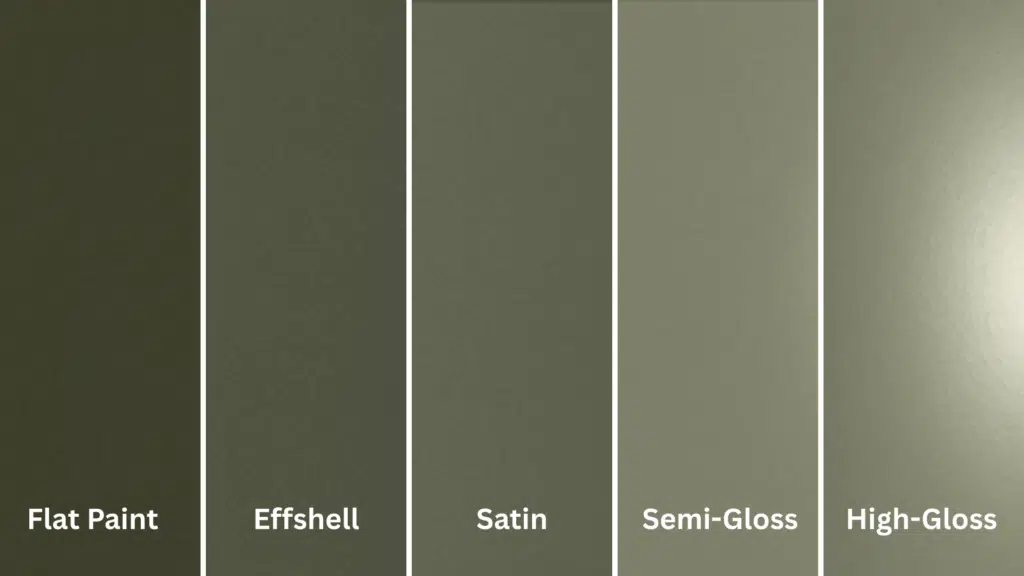
Paint finish determines how light reflects from a surface and plays a key role in visual outcome and long-term surface care.
Choosing the right finish affects cleaning effort, surface visibility, and how a painted area responds to regular use:
4. Matte or Flat Paint
Matte or flat paint creates a non-reflective surface that produces a soft and muted appearance.
This finish is often selected for areas where visual uniformity is important, as it reduces the appearance of minor wall inconsistencies.
It absorbs light rather than reflecting it, which helps create calm interiors. However, it requires careful handling due to limited washability.
5. Eggshell Paint
Eggshell paint offers a low-luster surface with a subtle sheen that becomes noticeable under direct lighting.
It balances appearance and practicality, making it suitable for spaces that need a refined look without strong shine.
This finish provides slightly better resistance to marks than flatter options while maintaining a smooth texture that works well across larger wall areas.
6. Satin Paint
Satin paint delivers a gentle sheen that adds depth without creating harsh reflections. It is often selected for spaces that benefit from light durability combined with visual softness.
The surface allows occasional wiping and handles everyday use better than lower-sheen finishes. Its consistent texture makes it a preferred choice for rooms that experience steady movement.
7. Semi-Gloss Paint
Semi-gloss paint creates a noticeable shine that enhances surface definition and highlights edges.
This finish forms a resilient coating that tolerates frequent cleaning and exposure to moisture. It is commonly used on areas requiring added protection, as the smoother surface resists stains.
Careful surface preparation is important because this finish shows flaws more clearly.
Choosing between satin paint finish vs semi gloss can change how a room handles light, cleaning, and daily use.
8. Gloss Paint
Gloss paint produces a highly reflective surface with a polished appearance. It offers strong resistance to moisture, stains, and repeated contact, making it suitable for high-use areas.
The finish emphasizes details and contours, which can enhance architectural elements.
Due to its reflective nature, even small surface imperfections may remain visible after application.
Test paint finishes on a small section of the surface before full application. Light conditions and wall texture can change how sheen appears once the paint fully dries.
Types of Paint Based on Surface Use
Paint selection often depends on the material being coated, as different surfaces respond uniquely to adhesion, moisture, and exposure conditions.
Using paint designed for a specific surface helps improve coating stability, appearance retention, and long-term surface protection:
9. Interior Paint
Interior paint is formulated to suit controlled environments where temperature and humidity remain relatively stable.
It focuses on smooth application, reduced odor release, and visual consistency across walls and ceilings. This paint type prioritizes comfort during use and regular upkeep rather than extreme resistance.
It is commonly applied in living spaces where appearance and ease of maintenance are key considerations.
10. Exterior Paint
Exterior paint is developed to withstand environmental factors such as rainfall, sunlight, and temperature variation. It forms a protective layer that helps limit surface damage caused by weather exposure.
This paint type maintains color integrity for longer periods and supports surface expansion and contraction.
Proper selection is essential for preventing peeling, fading, and moisture-related deterioration.
11. Wood Paint
Wood paint is designed to accommodate the natural movement of timber while providing surface coverage. It helps reduce moisture absorption and limits surface wear caused by regular handling.
This paint type supports smooth finishes while allowing the material beneath to respond to environmental changes.
Surface preparation plays a significant role in ensuring proper bonding and long-term performance.
12. Metal Paint
Metal paint is formulated to attach firmly to hard, non-porous surfaces. It helps reduce corrosion by creating a barrier between the metal and external elements.
This paint type often includes properties that slow oxidation and surface degradation. It is widely used on fixtures and structural components where surface protection and durability are essential.
13. Masonry Paint
Masonry paint is developed for porous surfaces such as concrete and brick. It allows trapped moisture to escape while maintaining surface coverage.
This paint type helps prevent cracking and surface breakdown caused by water retention.
Its composition supports long-lasting protection while maintaining the structural integrity of dense building materials.
Always match paint to the surface material rather than relying on appearance alone. Using a surface-appropriate paint improves adhesion and reduces early wear or peeling.
Specialty Types of Paint
Certain paint types are formulated for specific functional or visual requirements that standard options may not adequately address.
These paints are selected based on unique performance needs, surface behavior, or application conditions rather than general wall coverage:
14. Chalk Paint
Chalk paint produces a soft, powder-like surface that adheres well without extensive surface preparation.
It is often applied to furniture and decorative items where a muted, aged appearance is preferred.
This paint type allows layering and surface distressing techniques, making it suitable for restoration projects. Sealing is usually required to protect the finish from wear and surface marking.
15. Spray Paint
Spray paint is delivered in an aerosol form that enables even distribution across complex shapes and narrow spaces.
It is commonly used on objects with curves, grooves, or detailed edges that are difficult to coat with brushes or rollers.
This paint type dries quickly and supports controlled layering. Application requires careful ventilation and surface masking for clean results.
16. Epoxy Paint
Epoxy paint consists of a resin-based formulation that forms a rigid, bonded surface after curing. It is known for its ability to withstand heavy use, chemical exposure, and repeated cleaning.
This paint type is often applied to floors and industrial surfaces. Accurate mixing and timing are important, as curing begins soon after preparation.
17. Heat-Resistant Paint
Heat-resistant paint is designed to remain stable when exposed to high temperatures without blistering or discoloration.
It is used on surfaces that regularly encounter heat output, such as mechanical or utility components.
This paint type maintains surface integrity under thermal stress. Proper curing may require gradual temperature exposure to activate its protective properties.
18. Anti-Mold Paint
Anti-mold paint contains additives that help limit microbial growth on coated surfaces.
It is commonly applied in areas where moisture accumulation is frequent and air circulation is limited.
This paint type supports cleaner surfaces by reducing staining caused by biological buildup. Consistent surface dryness further enhances its long-term effectiveness.
Review application instructions carefully for specialty paints. Many require specific preparation, curing conditions, or sealants to achieve their intended performance.
Conclusion
Paint choices shape how surfaces age, respond to use, and maintain their appearance over time.
Differences in paint base influence drying behavior and surface bonding, while finish levels affect light reflection and ease of maintenance.
Surface-specific formulations help coatings perform reliably under varying conditions, and specialty paints address needs that standard options may not meet.
Together, the wide range of types of paint reflects how varied painting requirements can be across spaces and materials.
Considering surface conditions, exposure, and usage before painting supports more consistent results and longer-lasting finishes.
Share your experience with different types of paint or mention a preferred option in the comments below.

Millie Anderson, a graduate of Textile Design from the Fashion Institute of Technology, has carved her name in fabric and material finishes for over 16 years. Her career took flight in a renowned textile manufacturing company, where she mastered combining textures and patterns. Millie joined our team in 2018, becoming a cornerstone for readers interested in the latest trends in textiles. Since then, she has been the lead editor for our home decor fabrics section, blending her deep knowledge of materials with a flair for contemporary design. Beyond her professional achievements, Millie is an enthusiastic quilter and often participates in community arts and crafts workshops, further nurturing her passion for fabrics and design.