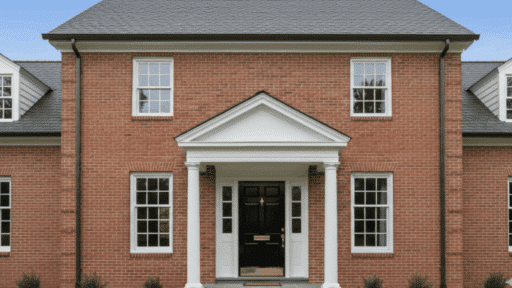
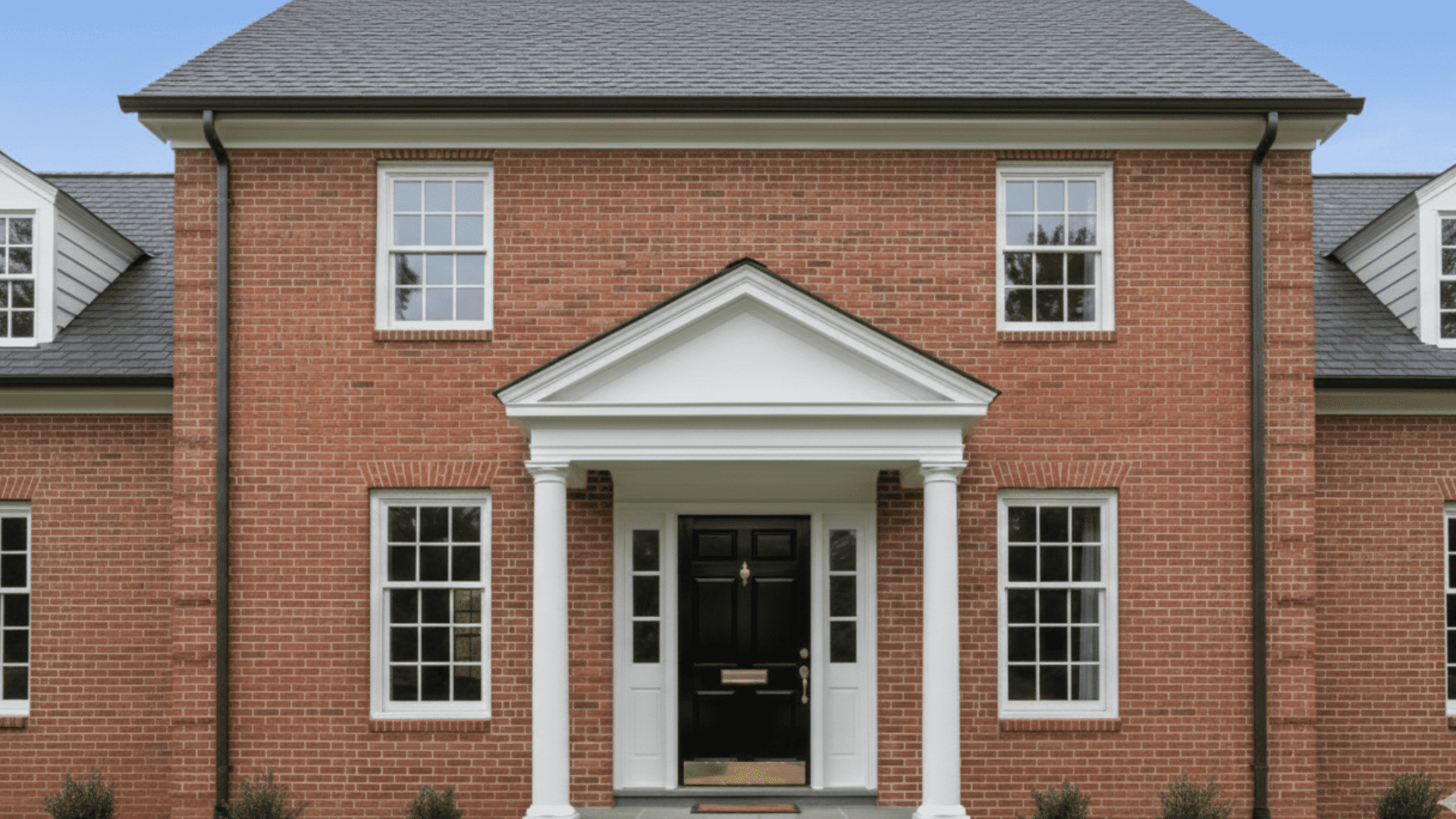

A portico is a small covered area above a front door with columns on either side.
This architectural feature shows up on everything from courthouses to suburban homes, but many people aren’t quite sure what makes it different from a regular porch.
A portico adds both function and style to a home’s entrance. It protects you from rain and sun while you fumble for your keys, and it gives the front of your house a more finished, intentional look.
Understanding what a portico is and whether it might work for your home starts with knowing its basic characteristics and purpose.
What Is a Portico?

A portico is a covered structure that projects from the entrance of a building. It includes a roof supported by columns or pillars and sits directly over or in front of the main doorway.
The columns hold up the roof, creating a small sheltered space at the entry.
Most porticos are relatively compact. They typically cover just the door and a small area in front of it, rather than extending along an entire wall.
The columns are a defining feature; without them, you’d simply have an overhang or awning.
Porticos attach to the building’s main wall and usually match the architectural style of the house.
They can be as simple as four posts with a flat roof or as detailed as carved columns with a peaked roof and decorative trim.
Historical Background
Porticos date back thousands of years to ancient Greece and Rome. Greek temples used them as grand entrances, with tall columns supporting triangular pediments above the doorways.
The Parthenon in Athens features one of history’s most famous porticos.
Roman architects adopted this design and spread it throughout their empire. They used porticos on temples, public buildings, and wealthy homes.
The structure served both practical and symbolic purposes. It sheltered visitors while announcing the importance of the building.
During the Renaissance, European architects revived classical styles, bringing porticos back into fashion.
By the 1700s and 1800s, porticos appeared regularly on government buildings, churches, and grand estates in Europe and America. Georgian and Colonial-style homes often featured them as key design elements.
The historical connection to classical architecture still gives them a formal, refined appearance.
Porch vs Portico: What’s the Difference?

People often confuse porches and porticos because both provide covered outdoor space. However, they differ significantly in size, purpose, and design.
| Feature | Portico | Porch |
|---|---|---|
| Size | Small, covers only the entrance | Large, extending across the front of the house |
| Purpose | Protects doorway, adds formal appeal | Creates an outdoor living space |
| Columns | Essential structural element | Optional or uses different supports |
| Furniture | No space for seating | Room for chairs, tables, and benches |
| Style | Formal and symmetrical | Casual and lifestyle-oriented |
| Location | Directly at the front door | Spans along the home’s facade |
The simplest way to tell them apart: a portico is just big enough to stand under while opening your door, while a porch is large enough to sit and spend time on.
Benefits of a Portico
Adding a portico to a home is not just a choice on the structure. A portico can offer several practical and visual advantages that you as a home owner should keep in mind.
1. Protects Your Entrance from Weather
You stay dry while unlocking the door during rain, and packages left at the entrance get some shelter from the elements.
This protection keeps your front door area cleaner and more comfortable year-round.
2. Improves Curb Appeal
A portico adds depth and dimension to a flat facade, creating visual interest and architectural character.
The columns and roof structure break up blank wall space and draw attention to the entrance.
3. Creates a Clear Focal Point
When someone looks at your house, the portico guides their eye to the front door, making the entrance obvious and welcoming.
This clarity improves the home’s overall appearance and makes it feel more thoughtfully designed.
4. Increases Perceived Home Value
While the actual return on investment varies by market and execution, a well-designed portico makes a house look more expensive and better maintained.
It suggests attention to detail and quality construction.
5. Improves Proportion and Balance
Porticos add vertical elements and shadow lines that make the facade more balanced and interesting, especially on homes with plain or flat exteriors.
Popular Portico Designs
Different portico styles suit different architectural preferences and home types. These are some of the most popular options that you would find everywhere.
1. Classical Columned Portico

This style draws directly from Greek and Roman architecture. It uses round columns, often with decorative capitals (tops), and may include a triangular pediment above.
The look is formal and traditional, working well with Colonial, Georgian, and Classical Revival homes.
2. Flat Roof Portico

A flat roof portico takes a simple, modern approach. It features clean lines, minimal decoration, and straightforward geometry. This style fits contemporary homes and minimalist designs.
The columns may be square rather than round, emphasizing the streamlined aesthetic.
3. Gabled Portico

This design includes a triangular roof that mirrors the roofline of many traditional homes.
The peaked shape adds visual interest and provides better water drainage than a flat roof. Gabled porticos appear frequently on Colonial, Craftsman, and traditional-style houses.
4. Arched Portico

Arched porticos use curved openings between columns or curved rooflines.
They create a softer, more European feel and appear commonly in Mediterranean, Spanish Colonial, and Tuscan-style architecture. The curves add elegance and distinction.
5. Cantilevered Portico

A cantilevered portico uses hidden structural support rather than visible columns. The roof appears to float above the entrance, held up by internal beams anchored to the building.
This creates a sleek, modern look with minimal visual clutter.
Common Materials Used for Building a Portico
Building a portico requires choosing materials for three main components: the structural frame, the columns, and the roof.
Each material option offers different benefits in terms of durability, appearance, maintenance, and price.
1. Structural Materials
The frame and support structure typically use treated lumber, cedar, steel, aluminum, or reinforced concrete.
Wood remains the most common choice for residential porticos due to cost and workability. Metal and concrete show up more in modern or high-end designs.
2. Columns
Wood columns offer affordability and easy customization. Fiberglass and composite columns resist weather damage better than wood and require less maintenance.
Stone and brick columns provide the most substantial appearance but cost more due to materials and labor.
3. Roofing Materials
Asphalt shingles are standard and budget-friendly. Metal roofing lasts longer and suits contemporary styles.
Tile or slate appears in specific architectural styles but increases both weight and cost, requiring stronger support structures.
Portico Building Cost Breakdown
Portico costs vary widely based on size, materials, design complexity, and location.
A small, basic portico with simple columns and a standard roof might cost between $3,000 and $6,000. This includes basic wood columns, asphalt shingle roofing, and straightforward construction.
A larger portico with decorative columns, custom details, and higher-end materials typically ranges from $8,000 to $15,000. Stone or brick columns, custom millwork, and specialty roofing push costs higher.
Material Costs
| Material Type | Cost Range | Maintenance | Best For |
|---|---|---|---|
| Wood columns/structure | $500 – $2,000 | Regular painting/sealing needed | Traditional homes, budget-conscious projects |
| Fiberglass/composite columns | $1,500 – $4,000 | Low maintenance | All styles, long-term value |
| Stone or brick columns | $3,000 – $8,000 | Very low maintenance | Formal, classical designs |
| Steel/custom metal | $2,500 – $6,000 | Low maintenance | Modern, contemporary homes |
| Asphalt shingle roofing | $300 – $800 | Moderate | Standard residential applications |
| Metal roofing | $800 – $2,500 | Very low maintenance | Contemporary and traditional styles |
| Tile or slate roofing | $1,500 – $4,000 | Low maintenance | Mediterranean, upscale designs |
Factors That Affect Cost
Several variables can increase or decrease your total portico project cost:
- Number and style of columns – Simple square posts cost less than ornate round columns
- Foundation requirements – Some porticos need substantial footings, others attach to existing structures
- Decorative details – Custom trim, pediments, and railings add to the total
- Local labor rates – Construction costs vary by region
- Permit fees – Required permits and inspections differ by municipality
Is a Portico Right for Your Home?
A portico works best when it matches your home’s existing architecture. Formal, symmetrical house styles like Colonial, Georgian, Federal, and Classical Revival naturally accommodate porticos. Adding one to these homes improves their inherent design language.
Contemporary and modern homes can use porticos, too, but the design needs to match the overall aesthetic.
Consider the scale of your home. A small portico on a large house may look out of proportion, while an oversized portico on a small house can overwhelm the facade.
Think about your practical needs. If you frequently deal with rain at your front door, carry groceries inside, or want to keep packages dry, a portico provides real functional value.
Budget matters too. If you can afford the construction and it fits your home’s style, a portico adds lasting value through improved appearance and protection.
Final Thoughts
A portico is more than decoration. It’s an architectural element with centuries of history and practical purpose.
This covered, column-supported entrance protects you from the weather while giving your home’s facade structure and style.
Unlike a porch, which creates an outdoor living space, a portico focuses on the entrance itself. It’s smaller, more formal, and emphasizes the front door as the home’s focal point.
It shelters your entrance, improves curb appeal, and connects your home to architectural traditions that span from ancient temples to today’s neighborhoods.
For homes with the right style and scale, a portico offers a cost-effective way to make a strong first impression while adding real, everyday utility.

With a Master’s in Architecture from the University of California, Berkeley, Alexander Martin has dedicated the last 18 years to enhancing outdoor living through thoughtful and robust structure design. His career kicked off in urban planning, giving him a unique perspective on integrating structures into diverse environments. In 2019, Alexander brought his expertise to our website, offering insights into creating versatile outdoor spaces. Since then, he has been the lead advisor for our outdoor design projects and is known for his ability to merge functionality with environmental consciousness. Alexander enjoys rock climbing outside of work and participates in community development projects, activities that reflect his passion for the outdoors and sustainable design.