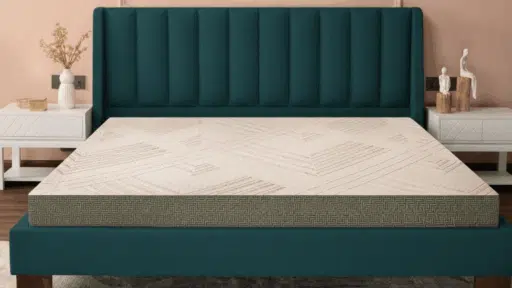


With so many mattress options available today, it’s easy to feel lost when trying to choose the right one.
Among them, the innerspring mattress remains a favorite for those who prefer classic support and a responsive feel.
Built with a system of metal coils, it offers structure, airflow, and durability that have stood the test of time.
In this guide, I’ll break down how innerspring mattresses work, the different coil types, their pros and cons, and who they suit best. You’ll also find a few trusted options and tips to help you shop with confidence.
What an Innerspring Mattress Is
An innerspring mattress uses metal coils in the core to create support. Thin comfort materials sit on top, so you feel lifted instead of sinking in. This gives the bed a familiar, classic feel that many people already know.
Inside the mattress, the coil system carries most of your weight. A light comfort layer adds softness, while edge support keeps the sides firm. These pieces work together to keep the mattress steady and long-lasting.
A fabric cover holds everything together and keeps the surface smooth. It protects the layers inside and adds a clean, finished look. This simple build is why innerspring mattresses stay popular.
An innerspring isn’t the same as a hybrid mattress. If the foam layer is over two inches thick, it becomes a hybrid with more contouring. This extra foam creates a softer, more body-shaping feel.
Types of Coil Systems and Why They Matter
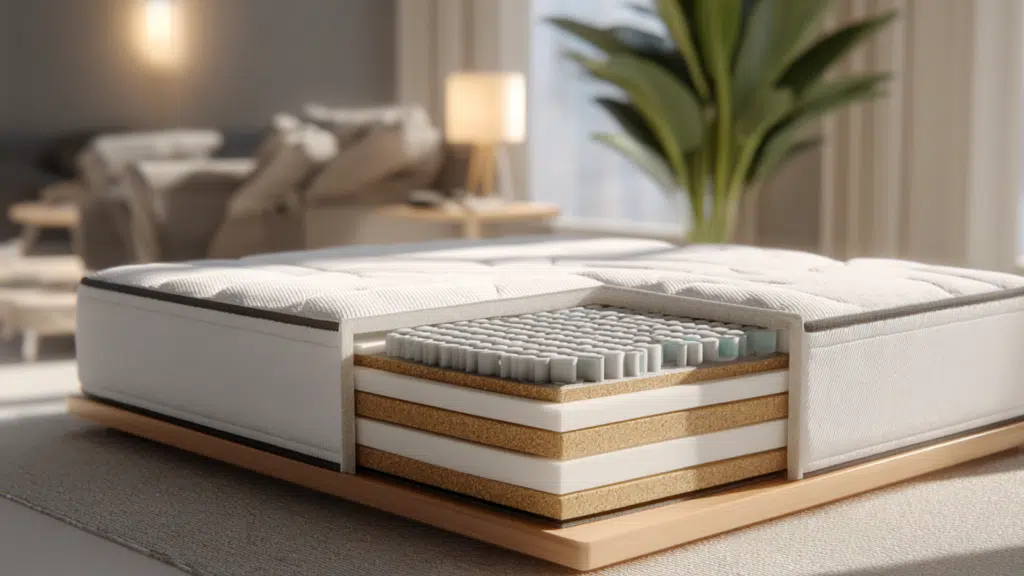
These coil styles change how the mattress feels and how well it supports you. They also play a big role in durability and motion control.
- Pocketed coils (individually wrapped): Each coil moves on its own, so movement stays contained.
This offers smoother, balanced support and works great for couples who want fewer sleep disruptions. - Bonnell coils: These hourglass-shaped coils are linked together, creating a firmer, basic level of support.
They’re a simple and inexpensive choice for budget shoppers. - Continuous coil systems: One long wire forms many connected coils, creating a strong and steady base.
This style is durable and works well for people who prefer firmer support. - Offset coils: These coils have flattened tops that flex more smoothly for better body comfort.
They offer a higher-quality feel and suit sleepers who want strong support with more comfort. - Coil count, coil gauge, and what to look for: More coils can help support, but coil quality matters more than the number. Lower gauge coils feel firmer, while higher gauge coils feel softer.
Look for pocket coils for motion control, good edge support, and a balanced gauge for comfort.
Key Benefits and Drawbacks of an Innerspring Mattress
Innerspring mattresses come with strengths and limitations that affect comfort, support, and long-term use. This table gives you a simple side-by-side view so you can understand both at a glance:
| Benefits | Drawbacks |
|---|---|
| Strong support and responsiveness | Limited pressure relief vs foam |
| Better airflow and cooler sleep | Potential noise over time |
| Wide range of firmness levels | Motion transfer with non-pocket coils |
| Budget-friendly options | Shorter lifespan for low-end models |
This side-by-side view helps you see how an innerspring mattress performs in real-world use. Use it to decide whether the overall feel and support match what you need.
Who Should Choose an Innerspring Mattress
- Back sleepers: Get a stable surface that keeps the spine aligned.
- Stomach sleepers: Helps prevent the hips from sinking and reduces back strain.
- Hot sleepers: Stays cooler for people who warm up easily at night.
- Heavy sleepers: Offers strong support that doesn’t compress too deeply.
- People who prefer an “on top” feel: Gives a firmer, lifted surface with easy movement.
Who Should Avoid an Innerspring Mattress
- Side sleepers needing pressure relief: May feel extra pressure on shoulders and hips.
- People sensitive to movement: Linked coils can spread motion across the bed.
- Those wanting a plush, contouring feel: Doesn’t provide a soft or body-hugging surface.
- Sleepers with joint pain: May need deeper cushioning for better comfort.
- People wanting a silent mattress: Coils can create light noise as the mattress ages.
Best Innerspring Mattress Options
Here are three carefully selected innerspring mattresses that stand out for their support, build quality, and value. Each one suits a different budget and sleep style, so you can pick what works best for you.
1. Emerspring 12″ Innerspring Queen Hybrid Mattress
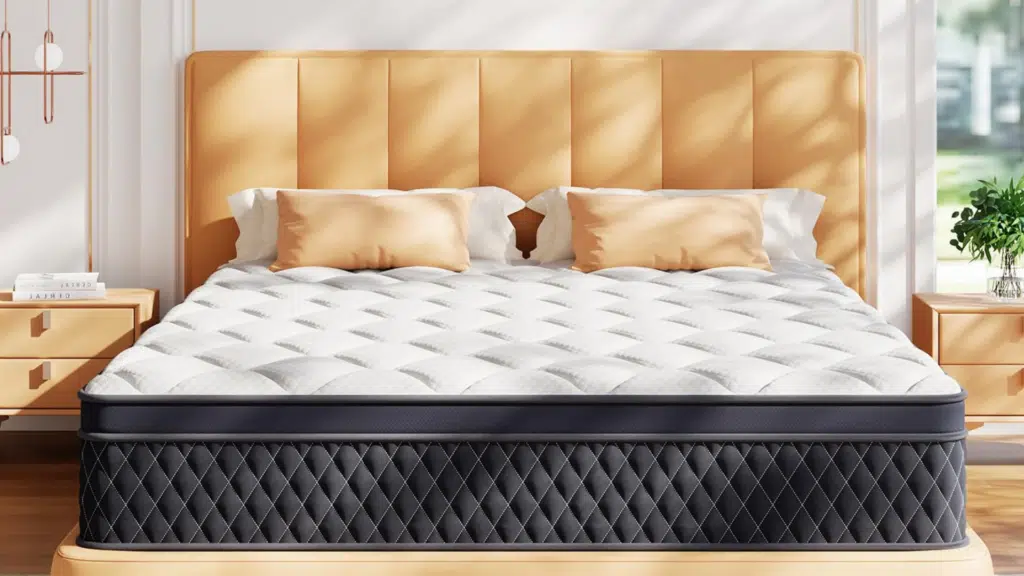
This mattress blends pocketed coils with a hybrid design for steady support and less motion transfer. It works well for couples who want a medium-firm feel and better edge stability.
Its build helps you stay lifted without sinking too much, making it a good fit for people who like a balanced, responsive surface. It’s a solid mid-range pick for most sleep positions.
2. Rimensy 12″ Full Innerspring Hybrid Mattress
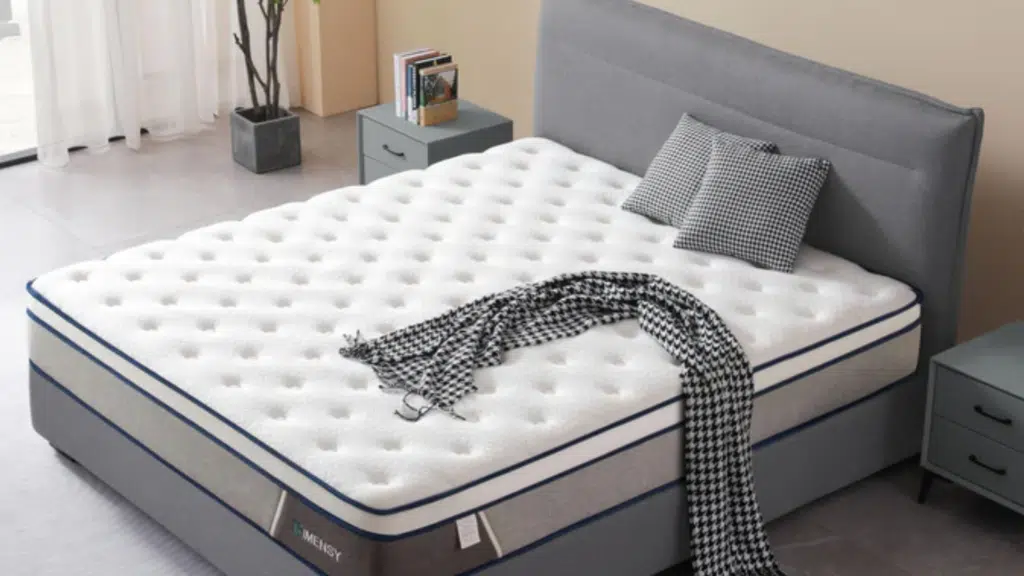
This option uses a full-size hybrid layout that mixes coils and foam for a supportive but affordable feel. It’s a good match if you want value without losing basic comfort.
The mattress stays firm enough for back and stomach sleepers while still offering light cushioning. It’s a practical choice for guest rooms or smaller spaces.
3. Vesgantti 10″ Full Innerspring Hybrid Mattress
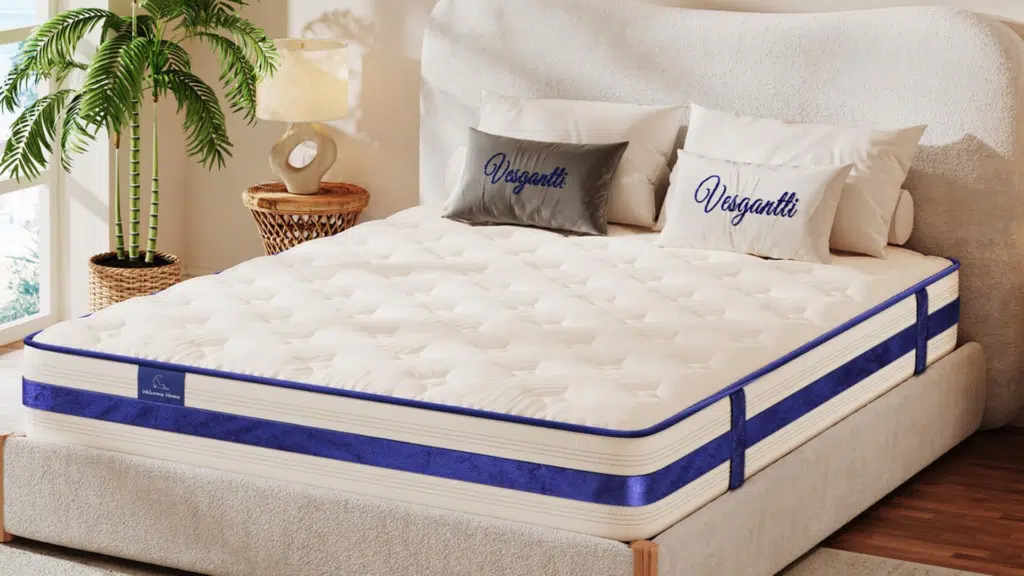
This mattress has a thinner hybrid profile with pocket coils for support and simple foam layers on top. It’s budget-friendly while still giving you decent stability and airflow.
It suits sleepers who prefer a firmer, lifted feel and don’t need extra plushness. A good everyday option if you want something supportive without spending much.
Innerspring vs. Other Mattress Types
This table shows how each mattress type differs in feel, support, and performance. Use it to see which option matches your comfort and sleep style:
| Feature | Innerspring | Memory Foam | Hybrid | Pocket Coil |
|---|---|---|---|---|
| Overall feel | Firm and lifted | Soft and contouring | Balanced and cushioned | Supportive with light contouring |
| Pressure relief | Light | High | Medium–High | Medium |
| Motion isolation | Low–Medium | High | Medium–High | High |
| Heat control | Very good | Can trap heat | Good | Very good |
| Movement ease | Easy to move | Slower response | Moderate | Easy to move |
| Noise | Can be noisy | Silent | Mostly quiet | Quiet |
| Best for | Firm-feel lovers | Side sleepers | Mixed sleepers | Couples and motion-sensitive sleepers |
What to Look For When Buying an Innerspring Mattress
A few key features can help you choose an innerspring mattress that feels comfortable and lasts longer.
These simple points show what matters most when comparing options:
- Minimum coil count to aim for: Look for at least 600 coils in a queen size for steady support.
- Coil gauge for firmness: A Lower gauge means firmer coils, while a higher gauge feels softer.
- Pocket coils for couples: Individually wrapped coils help reduce movement across the bed.
- Edge support quality: Strong edges prevent sagging and make the mattress feel larger.
- Warranty + return policy: Choose brands with clear coverage and an easy return window.
- Price tiers explained: Lower prices give basic builds, while mid to high tiers offer stronger coils and better comfort layers.
Conclusion
An innerspring mattress offers consistent support, good airflow, and an easy, familiar sleep feel that many people still prefer.
Its coil-based design keeps you lifted rather than sinking in, making it great for back and stomach sleepers. While it may not provide deep contouring like foam, it excels at breathability and responsiveness.
Before buying, pay attention to coil quality, edge support, and comfort layers to get lasting value.
If you’re ready to upgrade your sleep setup, explore a few innerspring models in person to find the firmness and comfort that feel just right for you.

With a Master’s in Architecture from the University of California, Berkeley, Mitchell Green has spent over two decades dedicated to the study and practical application of home fixture design. His career started in an architectural firm, providing him a strong foundation in the structural and aesthetic aspects of home interiors. Mitchell brought his comprehensive knowledge to our platform, where he has been an influential voice in our home fixtures and fittings section. Since 2018, he has been guiding our readers through the intricacies of selecting and installing fixtures, combining technical know-how with design flair. In his spare time, Mitchell is a keen photographer, capturing architectural details and design elements, an interest that complements his professional focus.