


Shopping for a front door online offers unmatched convenience,thousands of options at your fingertips, transparent pricing, and customer reviews to guide your decision.
But that convenience comes with a catch: you can’t physically inspect the door, and getting the wrong size or material means dealing with returns, reinstallation, and wasted time. The stakes are high when you’re replacing what’s literally the entrance to your home.
Online door shopping has surged in popularity because it eliminates the pressure of showroom sales tactics while offering better price comparisons and broader selection.
You can browse at 2 a.m. in your pajamas, read real customer experiences, and make informed decisions on your own timeline. However, before you add that beautiful craftsman-style door to your cart, there are critical factors to understand,from precise measurements to material performance in your specific climate. This guide walks you through everything you need to know to make a confident online purchase.
Understanding Door Sizing Fundamentals
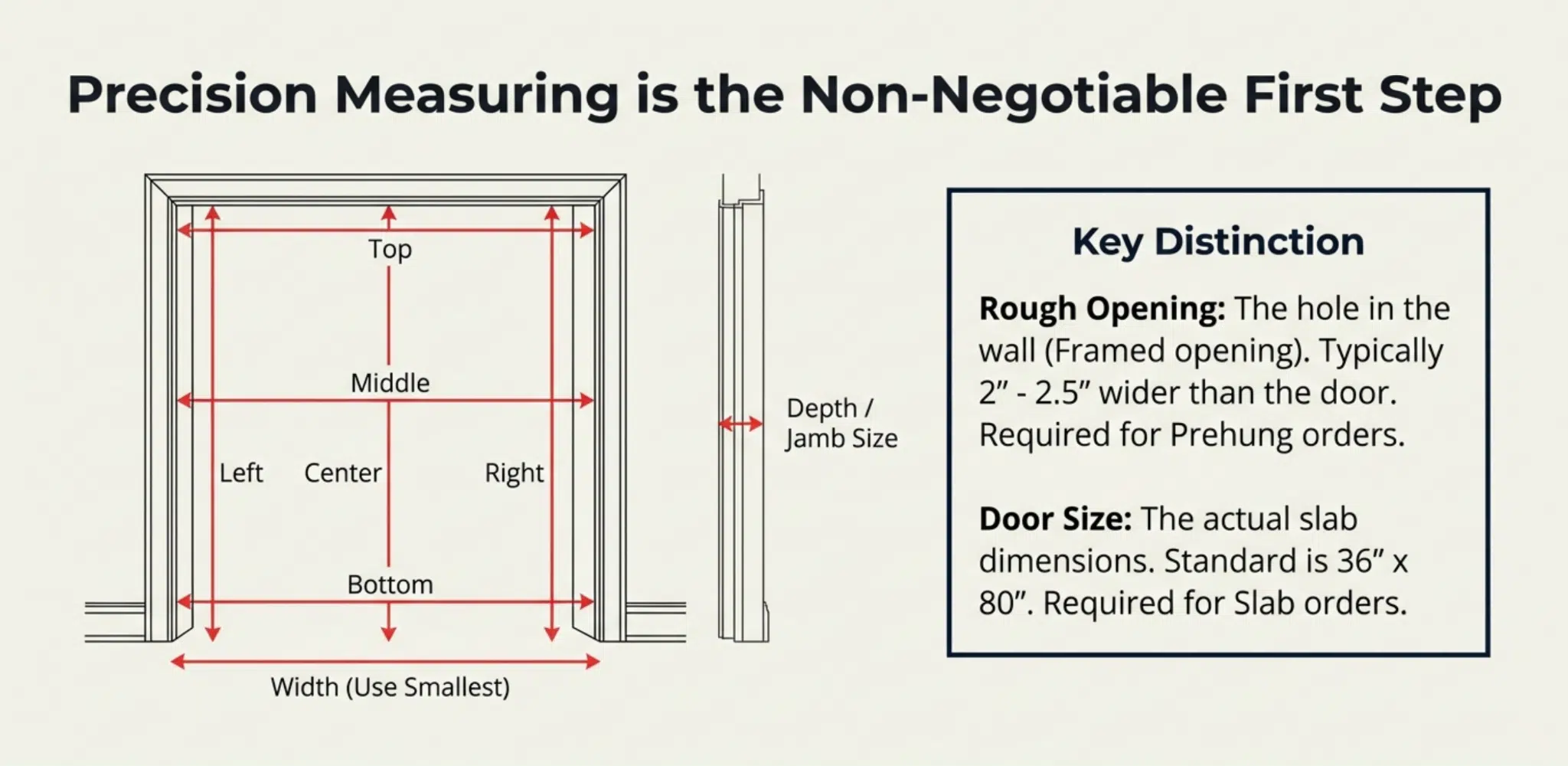
Getting the measurements right is non-negotiable when buying a door online. The most common residential front door size is 36 inches wide by 80 inches tall, but homes built before the 1990s or custom builds may have different dimensions. Never assume your door is standard size without measuring.
To measure your existing door opening, you’ll need the width, height, and depth. For width, measure from the inside of the door frame on the left to the inside on the right at three points: top, middle, and bottom.
Use the smallest measurement. For height, measure from the top of the frame to the threshold at the left side, center, and right side, again using the smallest number. The depth measurement,the thickness of your wall from interior to exterior,determines the door jamb size you’ll need.
Understanding the difference between rough opening and door size prevents costly mistakes. The rough opening is the framed opening in your wall, typically 2 to 2.5 inches larger than the actual door size to allow for the frame, shims, and adjustments during installation. A 36″ x 80″ door usually requires a rough opening of about 38″ x 82″. If you’re ordering a prehung door (door already mounted in a frame), you need to know your rough opening. If you’re ordering just a door slab, you need the exact door dimensions.
Prehung doors come already hung on hinges within a frame, complete with weatherstripping and often a threshold. They’re ideal for new construction or full door replacement and simplify installation considerably.
Door slabs are just the door itself,no frame, no hardware holes pre-drilled. They work when your existing frame is in good condition and you’re simply updating the door’s appearance. Slabs require more carpentry skill to install properly.
Single doors are straightforward, but double doors require careful planning.
You’ll need adequate wall space on both sides of the opening, and the structural header must support the wider span. Double doors also require consideration of which door is the “active” panel (the one you use daily) and which is the “inactive” panel (typically locked in place).
When to call a professional for measuring: If your door frame appears uneven, damaged, or out of square; if you’re converting from a single to double door or vice versa; or if you’ve never measured a door opening before and you’re investing in an expensive door. A $100 professional measurement can save you from a $2,000 mistake.
Material Options and Their Trade-offs
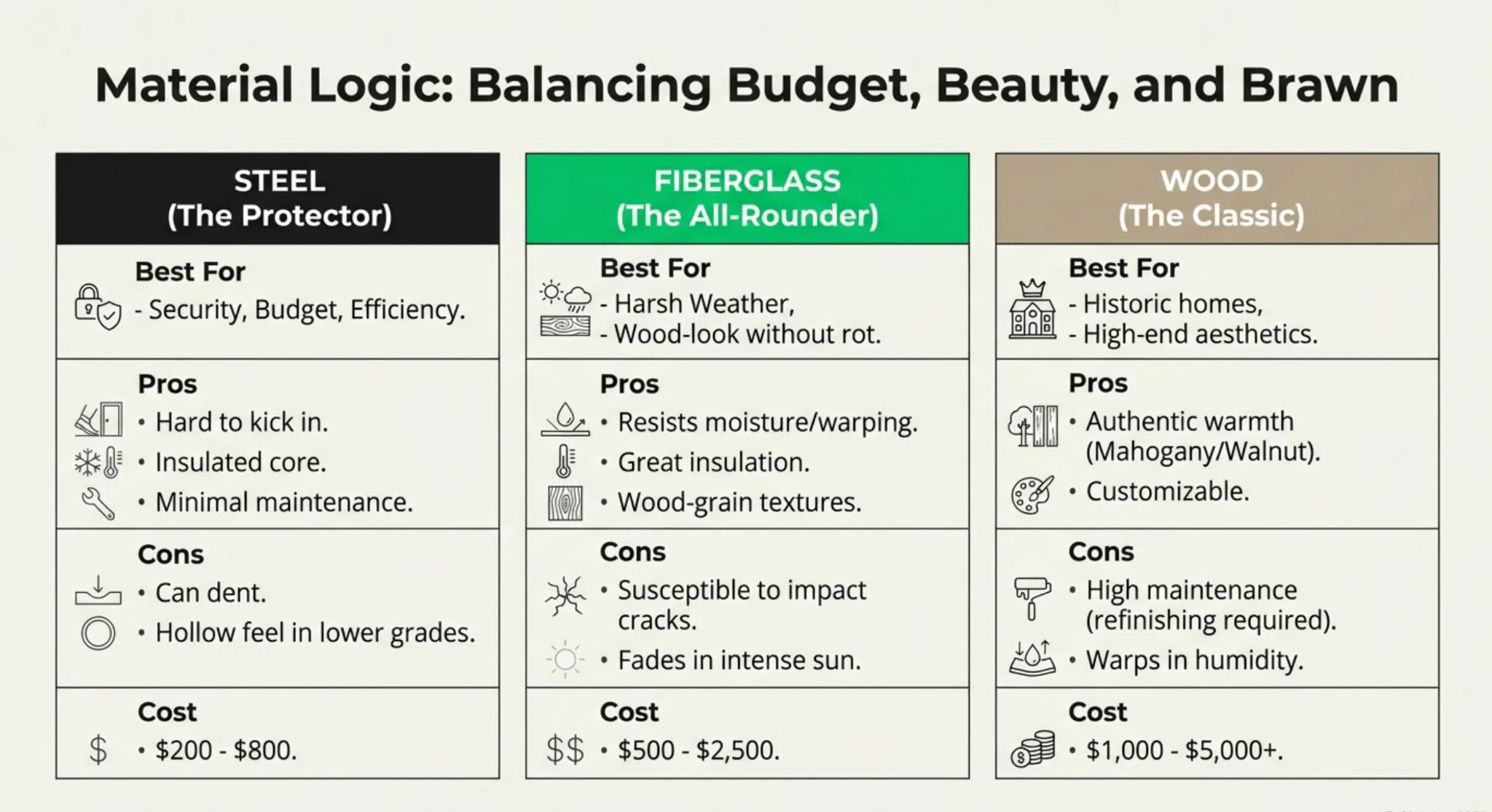
The material you choose affects everything from curb appeal to your heating bill, and each option comes with distinct advantages and compromises.
Steel doors dominate the market for good reasons. They offer exceptional security,a solid steel door is nearly impossible to kick in,and superior energy efficiency thanks to insulated cores with polyurethane or polystyrene foam. Modern steel doors resist warping, cracking, and weather damage better than traditional materials.
Maintenance is minimal: an occasional washing and touch-up paint if the finish gets scratched. The downsides? They can dent if struck hard, and lower-quality steel doors may show imperfections or a hollow appearance. In coastal environments, even galvanized steel can eventually corrode. Expect to pay $200-$800 for a quality steel door.
Fiberglass doors have gained popularity as a wood alternative that actually performs better in harsh weather. They resist moisture absorption, won’t rot or rust, and maintain their shape through temperature extremuations. High-end fiberglass doors feature remarkably convincing wood-grain textures that can be stained or painted.
They’re lighter than steel, making installation easier, and they offer excellent insulation values. The trade-off is cost,fiberglass typically runs $500-$2,500,and they can fade over time with intense sun exposure. They’re also more susceptible to impact damage than steel; a hard hit can crack the skin.
Wood doors remain the gold standard for traditional architecture and high-end homes. Nothing matches the authentic beauty and warmth of solid wood, especially species like mahogany, walnut, or old-growth fir. Wood is easily customizable, and a well-maintained wood door can last generations.
However, wood demands regular maintenance: refinishing every few years, checking for moisture damage, and addressing minor warping or splitting. Wood doors perform poorly in extreme climates with high humidity or dramatic temperature swings. They’re also the most expensive option, typically $1,000-$5,000 for solid wood. In wet climates like the Pacific Northwest or humid areas like the Southeast, wood doors require vigilant upkeep.
Composite materials,typically a blend of wood fibers and synthetic materials,offer a middle ground. They provide wood’s workability and appearance with better moisture resistance and dimensional stability. Composite doors are less expensive than solid wood ($400-$1,500) and require less maintenance. The downside is they can’t be refinished as many times as solid wood, and they may not satisfy purists seeking authentic materials.
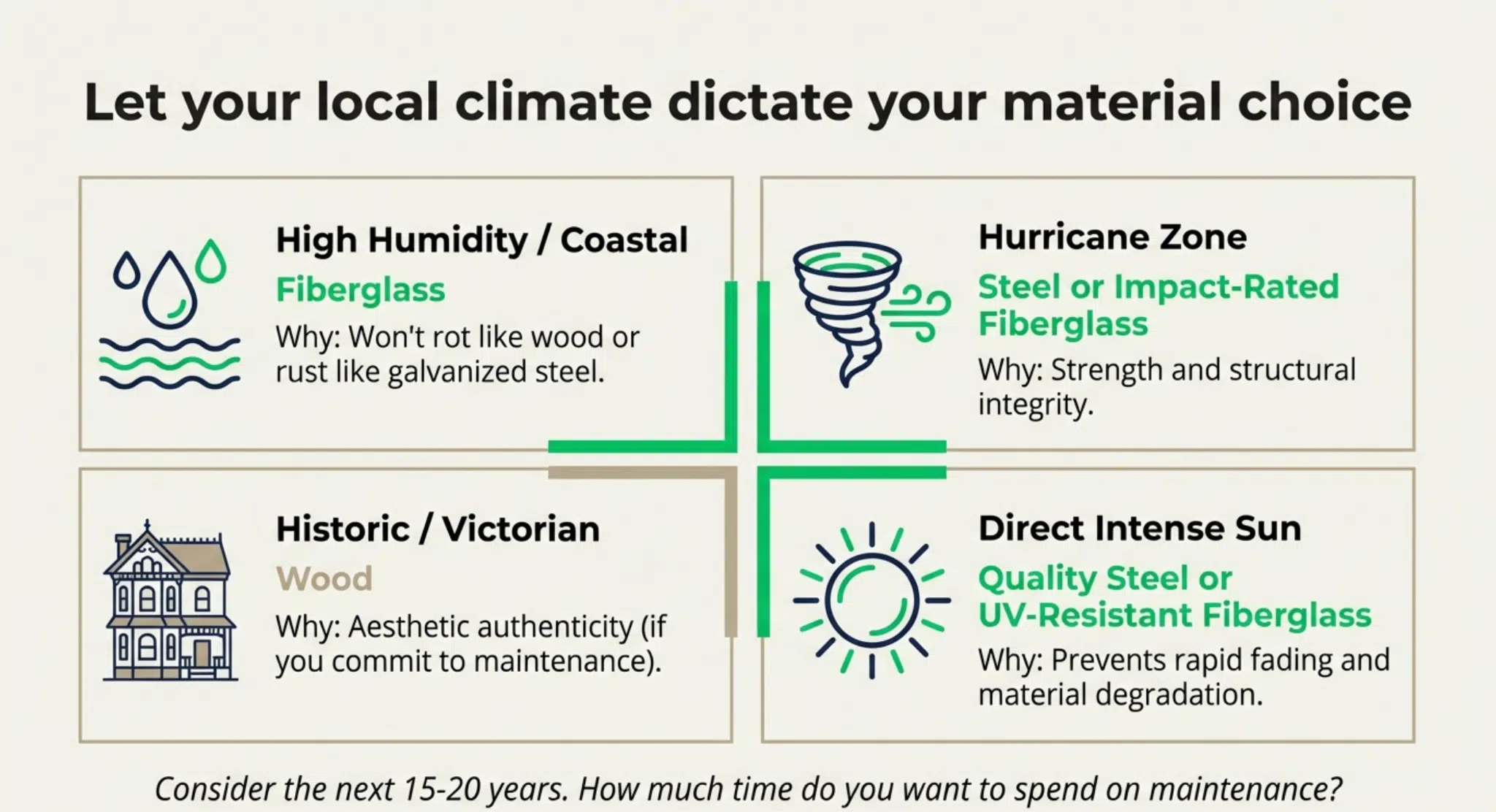
Matching material to climate and preferences is crucial. Live in a hurricane zone? Steel or fiberglass. Preserving a historic Victorian? Wood might be worth the maintenance.
Tight budget but want good performance? Quality steel wins. Hot, sunny climate with UV exposure? Choose fiberglass with UV-resistant finish or steel with durable paint. Ultimately, consider how much time you want to spend on maintenance and what your local weather will demand from your door over the next 15-20 years.
Key Features to Consider
Beyond size and material, several features dramatically affect your door’s performance and your satisfaction with the purchase.
Glass panels and sidelights transform your entryway’s appearance and functionality. Decorative glass adds character while allowing natural light into your foyer, but it reduces privacy and security.
Full-view glass doors are stunning but impractical for most front entries unless you have an enclosed porch or minimal privacy concerns.
Half-lite designs (glass in the upper portion) balance light and privacy well. Consider glass options: clear, frosted, textured, or decorative patterns. For security, tempered or laminated glass is essential,it’s much harder to break through. Sidelights (narrow glass panels flanking the door) brighten entryways beautifully but add cost and another potential thermal weak point.
Energy efficiency ratings matter more than most homeowners realize. The U-factor measures how well a door prevents heat from escaping,lower numbers are better, with quality doors ranging from 0.15 to 0.30. The R-value indicates insulation effectiveness,higher is better.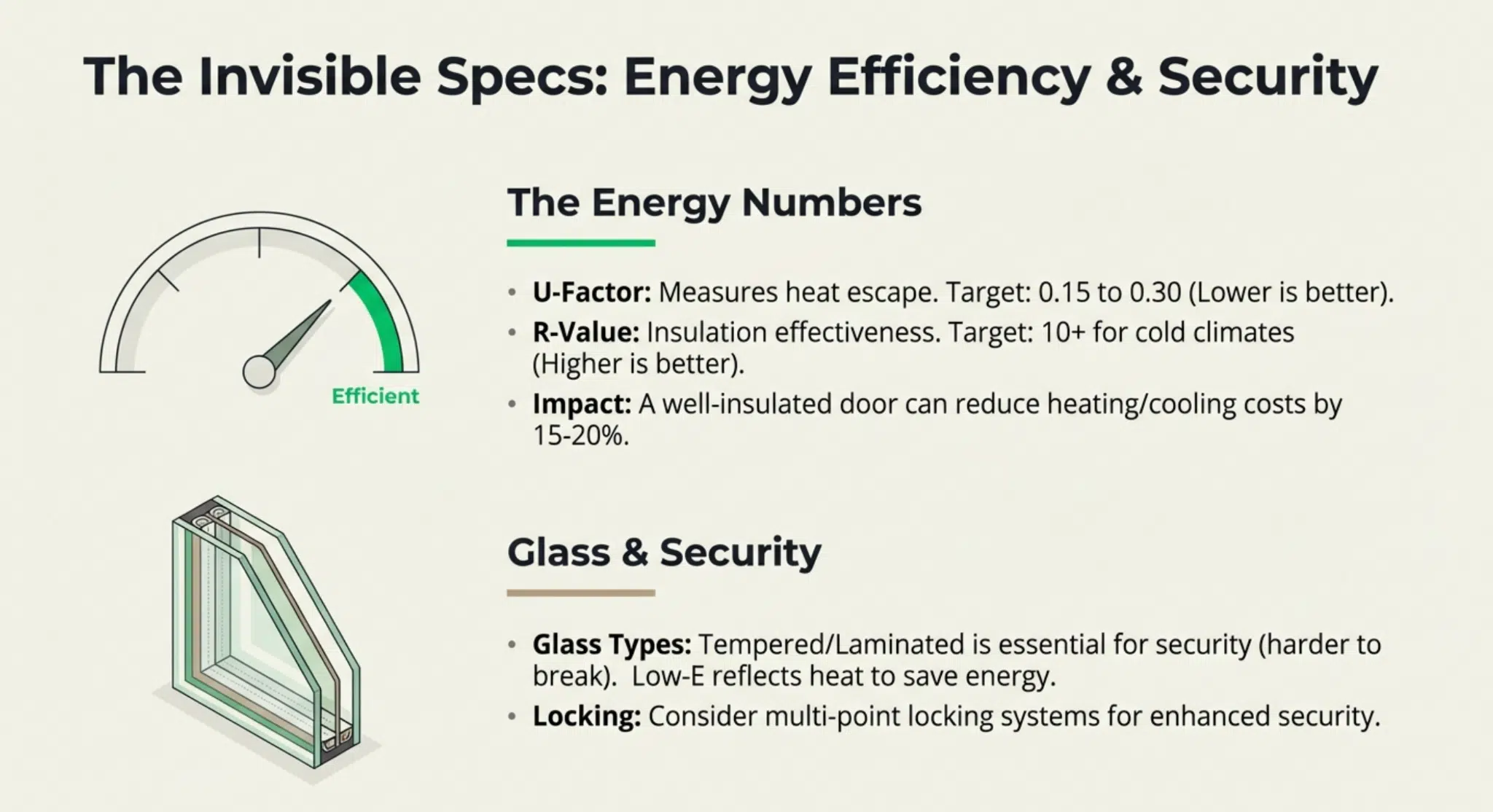
In cold climates, prioritize doors with R-values of 10 or higher. Energy Star certification indicates the door meets efficiency standards for your climate zone. A well-insulated door can reduce heating and cooling costs by 15-20% compared to an old, drafty door. That’s real money saved annually.
Hardware compatibility deserves attention before you buy. Verify that the door is pre-drilled for your preferred handleset style, or confirm it’s a solid door that can be drilled. Different manufacturers use different backset measurements (the distance from the door edge to the center of the handle bore),2-3/8″ and 2-3/4″ are most common.
If you’re replacing an existing door, match the backset to avoid modifying your frame. Consider whether you want traditional keyed locks, smart locks, or multi-point locking systems for enhanced security.
Weather stripping and seals are unglamorous but critical features. Quality doors include compression weather stripping around the entire perimeter and a door sweep or threshold seal at the bottom.
These components prevent air leakage, moisture intrusion, and pest entry.
Magnetic weather stripping provides superior sealing compared to simple foam strips. Adjustable thresholds let you fine-tune the seal over time as materials settle. Check customer reviews specifically for comments about drafts or weather performance,poor weather sealing is a common complaint with budget doors.
Finish options simplify or complicate your installation depending on your choice.
Pre-finished doors arrive painted or stained and sealed, ready to install. They save enormous time and often feature factory-applied finishes that are more durable than field-applied options. The downside is limited color selection and difficulty touching up damage during shipping or installation.
Unfinished doors offer complete customization,stain them any color, paint them to match your trim exactly, or apply specialty finishes. However, finishing a door properly requires skill, proper conditions, and time. You’ll need to finish both sides and all edges before installation to prevent moisture absorption and warping.
Installation Considerations
Understanding what happens after you click “buy” helps set realistic expectations and avoid unpleasant surprises.
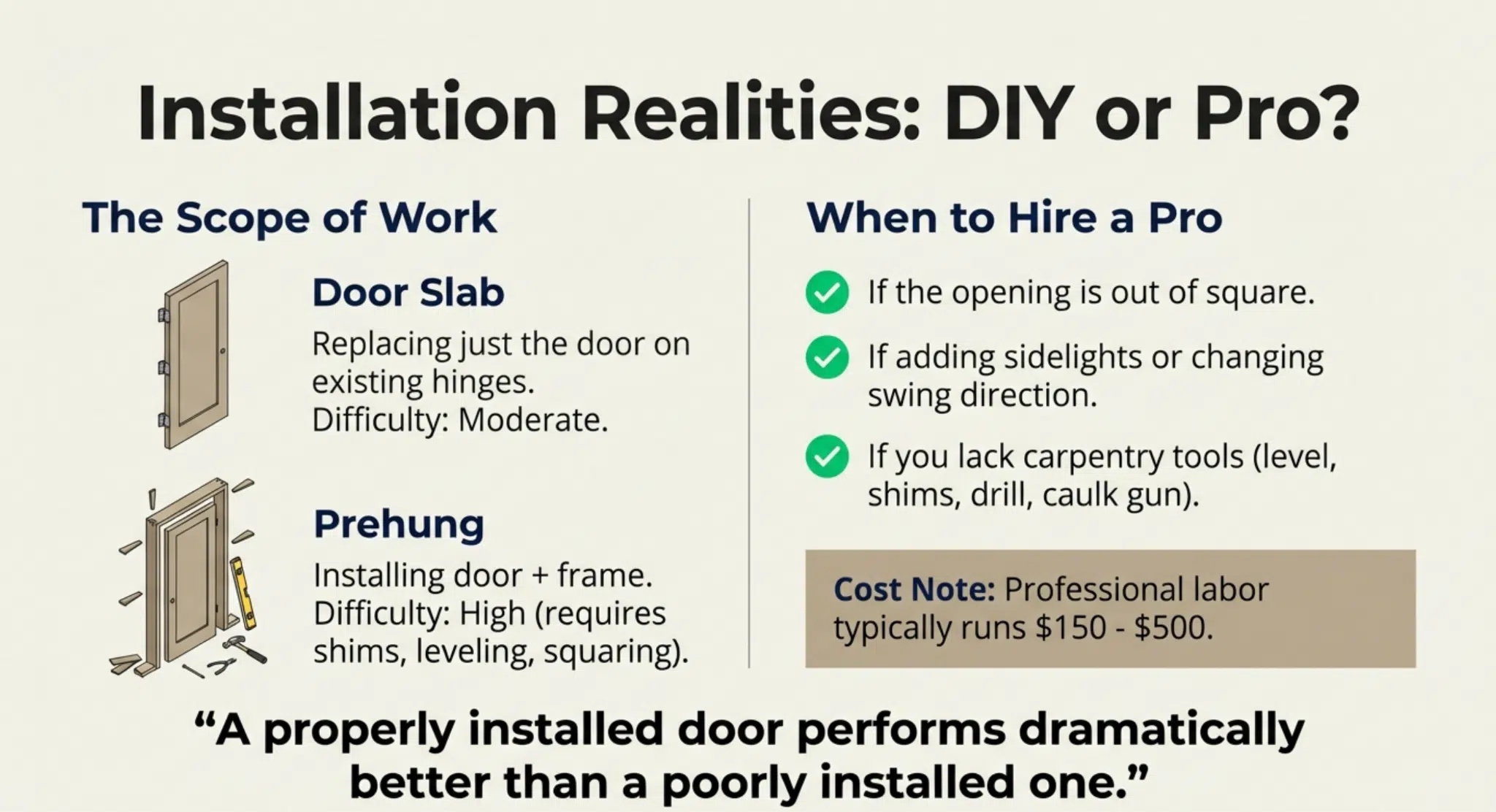
DIY vs. professional installation is a decision that depends on your skill level and the complexity of the job. Installing a prehung door in a square, level rough opening is a manageable DIY project for someone with moderate carpentry skills, basic tools, and patience. You’ll need a level, shims, drill, screwdriver, hammer, and caulk gun at minimum.
Replacing a door slab on existing hinges is even simpler. However, if your opening is out of square, if you’re switching door swing direction, installing a door with sidelights, or if you’ve never hung a door before, professional installation is wise. Labor typically costs $150-$500 depending on complexity and location, but a properly installed door performs dramatically better than a poorly installed one.
What’s typically included with online orders varies by seller. Prehung doors usually include the door slab, frame (jamb), hinges, weather stripping, and sometimes a threshold or door sweep.
Some include exterior trim (brickmold), while others don’t. Door slabs are just the door,you’ll need to purchase or reuse all hardware separately. Always verify exactly what’s included before ordering. Check whether lock bores and hinge mortises are pre-drilled or if you’ll need to drill them yourself.
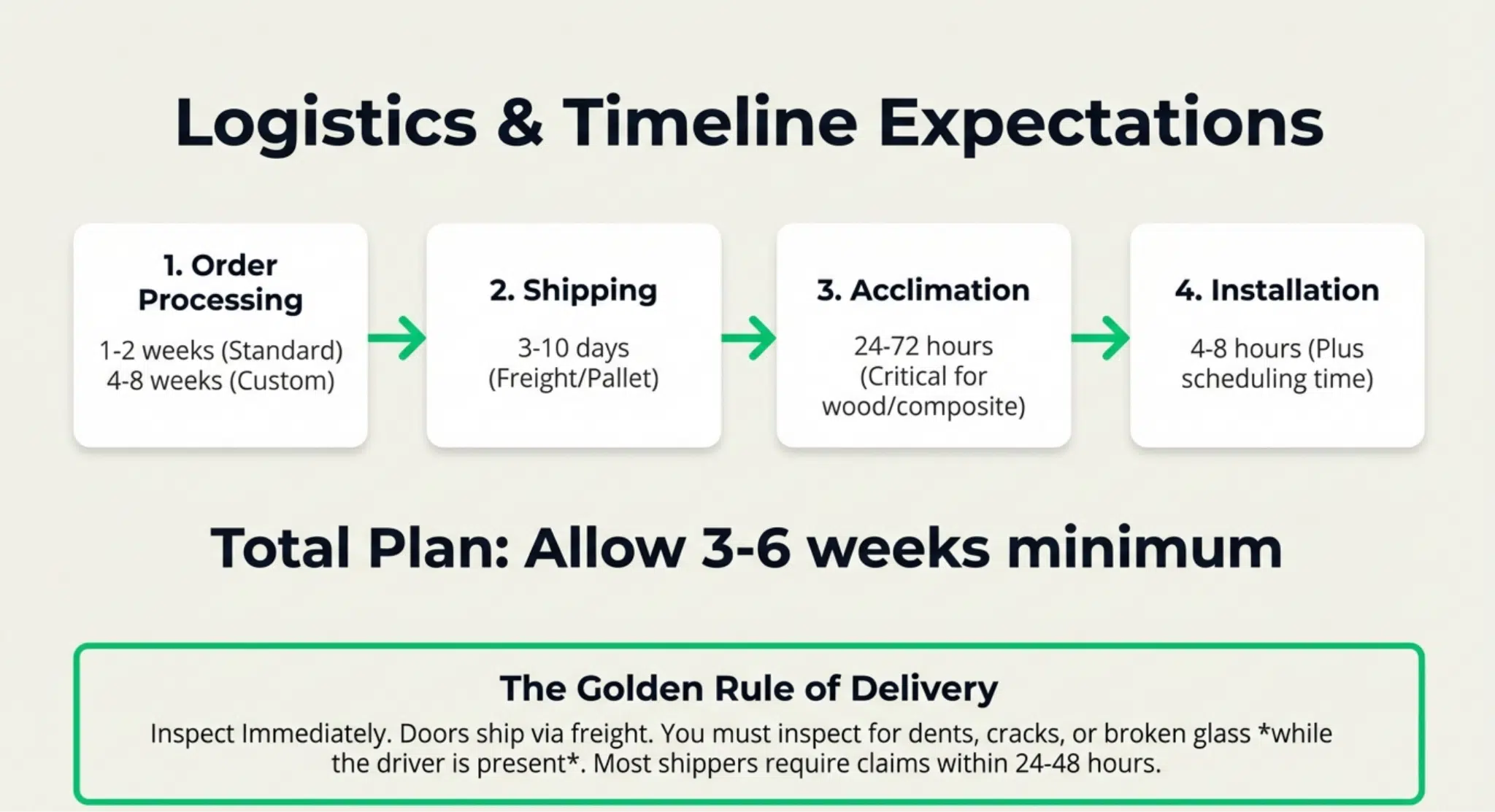
Shipping and delivery for doors is more complex than most online purchases. Doors are large, heavy, and fragile. They typically ship via freight carrier on a pallet, requiring someone to be home for delivery.
Inspect the door immediately upon arrival while the driver is present. Check for shipping damage: dents, cracks, broken glass, or damaged frames. Take photos and note damage on the delivery receipt if found. Most shippers require damage claims within 24-48 hours.
The door will likely need to acclimate to your home’s environment for 24-72 hours before installation, especially wood or wood composite doors, to prevent warping.
Local building codes may require permits for door replacement, particularly if you’re changing the door size or switching to a door with more glass (which affects egress and fire ratings).
Requirements vary by jurisdiction. Some municipalities require permits only for new door openings, while others require them for any exterior door replacement. Fire-rated doors are mandatory in specific locations, such as doors between the house and an attached garage. If you live in a historic district or have an HOA, you may face additional restrictions on door style, color, or materials. Check local regulations before ordering to avoid costly surprises.
Timeline expectations from order to installation span weeks, not days. Custom or semi-custom doors may take 4-8 weeks to manufacture. Standard doors ship faster, typically 1-2 weeks.
Add shipping time (3-10 days depending on location), acclimation time (1-3 days), and installation time (4-8 hours for DIY, or scheduling a contractor which might add another week). Plan for 3-6 weeks minimum from order to completion. If you’re ordering during peak seasons (spring and fall for home improvement projects), add extra time to every step.
Smart Shopping Checklist
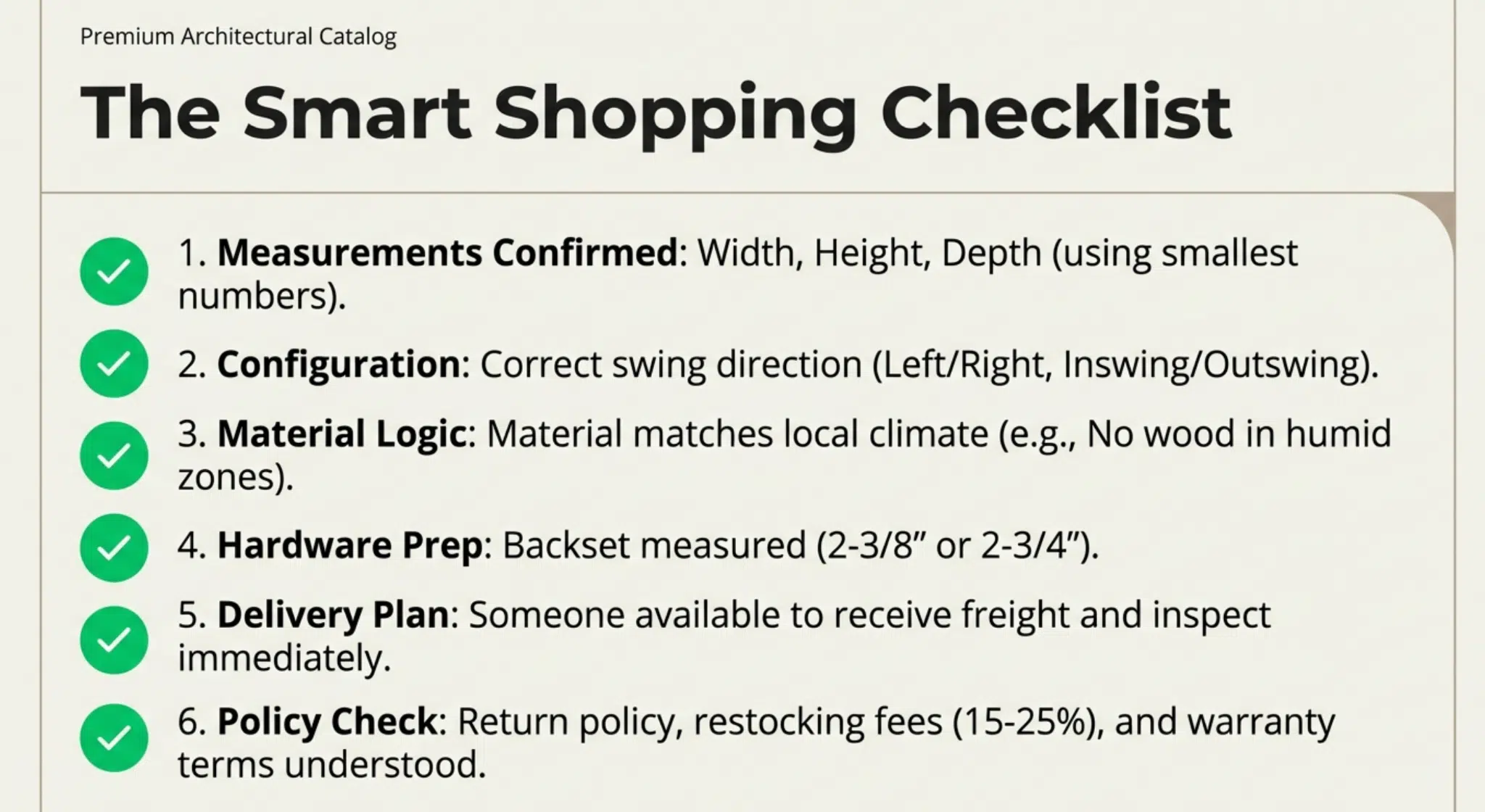
Before finalizing your online door purchase, verify you’ve addressed these critical points:
Measurements confirmed: You’ve measured width, height, and depth at multiple points and used the smallest measurements. You know whether you need rough opening dimensions (for prehung) or exact door dimensions (for slab replacement). You’ve verified door swing direction (left-hand inswing, right-hand outswing, etc.).
Material selected based on climate and budget: You’ve chosen steel, fiberglass, wood, or composite based on your local weather patterns, maintenance willingness, and budget constraints. You’ve considered longevity and lifecycle costs, not just upfront price.
Energy efficiency requirements noted: You’ve identified the appropriate U-factor and R-value for your climate zone. You’ve verified Energy Star certification if you’re seeking tax credits or rebates for energy-efficient home improvements.
Hardware style and finish chosen: You’ve confirmed the door accommodates your preferred handleset, lock type, and hinge finish. You’ve verified backset measurements match your existing setup or that you’re prepared to modify the frame.
Installation plan determined: You’ve honestly assessed whether this is a DIY project or if you need professional help. If hiring a contractor, you’ve gotten quotes and scheduled the work. You’ve verified you have all necessary tools and materials.
Return policy understood: You’ve read the fine print on returns, restocking fees, and damage claims. You know the deadline for refusing damaged shipments and the process for returning an incorrect order. Many online door retailers charge 15-25% restocking fees, and some custom orders are non-returnable.
Warranty coverage reviewed: You’ve confirmed what’s covered (manufacturing defects, finish, hardware) and what isn’t (installation issues, normal wear, damage from weather or improper maintenance). You understand the claim process and warranty duration, which typically ranges from 1-10 years depending on the component and manufacturer.
When you’re browsing front doors for sale, this checklist ensures you’re making an informed decision rather than an impulsive one. The few extra minutes spent verifying these details prevent days or weeks of frustration later.
Summary
Online door shopping offers remarkable convenience and selection when you approach it with the right preparation.
The ability to compare dozens of options, read authentic customer reviews, and find competitive pricing makes online retailers attractive alternatives to traditional suppliers. However, that convenience demands homework on your part.
The measuring and material selection process is where most problems originate. Invest time in getting accurate measurements,measure twice, order once is more than a cliché when you’re dealing with a product this size.
Choose your material based on what your climate demands and what maintenance level you’ll realistically commit to over the next two decades.
With careful preparation, browsing front doors for sale becomes an exciting part of your home improvement project rather than a source of anxiety. You’ll click “purchase” with confidence, knowing exactly what will arrive and how it will perform in your specific application.
The right preparation leads to a purchase you’ll admire every time you come home,and one that will enhance your home’s security, efficiency, and curb appeal for years to come. Take your time, use this guide as your roadmap, and enjoy the process of finding the perfect entry door for your home.

Tommy Hardy, an alumnus of the Georgia Institute of Technology with a degree in Mechanical Engineering, has been a go-to figure in residential upkeep and innovation for over 18 years. His career commenced in a leading home appliance manufacturing company, where he mastered the intricacies of household systems. Joining our platform in 2020, Tommy quickly became a reader favorite for his practical and easy-to-follow guides. He took the helm of our DIY section in 2019, consistently delivering content that empowers homeowners. Beyond his professional pursuits, Tommy is a passionate gardener and enjoys woodworking, skills enhancing his hands-on approach to home care.


