
For decades, design was treated as an aesthetic afterthought—something added once the “real work” was done. A fresh coat of paint. New furniture. A nicer logo. But that mindset no longer holds.
Today, thoughtful design sits at the intersection of productivity, well-being, culture, and long-term value. The spaces we live in and work from actively shape how we think, how we perform, and how we relate to others. As hybrid work becomes the norm, mental health takes center stage, and competition intensifies across industries, design has shifted from an optional enhancement to a strategic investment.
This isn’t about chasing trends or visual polish. It’s about intentionally shaping environments that support human behavior, decision-making, and sustainable performance.
Design as a Behavioral Tool, Not Decoration
At its core, design influences behavior. The layout of a room affects how people move, interact, and focus. Light impacts circadian rhythms and energy levels. Acoustics determine whether collaboration feels energizing or exhausting.
Environmental psychology—a field studied and applied by architects, workplace strategists, and urban planners for decades—has consistently shown that our surroundings directly affect cognition, stress levels, and efficiency. Hospitals, schools, and research institutions have long applied these principles. Now, businesses and homeowners are catching up.
Thoughtful design asks better questions:
- Does this space reduce friction or create it?
- Does it support the tasks people actually perform here?
- Does it adapt as needs evolve?
When design answers these questions well, it becomes a silent partner in daily life—working in the background to make things easier, calmer, and more effective.
The Workplace Has Changed—Design Had to Follow
The traditional office was designed for visibility and supervision. Rows of desks. Fixed schedules. Minimal personalization. That model is increasingly incompatible with modern work.
Supporting Focus, Collaboration, and Flexibility
Knowledge work requires deep focus and meaningful collaboration—often in the same day. Thoughtful workplace design now balances:
- Quiet zones for concentrated work
- Informal spaces for spontaneous discussion
- Technology-integrated rooms for hybrid meetings
- Flexible layouts that can shift as teams grow or reorganize
Organizations that invest in these environments aren’t doing so for aesthetics alone. They’re responding to clear signals from employees and industry research showing that autonomy, comfort, and choice directly influence engagement and retention.
Design as a Signal of Values
Workspaces also communicate priorities. Natural light, ergonomic furniture, and inclusive layouts send a message: people matter here. This is why many companies now treat design as part of their employer brand, not just a facilities decision.
In competitive talent markets, the physical environment can reinforce—or undermine—everything a company claims about its culture.
Home Environments Are Now Performance Spaces
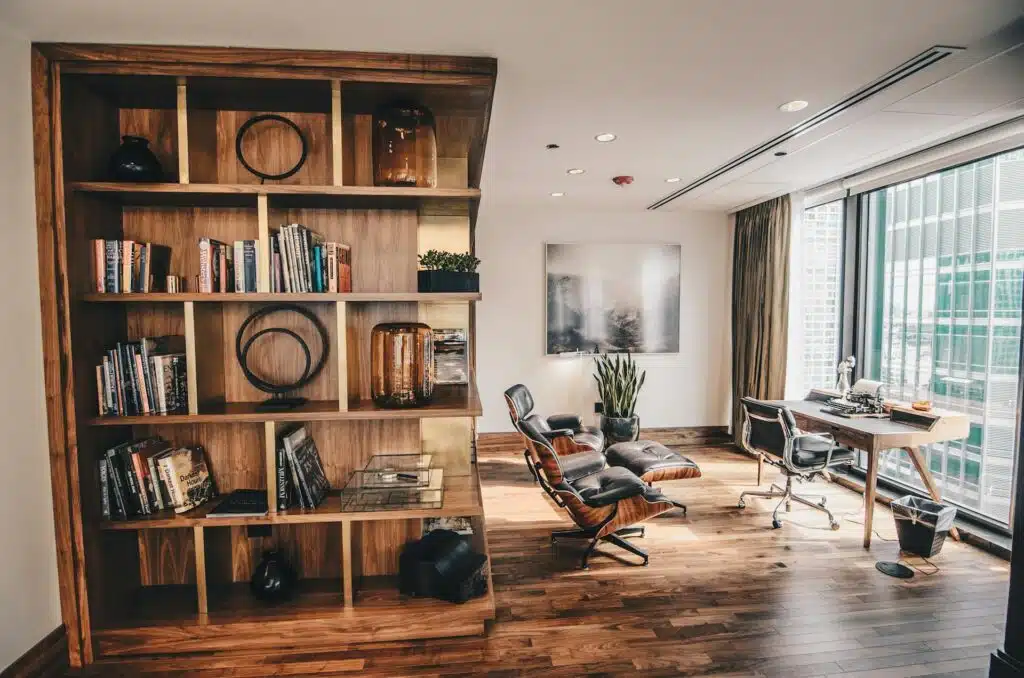
The line between “home” and “work” has blurred. Living spaces are no longer just for rest; they are offices, classrooms, gyms, and creative studios.
Designing for Multiple Roles
A thoughtfully designed home accounts for these overlapping functions without letting any one dominate. This might mean:
- Zoning spaces visually rather than structurally
- Using lighting to shift a room’s purpose throughout the day
- Selecting materials that balance comfort with durability
When done well, design reduces cognitive load. You don’t have to constantly adapt yourself to the space—the space adapts to you.
Wellbeing Is a Design Outcome
Research across architecture and public health increasingly aligns on one point: environments influence wellbeing. Access to daylight, connection to nature, and sensory balance are not luxuries. They are foundational elements of healthy living.
This is why homeowners and developers are turning to professional interior design services not just for style guidance, but for expertise in creating spaces that support long-term comfort, functionality, and mental clarity.
Design as a Long-Term Financial Decision
It’s easy to view design as a cost. It’s harder—but more accurate—to see it as an investment.
Reducing Hidden Costs
Poorly designed spaces often create expenses that don’t show up on initial budgets:
- Employee burnout and turnover
- Inefficient workflows
- Frequent renovations due to inflexible layouts
- Underused areas that still require maintenance
Thoughtful design anticipates future needs, reducing the likelihood of costly retrofits. Modular systems, adaptable layouts, and durable materials extend the lifespan of a space and improve return on investment over time.
Value Beyond Square Footage
In residential real estate, well-designed homes consistently outperform comparable properties in perceived value. In commercial settings, design quality influences everything from client trust to time spent on-site.
Design doesn’t just fill space—it increases the value of how that space is experienced.
Sustainability and Responsibility Are Design Imperatives
Modern design is inseparable from sustainability. Material choices, energy efficiency, and lifecycle planning are now baseline considerations, not optional upgrades.
Thoughtful design:
- Minimizes waste through durable, timeless choices
- Prioritizes energy-efficient lighting and climate systems
- Supports healthier indoor air quality
- Encourages reuse and adaptability rather than demolition
As regulatory standards tighten and environmental awareness grows, design decisions made today will have long-term ethical and financial consequences.
Why Expertise Matters More Than Ever
With countless inspiration sources available online, it’s tempting to treat design as a DIY exercise. But inspiration and execution are not the same.
Professional designers synthesize:
- Human behavior insights
- Technical constraints
- Budget realities
- Long-term functionality
They don’t just make spaces look good—they make them work. In complex environments where multiple goals must coexist, that expertise becomes a strategic asset.
Conclusion
The environments we inhabit quietly shape our days. They influence how we focus, how we connect, and how we recover from stress. As work evolves and expectations rise, ignoring design is no longer neutral—it’s a missed opportunity.
Thoughtful design is not about perfection or prestige. It’s about aligning space with purpose. When done well, it supports better work, healthier living, and more resilient organizations.
In that sense, design isn’t a luxury at all. It’s an investment in how we choose to live and work—now and into the future.

With a Master in Architectural Studies from University of Pennysylvania, Marwa Haydar has pioneered living spaces since 2005. Her expertise, initially honed in a prestigious architectural firm, is evident in her approach to creating environments. Marwa became part of our team in 2019 and has since been a driving force in our home improvement section, known for her practical yet stylish solutions. She’s been spearheading our design workshops since then, infusing her passion for teaching into her work. In her leisure time, Marwa enjoys exploring historic architecture and is an enthusiastic pottery hobbyist, further enriching her understanding of form and texture.