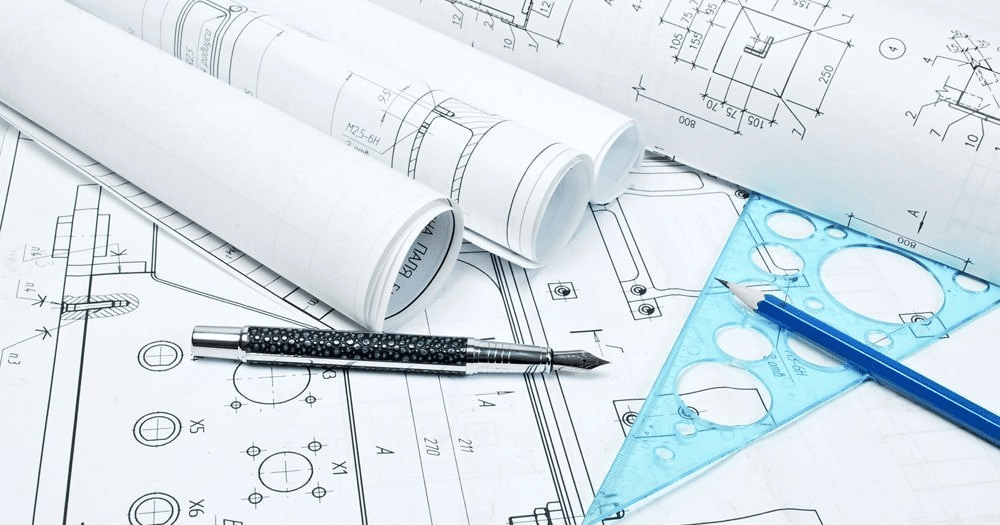

By bridging the gap between cad drafting and construction estimation services, project managers can identify cost overruns before a single cubic yard of concrete is poured.
This technical synergy allows estimators to move beyond guesswork and into the ultimate mathematical certainty.
The modern AEC (Architecture, Engineering, and Construction) landscape is increasingly complex.
Recent industry data from Digital Construction Week suggests that approximately 90% of global infrastructure projects result in cost overruns or delays.Much of this stems from a “siloed” approach where design and budget are treated as separate entities.
Let’s check out how estimating and drafting help refrain all of that!
How Professional Construction Estimators Prevent Budget Slippage
The primary objective of any construction cost estimator is to provide a roadmap that accounts for every variable, from market volatility to labor productivity rates. According to the Project Management Institute, nearly 28% of projects fail because of inaccurate cost assumptions during the initial phases.
To combat this, cost estimators utilize a Work Breakdown Structure (WBS). This hierarchical decomposition of the total scope of work ensures that every nail, beam, and man-hour is accounted for. It prevents the omission error, which is one of the most common causes of litigation in construction.
When you hire professional construction estimation services, you aren’t just getting a price tag. On the contrary, you are getting a risk assessment. These experts analyze historical data and current market indices to ensure that your “Level 5” definitive estimate (the most accurate tier) stays within a ±5% variance of the final spend.
Without this level of granular detail, a project is essentially flying blind. Estimators often utilize the P60 and P90 confidence intervals.
| NOTE! |
|---|
| A P90 estimate means there is a 90% probability that the project will be completed at or below the predicted cost, providing a “safe” ceiling for institutional investors. |
Comparative Accuracy of Estimate Levels
| Estimate Stage | Technical Term | Accuracy Variance | Primary Data Source |
|---|---|---|---|
| Feasibility | Order of Magnitude | ±20% to 30% | Rough square footage |
| Design Development | Budget Authorization | ±10% to 15% | Preliminary cad drafting services |
| Pre-Tendering | Definitive Estimate | ±5% | Complete Issued-for-Construction (IFC) sets |
The Technical Mechanics of Quantity Takeoffs
The transition from 2D blueprints to 3D CAD models has revolutionized how estimation services operate. In a traditional 2D environment, an estimator might spend weeks manually scaling drawings. This manual process has an inherent error rate of 3−5%.
With advanced cad drafting services, the “takeoff” is largely automated. Software like Bluebeam or Planswift can extract data directly from the CAD metadata. This allows contractors to spend less time counting and more time analyzing market risks and labor efficiencies.
Furthermore, these digital drawings allow for “layered” estimation. An estimator can isolate the electrical layer, the plumbing layer, and the structural layer. This granularity is essential for large-scale commercial projects where different subcontractors handle each division.
Why Every Modern Project Requires Integrated Construction Estimation Services
In today’s market, material prices are no longer static. The “all-in” rate for a project must account for escalation clauses and supply chain disruptions. Professional construction estimation services use parametric modeling to adjust for these fluctuations in real-time.
By linking the estimate to the live data provided by cad drafting, any change in the design is immediately reflected in the projected budget. This is often referred to as 5D BIM, where the fourth dimension is time and the fifth is cost.
| Budget Variable | Impact on Total Cost | Mitigation Strategy |
|---|---|---|
| Design Discrepancies | 5% – 12% | Rigorous cad drafting services audits |
| Labor Inefficiency | 15% – 25% | Detailed man-hour analysis by construction estimators |
| Material Escalation | 8% – 15% | Real-time construction estimation services updates |
High-Quality CAD Drafting Services Form the Foundation of Every Accurate Bid
You cannot estimate what you cannot see. This is where cad drafting services become the backbone of the pre-construction phase. Modern drafting isn’t just about drawing lines.
Through 3D modeling and Building Information Modeling (BIM), drafters provide the precise geometric data. This data includes exact volumes, surface areas, and component counts that manual calculations simply cannot match.
When cad drafting produces high-fidelity schematics, it allows for “Clash Detection.” By identifying where an HVAC duct might intersect with a structural steel beam in the digital model, firms save an average of 10% in “rework” costs.
The Digital Workflow Between Drafters and Construction Estimators
The workflow starts with a concept. However, it is refined through a rigorous feedback loop. Once the team completes the detailed blueprints, construction estimators perform a “Quantification.”
This process involves extracting every nut, bolt, and panel from the drawings. In a technical environment, this is known as the Component-Based Approach. Instead of estimating “by the room,” the team estimates “by the assembly.”
- Extraction: Taking raw data from CAD files. This includes metadata regarding material grades and structural requirements.
- Pricing: Applying current market rates for labor and materials is necessary. Plus, they should be adjusted for the specific geographic location of the site.
- Risk Analysis: Adding contingencies for “known unknowns.” These include potential subsurface soil issues or weather delays.
- Final Review: Ensure the estimate aligns with financial goals and the developer’s ROI targets.
Statistics show that firms using BIM and estimation see a 15% increase in productivity. This is because the data remains consistent throughout the project lifecycle. When the estimator uses the same model as the drafter, the “information gap” is eliminated.
Mitigating Risk Through Professional Construction Estimation Services

Risk is the only constant in construction. Whether it is a sudden spike in lumber prices or a shortage of skilled electricians, construction estimating companies must build a buffer into the project. This is not just a random percentage; it is a calculated contingency.
Professional cost estimation services perform “Sensitivity Analysis.” By running simulations against the data provided by cad services, the team can create a robust financial strategy.
This allows the developer to secure the appropriate line of credit and avoid the “funding stalls” that can kill a project’s momentum.
The Bottom Line
Investing in top-tier cad drafting services is not an overhead expense but an insurance policy for your capital. By employing dedicated estimators who utilize technical drafting data, you ensure that your project is built on a foundation of facts rather than optimistic projections.
In an industry where a 2% margin can be the difference between success and failure, technical precision is your most valuable asset. The synergy between a perfectly drafted model and a data-backed estimate is the only way to guarantee that a project finishes on time, under budget, and to the specified quality.
With a future of Digital Twins and AI-driven site management, roles of the drafters and estimators will only become more intertwined. Those who master the integration today will be the industry leaders of tomorrow.

Holding a Master’s in Construction Management from Purdue University, William Ray has dedicated more than two decades to studying and applying construction principles. His professional journey includes a tenure with a prominent construction firm, where he specialized in project management and building technologies. William brought his knowledge to our team, providing in-depth insights into practical construction techniques. As the leader of our beginner’s guide to building since 2019, he has a knack for breaking down intricate processes into easily digestible content. When not involved in writing or onsite consultations, William enjoys woodworking and volunteering in community building projects, which aligns with his passion for hands-on construction and community service.