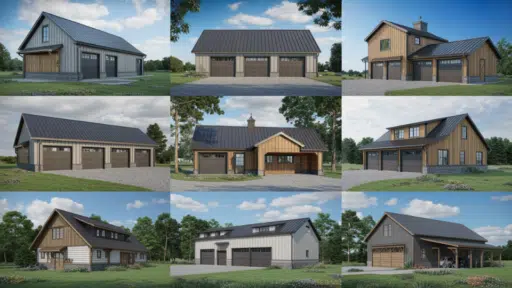
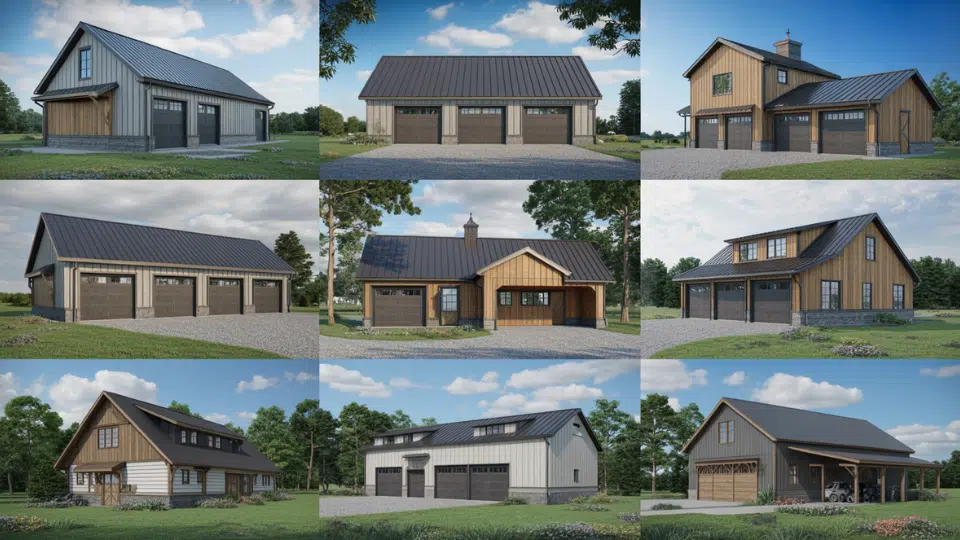

Garages play a bigger role in barndominium living than most people expect.
They affect how the home functions, how space is used, and how daily routines flow.
A garage is not just a place to park; it often becomes a storage, workspace, or an extension of the home itself.
That is why barndominium plans with a garage deserve careful attention.
Layout choices such as placement, size, and connection to the living area can shape comfort and practicality over time.
From compact designs to larger multi-use setups, garage options vary widely.
Understanding these layouts makes it easier to compare plans and choose one that supports both living needs and long-term use without unnecessary changes later.
Barndominium Plans With Garage: Explained
Barndominium plans with a garage are building designs that combine a living space and a garage within the same overall structure or property layout.
A barndominium is typically a metal or post-frame building that blends residential living areas with utility-style spaces. When a garage is included in the plan, it is intentionally designed as part of the layout rather than added later.
These plans can include:
An attached garage that connects directly to the home
A detached garage is placed nearby on the same property
Garages designed for vehicles, storage, workshops, or equipment
The goal of barndominium plans with a garage is to create a practical, flexible home that supports both daily living and functional needs like parking, storage, or work space in one coordinated design.
Barndominium Plans With Garage: Design Options to Look at
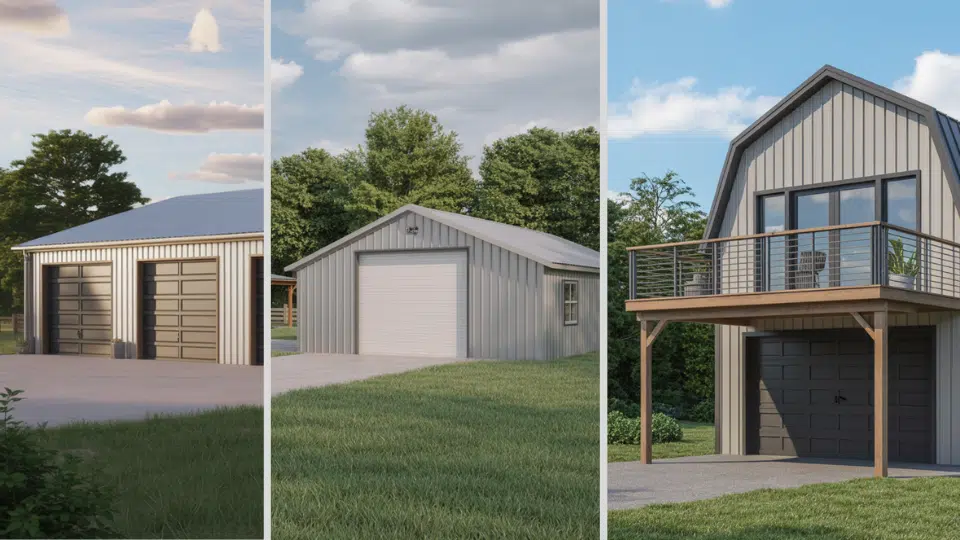
1. Attached Side-Entry Garage Design
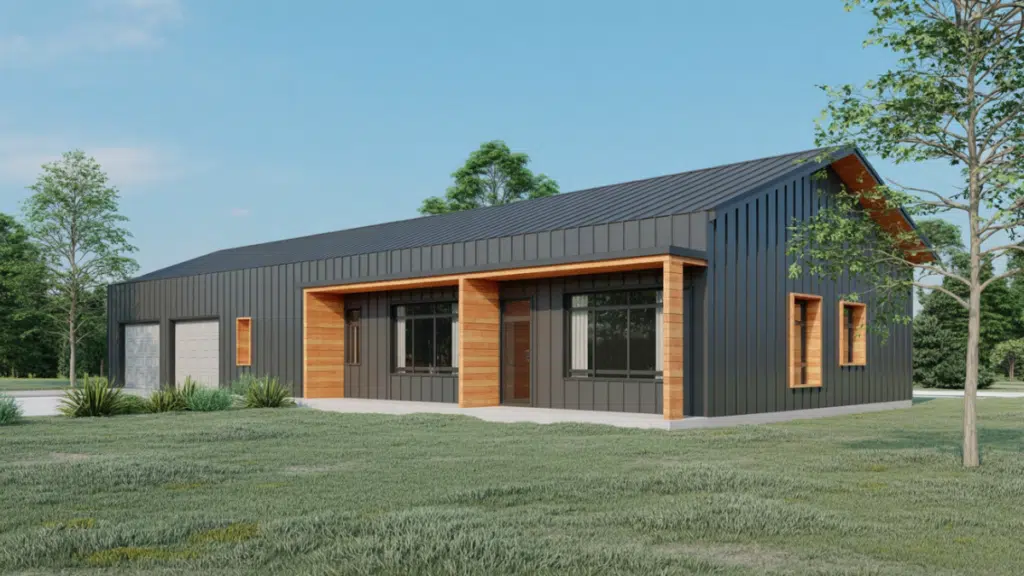
This design places the garage directly beside the living area, with doors facing the side of the home. It keeps the front exterior focused on the main entry instead of the garage.
These plans work well on wider lots and are popular for clean curb appeal. Inside, the garage usually connects through a mudroom or utility space, keeping dirt and noise away from living areas.
2. Front-Entry Garage Barndominium Design
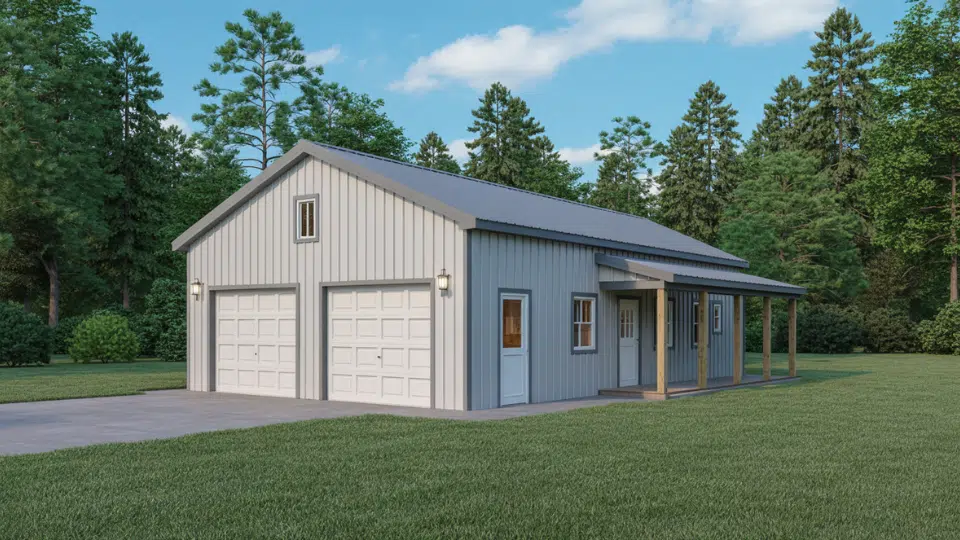
In this layout, the garage doors face the driveway and sit at the front of the structure.
It’s one of the most practical and cost-efficient designs, especially for narrow or standard lots.
The garage is often positioned slightly forward or recessed to reduce visual dominance. This design is common in compact barndominium plans where space efficiency matters.
3. Detached Garage Barndominium Design
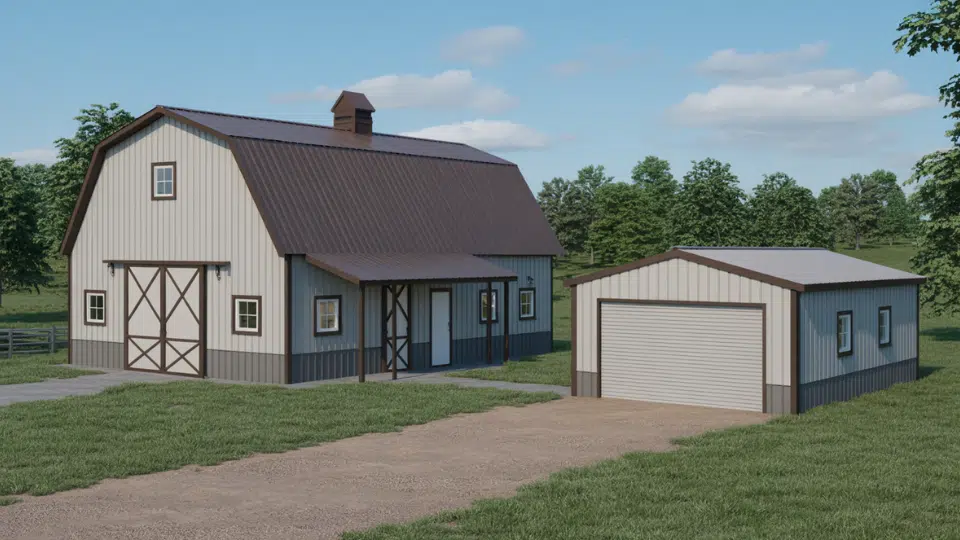
Detached garage designs separate the garage from the main living structure.
These plans are ideal when the garage is used for workshops, equipment, or storage beyond vehicles. Noise and dust stay outside the home, improving comfort.
Many designs include a covered walkway to maintain convenience while keeping the spaces independent.
4. Oversized Garage Barndominium Design
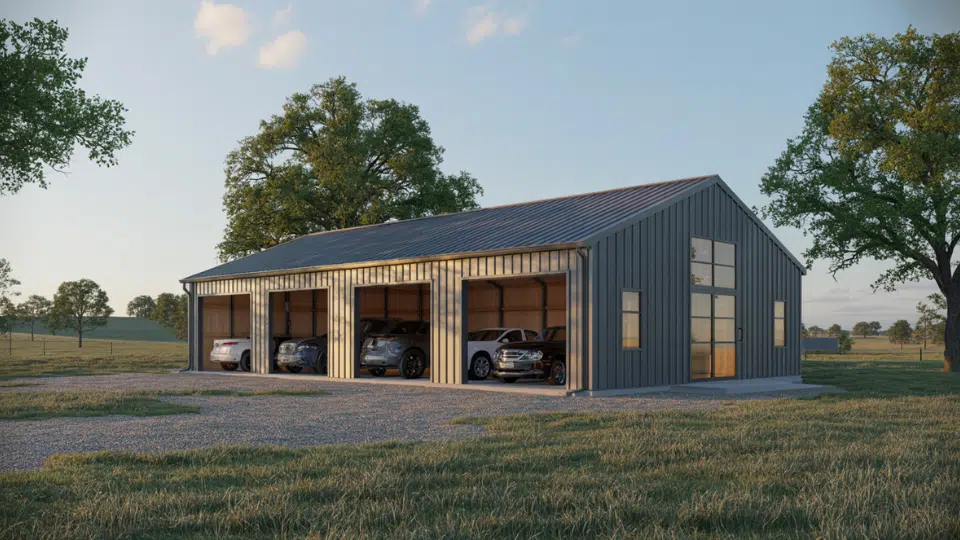
Oversized garage designs include extra bays or extended depth for storage, tools, or recreational vehicles.
These plans are common in rural settings where space allows flexibility. The garage often becomes a multi-purpose area rather than just parking.
To keep balance, oversized garages are frequently placed on the side or as detached structures.
5. Drive-Through Garage Barndominium Design
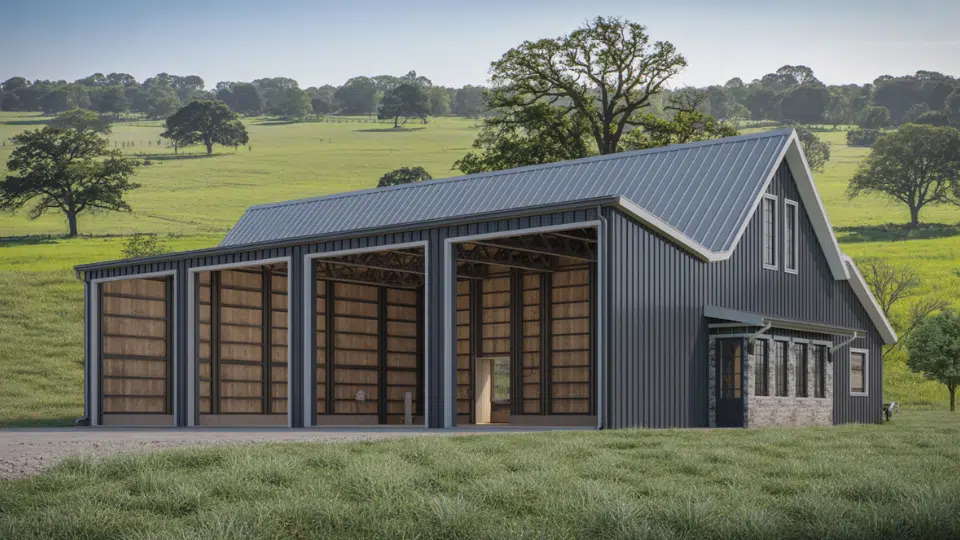
This design includes garage doors on both ends, allowing vehicles or equipment to pass straight through.
It’s especially useful on large properties, farms, or homes with trailers and machinery.
Drive-through garages are built with function in mind and are often paired with higher ceilings and reinforced floors.
6. Two-Story Barndominium With Garage Below
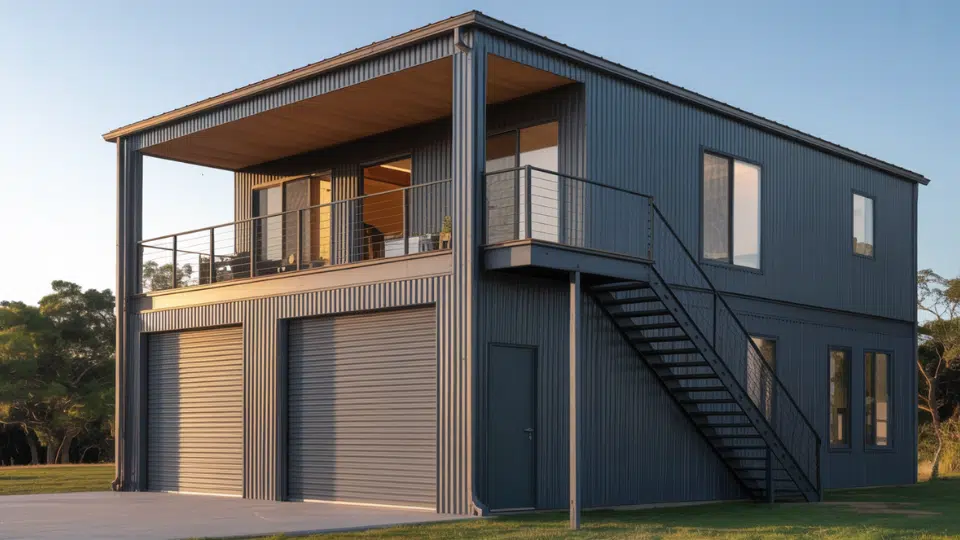
In this design, the garage sits on the ground level, with living spaces above or adjacent.
It’s a smart option for smaller lots where vertical space is needed. The layout separates work and living zones clearly.
Sound insulation and stair placement are key design considerations in these plans.
7. L-Shaped Barndominium With Integrated Garage
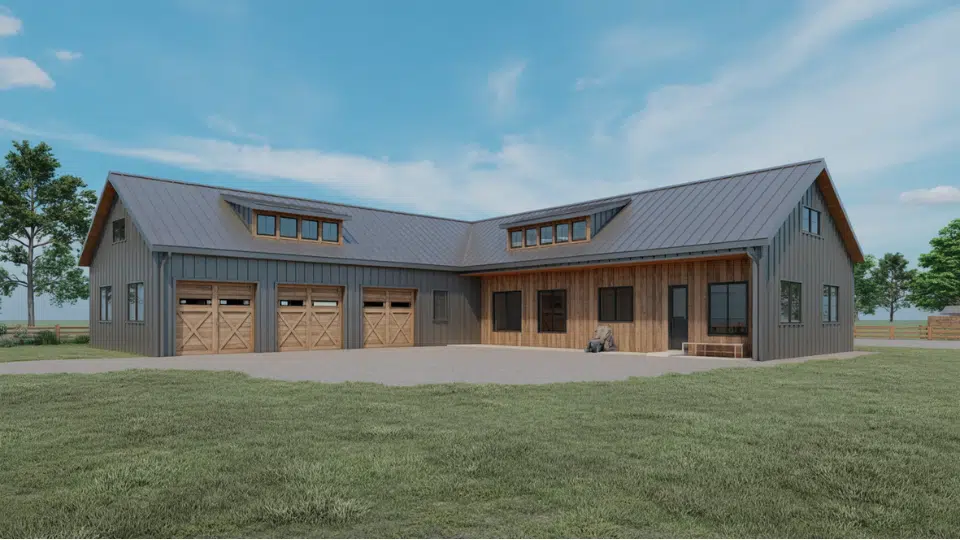
L-shaped designs allow the garage to sit perpendicular to the main living space.
This creates natural separation without fully detaching the garage.
The layout works well for creating private outdoor areas or courtyards. It also helps reduce the garage’s visual impact from the front.
8. Barndominium With Garage and Mudroom Entry
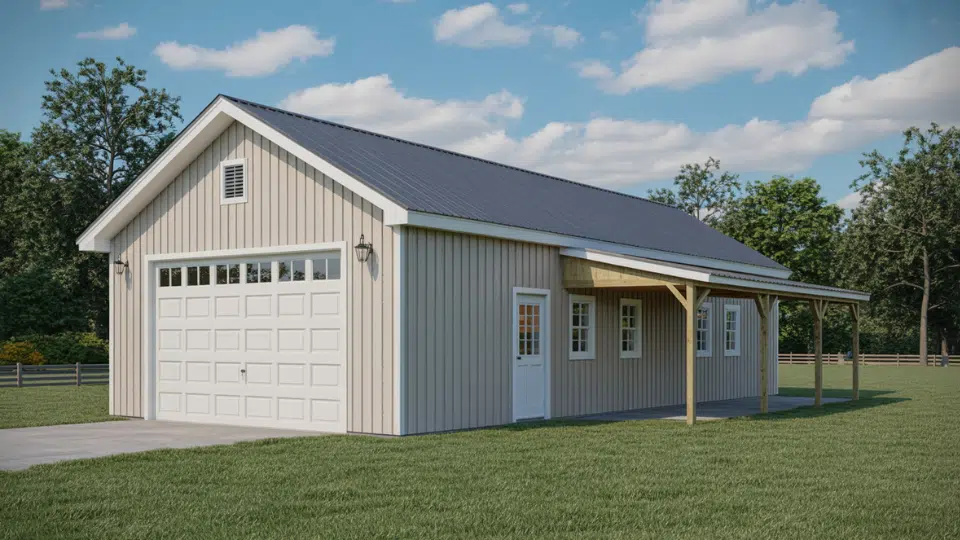
This design prioritizes daily functionality. The garage connects to the home through a dedicated mudroom that includes storage, seating, and organization space.
Shoes, coats, and tools stay contained before entering the main living area. This design is popular for families and high-traffic households.
9. Narrow-Lot Barndominium With Garage
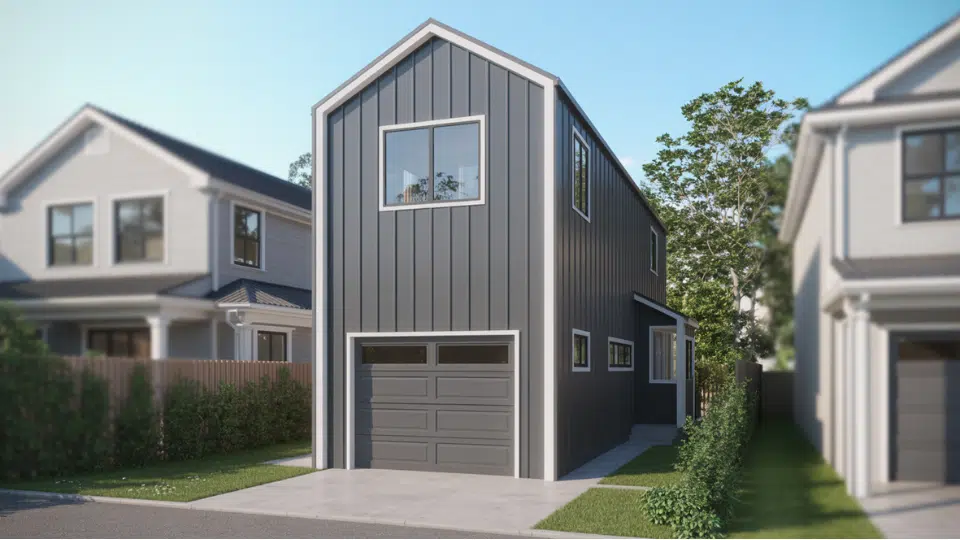
Designed for limited-width properties, these plans use compact garage placement without sacrificing living space.
The garage is often front-entry or stacked efficiently beside the home.
Interior layouts are simplified to maintain flow. This design is common in suburban or semi-rural developments.
10. Workshop-Focused Garage Barndominium Design
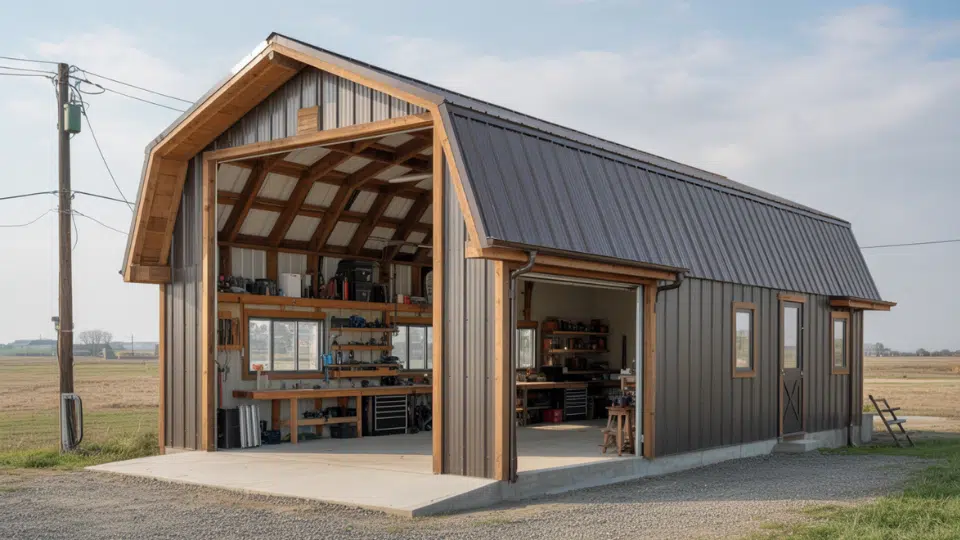
In this design, the garage is treated as a primary workspace. It may include extra height, reinforced flooring, and dedicated zones for tools or equipment.
Living areas are placed farther away to reduce noise impact. These plans suit hobbyists, tradespeople, and home-based work setups.
Attached vs Detached Garage Comparison
| Feature | Attached Garage | Detached Garage |
|---|---|---|
| Connection to Home | Direct access to the living space | Separate the structure from the home |
| Daily Convenience | Easier for groceries, kids, and bad weather | Requires walking outside to enter |
| Noise & Smell Control | Needs insulation and buffer spaces | Naturally keeps noise and dust away |
| Best Lot Size | Works well on small or narrow lots | Better suited for larger properties |
| Construction Cost | Usually lower due to shared structure | Often higher due to a separate build |
| Use Beyond Parking | Limited without careful planning | Ideal for workshops and equipment |
| Future Flexibility | Less flexible for conversion | Easier to repurpose later |
How to Decide Between the Attached vs Detached Garage?
An attached garage works best when convenience is the top priority. If the garage will be used daily for parking, storage, or quick access into the home, this layout often feels more practical. It also makes sense for compact properties where space needs to be used efficiently.
A detached garage is a better choice when the garage is more than a parking space. Workshops, hobby areas, and equipment storage benefit from physical separation. This layout also helps maintain a quieter and cleaner living environment.
Rather than choosing based on appearance alone, think about how often the garage will be used and what activities will happen inside it. That usually makes the decision clear.
Conclusion
Barndominium plans with a garage work best when the layout supports real daily use rather than just visual appeal.
Garage placement, size, and connection to the living space all influence how the home functions over time.
Some layouts favor quick access and efficiency, while others provide separation for storage, tools, or work needs.
There is no single option that fits every property or routine. The most suitable plan is one that aligns with how often the garage is used and what it needs to accommodate.
By comparing design options carefully and thinking through long-term use, it becomes easier to choose a layout that stays practical, organized, and comfortable without constant adjustments.

With a Master’s in Architecture from the University of California, Berkeley, Mitchell Green has spent over two decades dedicated to the study and practical application of home fixture design. His career started in an architectural firm, providing him a strong foundation in the structural and aesthetic aspects of home interiors. Mitchell brought his comprehensive knowledge to our platform, where he has been an influential voice in our home fixtures and fittings section. Since 2018, he has been guiding our readers through the intricacies of selecting and installing fixtures, combining technical know-how with design flair. In his spare time, Mitchell is a keen photographer, capturing architectural details and design elements, an interest that complements his professional focus.