
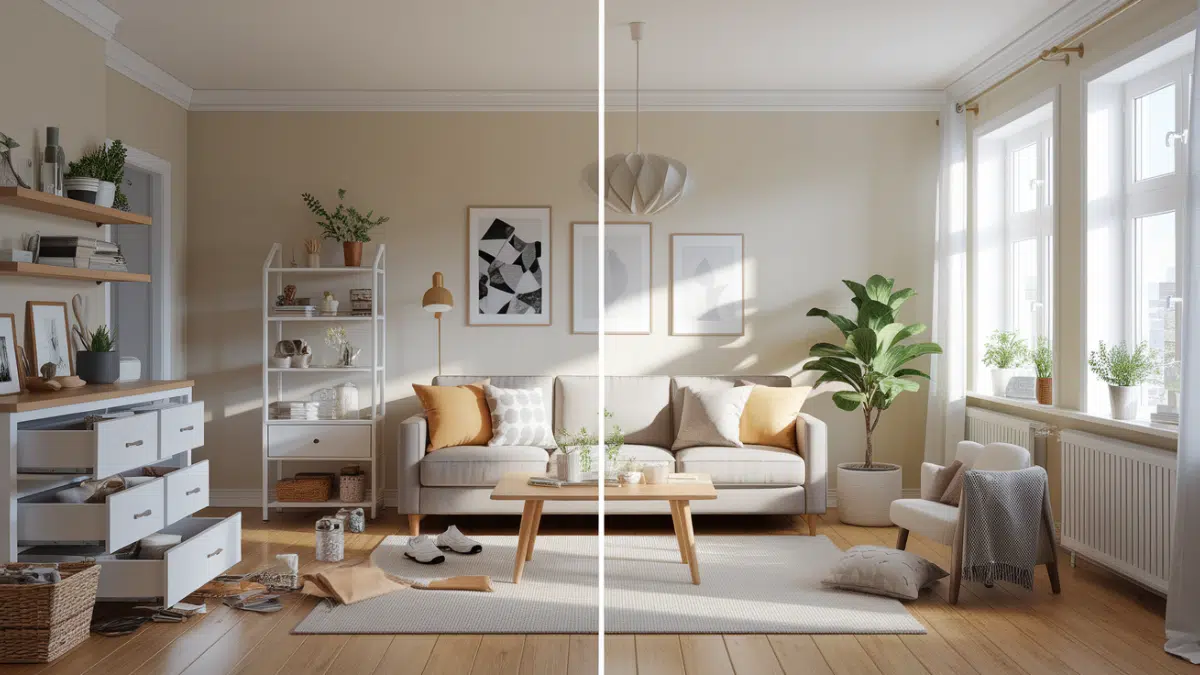

Your home has more stuff than you can keep track of. Drawers won’t close.
Closets overflow. Counters collect mystery piles that grow while you sleep.
You’ve tried organizing bins, labeled boxes, and those trendy storage hacks from Instagram. Nothing sticks.
Here’s why: you’re organizing clutter instead of removing it. Real decluttering isn’t about finding better places to hide things; it’s about making things leave.
This guide shows you a simple removal-first method that works in small spaces without creating floor chaos.
You’ll learn exactly where to start, what questions to ask, and how to handle items tied to guilt or memories. Ready to reclaim your space?
What Counts as Clutter and Why It Keeps Building Up?
Clutter is anything that takes up space without helping your daily routine. It does not always look messy.
Sometimes it sits neatly in drawers, closets, or boxes, but still makes life harder. These items slow you down when you try to find what you need.
They take up space that could be used better. Even organized clutter adds mental pressure because it still needs to be managed, cleaned around, and remembered.
If something does not support how you live right now, it quietly becomes part of the problem.
What Typically Qualifies as Clutter?
- Duplicates and extras: multiple versions of the same tool, mug, cable, or cosmetic, especially when only one gets used.
Deferred decisions: items kept because deciding feels tiring, mail piles, returns, clothing that might fit later, half-finished projects.
Broken or incomplete items: missing parts, damaged pieces, “fix later” objects that never make it to repair.
Expired and dried-up products: food past its date, skincare that irritates, paint that has hardened, markers with no ink.
Sentimental overflow: keepsakes stored without limits, leading to boxes that never get opened.
Aspirational supplies: hobby materials for a version of life that is not happening right now.
Why Does Clutter Keep Coming Back?
Clutter builds up for a few common reasons.
First, many homes have more items than the brain can track. Every object needs storage, cleaning, and remembering. When there is too much, things get set down instead of being put away.
Second, many homes do not have an easy way for items to leave. Without a habit for trash and donations, everything stays.
Third, organizing is often used instead of removing items. Containers hide clutter, but they do not reduce it.
A Simple Step-by-Step Method to Get Rid of Clutter
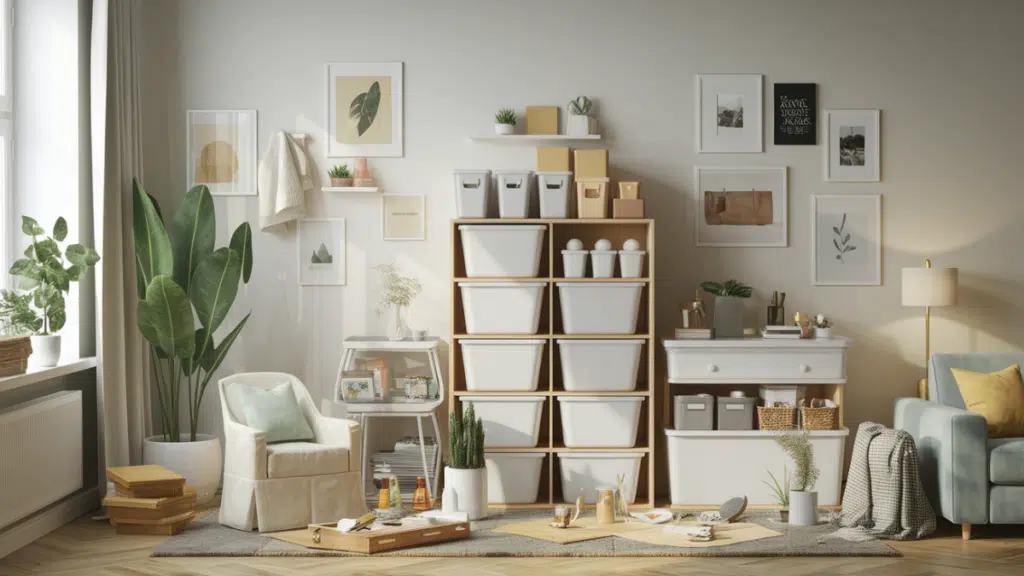
Small spaces make decluttering harder if the wrong method is used.
Pulling everything onto the floor can quickly turn into a bigger mess. The key is to remove items first, not sort them into piles.
1. Start with Removal, Not Sorting
Before touching anything, set up three basic exits for clutter. Keep a trash bag nearby for items that clearly need to be thrown away.
Have a donation bag or box ready for items in good condition that you no longer need.
Use one small bin for items that belong in another room. This setup helps you make quick decisions and ensures clutter leaves the space instead of spreading around it.
2. Choose a Small Area
When choosing where to start, focus on a very small area. This could be a single chair, one drawer, one shelf, a nightstand, or a short section of a counter.
Pick something that can be finished in one short session. Completing a small area is more helpful than starting a large one and stopping halfway.
Finishing builds momentum and makes the process feel manageable.
3. Avoid Floor Piles
Avoid spreading items on the floor while decluttering. Floor piles can quickly take over a room and make the space feel more stressful.
Instead, use a bed, desk, or table as a temporary work surface. When the session ends, clear that surface so the room stays functional.
This habit prevents half-finished decluttering from turning into a new mess.
4. Look for Easy Wins First
Start by looking for easy items to remove. Trash, empty packaging, broken things, expired products, dried-up supplies, and old papers usually require very little thought.
Removing these items first creates visible space right away. Quick progress builds confidence and makes harder decisions feel easier later.
How To Get Rid of Clutter in Simple Steps?
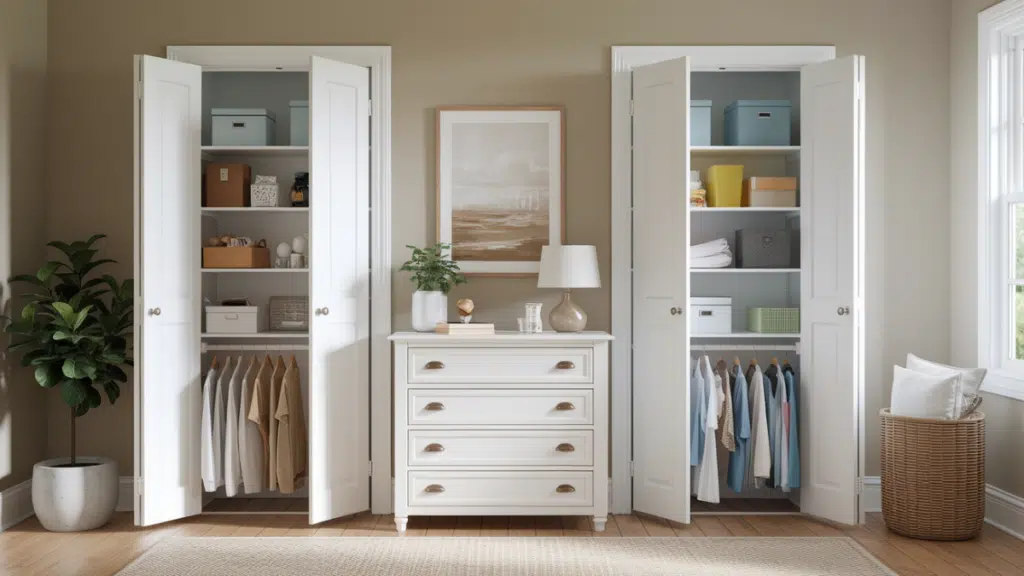
Using the same steps every time keeps decluttering from feeling stressful. There is no need to invent a new plan for each room.
Step 1: Pick One Small Zone
Start with an area that is easy to finish, such as one drawer, one shelf, or one surface. Avoid large spaces at first.
Small zones are faster to complete and easier to manage. When the area is finished, it should be fully usable.
This quick win helps build momentum and makes the next step feel less difficult.
Step 2: Decide Quickly
Ask simple questions for each item:
Was this used recently?
Is this needed for the current life?
Is it worth the space it takes?
If the answer is no, the item can leave. Do not overthink. Faster decisions work better.
Step 3: Remove Items Right Away
Trash goes out immediately. Donations go into a bag or box that gets closed when full.
Items for another room go into the relocate bin and are returned during a short follow-up session.
Loose piles slow progress. Bags and boxes create clear boundaries.
Step 4: Give What Stays a Clear Home
After removing clutter, decide where each remaining item belongs. Items without a clear place often end up creating a new mess.
Keep frequently used items easy to reach and store less-used items farther away.
Use containers as limits rather than storage for extras. If something does not fit, it is a sign that less is needed.
How to Get Rid of Clutter When You Have Emotional Attachment?
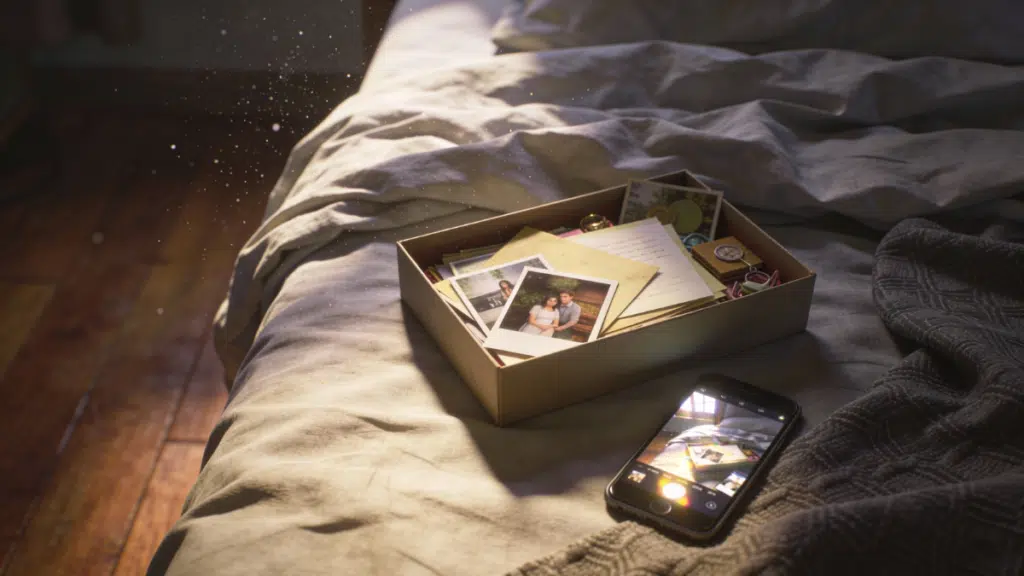
Some clutter stays because it is tied to memories, not because it is useful. Letting go can feel hard when emotions or guilt are involved.
Memories do not live inside objects. Photos or notes can preserve meaning without keeping everything. This allows space to open up without losing what matters.
It is okay to take time with emotional items. Setting them aside and revisiting them later often makes decisions clearer.
Unused items do not protect memories. Over time, they are usually stored away and forgotten. Clear space supports daily comfort and makes rooms easier to use.
Rules That Make It Easier to Decide What to Keep or Let Go
Even with clear rules, some items still feel difficult to part with. This usually happens when emotions are tied to the clutter, not the space itself.
When decisions feel hard: Even with a clear method, some items are harder to decide on. This is normal. Simple rules help reduce hesitation and make choices faster, especially when you feel stuck or unsure.
Replaceable items: If something can be bought again easily and at a low cost, it may not need to stay. Many people keep extra items out of fear, even when they rarely use them. Letting go of replaceable things frees space with very little risk.
Worn or damaged items: Clothes with stains, stretched fabric, or small tears often stay because they still “work.” Over time, these items take up space and are rarely chosen.
If something is only used as a last option, it may no longer deserve space.
Duplicates: When several versions of the same item exist, most people reach for only one. Keeping the best or most-used version and letting the rest go makes storage simpler and reduces visual clutter.
Items kept out of guilt: Some items stay because money was spent on them. The cost is already gone, whether the item stays or not.
Keeping something unused does not recover that money. Choosing space and ease can be more helpful than holding onto guilt.
Conclusion
Getting rid of clutter doesn’t require a massive weekend overhaul or perfect organizing systems.
It starts with one drawer, one shelf, one small decision at a time. The methods in this guide work because they focus on removing items first, not just rearranging them into prettier piles.
When you start small, make quick decisions, and create simple exits for unwanted items, clutter loses its grip on your space.
Remember, the goal isn’t perfection, it’s progress. Your home should support the life you’re living right now, not the one you think you should be living.
Start today with just one small zone. Clear that single space completely, and you’ll feel the difference immediately.
That momentum will carry you forward, one clutter-free area at a time.

Holding a Master’s in Library and Information Science from the University of Illinois, Josh Clarke has dedicated more than 15 years to managing and disseminating information across various platforms. His professional journey includes significant experience as a research librarian, where he developed an expertise in sourcing and providing accurate and comprehensive answers to diverse questions. In 2018, Josh brought his rich experience to our platform, quickly establishing himself as a reliable source for general FAQs. He has been overseeing our information curation since then, combining his research skills with a flair for engaging content delivery. When not involved in information management, Josh enjoys exploring digital photography and participating in local quiz competitions, hobbies that complement his inquisitive nature and love for learning.