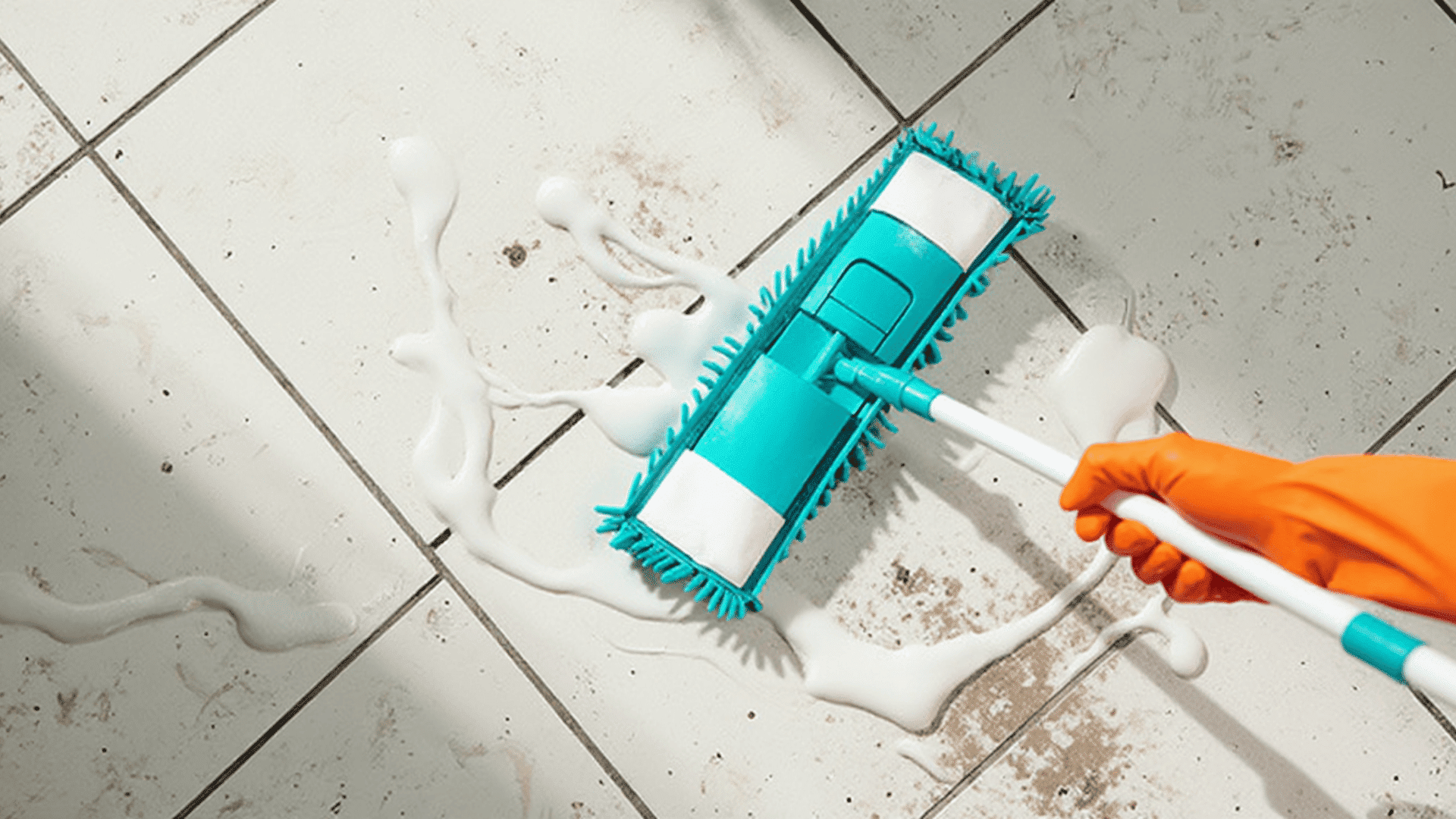

Tile floors often appear low-maintenance, yet keeping them truly clean requires more than a quick mop.
Dull patches, cloudy residue, and darkened grout usually come from using the wrong products or too much water.
The best way to clean tile floors focuses on simple steps that protect the surface while removing everyday buildup.
Small choices, such as how dirt is removed first or which cleaner touches the tile, make a visible difference over time.
Ahead, practical methods break down what works, what causes problems, and how different tile surfaces respond to cleaning, setting the stage for smarter, longer-lasting floor care.
Best Way to Clean Tile Floors
The best way to clean tile floors is to remove loose dirt first, then mop using warm water and a mild, pH-neutral cleaner that does not leave residue.
This method cleans the surface effectively while protecting the tile finish and maintaining its natural look.
A simple, controlled approach works better than strong chemicals or excess water, which can dull tiles over time.
- Start by sweeping or dry mopping to clear dust, crumbs, and grit
- Mix warm water with a small amount of gentle floor cleaner
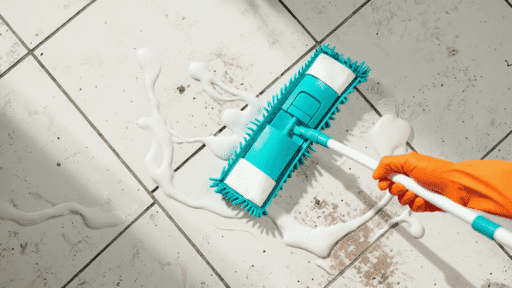
- Mop using a microfiber mop, wringing out excess water before each pass
- Work in sections to ensure even cleaning without soaking the floor
- Finish by letting the floor air-dry or wiping it with a clean cloth
Using this method regularly keeps tile floors clean, streak-free, and well-maintained without unnecessary effort or surface damage.
How to Clean Tile Floors Based on Tile Type?
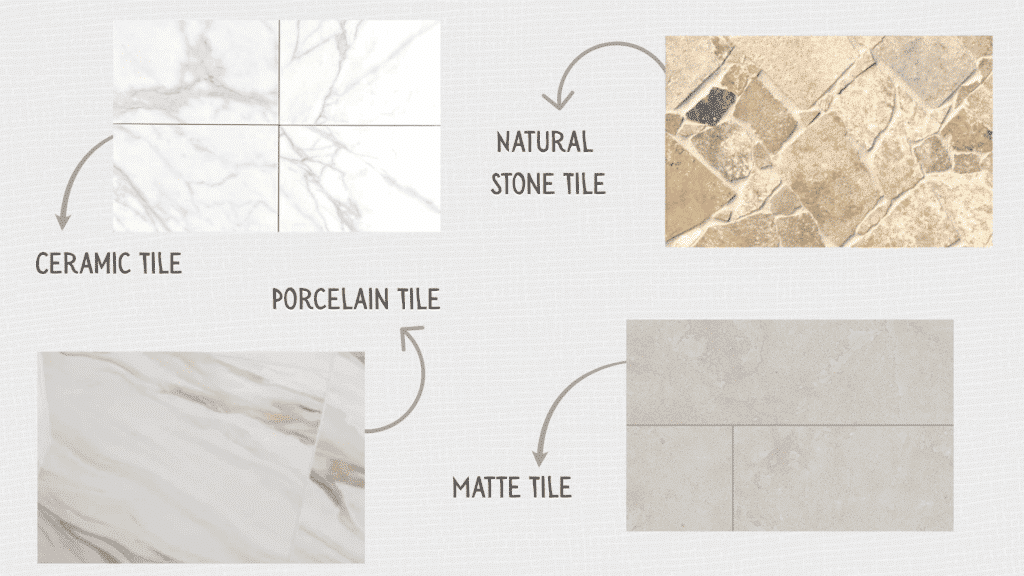
Different tile materials react differently to moisture, cleaners, and scrubbing pressure. Using a method suited to the tile type helps maintain surface quality and prevents long-term damage.
The tile type selected during tile installation affects how surfaces respond to moisture and cleaners.
Below are tile-specific cleaning approaches with clear do’s and don’ts for each surface:
Ceramic and Porcelain Tile
Ceramic and porcelain tiles are dense, sealed surfaces commonly used in kitchens, bathrooms, and living areas.
They resist moisture and stains but can show streaks or dull patches if residue builds up.
Regular care keeps the surface smooth, clean-looking, and free from surface wear over time.
- Best method to clean: Use warm water mixed with a gentle floor-safe cleaner to remove surface dirt without affecting the finish.
- What to avoid: Avoid abrasive pads or powder cleaners, as they can scratch the tile glaze and leave dull marks.
Natural Stone Tile
Natural stone tiles, such as marble, slate, or travertine, have a porous structure that reacts to moisture and chemicals.
These tiles require controlled cleaning to protect their surface and internal composition.
Using suitable methods helps prevent discoloration, surface damage, and gradual material breakdown.
- Best method to clean: Clean using a stone-safe solution designed to protect the tile’s natural structure and surface seal.
- What to avoid: Avoid acidic, vinegar-based, or ammonia cleaners, as they can cause etching and permanent surface damage.
Textured or Matte Tile
Textured or matte tiles feature uneven surfaces designed for grip and slip resistance. Dirt, oils, and fine debris tend to settle into surface grooves more easily.
Cleaning these tiles requires attention to surface depth to ensure buildup is removed without affecting the tile’s finish or appearance.
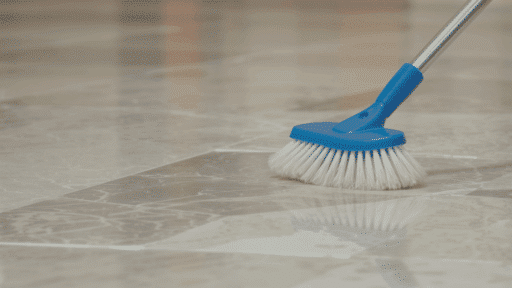
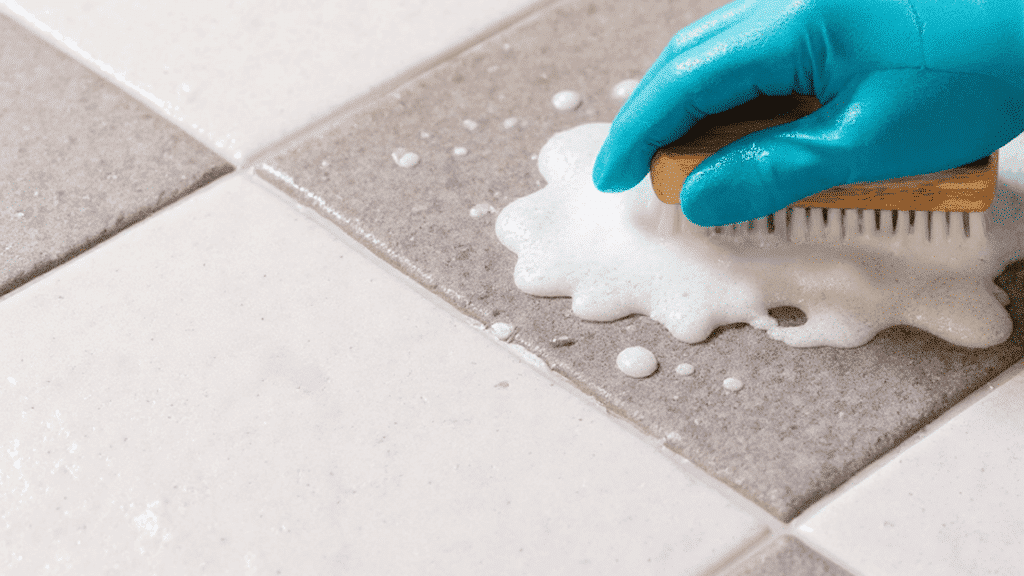
- Best method to clean: Use a soft-bristle brush with a mild cleaner to lift dirt from grooves without wearing down the surface.
- What to avoid: Avoid thick cleaning solutions that settle into textures and dry as residue.
Choosing cleaning methods based on tile material helps maintain appearance, reduces wear, and supports long-term floor care with minimal effort.
Best Way to Clean Tile Grout
Tile grout absorbs dirt and moisture faster than tile surfaces, making it prone to discoloration over time. Cleaning grout properly helps maintain a consistent floor appearance and supports overall hygiene.
Below are practical methods that focus on safe removal of buildup without weakening the grout lines:
- Baking soda paste: Mix baking soda with water and apply it directly to grout lines to loosen surface stains before gentle scrubbing.
- Hydrogen peroxide solution: Use a small amount on light-colored grout to reduce dark patches caused by moisture exposure.
- Soft-bristle brushing: Scrub grout lines using controlled pressure to remove trapped debris without breaking down the grout structure.
- Clean water rinse: Rinse thoroughly after cleaning to remove residue that can attract new dirt.
- Proper drying: Dry grout lines fully to reduce moisture retention and slow future staining.
Consistent grout care using mild methods helps keep grout lines clean, uniform, and less prone to long-term discoloration.
How Often Should Tile Floors Be Cleaned?
The frequency of tile floor cleaning depends on foot traffic, room usage, and exposure to dirt or moisture.
Regular cleaning prevents buildup that can affect both appearance and surface condition.
High-use areas require more attention, while low-traffic spaces can follow a lighter schedule without compromising cleanliness.
- Daily or frequent sweeping: Removes loose dirt, dust, and debris that can scratch tile surfaces over time.
- Weekly mopping: Helps clear stuck-on residue and maintains a clean finish in most living spaces.
- Biweekly cleaning: Works well for rooms with moderate use, such as bedrooms or guest areas.
- Occasional deep cleaning: Addresses embedded grime in grout lines and textured tiles when routine cleaning is not enough.
Adjusting the cleaning schedule based on usage helps maintain tile floors efficiently without unnecessary effort.
Common Tile Floor Cleaning Mistakes to Avoid
Common tile floor cleaning mistakes often come from using methods that seem effective but cause gradual damage.
Excess water is one of the biggest issues, as it can seep into grout lines and weaken them over time.
Harsh chemical cleaners may remove dirt quickly, but can dull tile surfaces and affect grout color. Skipping regular dry cleaning allows grit to scratch tiles during mopping.
Another mistake is leaving cleaning residue behind, which attracts dirt and makes floors look cloudy faster.
Best Way to Clean Tile Floors Reddit
Discussions on Reddit show that many homeowners prefer gentle, residue-free methods when cleaning tile floors, especially in homes with children or pets.
Reddit users often warn against frequent vinegar use, pointing out that its acidity may affect grout or certain tile finishes over time.
Instead, commonly shared advice includes using warm water with a small amount of mild dish soap or a pH-neutral floor cleaner.
Steam mops are repeatedly recommended on Reddit for their ability to clean effectively using only water, making them suitable for crawling babies.
Users also stress proper rinsing and minimal water use to prevent sticky residue and dull-looking floors.
Conclusion
Cleaning tile floors does not need complicated products or harsh methods.
Across the sections, the best way to clean tile floors is shown to rely on simple habits like dry cleaning first, limited water use, and surface-appropriate cleaners.
Tile type plays a major role in how surfaces react, while grout needs focused care to prevent discoloration.
A consistent cleaning schedule helps reduce buildup, and avoiding common mistakes protects both tiles and grout over time.
Even insights shared by everyday homeowners highlight the value of gentle, residue-free routines.
When simple habits are followed regularly, tile floors stay cleaner, safer, and better looking for longer.
Have a routine that works well at home? Share your experience or favorite cleaning method in the comments below.

Tommy Hardy, an alumnus of the Georgia Institute of Technology with a degree in Mechanical Engineering, has been a go-to figure in residential upkeep and innovation for over 18 years. His career commenced in a leading home appliance manufacturing company, where he mastered the intricacies of household systems. Joining our platform in 2020, Tommy quickly became a reader favorite for his practical and easy-to-follow guides. He took the helm of our DIY section in 2019, consistently delivering content that empowers homeowners. Beyond his professional pursuits, Tommy is a passionate gardener and enjoys woodworking, skills enhancing his hands-on approach to home care.