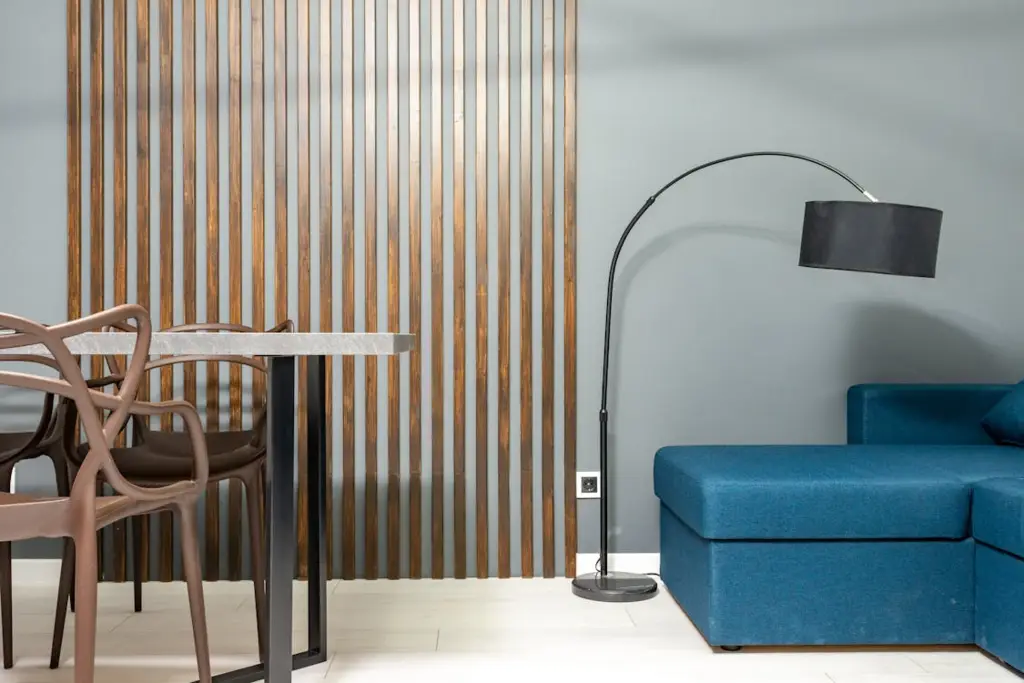

Walk into any well-designed room, and you will spot it straight away – one wall pulling more weight than the other three. It might be wrapped in woven grasscloth, clouded with limewash, or lined in stacked timber slats, but whatever the material, somebody chose it on purpose. The accent wall is one of the oldest moves in interior design, and it is still the fastest way to make a flat, forgettable room feel intentional.
The problem is that a bad accent wall is worse than no accent wall at all. Wrong material, wrong colour, wrong wall – and the whole room feels like it is trying too hard. After years of watching trends come and go, the accent walls that actually hold up share one thing in common: they add something a flat painted surface cannot – texture, depth, warmth, or genuine architectural weight.
Below are ten treatments that consistently deliver, from a fifty-dollar weekend paint job to a full contractor build. Each one earns its place on the wall.
1. Grasscloth Wallpaper
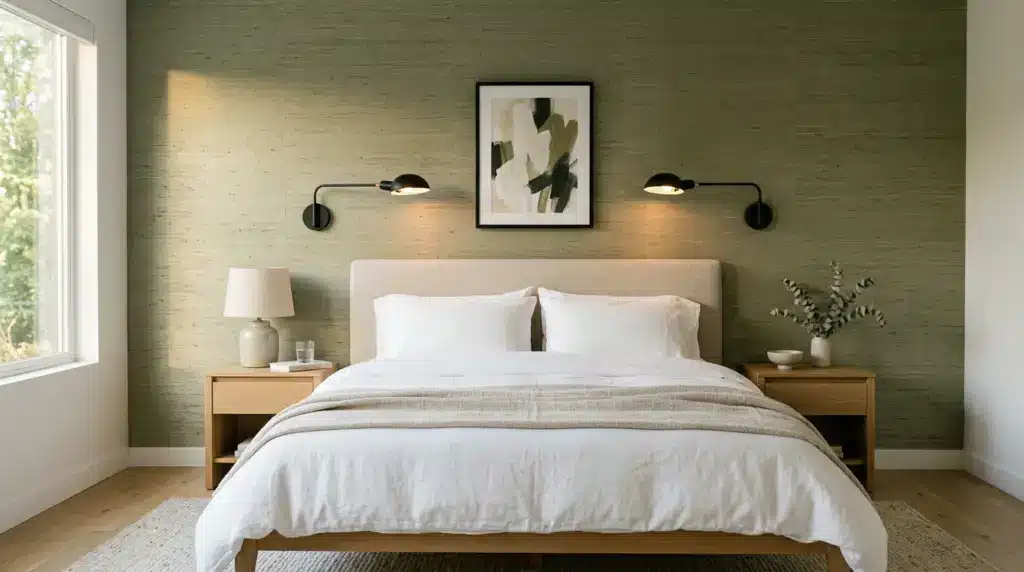
Eco-friendly grasscloth wallpaper is the quiet show-off of wall coverings. Woven from natural plant fibers – jute, sisal, seagrass, or arrowroot – it introduces a tactile depth that no paint roller can match. Each panel has a slight natural variation, so the wall surface shifts and moves as daylight passes across it. Designer Anu Jain put it well in Veranda: materials like grasscloth “evoke emotion and depth” because they are inherently imperfect.
The earthy weave makes bold colours feel more organic and grounded – deep charcoal, warm oatmeal, and smoky blue-green are the strongest choices right now. Hang it on the wall that catches the most daylight so you get that shifting texture all day long. At around $40–80 per roll plus installation, grasscloth sits mid-range on cost but reads far more expensive than it is. One honest warning: grasscloth is not wipeable, and it is unforgiving to hang, so this is a job for a professional paperhanger, not a YouTube tutorial.
2. Limewash Paint
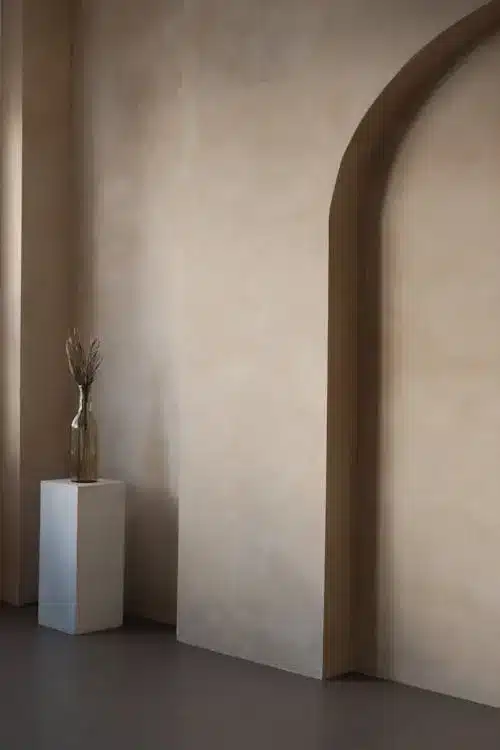
Every designer worth following has used limewash somewhere in the last eighteen months, and the hype is earned. This centuries-old technique layers mineral pigment onto the wall so each brush stroke remains faintly visible – creating cloudy movement and depth that flat latex paint will never achieve. It is also one of the more eco-friendly finishes available: breathable, low-VOC, and naturally mold-resistant. The bigger shift in 2026 is that limewash has moved beyond single accent walls into full-room saturation – walls, ceiling, and trim in one continuous tone for that calm, cocoon-like feel.
Terracotta, warm greige, and dried sage are the colours getting the most traction – all earthy enough to pair naturally with wood, stone, and linen. For the layered fresco finish that looks truly professional, apply a lighter shade over a damp, darker base coat; the translucent layers build real visual depth, not just painted texture. A single-wall limewash project runs about $100–250 in materials and is surprisingly approachable as a DIY – the beauty of limewash is that imperfection is literally the point.
3. Wood Slat & Acoustic Panels
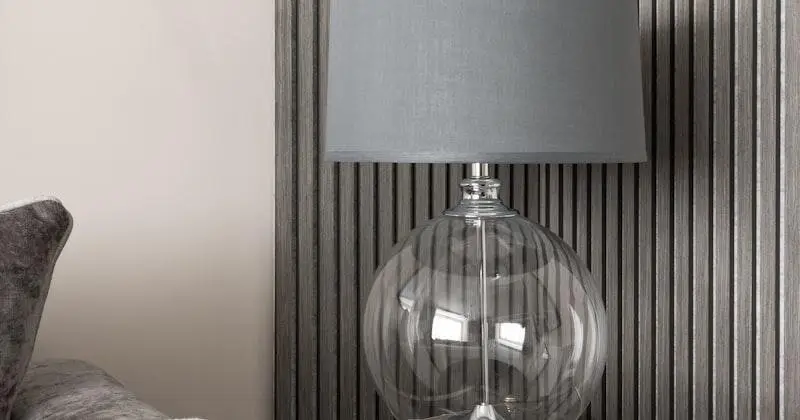
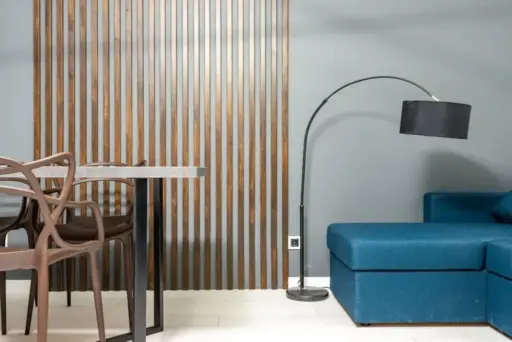
Wood slat walls – vertical or angled rows of narrow timber strips mounted against a flat or felt-backed panel – are everywhere right now, and the reason is practical: they deliver warmth, architectural rhythm, and genuinely improved acoustics in one installation. Most brands now sell peel-and-mount kits that an intermediate DIYer can handle in an afternoon, which has pushed adoption well beyond the designer market. The acoustic-backed versions are especially popular in home offices and open-plan living spaces where echo is a real problem.
Slat wall lighting brings the timber to life by highlighting its texture and creating subtle shadow lines when concealed between panels or around the edges.
The look has matured noticeably – the bright-white Scandinavian slats that dominated a few years ago are giving way to earthy stained finishes: walnut, smoked oak, and warm espresso. Mount them behind a TV or bed rather than flanking a fireplace; the strong vertical geometry works best when it is not competing with another architectural focal point. Budget roughly $150–400 for a kit-based single-wall, depending on the panel quality.
4. Dark Paint, Done Right
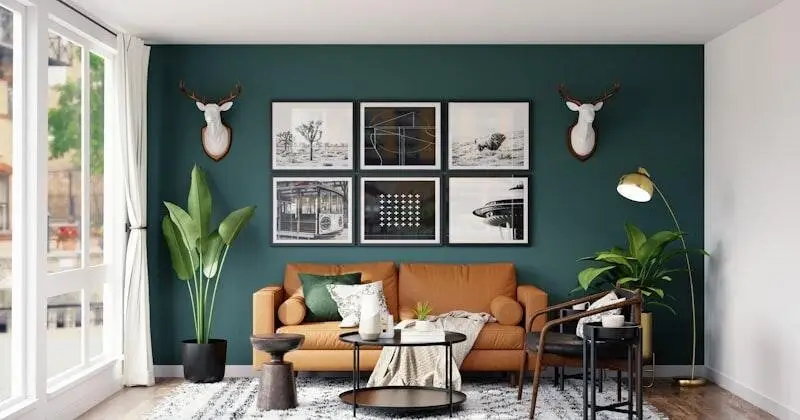
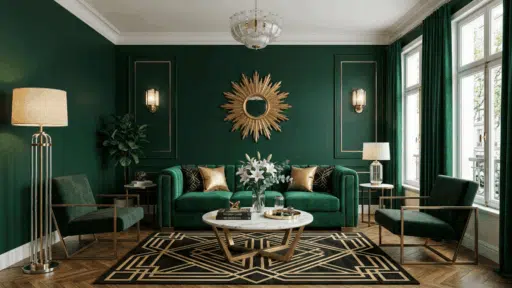
This is the accent wall that scares people most and delivers the most dramatic payoff. A deep charcoal, inky green, or near-black wall in a matte finish hides every drywall imperfection while making the rest of the room pop forward. Designer favorites for 2026 include Sherwin-Williams Tricorn Black and Iron Ore, plus Benjamin Moore Wrought Iron. And if you are worried about a dark wall shrinking a small room, it actually does the opposite. Dark paint adds depth and creates an intimate atmosphere that big, bright rooms struggle to achieve.
Pair it with warm brass or gold hardware and natural wood tones – cold metals against dark paint read harsh, warm metals make everything feel intentional. At $30–60 for a gallon of premium paint, this is the best cost-to-impact ratio on the entire list. You can finish a single accent wall in a Saturday morning.
5. Exposed or Faux Brick
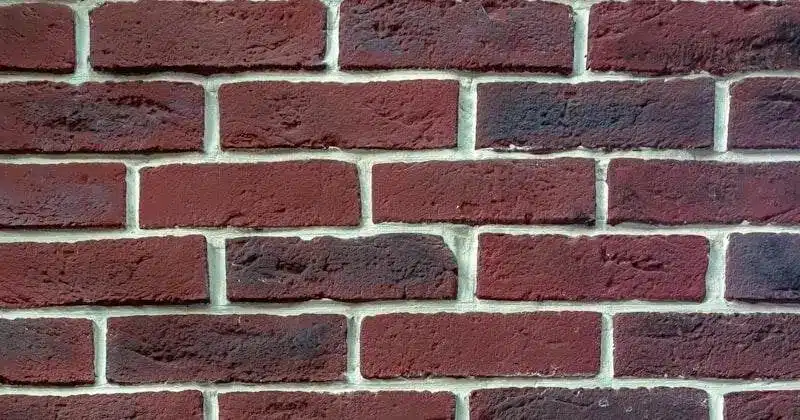
Brick is one of the few accent wall materials that immediately makes a room feel like it has history – even when the brick was installed last Tuesday. Whether you expose original masonry or apply a thin brick veneer over drywall, the result adds warmth and a sense of permanence that lighter materials struggle to match. White-painted brick softens the industrial edge for farmhouse or transitional interiors, while raw red or reclaimed brick leans into that loft-apartment energy.
Between those two looks, the right choice usually depends on how bold you want the wall to feel. Comparing options like brick veneer at I-XL or at StaxStone can help you see how color, texture, and finish change the mood of the room. A softer finish blends into the design, while a rougher red brick becomes more of a focal point. It also helps to think about the furniture and lighting around it, since brick can look very different in warm or cool light. Wood, metal, and neutral decor usually pair well with both painted and raw brick finishes.
Brick works best on a single wall – behind a fireplace or as an entryway focal point. Cover more than one surface, and the room starts to feel like a cellar. Real exposed brick is free if you already have it under plaster; thin brick veneer panels run $300–800 for a feature wall. Installation is intermediate-level DIY – the adhesive work is straightforward, but cutting around outlets takes patience.
6. Board and Batten
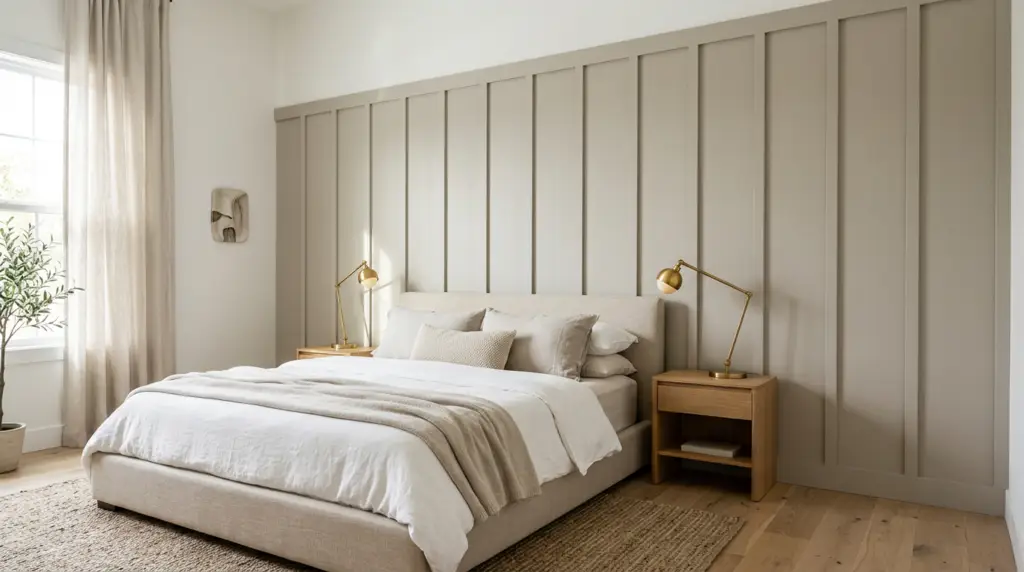
Board and batten might be the single best value on this list. The materials – MDF or pine battens, construction adhesive, and a tube of caulk – cost well under $200 for a full wall, and an intermediate DIYer can finish the install in a weekend. Evenly spaced vertical battens over a flat base create a grid-like depth that adds serious architectural weight without overwhelming the room. It works in almost any colour – crisp white for a coastal bedroom, deep sage for a moody dining room, warm taupe for something in between.
One tip that separates a professional-looking result from a rushed one: skim-coat the base wall before installing the battens. Orange-peel or knockdown texture underneath the trim catches light differently and is visible even from across the room. A smooth base takes an extra afternoon but makes the entire wall read as custom millwork rather than a weekend project.
7. Large-Scale Wall Mural
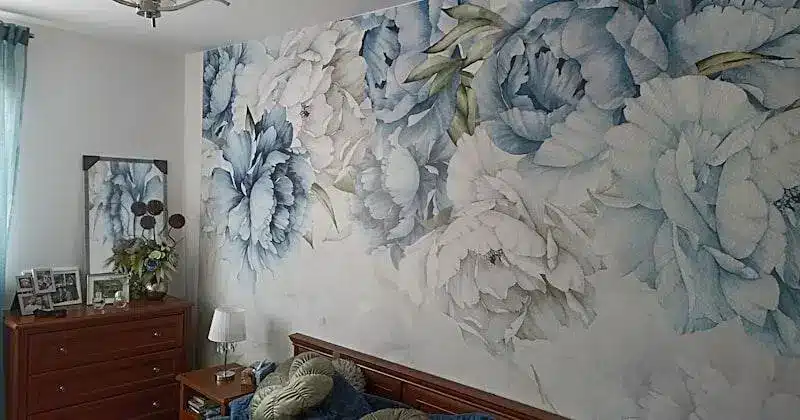
Murals used to mean nurseries and novelty restaurants. Not anymore. The big design shift is toward large-scale biophilic themes – oversized botanicals, moody forest canopies, celestial night skies – printed on peel-and-stick or traditional paste panels that cover an entire wall. Designers in Veranda describe the current mural moment as “a return to layered living – old-world elegance reinterpreted through a modern lens,” and it shows: rich, romantic, occasionally dramatic, but always grounded in a serious colour palette.
The key principle: the mural does the talking; everything else in the room should listen. Keep furniture simple and lighting restrained. A single sconce or picture light aimed directly at the mural transforms a flat print into something that reads as considered artwork, not just wallpaper. Budget anywhere from $80 for a good peel-and-stick set to $500+ for a custom-printed design, making this one of the wider cost ranges on the list. Installation is a patient weekend DIY.
8. Stone Veneer
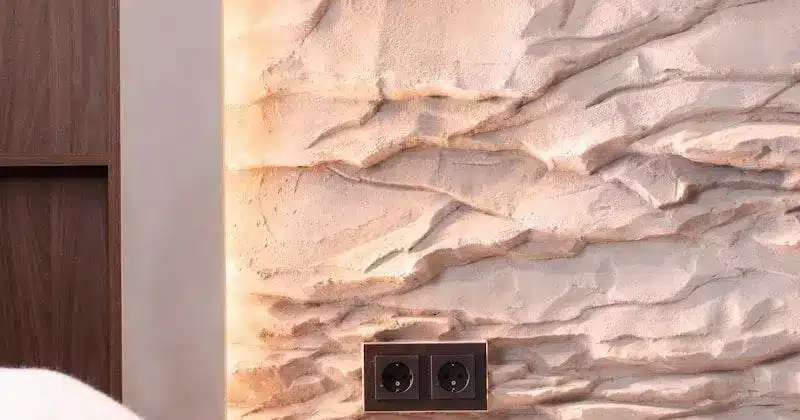
Stone veneer gives you the geological drama of a stacked-stone wall without the structural engineering bill that real stone demands. Lightweight panels adhere directly to drywall and work especially well behind built-in shelving, as a fireplace surround, or in an entryway where you want an immediate sense of weight and permanence. Interior architects describe stone surfaces as inherently “sculptural” – the irregular texture adds dimension that paint can never replicate, and that trend cycles struggle to date.
Limit stone to one wall and keep the surrounding surfaces neutral – stone has a strong personality and needs room to breathe. Competing with brick, wood slats, or bold wallpaper on adjacent walls creates visual noise rather than drama. Expect to spend $500–1,500 for a feature wall in quality veneer, and budget for professional installation unless you are comfortable with thin-set mortar and a tile saw.
9. Shiplap
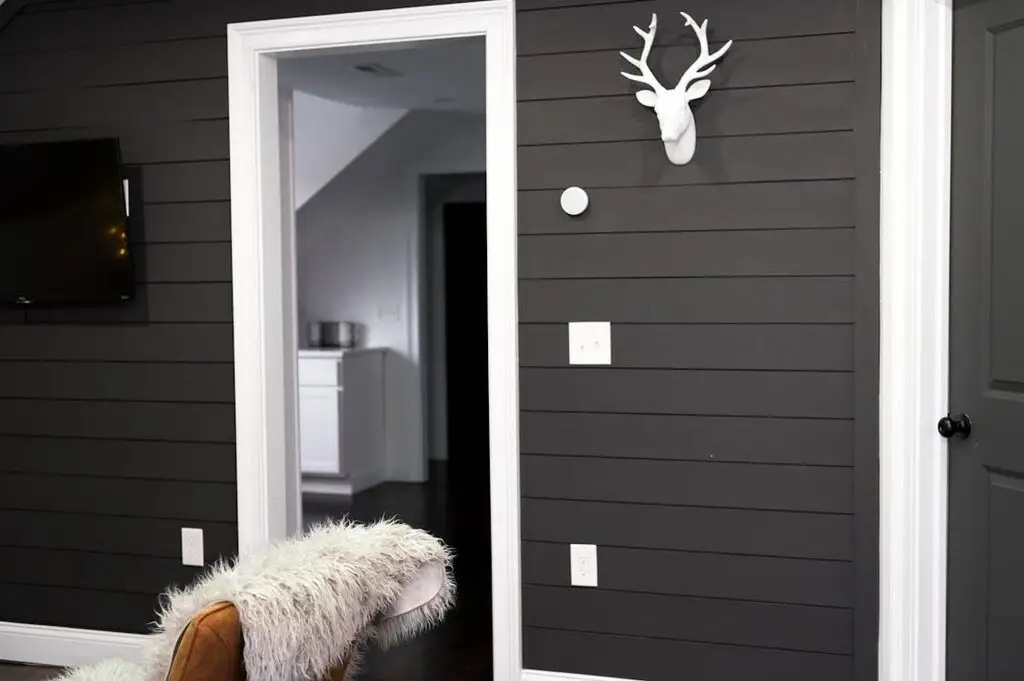
Shiplap outlived the farmhouse trend that made it famous, and its staying power says something. The smooth, overlapping horizontal planks add clean linear texture without the visual complexity of slats or paneling – which is exactly why it works in so many different contexts. The evolution worth noting: the bright-white Fixer Upper look has given way to warmer, earthier tones. UFP Edge’s most popular shiplap finishes right now are Truffle, Eventide, and Linen – all sophisticated neutrals that feel current without screaming trend. Installed vertically, shiplap adds height; horizontally, it adds width.
If you are debating colour: stained or painted shiplap in a rich tone – warm walnut, deep forest green, charcoal – outperforms the all-white version as an accent wall in 2026. White shiplap is starting to read as 2018. Materials run $100–300 for a feature wall, and this is a very approachable weekend DIY, especially with tongue-and-groove planks that lock together without visible nails.
10. Decorative 3D Panels
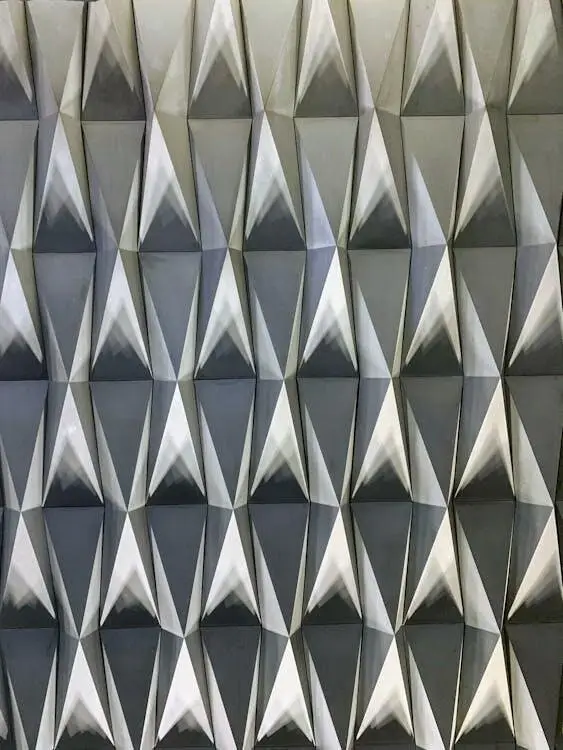
Three-dimensional wall panels – sculpted MDF, plaster, or gypsum tiles in geometric patterns – are the accent wall choice that leans hardest into modern architecture. They introduce dimension through form and shadow rather than colour or pattern, which makes them exceptionally effective in minimalist or monochromatic rooms where busy textures would feel like noise. Pair them with recessed LED strip lighting along the top or bottom edge, and the shadow play becomes genuinely dramatic after dark. These are the panels showing up most often on TV feature walls and behind-bed headboard walls in luxury new builds.
The design rule here is counterintuitive: keep the panel colour within one tone of the surrounding wall. The impact comes entirely from shadow and geometry, not colour contrast. White panels on a white wall, dark panels on a dark wall – both work brilliantly because the sculpted surface does all the heavy lifting. Budget $200–600 for a feature wall, depending on panel material, and note that this is one of the easier installs on the list – most panels mount with construction adhesive and require no special tools.
The best accent wall is never the most expensive – it is the most considered. Every option on this list works because it adds something that bare drywall cannot: texture, movement, depth, or genuine architectural character. If you are deciding where to start, look for the wall that already serves as the room’s natural focal point – behind the bed, above the fireplace, or directly opposite the entrance. Give it one strong, committed treatment and let everything else in the room defer to it. Start with one wall. You can always do more later, but you will be surprised how much one changes.

With a Master in Architectural Studies from University of Pennysylvania, Marwa Haydar has pioneered living spaces since 2005. Her expertise, initially honed in a prestigious architectural firm, is evident in her approach to creating environments. Marwa became part of our team in 2019 and has since been a driving force in our home improvement section, known for her practical yet stylish solutions. She’s been spearheading our design workshops since then, infusing her passion for teaching into her work. In her leisure time, Marwa enjoys exploring historic architecture and is an enthusiastic pottery hobbyist, further enriching her understanding of form and texture.