
Have you ever seen a house that looks like a classic farm building but feels like a luxury hotel inside?
That is exactly what barn-style homes are all about. These houses take the sturdy, open look of old-fashioned barns and turn them into cozy places to live.
They are becoming a top choice for families who want a lot of space without feeling cramped.
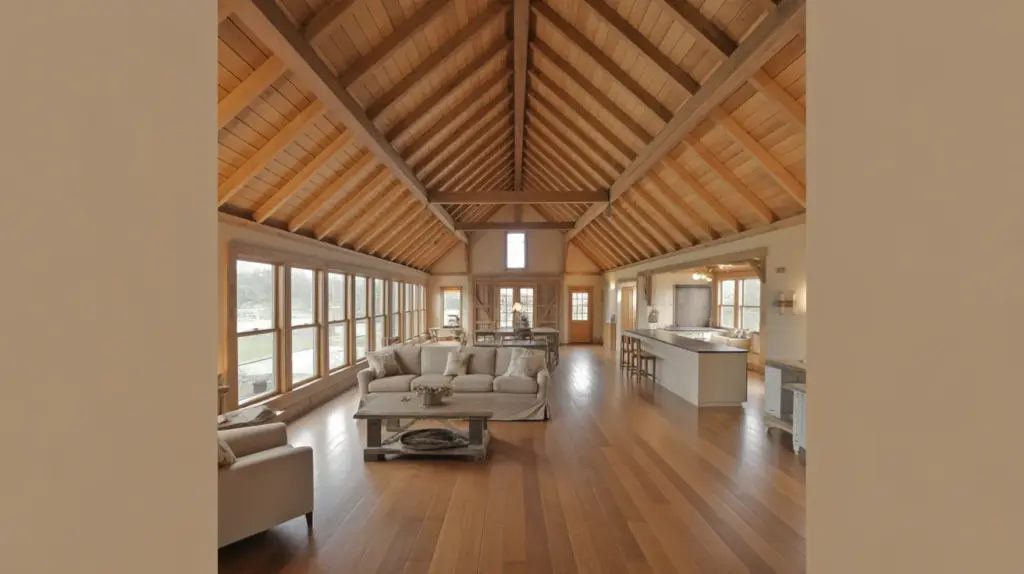
The coolest thing about a barn house is the open layout. Because these designs don’t need many interior walls to hold up the roof, you get huge rooms and very high ceilings.
It makes even a smaller house feel much bigger than it really is.
What Makes a Barn House Special?
The main goal of this design is to give you a lot of room to breathe. Most regular houses have many small rooms separated by walls.
A barn house does the opposite. It uses a “great room” concept where the kitchen, dining area, and living room all share one massive space.
Here are the features that people love most:
Tall Ceilings: Since the roof is high and peaked, the ceilings often go all the way up to the rafters.
Visible Beams: You can often see the heavy wood or steel beams that hold the house up. It gives the home a very sturdy feel.
Natural Light: Because the walls are so tall, you can have massive windows that let the sun shine in all day.
- Simple Shapes:Most of these homes are built in a rectangle or square, which makes them easier to build and keep warm.
Interior Design Features of Barn Style Homes
Decorating these houses is the fun part! You can go with a “rustic” look by using lots of reclaimed wood and stone. Or, you can go “modern” with black metal fixtures and white walls.
Since barn-style homes have so much extra height, you can hang large lights or even fans with massive blades. It gives the house a bold look that guests will talk about for a long time.
Inside these homes, builders use specific parts to keep that “farm” feel while making it feel like a luxury space.
Huge Windows: These let in tons of natural light and help you see your backyard from almost any room.
Loft Spaces: This is a second floor that only covers half of the house. It looks down over the main living area, making the whole place feel connected.
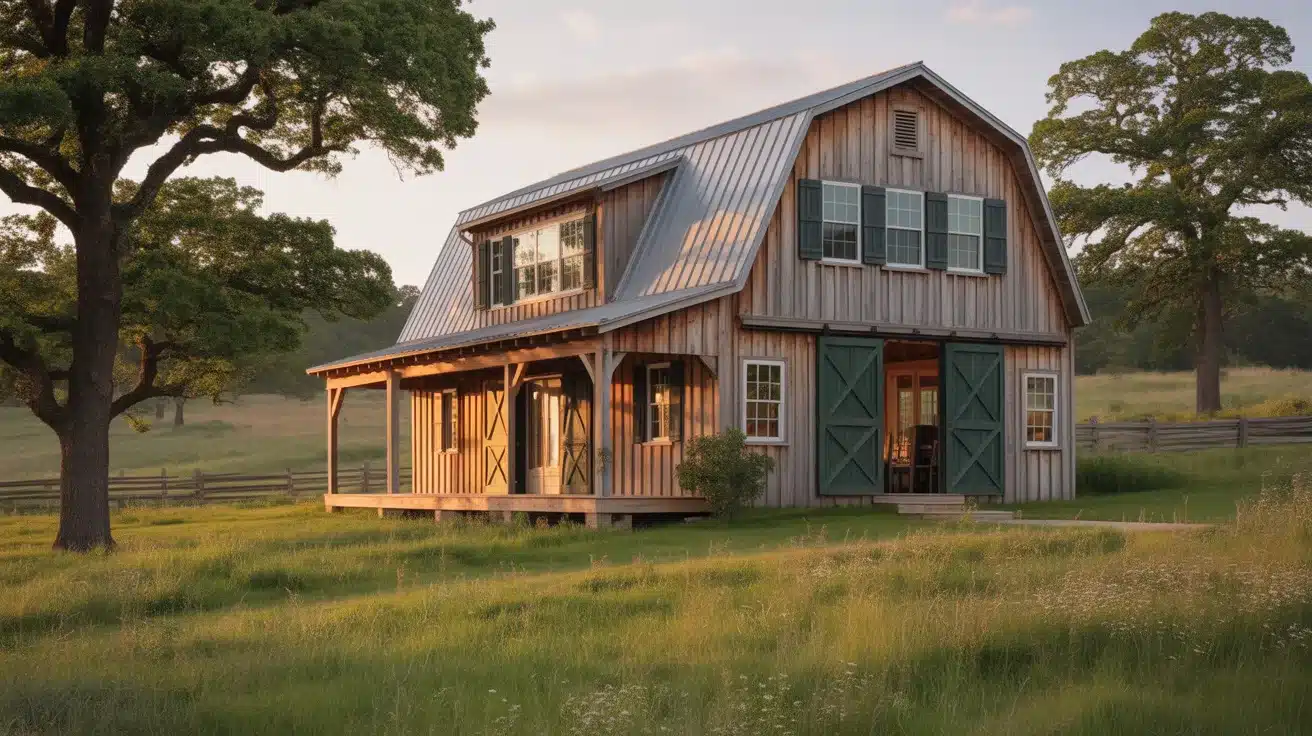
Slide Doors: Instead of doors that swing open and take up space, these big wooden doors slide on a track. They are great for saving space and look very cool.
Pros and Cons of Barn Style Homes
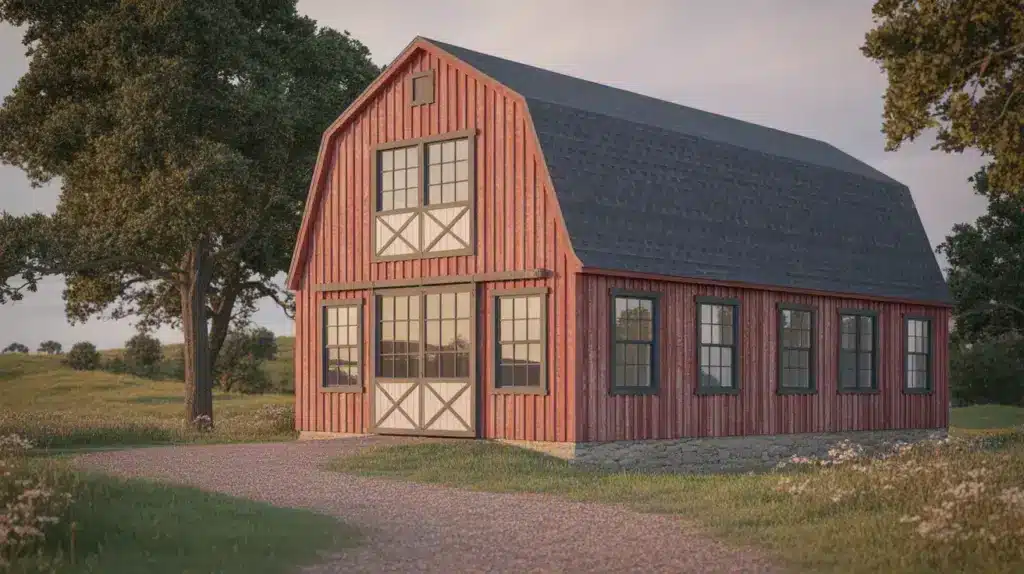
Before you decide to build, it is smart to consider both the pros and cons of these buildings. While barn-style homes are very popular right now, they work differently from a standard house.
Pros of Barn Style Homes
Choosing these comes with several perks that make them a top pick for modern living. Here are the main reasons why people choose this type of build over a regular house:
Open Layouts: These homes do not need many middle walls. This gives you a giant living space where the whole family can hang out together without feeling crowded.
Lower Construction Cost: Because the shape is usually a simple rectangle, you save money on labor and materials. A metal barn house is often much cheaper per square foot than a brick home.
Faster Build Time: The main frame of the house is easy to put up. Many people use kits that allow the “shell” of the home to be finished in just a few weeks.
Energy Efficiency: When you use the right spray foam insulation, these houses are great at holding in heat or cold air. This can lead to much lower power bills.
Cons of Barn Style Homes
While there is a lot to love about these houses, you should also think about the practical hurdles that come with this specific design. Here are the common issues people face with barn-style homes and what you should watch out for:
Heating and Cooling: Since the ceilings are so high, all the warm air rises to the top. This can make the ground floor feel chilly if you don’t have a good heating system.
Sound Travel: Because there are fewer walls and open loft spaces, noise moves easily. A TV in the living room might sound very loud to someone in a bedroom upstairs.
Zoning Restrictions: Some cities have rules that say houses must be made of wood or brick. They might not allow a pole barn home with metal siding in certain neighborhoods.
Financing Challenges: Some banks are not used to these types of buildings. It can be a bit harder to get a traditional home loan, so you might have to talk to several different lenders.
Barn Style Homes vs Barndominiums vs Farmhouse Homes
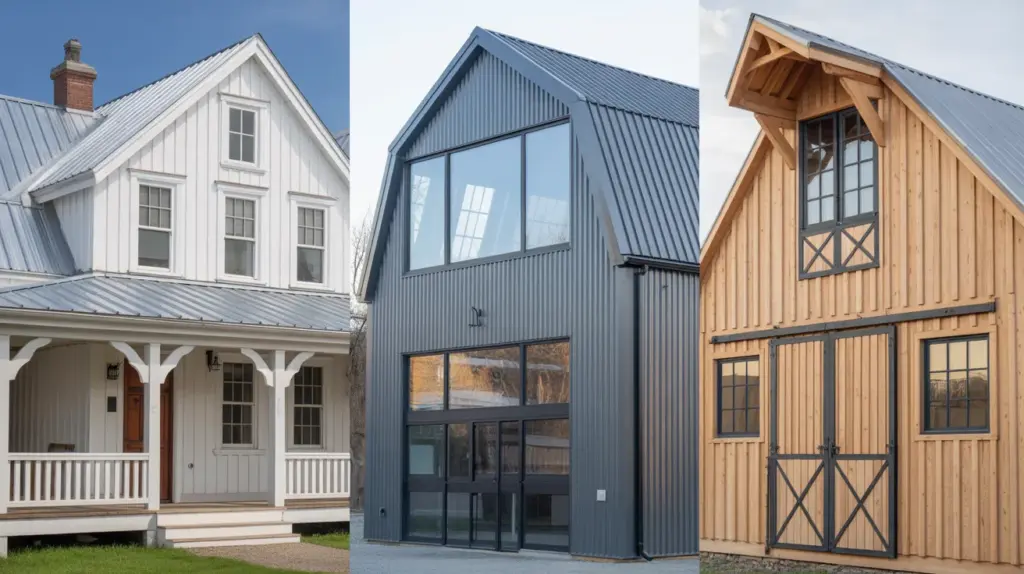
The main difference is in how the house is framed and what it is used for. A farmhouse is usually a traditional wood house, while barn-style homes and barndominiums often focus on huge, open spaces and tougher materials like steel.
| Feature | Farmhouse Home | Barndominium | Barn Style Home |
| Exterior Style | Traditional, often with a wrap-around porch. | Industrial or warehouse look with a high roof. | Classic barn shape, often with big wooden beams. |
| Typical Materials | Wood siding, brick, and shingles. | Metal siding and steel frames. | Timber frames or heavy wood siding. |
| Cost Range | $150 – $300 per square foot. | $65 – $160 per square foot. | $100 – $250 per square foot. |
| Best Use Case | Families in suburbs or traditional neighborhoods. | People who want a home + shop or a big open hobby space. | People who want a rustic look with massive ceilings. |
Barn Style Homes Floor Plans
1. Popular 3 Bedroom Barndominium Floor Plans
Most families find that a 3-bedroom layout is the “sweet spot.” It is not too big to clean, but it has plenty of room for everyone to have their own space.
Size: Usually between 1,800 and 2,100 square feet.
Best for: Families with one or two children or people who need a guest room.
Cool Feature: Many 3-bedroom barndominium floor plans put the main bedroom on one side of the house and the other two bedrooms on the far side. This is called a “split floor plan,” and it gives parents a little extra peace and quiet.
2. Large 4 Bedroom Barndominium House Plans
If you have a bigger family or work from home, you might want to look at 4-bedroom barndominium house plans. These homes are built for action and often include extra spots to keep things organized.
Size: Usually 2,400 square feet or more.
Best for: Large families, multi-generational living, or people who want a dedicated home office.
The “Mudroom” Must-Have: Most of these plans include a large mudroom. This is a small room near the door where kids can drop muddy boots and backpacks so the rest of the house stays clean.
3. Small Pole Barn House Plans for Simple Living
Not everyone needs a massive mansion. Some people want a home that is easy to take care of and cheap to heat. Pole barn house plans are perfect for this because they are simple to build.
Size: Under 1,200 square feet.
Best for: Couples, a weekend getaway house, or even a “granny flat” in the backyard.
Loft Life: Even in a small home, you can add a loft. This puts a “bonus room” up high under the roof. You can use it for storage, a reading nook, or an extra place for guests to sleep.
Made a reference table for you:
| Family Size | Recommended Square Feet | Best Layout Type |
| 1-2 People | 800 – 1,200 | 1-2 Bedrooms + Loft |
| 3-4 People | 1,800 – 2,200 | 3 Bedrooms + Open Great Room. |
| 5+ People | 2,500+ | 4-5 Bedrooms + Mudroom |
Average Cost to Build a Barndominium
A “barndominium” is just a fancy word for a barn that has been turned into a home. On average, you might pay between $65 and $160 per square foot to finish one.
For a standard 2,000-square-foot home, that totals about $130,000 to $320,000.
If you compare this to a traditional house, which can cost $150 to $300 per square foot, you can see why these are so popular!
Pole Barn House Cost Factors
When you look at pole barn house cost details, you have to think about more than just the walls. A lot of the price comes from things you might not see right away.
Here are the big things that change the price:
The Foundation: Most of these homes sit on a flat concrete slab. This usually costs between $6 and $14 per square foot.
The Kit vs. Custom: Buying a pre-made kit can save you thousands in architect fees.
Location: Building in a place like Texas or Oklahoma is often cheaper than building in California or New York because labor and land cost less there.
Cheap Ways to Build a Barn House
If you are on a tight budget, there are tricks to keep your spending low.
Stick to a Rectangle: Houses with extra corners or “L” shapes cost more to build and roof. A simple rectangle is the cheapest shape.
Use Metal Siding: Metal is cheaper than wood or brick, and it lasts a very long time without needing paint.
Do the “Sweat Equity”: If you can paint the walls or lay the floors yourself, you can save about 20% to 30% on labor costs.
Cost Comparison Table (2,000 Sq. Ft. Home)
| Item | Estimated Cost (Low) | Estimated Cost (High) |
| Building Shell/Kit | $40,000 | $70,000 |
| Foundation (Slab) | $12,000 | $28,000 |
| Interior Finishing | $80,000 | $220,000 |
| Total Project | $132,000 | $318,000 |
Pro Tip: Always set aside an extra 10% of your budget for “surprises.” When building any home, things like permits or dirt work often cost a little more than the first estimate.
Zoning, Permits, and Financing: Barn Style Homes
Before you can start construction, you have to work with the city and your bank to get the right approvals. This part of the process ensures your home is safe, follows local laws, and stays within your budget.
1. Rural vs Residential Zoning
Zoning determines if you can build on your land. In rural spots, barn-style homes fit right in with the farm surroundings. In residential areas, rules are often tighter.
Some towns might not allow metal siding or specific barn shapes, so check your local codes first.
2. HOA Restrictions
Homeowners’ Associations often have strict rules about how a house looks. They might ban metal roofs or require specific colors to match the neighborhood.
Always check your HOA rules before buying barn-style home plans to avoid being told you cannot build.
3. Permits Required
You need official permission before you can start digging. This includes a building permit to ensure the house is safe and sturdy. You will also need permits for your plumbing, electricity, and driveway.
Starting this paperwork early prevents big delays in your build.
4. Construction Loans vs Mortgages
Building a home requires a construction loan, which pays for materials and labor as you go. Once the house is done, this loan usually switches to a standard mortgage.
Since some banks are picky about pole barn house plans, look for a lender that has worked with these homes before.
5. Insurance Considerations
Insurance costs depend on the materials you choose for your home. Metal barn-style homes are very fire-resistant, which can help you save money on your monthly bill.
However, you should check how your local weather, like hail or wind, might change your insurance price.
Conclusion
Building barn-style homes is a smart way to get the space you need without spending a fortune.
These houses mix the classic look of a farm with all the modern comforts your family deserves.
While you have to keep an eye on things like zoning and heating, the benefits of open living and faster builds are hard to beat.
If you are ready to stop dreaming and start building, now is the perfect time to look at your options. These homes are tough, beautiful, and built to last.

With a Master’s in Architecture from the University of California, Berkeley, Alexander Martin has dedicated the last 18 years to enhancing outdoor living through thoughtful and robust structure design. His career kicked off in urban planning, giving him a unique perspective on integrating structures into diverse environments. In 2019, Alexander brought his expertise to our website, offering insights into creating versatile outdoor spaces. Since then, he has been the lead advisor for our outdoor design projects and is known for his ability to merge functionality with environmental consciousness. Alexander enjoys rock climbing outside of work and participates in community development projects, activities that reflect his passion for the outdoors and sustainable design.