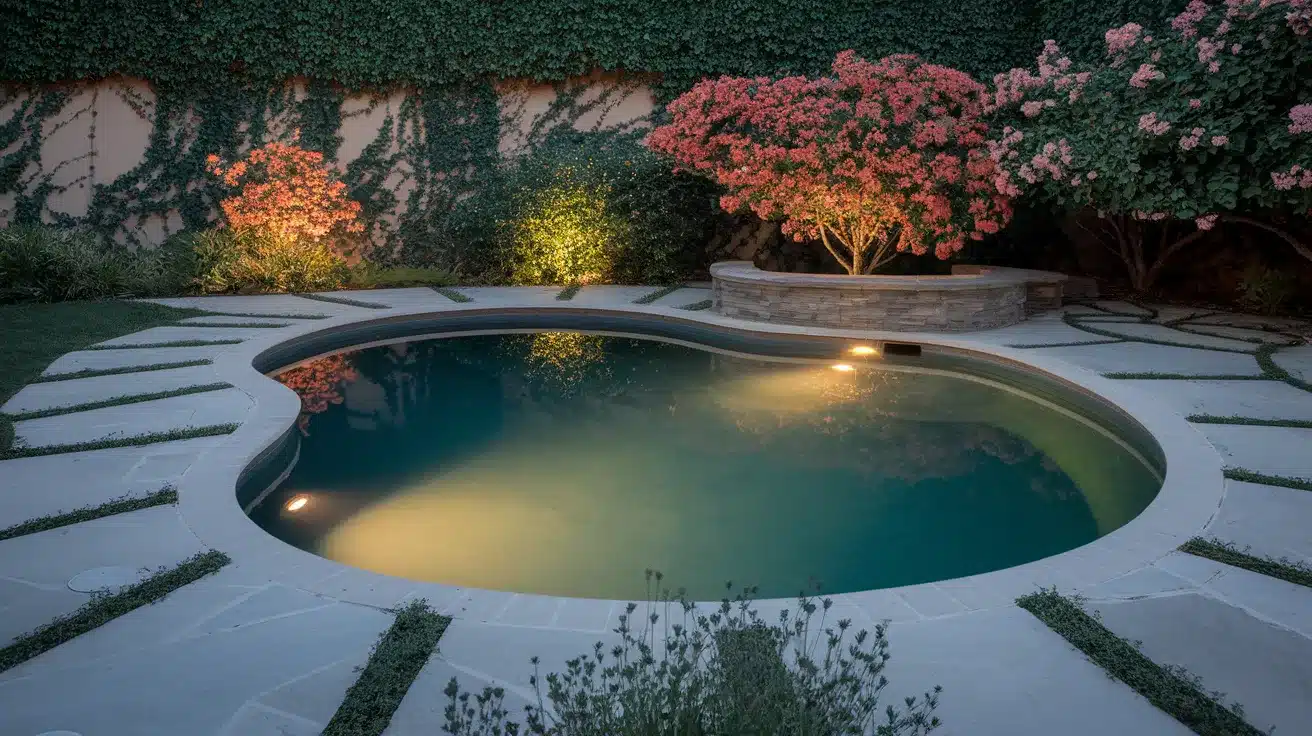

Small backyard pool ideas address a common concern: limited outdoor space often feels unsuitable for pool installation.
Poor layout choices, oversized designs, and crowded features can quickly reduce comfort and usability in compact yards.
With proper planning, however, smaller spaces can support pools that remain functional, balanced, and easy to maintain.
This article explains how thoughtful sizing, layout decisions, and material choices help pools fit naturally into limited backyards.
Each section focuses on clear, workable solutions for compact outdoor areas.
Best Pool Types for Small Backyards
Choosing the correct pool type sets the foundation for long-term satisfaction. Smaller yards require pool designs that minimize footprint while maintaining comfort and safety.
Plunge Pools
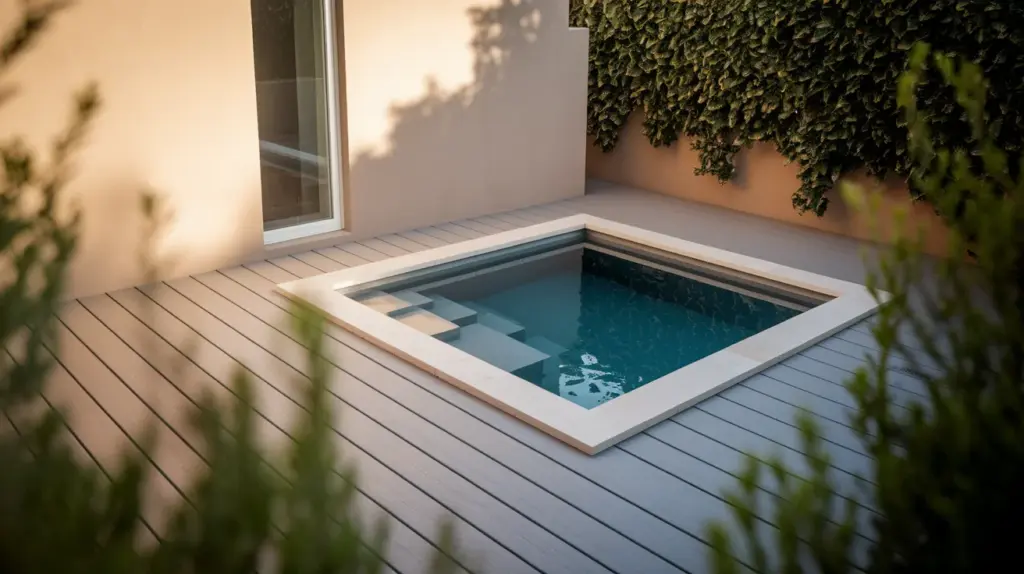
Plunge pools are among the most common solutions for compact backyards. These pools focus on cooling and relaxation rather than active swimming.
Their depth allows full-body immersion while keeping surface area limited. Installation works well in square or narrow spaces where traditional pool shapes would feel oversized.
Maintenance requirements are often lower due to reduced water volume. Heating costs also remain manageable, making plunge pools suitable for frequent use during warm months.
Cocktail Pools
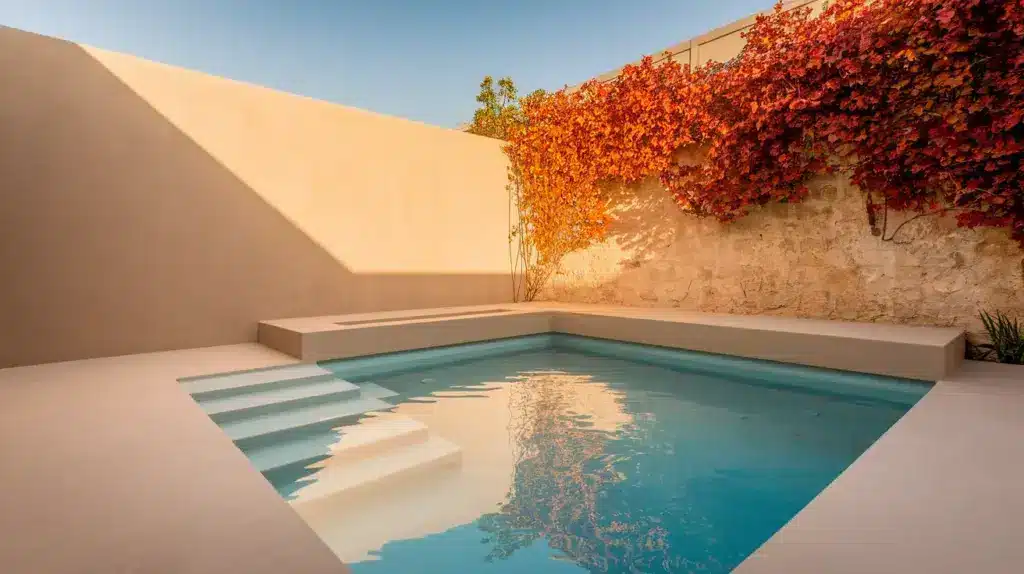
Cocktail pools combine shallow depth with built-in seating. These pools function well as social or relaxation areas rather than swim-focused spaces.
The shallow design improves safety while supporting longer use without fatigue.
This pool type works well when paired with minimal decking and seating walls. Cocktail pools often include steps or ledges that replace the need for additional furniture.
Lap Pools for Narrow Spaces
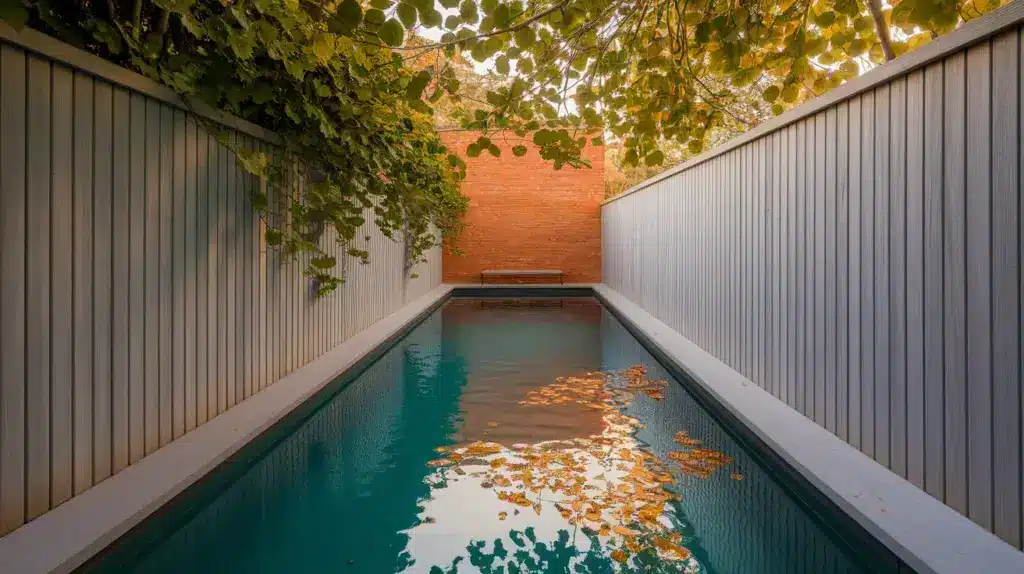
Lap pools suit backyards with limited width but available length. Their long, narrow design fits along property lines or fencing without dominating the yard.
This layout preserves central space while allowing light exercise and movement.
Lap pools benefit from clean rectangular shapes and simple entry points. Narrow decking on one side often provides enough access without wasting space.
Above-Ground and Semi-Inground Pools
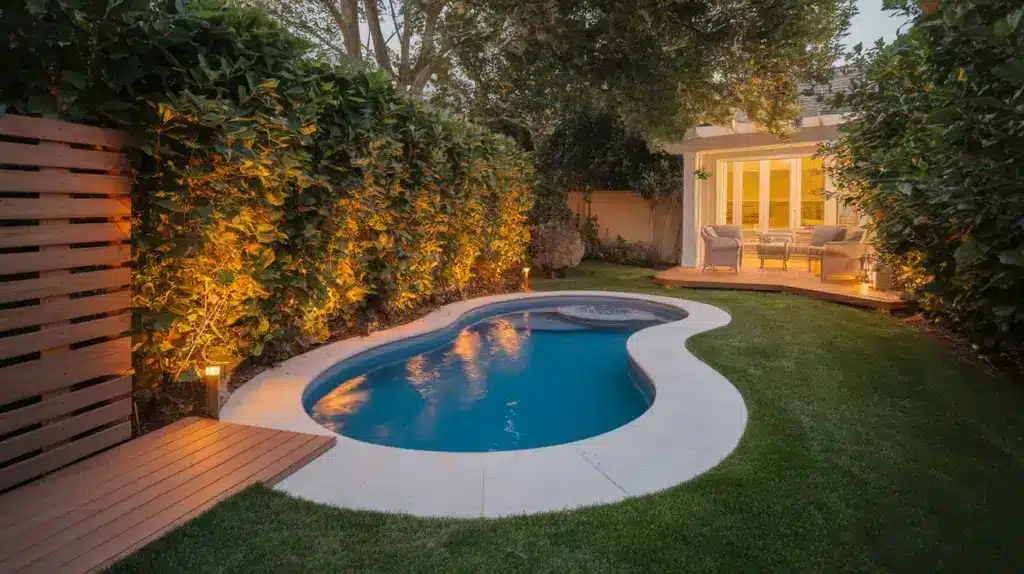
Above-ground and semi-inground pools offer flexibility where excavation is limited by budget, soil conditions, or access.
These pools work well in sloped or irregular yards where full in-ground installation is not practical.
With proper decking and screening, these pools integrate visually into small backyards while keeping installation time shorter.
Space-Saving Small Backyard Pool Ideas
Efficient layouts help small yards remain comfortable and organized.
1. Corner Pool Placement
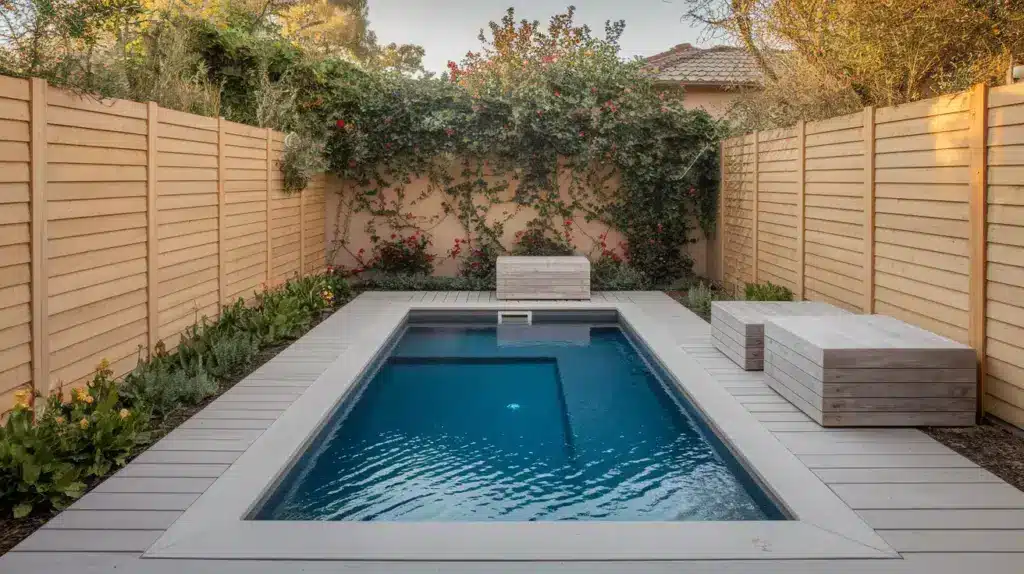
Corner placement uses space that often remains unused. Installing the pool in a corner preserves open walking areas and seating zones.
This layout supports better flow and reduces visual congestion in the center of the yard.
Corner pools also simplify fencing and privacy planning, especially in closely spaced neighborhoods.
2. Built-in Steps and Benches
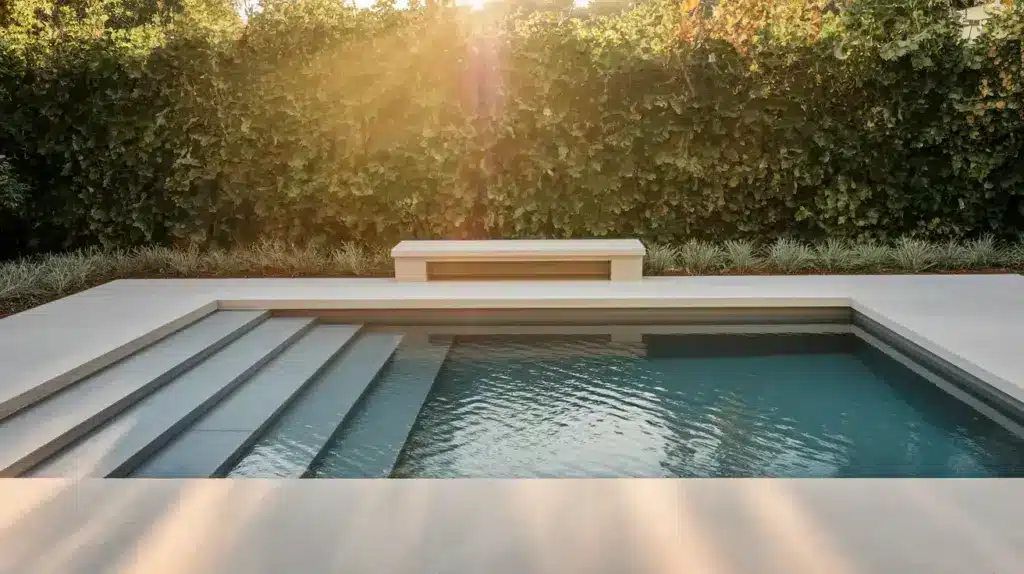
Built-in steps and benches reduce the need for separate ladders or furniture. Integrated features improve comfort while keeping the pool area uncluttered.
Seating ledges also provide resting areas without increasing pool size.
This approach supports both relaxation and safety, especially in shallow pool designs.
3. Raised Pool Edges with Dual Purpose
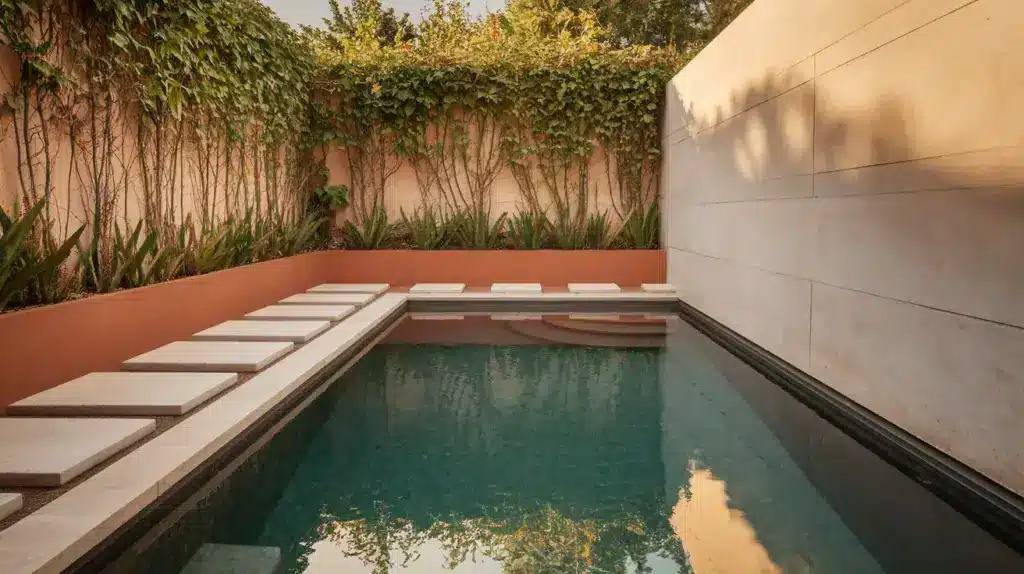
Raised pool edges can serve as seating walls or visual boundaries. This design eliminates the need for extra seating structures and helps define the pool area without fencing.
Raised edges also improve drainage control and surface transitions in compact yards.
4. Narrow Decking Layouts
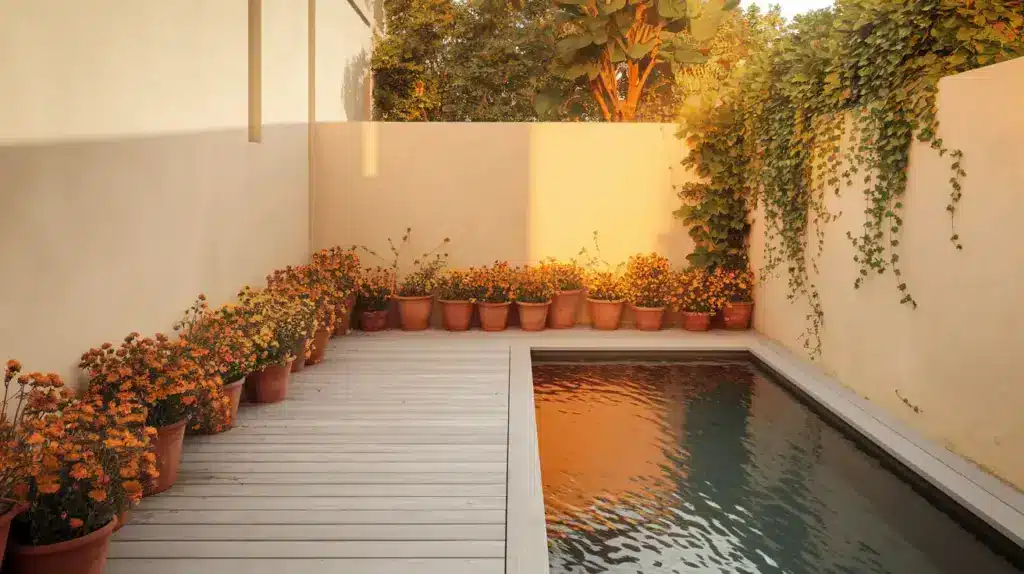
Wide decks often consume valuable space. Narrow decking paths provide safe access while preserving yard usability.
Materials such as concrete pavers or composite boards work well in tight layouts.
Decking should focus on access points rather than surrounding the entire pool.
5. Pool Covers that Double as Surfaces
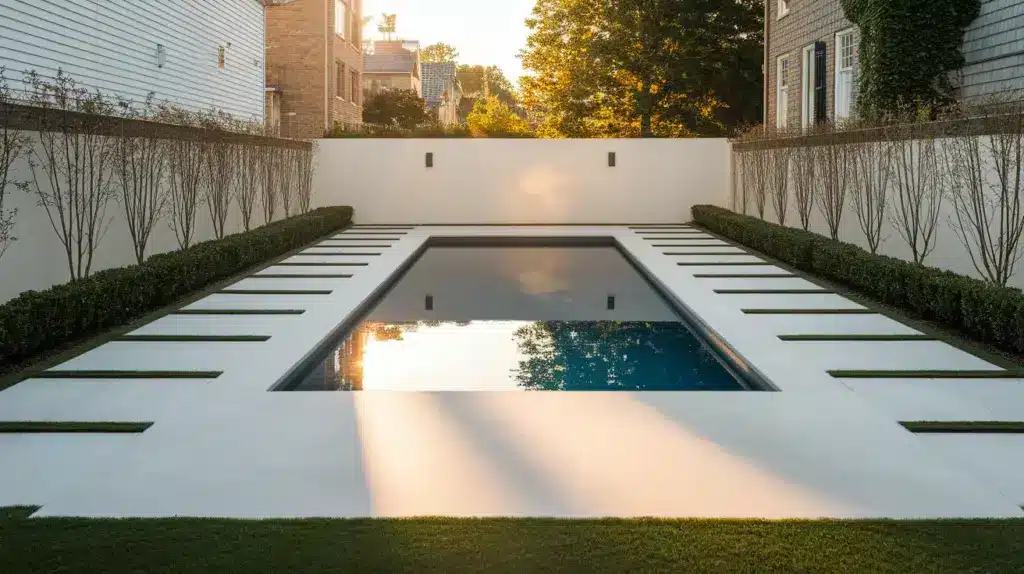
Walkable pool covers provide added safety and usable surface space when the pool is not in use.
These covers allow small yards to serve multiple purposes throughout the year.
This option works well in urban settings where outdoor space must remain flexible.
Small Backyard Pool Landscaping Ideas
Landscaping choices influence how open or enclosed a pool area feels.
6. Minimal Planting Strategies
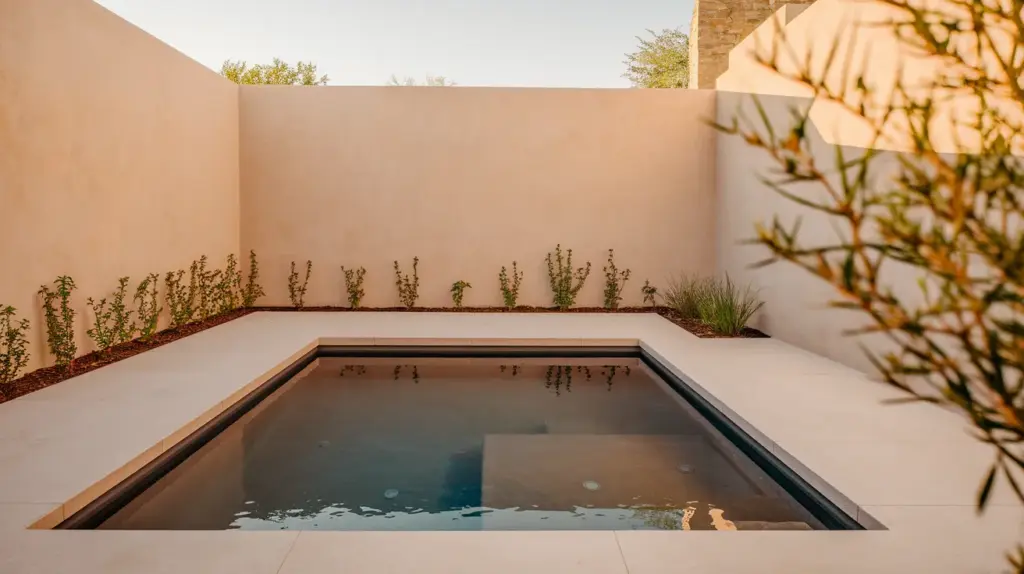
Small backyards benefit from a limited plant variety. Fewer plant types with consistent spacing create a cleaner look and reduce maintenance demands.
Plants should remain proportional to the pool size. Overcrowding greenery can reduce airflow and make the space feel closed.
7. Vertical Privacy Solutions
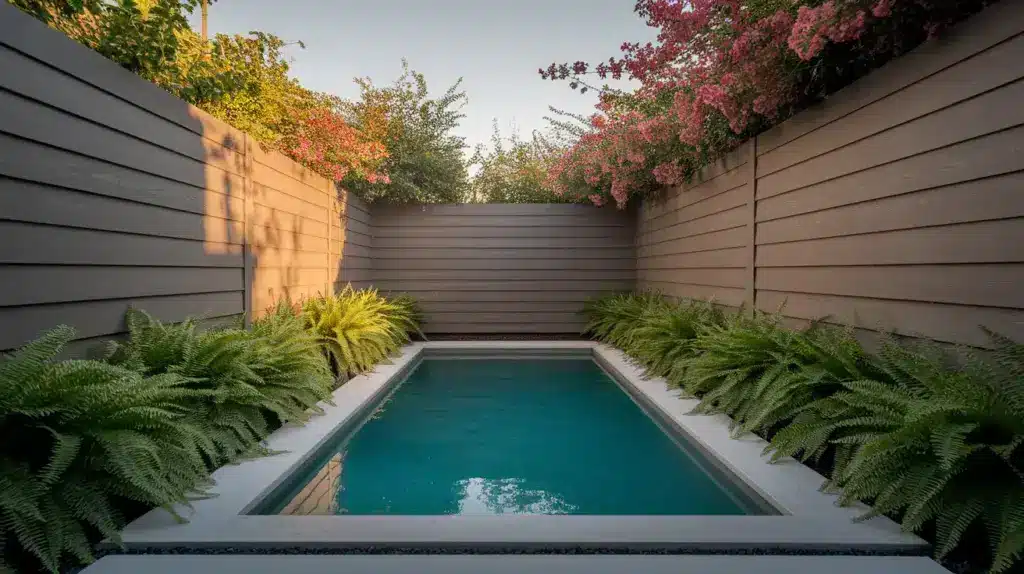
Vertical elements such as slim fencing, privacy screens, or tall planters add separation without reducing floor space.
These features offer privacy while keeping the yard visually open. Neutral materials and simple patterns maintain balance in compact areas.
8. Hardscape-Focused Surroundings
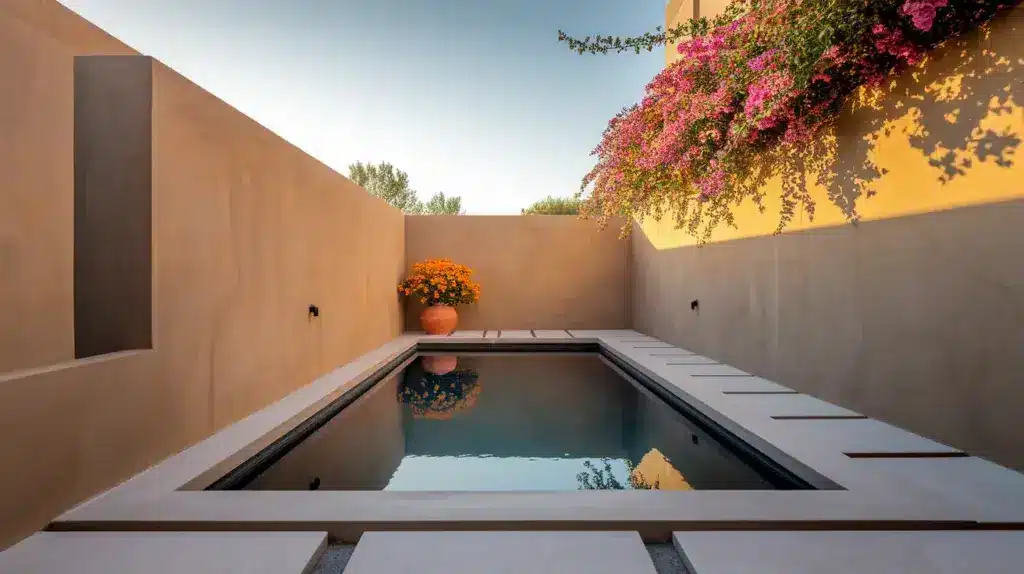
Reducing lawn areas around the pool simplifies maintenance and improves drainage. Stone, concrete, or paver surfaces support clean transitions and reduce visual clutter.
Hardscaping also improves accessibility in small yards.
9. Low-Profile Lighting Placement
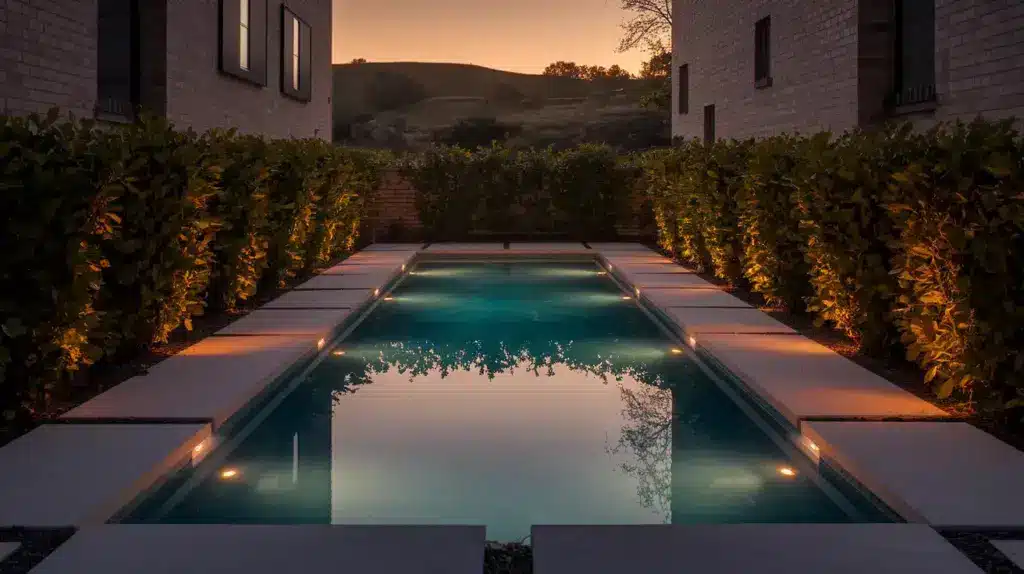
Lighting should support safety without overwhelming the space. Recessed lights along pathways or within pool walls provide sufficient visibility.
Avoid excessive fixtures that create glare or visual overload.
Budget-Friendly Small Backyard Pool Ideas
Cost control begins with design restraint and material selection.
10. Prefabricated Pool Options
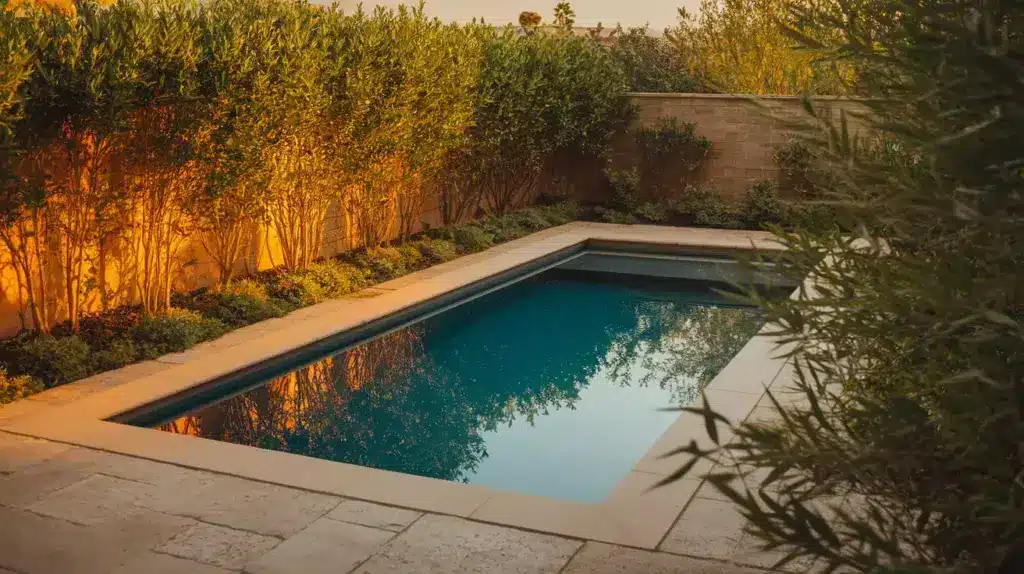
Prefabricated pools reduce labor and installation time. These pools arrive in set shapes and sizes that suit small backyards. Faster installation lowers overall project costs.
This option also limits unexpected construction delays.
11. Standard Finishes and Materials
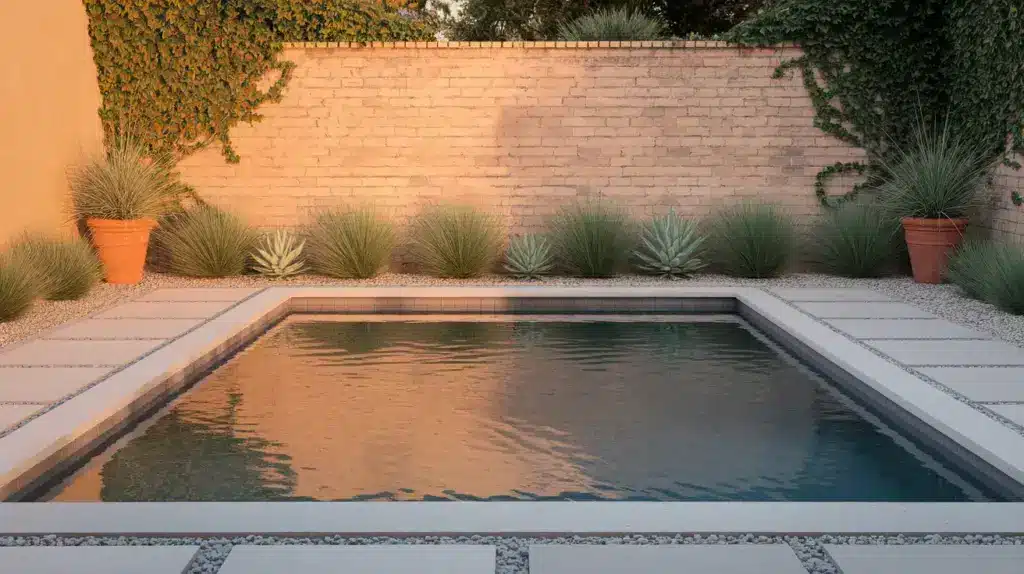
Simple finishes reduce both upfront and long-term costs. Neutral surfaces resist staining and simplify cleaning.
Standard coping materials often perform better in compact designs. Avoiding complex tile work keeps maintenance manageable.
12. Phased Feature Installation
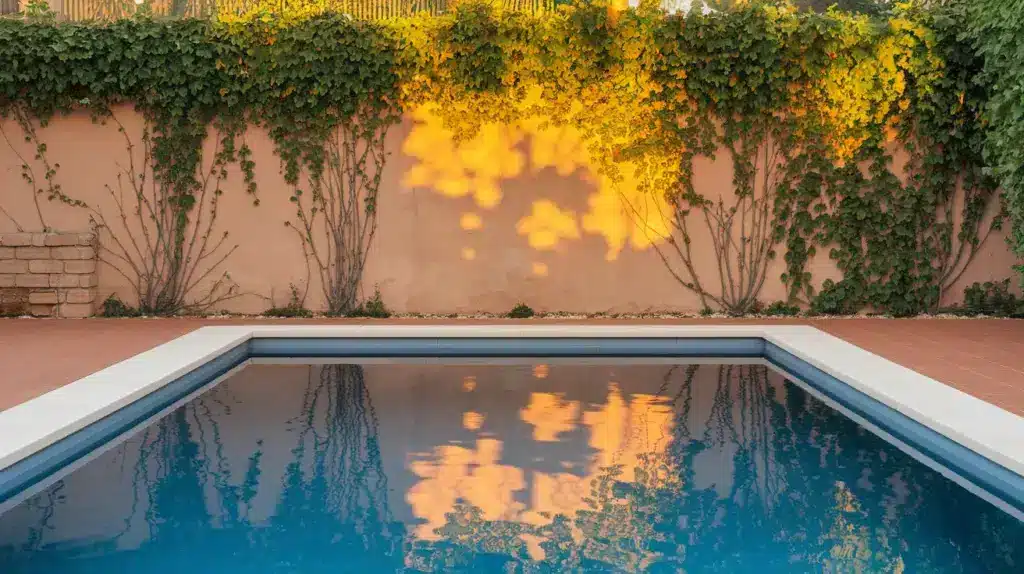
Adding features in stages spreads expenses over time. Starting with a functional pool allows later upgrades such as heating, lighting, or automation.
This approach maintains budget flexibility without sacrificing usability.
13. Shared Utility Systems
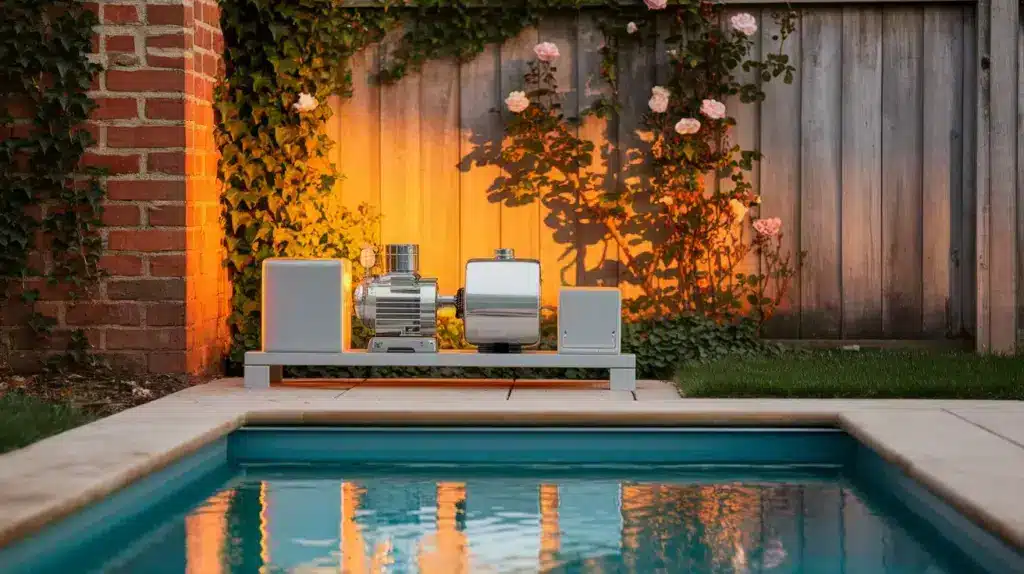
Compact pools require smaller pumps and filtration systems. Choosing appropriately sized equipment reduces energy use and maintenance costs.
Oversized systems increase expenses without added benefit.
Common Mistakes to Avoid With Small Backyard Pools
Certain planning errors reduce functionality and comfort.
Oversized pool dimensions reduce available space for walking paths and seating areas
Poor circulation planning causes congestion near pool entry and exit points
Too many added features overwhelm the limited space and increase maintenance needs
Ignoring local zoning rules may result in redesigns or removal after installation
Skipping safety requirements can lead to compliance issues and added costs
Inadequate drainage planning creates long-term water management problems
Lack of space balance makes the backyard feel crowded and harder to use
Conclusion
Small backyard pool ideas succeed when design choices prioritize function, proportion, and simplicity.
Compact pools can provide cooling, relaxation, and visual appeal without overwhelming a limited outdoor space.
Pool type selection, efficient layouts, and controlled landscaping contribute to long-term usability.
Budget-aware decisions support sustainable maintenance and flexible upgrades. Avoiding common layout mistakes prevents wasted space and improves daily comfort.
With careful planning, small backyards can include pools that feel intentional and practical rather than restrictive.
Comments and shared experiences can support further comparisons and refinements for compact pool planning.

With a Master’s in Architecture from the University of California, Berkeley, Alexander Martin has dedicated the last 18 years to enhancing outdoor living through thoughtful and robust structure design. His career kicked off in urban planning, giving him a unique perspective on integrating structures into diverse environments. In 2019, Alexander brought his expertise to our website, offering insights into creating versatile outdoor spaces. Since then, he has been the lead advisor for our outdoor design projects and is known for his ability to merge functionality with environmental consciousness. Alexander enjoys rock climbing outside of work and participates in community development projects, activities that reflect his passion for the outdoors and sustainable design.