
A failing roof may look ugly, but it’s also a sign of structural problems. Your roof is supposed to protect your home from damage, and if it fails, it won’t do its job. Just one small water leak can cause extensive, costly damage to your insulation, drywall, sheathing, and framing.
Sometimes repairs are warranted, but some situations call for a roof replacement. It’s crucial to recognize the signs before your roof fails and costs you thousands of dollars in damage.
1. Your roof is more than 20 years old
Age alone can justify a roof replacement, even if you don’t notice any damage. Most asphalt shingle roofs are only designed to last around 20 to 30 years, and that lifespan is even shorter in harsh climates. Once your roof reaches 20 years, it’s vulnerable.
Most roofing materials degrade when exposed to sunlight, temperature fluctuations, and moisture. No shingle will last forever, and even the most expensive materials can lose granules and start to deteriorate. By the time your roof reaches its expected lifespan, failure becomes a systemic problem rather than isolated issues that can be fixed with a simple repair.
2. You’re missing shingles or have damaged shingles
If your shingles are curling, buckling, cracked, or missing, that’s an invitation for water intrusion. It’s common for the freeze-thaw cycles to eventually damage shingles. They can’t withstand repeated expansion and contraction forever. All it takes is a small crack and heavy rain and you’ll be dealing with a leak. However, you may not notice the leak until it’s already done serious damage to your walls or ceiling.
If the damage only impacts a few shingles, you might be fine with a repair. However, it’s best to get a professional roof inspection to determine your best options. If the damage is widespread, you might need a new roof, even if most of your shingles appear to be fine.
3. You find granules in your gutters
Shingle granules are added as protection against UV rays, but over time, they will come loose and end up in your gutters. Without proper granule protection, your roof won’t be protected from the sun and will age much faster.
If you find heavy granule buildup in your gutters, it’s a sign of extensive wear and more damage to come. Compromised shingles are easy to spot because they have smooth, dark patches where the granules used to be.
4. You have water damage or leaks
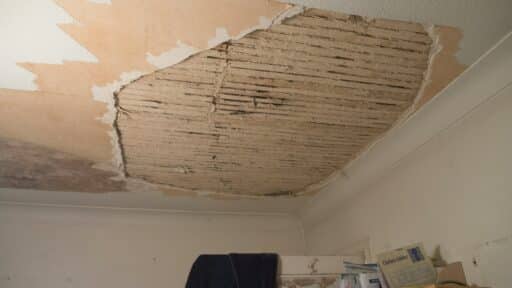
Water intrusion is a major sign that your roof is compromised. Not only can water damage your home, but mold can start growing in as little as 24-48 hours. If you have chronic leaks, you can expect damaged insulation and rotting sheathing. If it gets too bad, you might experience sagging drywall from the weight of the water.
5. The roofline is sagging or deformed
An uneven roofline visible from outside your home can be a sign of damaged decking or rafters. This type of damage can’t be solved with a small repair. Most of the time, when a roof starts to sag, a full roof replacement is required to reinforce the framing and replace the decking.
6. Your roof has widespread storm damage
If your home has been hit by a major storm or if you experience big storms frequently, your roof is going to deteriorate faster than it would in a calm area. Even hail and severe wind can cause damage. Hail can weaken your shingles and harsh wind can alter the position of flashing. It’s recommended to replace your roof if storm damage has impacted a significant portion of the roof, although depending on your situation, some roofing companies will replace a large section of isolated damage and leave the rest.
7. Your energy bills are getting higher for no apparent reason
If your heating and cooling costs have been high without increased usage or higher rates, that could indicate a compromised roofing system. Aging and damaged roofs can prevent insulation and ventilation from functioning properly and will trap heat in summer and moisture in winter.
Replacing an older roof before it completely fails will significantly improve your home’s ability to maintain the temperature inside in summer and winter and will keep your utility costs low.
Repair or replace your roof before it completely fails
Roofs rarely fail without warning. Issues like broken shingles, lost granules, water leaks, structural sagging, and an unexplained increase in energy bills can all point to necessary repairs and sometimes replacement. While it costs more to replace a roof, sometimes that’s the best option to protect the structural integrity of your property.
Avoiding serious damage is an investment in the long-term stability and value of your home.

With a Master in Architectural Studies from University of Pennysylvania, Marwa Haydar has pioneered living spaces since 2005. Her expertise, initially honed in a prestigious architectural firm, is evident in her approach to creating environments. Marwa became part of our team in 2019 and has since been a driving force in our home improvement section, known for her practical yet stylish solutions. She’s been spearheading our design workshops since then, infusing her passion for teaching into her work. In her leisure time, Marwa enjoys exploring historic architecture and is an enthusiastic pottery hobbyist, further enriching her understanding of form and texture.