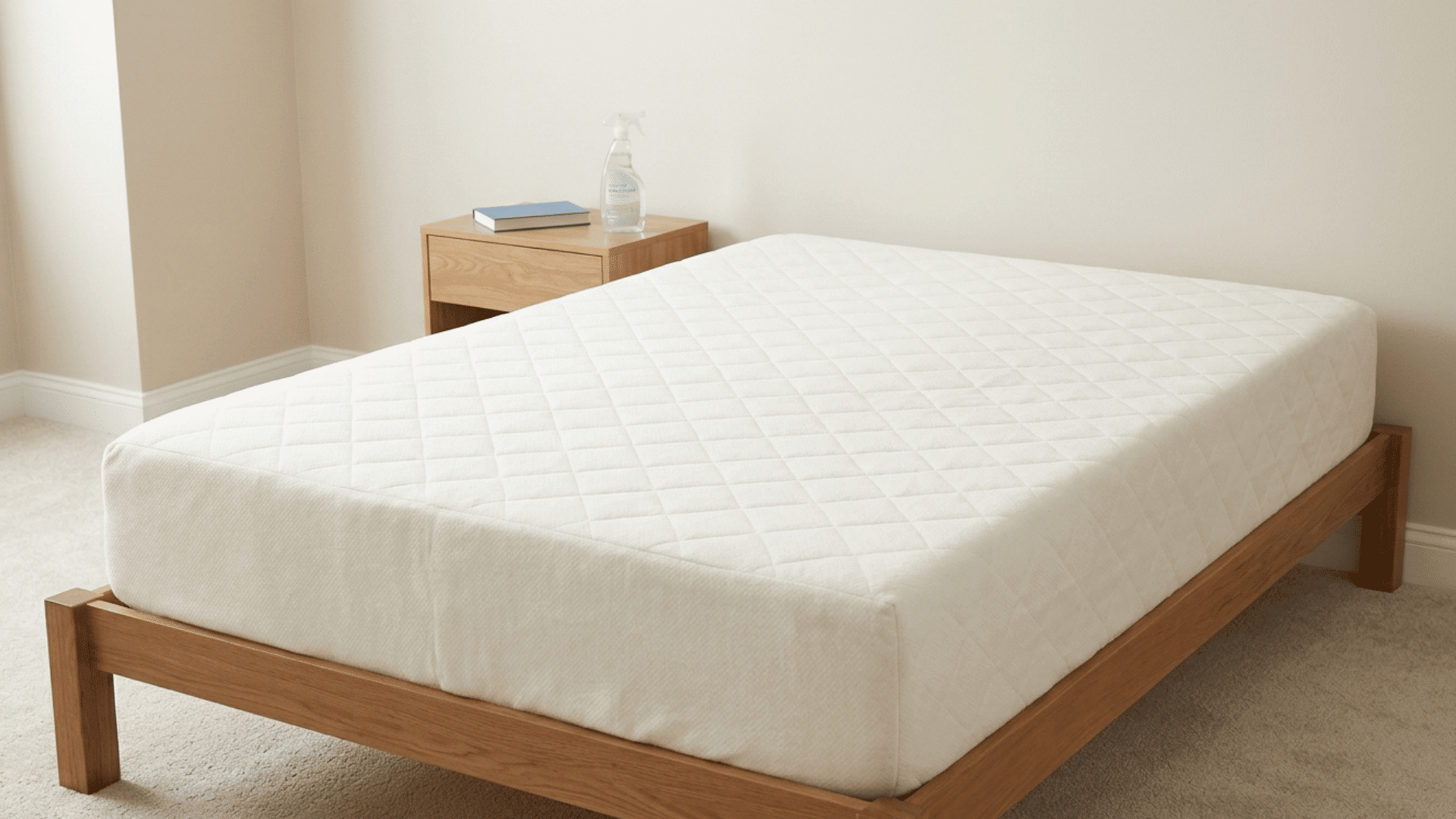

Got an old mattress taking up space? It’s one of those bulky items that’s tricky to deal with. You can’t just leave it outside and expect it to disappear, and tossing it without a plan can harm the environment.
Many mattresses end up in landfills, where they take years to break down and waste valuable space. The good part is that there are smarter and more responsible ways to handle it.
What to do with an old mattress from recycling, donating, or simple reuse ideas, there are options that actually make sense.
This blog leads you through easy ways to get rid of your old mattress without creating unnecessary waste or stress.
Why Should You Avoid Throwing Away a Mattress?
Throwing away a mattress might seem like the easiest option, but it creates long-term problems. Mattresses can take years to break down in landfills, adding to growing waste issues.
They are bulky, which means they quickly fill up valuable landfill space that could be used for other waste.
Some materials inside, like foam and synthetic fibers, can also release harmful substances into the environment over time. This makes simple disposal less responsible than it looks.
Choosing better options, like recycling or donating, helps reduce waste and keep useful materials in use. A small effort in disposal can make a big difference for both the environment and your community.
Check Mattress Condition Before Disposal
Before deciding how to dispose of your mattress, check its condition first. A quick inspection can save time and help you choose the right option. Look for signs like stains, odors, sagging, or damage to the structure.
| Signs Mattress Can Be Reused | Signs Mattress Should Be Recycled |
|---|---|
| No visible stains or unpleasant odors | Broken or protruding springs |
| No major sagging or uneven surface | Mold, mildew, or a strong, unpleasant smell |
| Still feels supportive and comfortable | Torn fabric or visible damage |
| No signs of bed bugs or pests | Severe sagging or loss of shape |
How to Prepare Your Mattress for Disposal?
A little preparation can make mattress disposal simple and hassle-free. Taking a few basic steps helps keep things clean, ensures it meets local rules, and makes pickup or recycling much smoother.
Step 1: Clean the Mattress
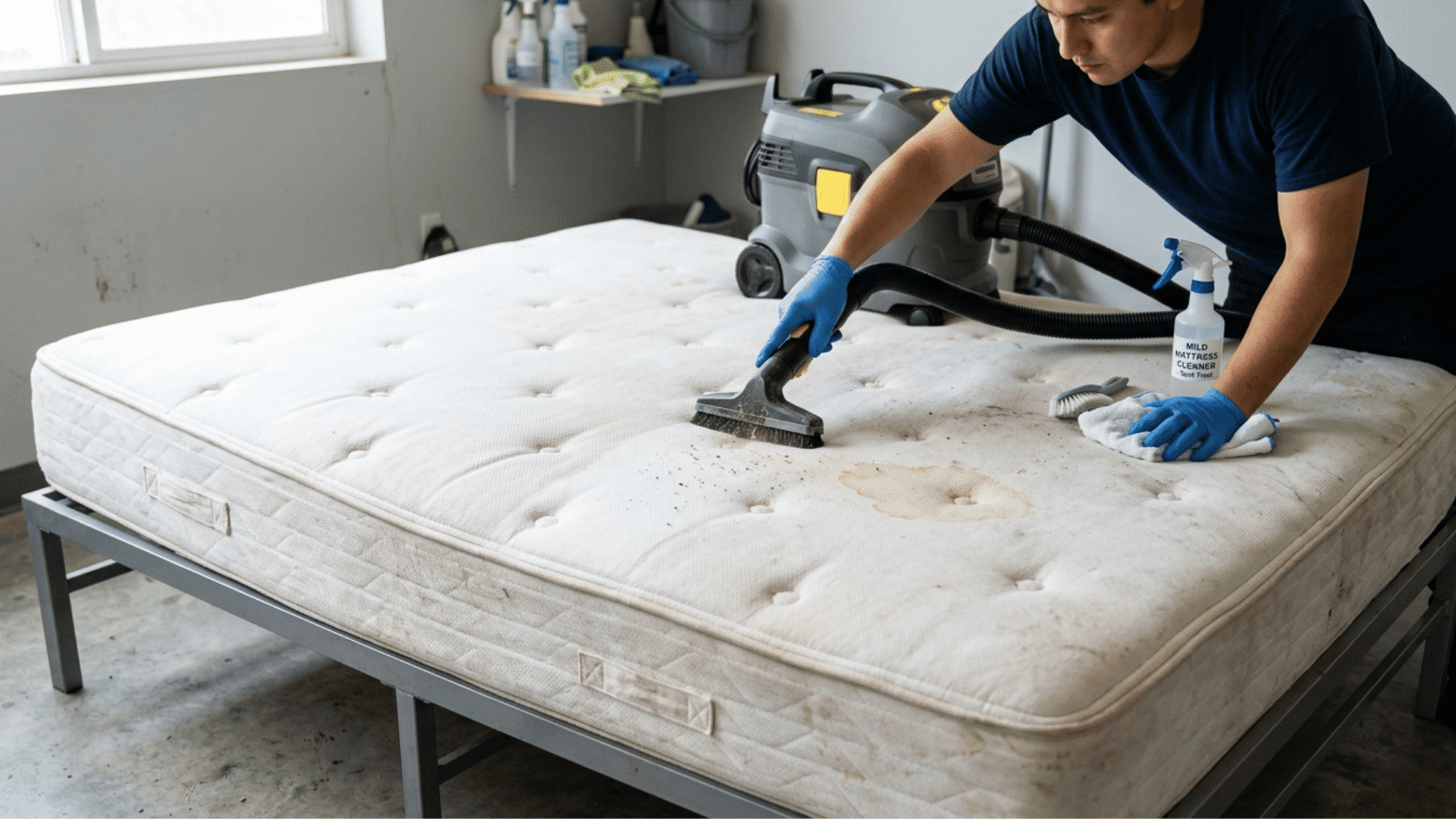
Start by giving your mattress a basic clean. Remove dust, debris, and visible stains using a vacuum and mild cleaner.
This step is especially important if you plan to donate or give it away. A cleaner mattress is safer to handle and more acceptable for reuse.
Even if it’s going for disposal, cleaning helps reduce odors and keeps things more hygienic during transport and handling.
Step 2: Dry it Completely
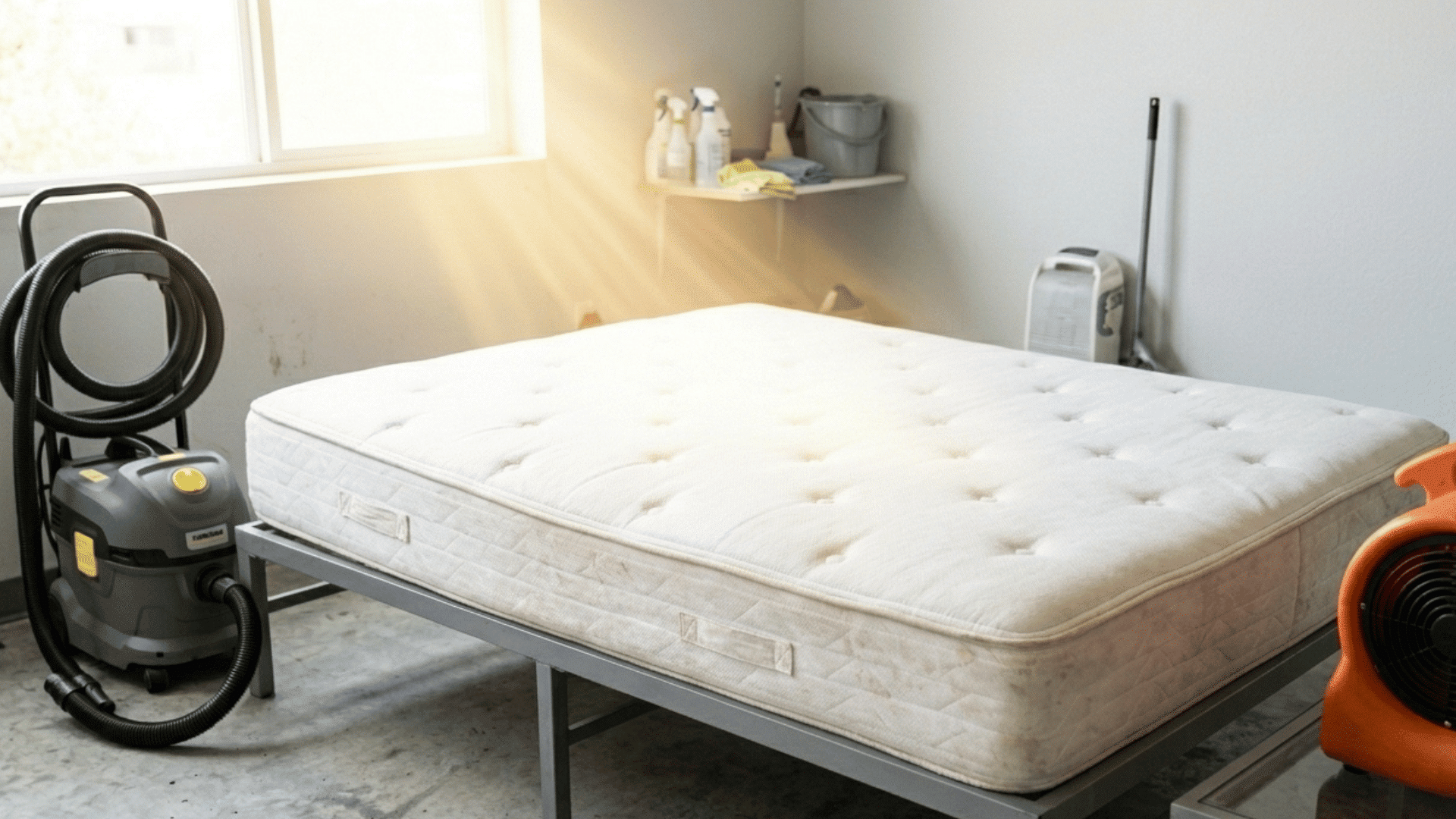
After cleaning, make sure the mattress is fully dry before moving it out. Any moisture left inside can lead to mold or unpleasant smells, especially if it sits for a while before pickup.
Place it in a well-ventilated area or under sunlight for faster drying. A dry mattress is easier to handle and prevents issues during storage, transport, or recycling.
Step 3: Wrap or Cover it
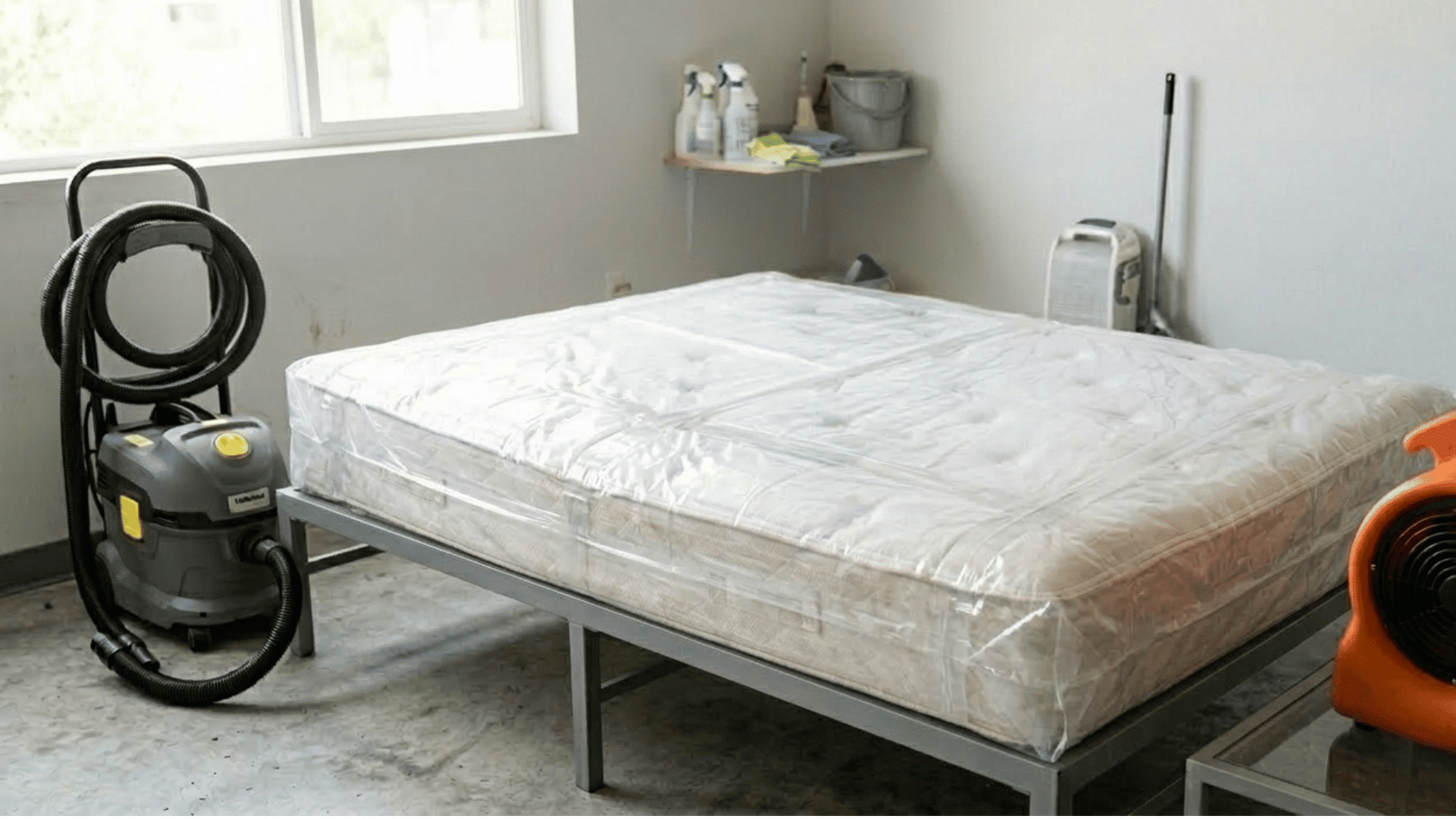
Wrap your mattress in a plastic cover or mattress bag to keep it contained.
This helps prevent dirt, pests, or damage during handling. Many cities also require mattresses to be wrapped for disposal to ensure hygiene.
A proper cover makes the process smoother for pickup teams and protects surrounding areas from mess or contamination.
Step 4: Move it to the Pickup Spot
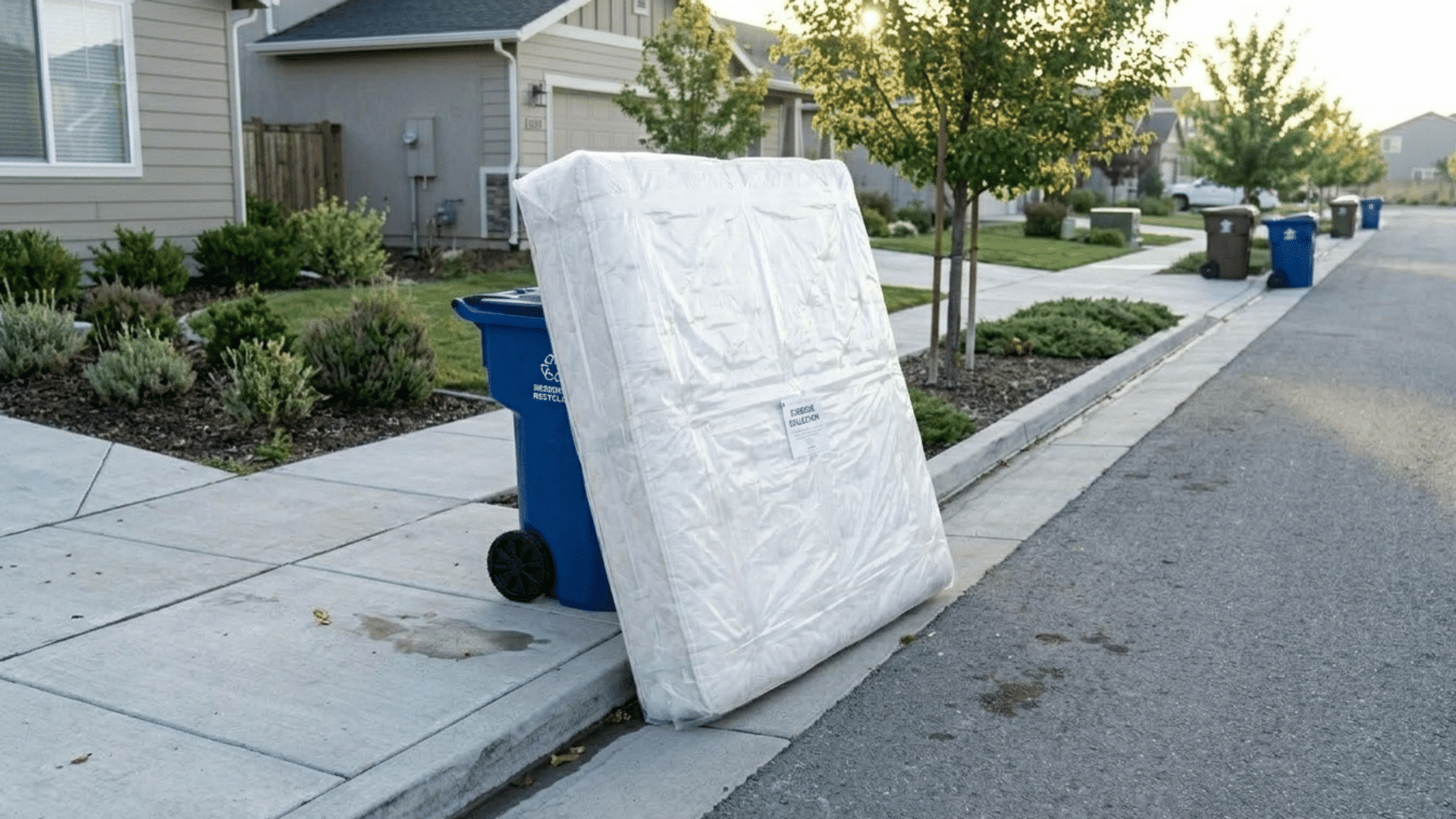
Once everything is ready, move the mattress to the designated pickup area. This could be the curbside, driveway, or a specific collection point.
Make sure it’s placed neatly and doesn’t block pathways. Putting it out at the right time, usually the night before or early morning, helps ensure a smooth and hassle-free pickup process.
Options for Mattress Recycling and Disposal
Recycling your mattress is a simple way to cut down waste and reuse valuable materials. With the right approach, you can keep bulky items out of landfills and make disposal more responsible.
What Parts Can Be Recycled
Many parts of a mattress can be recycled, including metal springs, foam, fabric, and wood components. Proper recycling helps reduce landfill waste and allows materials to be reused in new products.
- Metal Springs: These can be extracted and recycled into new metal products.
- Foam Padding: Foam layers are often reused for carpet padding or cushioning materials.
- Wood Frames: Wooden parts can be repurposed for small projects or processed for fuel.
How to Find Recycling Centers
Finding recycling centers for mattresses involves identifying facilities that can properly handle and separate different mattress materials. It ensures safe disposal while maximizing the reuse of recyclable components.
- Search Local Recycling Facilities: Find centers near you that accept bulky items, such as mattresses.
- Check with Your Municipality: Many local authorities offer recycling or special pickup options.
- Look For Mattress Recycling Programs: Some organizations specialize in breaking down and reusing mattress materials.
- Ask Local Retailers: Some mattress stores offer take-back or recycling services when you buy a new one.
Repurpose an Old Mattress at Home
Instead of throwing your mattress away, you can reuse its parts in simple and practical ways. With a little effort, it can be turned into useful items for your home or outdoor space.
| Idea / Tip | Description |
|---|---|
| Pet Bed | Use the foam or soft padding from your mattress to create a cozy and comfortable bed for your pets at home. |
| Cushion Filling | Cut the foam into smaller pieces and reuse it as cushion or pillow filling, or for floor seating. |
| Garden Seating | Turn the mattress base or padding into simple outdoor seating by adding a durable cover for protection. |
| Cut Foam Safely | Always use proper tools and take care while cutting foam to avoid injuries or uneven pieces. |
| Clean Materials First | Make sure all materials are cleaned and completely dry before reuse to maintain hygiene and safety. |
| Use Covers For Hygiene | Add removable or washable covers to keep reused items clean, safe, and easy to maintain over time. |
Use Bulk Trash or Pickup Services
Using bulk trash or pickup services is one of the easiest ways to get rid of a mattress. These services handle the heavy lifting and ensure proper disposal with minimal effort from your side.
- Municipal Bulk Pickup: Many cities provide scheduled bulk waste collection for large items like mattresses, allowing you to place them outside on specific days for easy pickup.
- Junk Removal Services: Private companies can collect your mattress directly from your home and handle the disposal, often offering quick and flexible scheduling options.
- Check Fees In Advance: Some services are free, while others charge based on location or item size, so it’s important to confirm the cost beforehand.
- Confirm Pickup Schedule: Knowing the exact pickup day and timing helps ensure your mattress is ready and avoids delays or missed collections.
- Follow Local Disposal Rules: Always review local guidelines to make sure your mattress is wrapped, placed correctly, and accepted for pickup.
Final Thoughts
An old mattress doesn’t have to turn into a hassle if handled the right way. Learning your options for old mattresses can help you decide whether to donate, recycle, or repurpose them at home.
The right choice depends on its condition and the services available in your area. Taking time to properly dispose of an old mattress can reduce waste and make better use of materials.
It can also support someone in need if the mattress is still usable.
Instead of disposing of it without a plan, knowing what to do with an old mattress makes the process more responsible and meaningful.

Holding a Master’s in Library and Information Science from the University of Illinois, Josh Clarke has dedicated more than 15 years to managing and disseminating information across various platforms. His professional journey includes significant experience as a research librarian, where he developed an expertise in sourcing and providing accurate and comprehensive answers to diverse questions. In 2018, Josh brought his rich experience to our platform, quickly establishing himself as a reliable source for general FAQs. He has been overseeing our information curation since then, combining his research skills with a flair for engaging content delivery. When not involved in information management, Josh enjoys exploring digital photography and participating in local quiz competitions, hobbies that complement his inquisitive nature and love for learning.