
Is your front door looking a little tired or outdated?
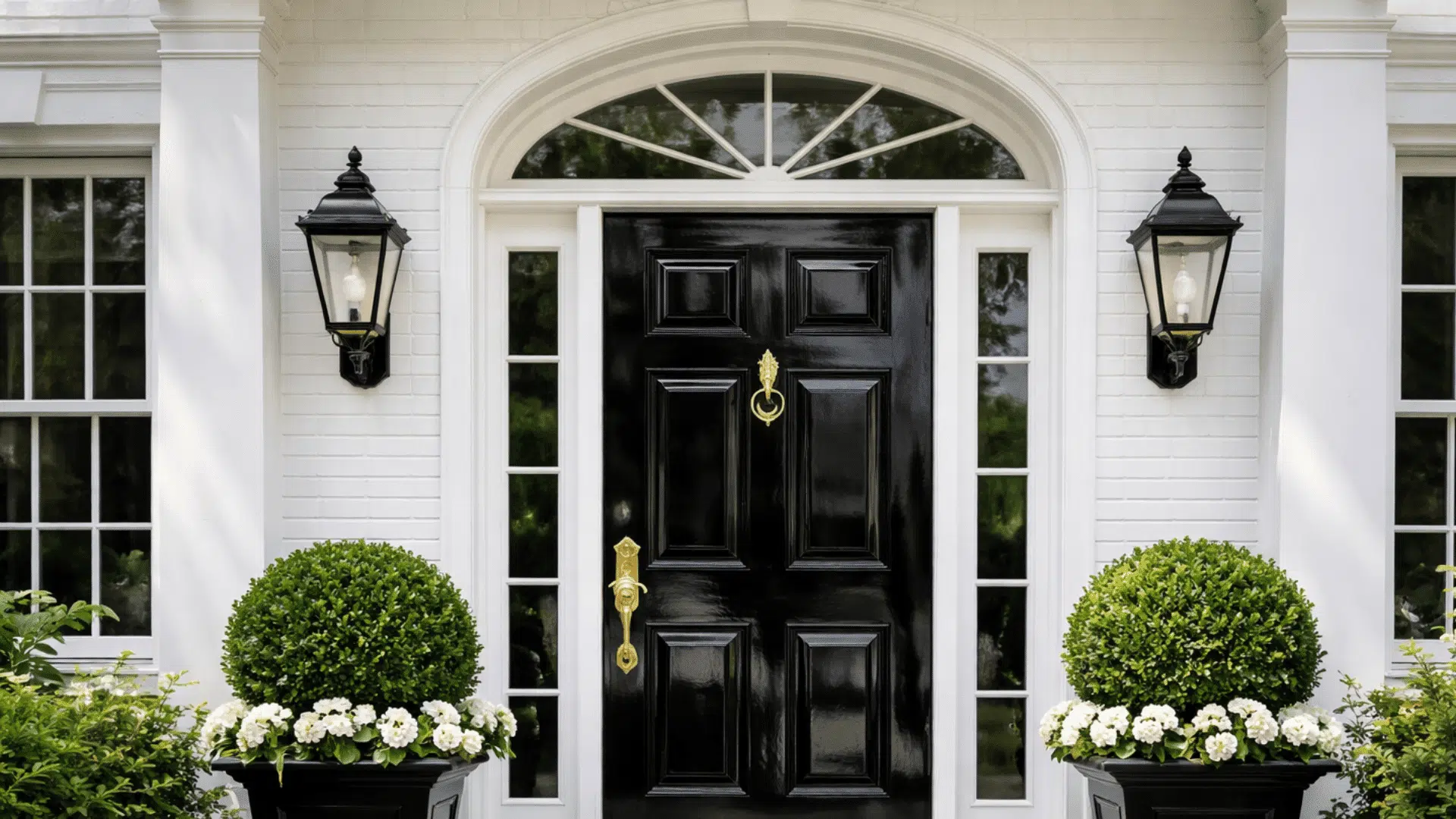
Painting front door black brings a sleek, sophisticated vibe. It makes a bold statement, boosts curb appeal, and adds a sense of security.
Whether upgrading interior doors or adding a stylish touch to the front entry, black paint is a versatile choice that complements any home style.
This blog shares why painting your front door black is a great option, how to do it yourself, and which shades will make it stand out.
Why Choose a Black Front Door?
A black front door can bring many benefits to your home, making it both stylish and practical.
- Elegant Look: Black is aclassic color that adds a touch of sophistication, style, refinement, and modern elegance to any home.
- Easy to Pair with Any Home Style: It effortlessly blends with various materials and colors, creating a striking contrast that creates your home’s overall appearance.
- Boosts Curb Appeal: creates a bold focal point that enhances the visual appeal, making your home stand out in the neighborhood.
- Enhances Security Perception: A black door conveys a sense of protection, helping to create the perception of a more secure, robust entrance.
- Low Maintenance: Black doors are known for their durability and ability to hide dirt and wear, making them easy to maintain while still looking pristine.
Easy Steps on Painting the Front Door Black
By following these easy steps, you’ll achieve a sleek, professional finish that gives your door a fresh new look.
Materials Required to Paint Your Door
When painting your front door black, having the right tools and materials is essential to achieving a smooth, long-lasting finish.
| Tools | Materials | Usage |
|---|---|---|
| Orbital sander or sanding block | Stix Primer | For sanding the door surface before painting |
| Flexible sanding sponge (80 and 120 grit) | Benjamin Moore Aura Exterior Paint | To remove old paint or rough spots and to prime the door |
| Shop vac or leaf blower | Painter’s tape | To clean up sanding dust and protect areas around the door |
| Microfiber towels | Plastic sheeting | For wiping down the door and preventing debris |
| Angled brush (2.5 inches) | Drop cloth | For painting detailed areas and covering the floor |
| Paint roller (6-inch nap) | Wreath hanger removal tools | For applying paint evenly across larger surfaces |
| Ladder (for larger doors) | Drop cloth for catching drips | For access to tall doors and to catch any paint drips |
Step 1: Remove Hardware and Accessories
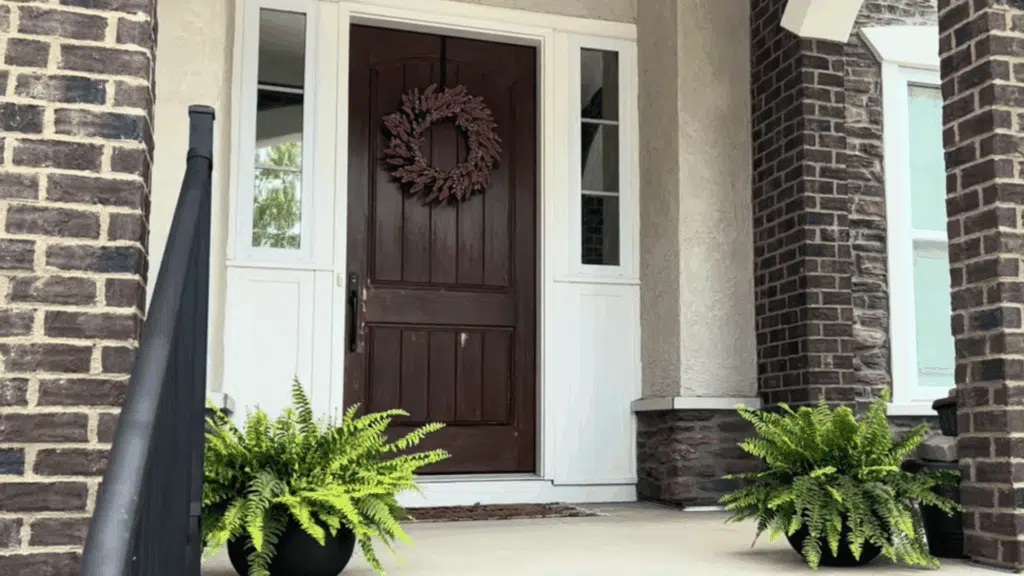
Start by removing any items attached to the door, such as the door handle, lock, wreath, or wreath hanger.
This step will make the painting process easier and prevent paint from getting onto areas you don’t want to cover.
Step 2: Sand the Door
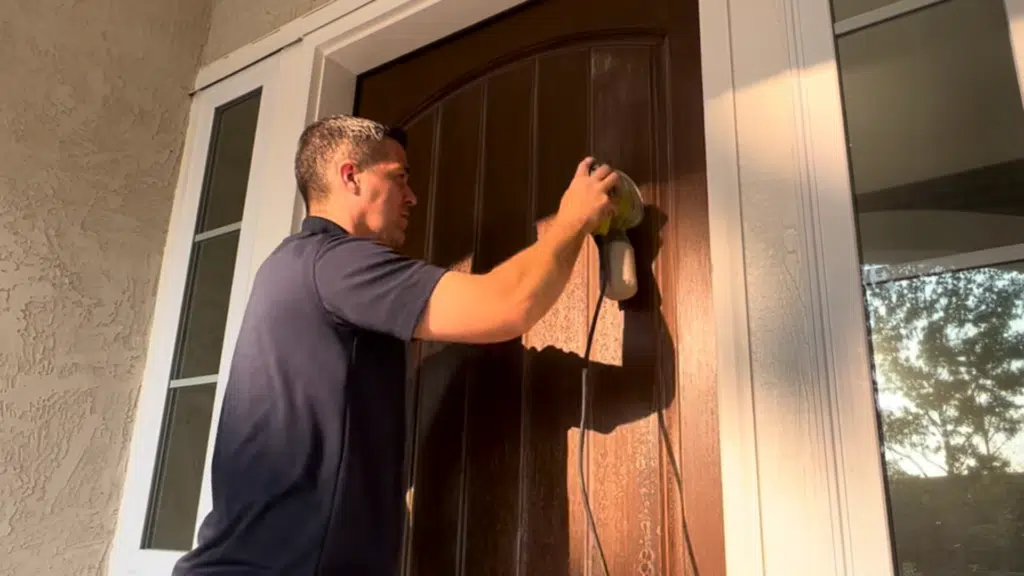
To prepare your door for painting, you’ll need to sand it to remove any old paint, polyurethane, or rough spots.
Use a flexible sanding sponge (80 grit) for detailed areas and an orbital sander for the flat surfaces.
Sand in the direction of the wood grain for the best results. If your door has peeling polyurethane, ensure you’ve thoroughly sanded those spots before moving on.
Step 3: Clean the Door
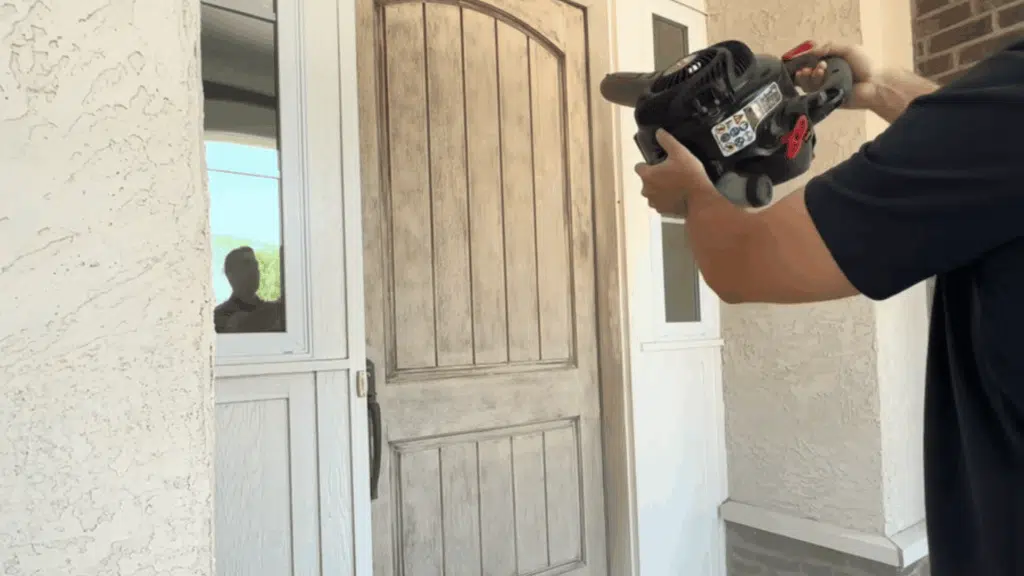
After sanding, use a leaf blower or a shop vac with a brush attachment to remove the majority of the dust. Wipe down the door with a damp microfiber towel to pick up any remaining dust.
This will ensure a clean surface for the primer to adhere to.
Step 4: Protect the Surrounding Area
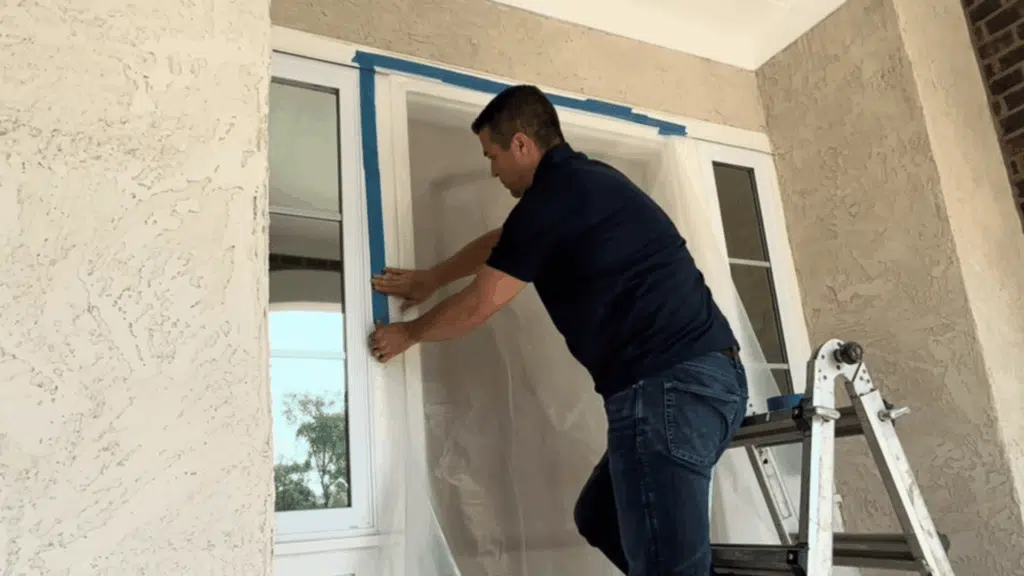
Use plastic sheeting and painter’s tape to cover the trim and surrounding area.
Secure the plastic to the trim with painter’s tape and trim any excess plastic that extends beyond the door. This will protect the surrounding areas from getting paint on them.
Step 5: Apply Primer
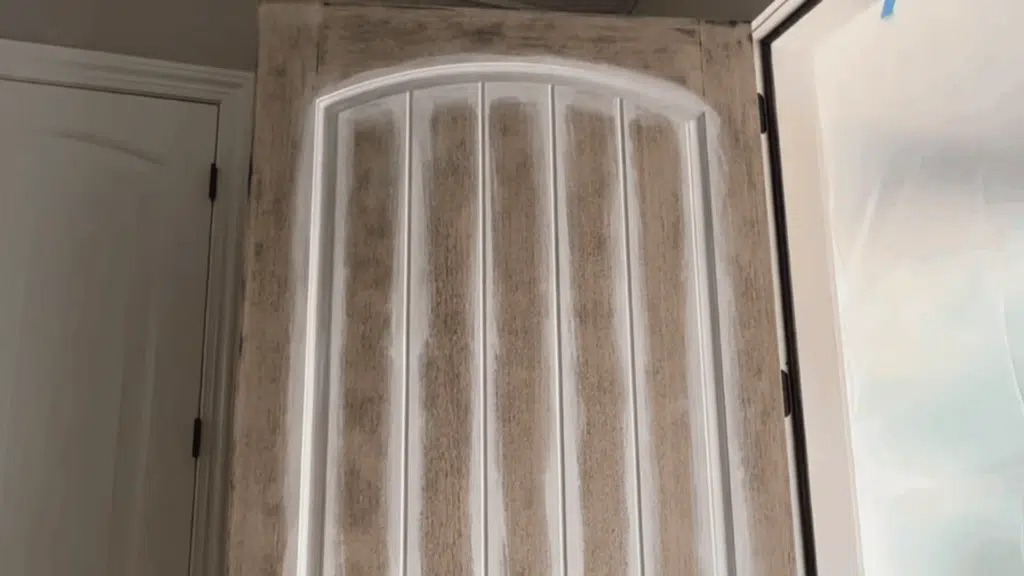
For the best results, apply a coat of high-quality primer like Stix Primer, which adheres well to most surfaces. Use an angled brush to paint the detailed areas first.
Then, use a roller for the flat surfaces of the door. Allow the primer to dry for about 4 hours before applying the second coat.
Step 6: Paint the Door
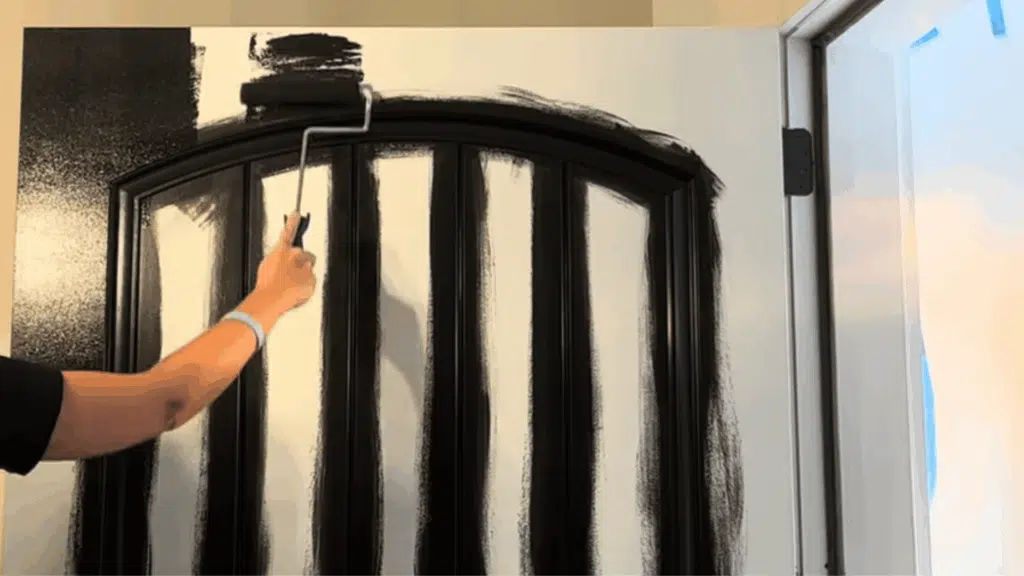
Once the primer has dried, apply your black paint.
For a smooth, even finish, use the same process as with the primer. Start with the detailed areas using an angled brush, then move to the larger areas with a roller.
Allow the first coat to dry for at least 4 hours before applying the second coat.
Step 7: Touch Up
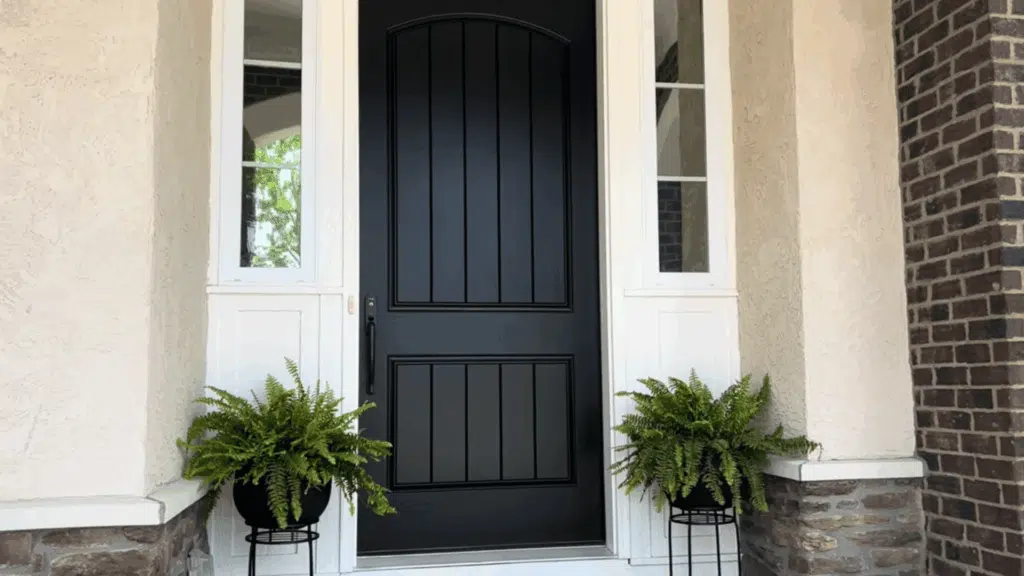
After the second coat of paint has dried completely, carefully remove the painter’s tape from the door and touch up any small areas that need attention.
Reinstall the hardware, and your door is ready to impress with a fresh, bold black finish!
Check out the full video below:
Top Black Shades for Front Doors
Below are some popular paint options that work beautifully on front doors, from deep true blacks to softer black tones that still read bold and stylish.
Best True Black Shades
- Sherwin‑Williams Tricorn Black (SW 6258): A pure, deep black with no noticeable undertones, perfect for a sharp, modern look. Designers love its balanced depth that pairs with any palette.
- Benjamin Moore Black (2132‑10): Classic, neutral black that doesn’t lean warm or cool, ideal for timeless curb appeal.
Rich Black Shades with Personality
- Sherwin‑Williams Black Magic (SW 6991): Very deep black with subtle warmth that softens visual contrast while still making a statement.
- Benjamin Moore Jet Black (2120‑10): Slightly softer than pure black with deep inky richness that works on traditional and modern facades alike.
Soft Black & Greyer Black Options
- Sherwin‑Williams Iron Ore (SW 7069): Almost‑black with a hint of deep charcoal, great if pure black feels too stark in bright light.
- Behr Raven Black (PPF‑59): Ultra‑rich black from a budget‑friendly brand – excellent if you want strong contrast with less sheen.
Which Other Doors Can You Paint Black?
When considering painting the front door black, it’s important to know which types are suitable for this striking update, according to doors.
| Type of Door | Why Black Paint Works | Ideal for |
|---|---|---|
| Main Door | Adds curb appeal and makes a strong first impression | Creating a bold, welcoming entrance |
| Bathroom Doors | Complements light-colored walls, adds elegance without darkening the space | Smaller, enclosed areas |
| Interior Doors | Gives a modern, elegant touch to bedrooms, hallways, and closets | Enhancing interior aesthetics |
| Garage Doors | Creates a bold, cohesive look that complements exterior design | Unifying the home’s overall style |
| French Doors | Frames glass beautifully for a sophisticated, sleek appearance | Bringing a sleek finish to rooms |
| Back Doors | Adds class to less formal entries, matching the exterior design | Subtle touch for secondary entrances |
Conclusion
Painting your front door black is a bold yet classic choice that can instantly enhance your home’s curb appeal. Not only does it add elegance, but it also makes a strong first impression.
By following our step-by-step guide on painting your front door black, you can achieve a smooth, professional-looking finish that stands the test of time.
Whether you’re updating your main door, bathroom door, or interior doors, black paint offers versatility and sophistication.
Ready to take the plunge? Get your supplies and start painting your front door black today for a refreshed, stylish entrance!
Frequently Asked Questions
How long does it take for the paint to dry on a front door?
It depends on the type of paint, but typically 4-6 hours for touch-up drying and 24-48 hours for full drying.
Is black paint difficult to maintain?
No, but regular cleaning is necessary to keep it looking fresh.
What finish should I choose for painting my front door black?
It depends on your style, but high-gloss gives a shiny, polished look, while matte offers a more understated, elegant finish.
What is the best time of year to paint?
The best time to paint is during mild weather, typically spring or fall, when temperatures are between 50-85°F (10-29°C) for optimal drying conditions.

Tommy Hardy, an alumnus of the Georgia Institute of Technology with a degree in Mechanical Engineering, has been a go-to figure in residential upkeep and innovation for over 18 years. His career commenced in a leading home appliance manufacturing company, where he mastered the intricacies of household systems. Joining our platform in 2020, Tommy quickly became a reader favorite for his practical and easy-to-follow guides. He took the helm of our DIY section in 2019, consistently delivering content that empowers homeowners. Beyond his professional pursuits, Tommy is a passionate gardener and enjoys woodworking, skills enhancing his hands-on approach to home care.