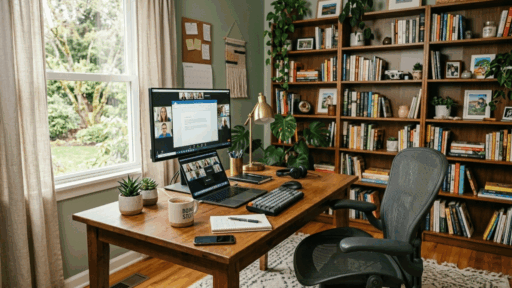
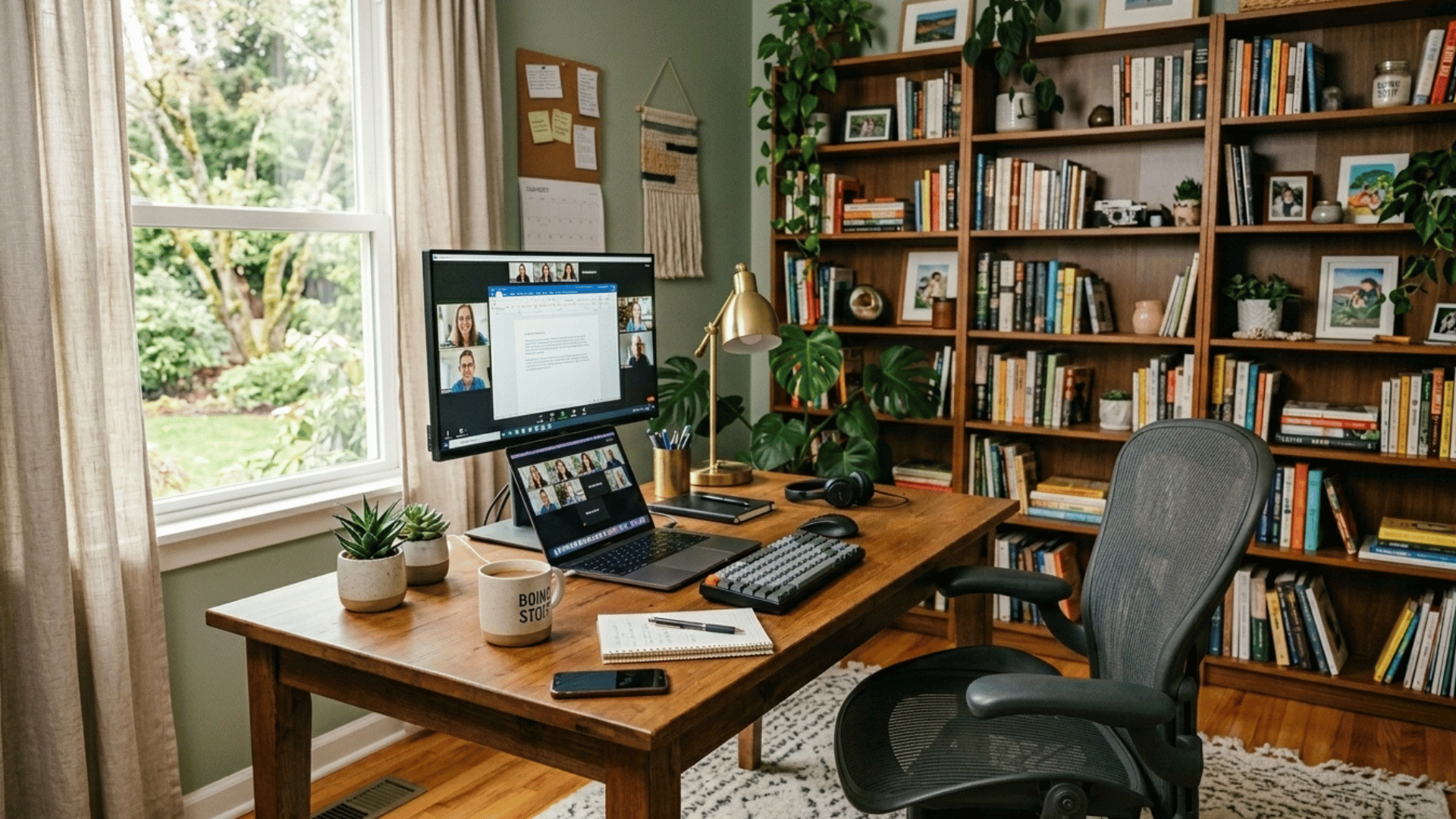

Working from home is now part of everyday life for many people. But staying focused is not always easy, especially without a proper workspace.
A well-planned home office can help improve productivity and comfort at the same time. The good part? It doesn’t need a big budget or a full renovation.
This blog has home office design ideas that are simple, practical, and easy to try. You’ll find ideas for small spaces, cozy setups, and smart layouts that actually work.
Why a Well-Designed Home Office Matters
A well-designed home office supports better focus and makes daily work easier to manage. The right setup helps create comfort, structure, and a clear boundary between work and home life.
- Improves Focus: A clean and organized space helps reduce distractions.
- Boosts Productivity: A comfortable setup makes tasks easier to handle.
- Supports Better Posture: Proper furniture reduces strain during long hours.
- Increases Motivation: Good lighting and layout keep energy levels up.
- Creates Work-Life Balance: A dedicated space helps separate work from personal time.
- Reduces Stress: An organized environment makes work feel more manageable.
Small Office Design Ideas
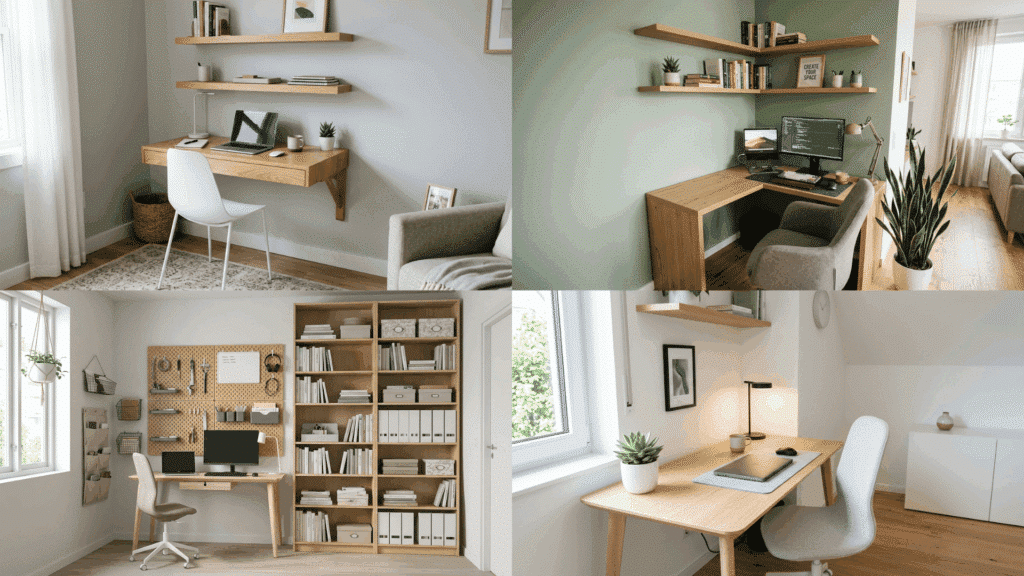
Small spaces can still feel organized and comfortable with the right setup. Here are smart ways to make the most of limited space:
1. Use a Wall-Mounted Desk to Save Floor Space
A wall-mounted desk is one of the easiest ways to free up floor space. It keeps the area open and makes the room feel less crowded.
This type of desk works well in bedrooms, living rooms, or even hallways. It also gives a clean and simple look that fits most styles.
2. Try a Fold-Down Desk that Can Be Hidden when Not in Use
A fold-down desk is a smart choice for homes with tight spaces. It can be folded away after work hours, making the area available for other uses.
This works well in shared spaces like living rooms or bedrooms. It also helps maintain a clutter-free look throughout the day.
3. Set up A Corner Workstation to Use Unused Areas
Corners are often underused, but they can be perfect for a small office setup. Placing a desk in the corner helps maximize available space without blocking movement.
It also creates a natural work zone that feels separate from the rest of the room. You can add corner shelves above the desk for storage and decor.
4. Add Floating Shelves for Extra Storage
Floating shelves are great for adding storage without taking up floor space. They can hold books, office supplies, and small decor items.
Installing them above your desk keeps everything within reach while keeping the area neat. They also make the wall look more organized and purposeful.
5. Place a Slim Desk Behind the Sofa
Using the space behind a sofa is a clever way to create a small office. A slim desk can fit neatly without affecting the room’s layout.
This setup works well in living rooms where a separate office is not possible. It allows you to work comfortably while still being part of the main space.
6. Turn a Closet Into a Compact Office Nook
A closet can be turned into a small office with a few simple changes. Removing the doors or keeping them open can create a hidden workspace.
Add a small desk, shelves, and good lighting to make it functional. This setup keeps work items out of sight when not in use.
7. Use Vertical Storage to Keep Things Off the Floor
Tall shelves, wall organizers, and hanging storage units are great options. They allow you to store more without crowding the room.
Keeping items off the floor also makes cleaning easier. This setup works well in tight spaces where floor space is limited. It helps maintain a neat and organized workspace.
8. Pick a Compact Chair that Fits Easily
Choosing the right chair is important in a small office. A compact chair takes up less space while still providing comfort.
Avoid bulky designs that can make the space feel tight. A simple and functional chair can improve both comfort and space management.
9. Install Pegboards to Organize Supplies
Pegboards are a great way to organize office supplies on the wall. They keep items like tools, notes, and accessories within easy reach.
This reduces desk clutter and keeps everything in one place. Pegboards are also easy to customize based on your needs.
10. Use Light Colors to Make the Space Feel Open
Light colors can make a small office feel bigger and brighter. Shades like white, beige, or soft gray reflect light and open up the space.
They also create a calm and clean environment. Using light colors on walls, furniture, and decor can improve the overall feel of the room. This simple change can make a noticeable difference in small areas.
11. Add a Ladder Shelf for Storage and Style
A ladder shelf is a smart way to add storage without taking up too much space. It leans against the wall and offers multiple levels for storing items.
You can use it for books, plants, or office supplies. It also adds a bit of style to the workspace. Choose a slim design to keep the area open. This is a practical and stylish addition to a small office.
12. Keep Bins Under the Desk for Hidden Storage
Using bins under the desk helps keep clutter out of sight. It’s a simple way to store items that are not used every day. This keeps the desk surface clean and organized.
Choose bins that fit neatly under the desk and are easy to access. This method works well for small spaces with limited storage options.
13. Choose Furniture that Serves More than One Purpose
Multi-purpose furniture is ideal for small spaces. A desk with built-in storage or a chair with hidden compartments can save space. These pieces help reduce the need for extra furniture.
This keeps the room less crowded and more functional. Choosing smart furniture can make a big difference in small home offices.
14. Keep Decor Simple to Avoid Clutter
Simple decor helps maintain a clean and organized workspace. Too many items can make a small space feel crowded.
Stick to a few meaningful pieces that add personality without overwhelming the area. This keeps the focus on work while still making the space feel comfortable. A simple setup is easier to manage and maintain.
15. Add a Mirror to Make the Space Look Bigger
Mirrors can make a small office feel larger by reflecting light. Placing a mirror near your desk can brighten the space and create a sense of openness.
It’s a simple trick that works well in tight areas. Choose a design that matches your setup. This small addition can improve both the look and feel of your workspace.
Modern Home Office Design Ideas
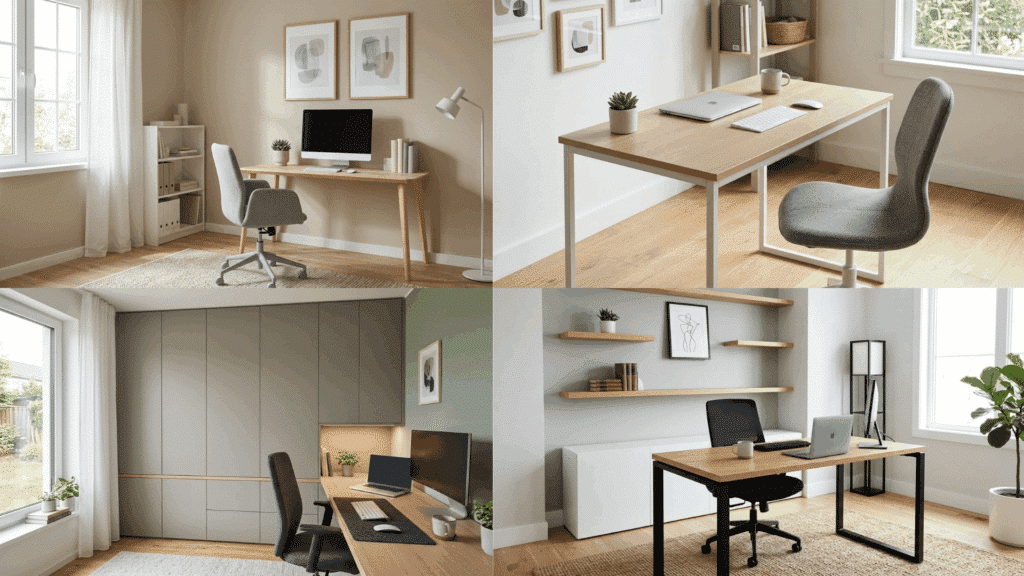
A clean setup can help reduce distractions and keep things simple. These ideas focus on a neat and organized look:
16. Stick to Neutral Color Tones
Neutral colors help create a calm and balanced workspace. Shades like white, beige, and soft gray make the room feel open and less distracting.
They also reflect light better, which can improve brightness during the day. Using neutral tones on walls, furniture, and decor keeps everything looking clean and consistent.
17. Choose a Sleek and Simple Desk
A simple desk design keeps your workspace neat and easy to manage. Look for desks with clean edges and minimal detailing.
This helps reduce visual clutter and keeps the focus on work. A sleek desk also fits well in modern interiors and small spaces.
18. Keep Decor Minimal
Too many decor items can make a workspace feel busy and distracting. A minimal approach keeps things simple and clean.
Choose a few meaningful items instead of filling every surface. This could be a small plant, a photo frame, or a piece of art.
19. Hide Cables Using Cable Organizers
Visible cables can make even a clean desk look messy. Using cable organizers helps keep wires out of sight and neatly arranged.
You can use clips, sleeves, or boxes to manage cords under the desk. This not only improves the look of your workspace but also makes it safer.
20. Try a Glass Desk for A Lighter Feel
A glass desk can make the space feel more open and less crowded. Since it is transparent, it doesn’t visually block the room. This works especially well in small home offices.
It also adds a clean and modern touch to the setup. Pair it with simple accessories to maintain a balanced look. Regular cleaning helps keep the surface clear and polished.
21. Use Cabinets with No Handles for A Smooth Look
Handle-free cabinets give a clean and seamless appearance. They reduce visual clutter and make storage look more organized.
These cabinets are easy to use and blend well with modern designs. They also help maintain a smooth and uniform look across the workspace.
22. Add Black and White Contrast
Black and white is a classic combination that works well in modern spaces. It creates a clear and balanced look without feeling overwhelming.
You can use white walls with black furniture or add small black accents. This contrast adds depth while keeping the setup simple.
23. Pick One Statement Decor Item
Instead of adding many decor pieces, choose one item that stands out. This could be a piece of art, a bold chair, or a unique lamp.
A single statement item adds personality without cluttering the space. It becomes the focal point of the room while keeping everything else simple. This approach helps maintain a clean and modern look.
24. Use Furniture with Clean Lines
Furniture with straight and simple lines fits well in a modern workspace. It creates a neat and organized look without unnecessary details. Clean-lined furniture also makes the room feel less crowded.
It works well in both small and large setups. This style helps keep the focus on function while still looking stylish. It also pairs easily with different decor elements.
25. Keep the Desk Surface Clutter-Free
A clean desk helps improve focus and productivity. Keep only essential items on the surface, like your laptop, notebook, or lamp.
Store other items in drawers or shelves. This reduces distractions and makes the workspace easier to manage. A clutter-free desk also creates a calm and organized feel. It’s one of the simplest ways to improve your work environment.
26. Add Subtle LED Lighting
LED lighting can improve both function and mood in your workspace. Use soft lighting under shelves or behind the desk for a modern touch.
It adds brightness without being too harsh. This type of lighting works well for late-night work sessions. It also helps highlight certain areas without overwhelming the room. Choose warm or neutral tones for a balanced look.
27. Choose Matte Finishes
Matte finishes give furniture and decor a soft, smooth look. They reduce glare and make the space feel more comfortable.
Matte surfaces are also easier to maintain as they show fewer fingerprints. This finish works well for desks, cabinets, and accessories. It helps create a calm, clean workspace without excessive shine.
28. Use Closed Storage to Hide Mess
Closed storage helps keep the workspace looking neat and organized. Cabinets and drawers can hide items that are not used often.
This reduces visual clutter and keeps the focus on work. It also makes cleaning easier and faster. Using closed storage is especially helpful in small spaces where clutter can build up quickly.
29. Add a Simple Desk Lamp
A desk lamp provides focused lighting for work tasks. Choose a simple design that matches your workspace style. It should be easy to adjust and not take up too much space.
Good lighting reduces eye strain and improves comfort. A minimal lamp design keeps the setup clean and functional.
30. Stick to Two or Three Main Colors
Using too many colors can make a workspace feel busy. Sticking to two or three main colors keeps the design simple and balanced.
This creates a consistent look across the room. It also makes it easier to choose furniture and decor. A limited color palette helps maintain a calm and organized environment.
Cozy and Comfortable Office Ideas
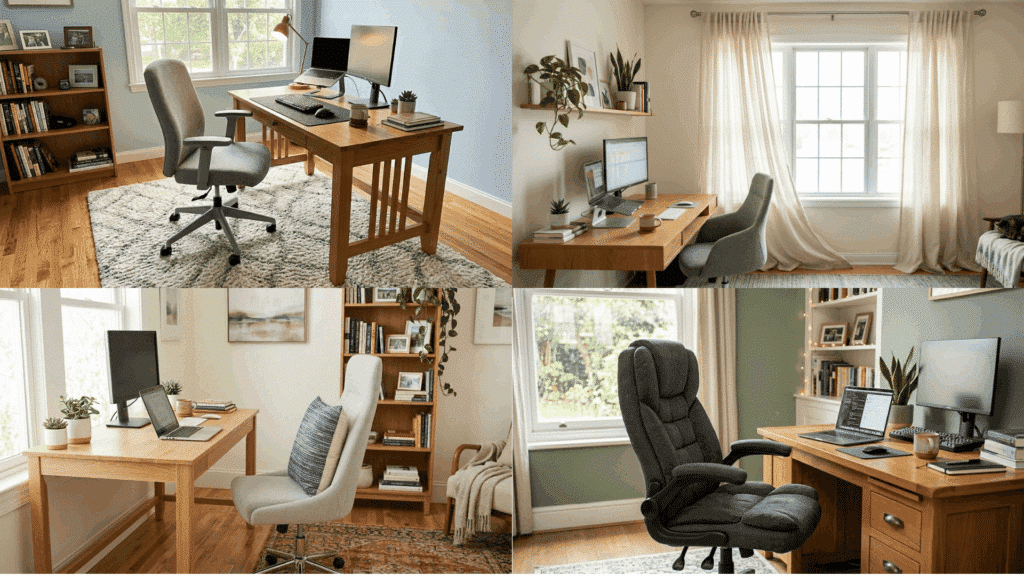
Comfort matters when spending long hours at your desk. These small office design ideas help create a warm and relaxed workspace:
31. Add a Soft Rug Under Your Desk
A soft rug can make your workspace feel more comfortable and inviting. It adds warmth, especially on hard flooring like tile or wood.
A rug also helps reduce noise, which can make the room feel quieter. Choose a texture that feels good under your feet and fits your space size.
It can also visually tie the whole setup together. This small addition can make long work hours feel less tiring.
32. Use a Cushioned Chair
A cushioned chair provides better support during long hours of sitting. It helps reduce strain on your back and keeps you comfortable throughout the day.
Look for a chair with proper padding and adjustable features. This ensures it fits your posture and height. A comfortable chair can improve focus and reduce discomfort. It’s one of the most important parts of a cozy workspace.
33. Add Throw Pillows for Support
Throw pillows can add both comfort and style to your chair or seating area. They provide extra support for your back or neck when needed.
This is especially helpful during long work sessions. Choose soft fabrics that feel comfortable and match your setup. Pillows also make the space feel more relaxed and less formal. They are easy to switch out for a fresh look.
34. Use Warm Lighting Instead of Harsh Lights
Warm lighting creates a softer and more relaxing environment. It reduces eye strain compared to bright, harsh lights.
This type of lighting works well in the evening or low-light conditions. It helps create a calm setting that supports focus without feeling too intense.
35. Hang Curtains to Soften the Space
Curtains can make a room feel more comfortable and less rigid. They soften the look of windows and help control natural light.
Choose light fabrics to keep the space airy. This simple addition can make your office feel more relaxed.
36. Keep a Blanket Nearby
A blanket can make your workspace feel more personal and comfortable. It’s useful during colder days or when sitting for long periods.
It can also add a cozy touch to your chair or seating area. This small detail can make a big difference in how the space feels.
37. Add Personal Photos
Personal photos can make your workspace feel more connected to your life. They add a sense of comfort and familiarity to the room.
Seeing photos of family, friends, or favorite moments can lift your mood during the day. Keep the display simple to avoid clutter. A few well-placed photos can make the space feel more welcoming.
38. Use Calm and Soft Colors
Soft colors help create a peaceful and balanced workspace. Shades like light blue, beige, or soft green can make the room feel calm.
These colors are easy on the eyes and reduce visual stress. Using them on walls or decor can improve the overall mood of the space. A calm color palette helps you stay focused and relaxed.
39. Add a Small Bench or Seating Area
A small seating area can give you a place to take short breaks. It helps create a balance between work and rest within the same space.
A bench or small chair can also be used for reading or relaxing. This setup works well if you have a bit of extra room. It makes the office feel more comfortable and less rigid.
40. Bring in Wood Elements for Warmth
Wood elements can add a natural and warm feel to your workspace. This could be a wooden desk, shelves, or small decor pieces.
They also add texture without making the room feel busy. This simple touch can improve the overall comfort of the space.
41. Use a Footrest for Better Comfort
A footrest can improve your sitting posture and reduce strain on your legs. It helps keep your feet supported during long hours of work.
This can improve comfort and reduce fatigue. Choose a simple design that fits under your desk. A footrest is a small addition that can make a big difference in daily comfort.
42. Create a Small Reading Corner
A reading corner adds a relaxed spot within your workspace. It can be a chair with a small table or just a quiet corner with good lighting.
This area can be used for breaks or light reading. It helps create a balance between work and relaxation. Even a small corner can serve this purpose well.
43. Add Soft Wall Art
Soft wall art can make your workspace feel more inviting. Choose pieces with calm colors or simple designs.
Avoid overly busy patterns that can distract you. Wall art adds personality without taking up space. It helps create a comfortable environment that feels more like home.
44. Use Candles or Diffusers
Candles or diffusers can improve the overall feel of your workspace. Light scents can help you relax and stay focused.
Choose mild fragrances that are not overpowering. This small addition can make the space feel more pleasant. It also adds a personal touch to your setup.
45. Choose Natural Fabrics Like Cotton
Natural fabrics like cotton feel soft and comfortable. They are breathable and work well for long hours. Use them in curtains, cushions, or chair covers.
These materials help create a relaxed and simple environment. They also improve the overall comfort of the space with minimal effort.
Productivity-Boosting Office Ideas
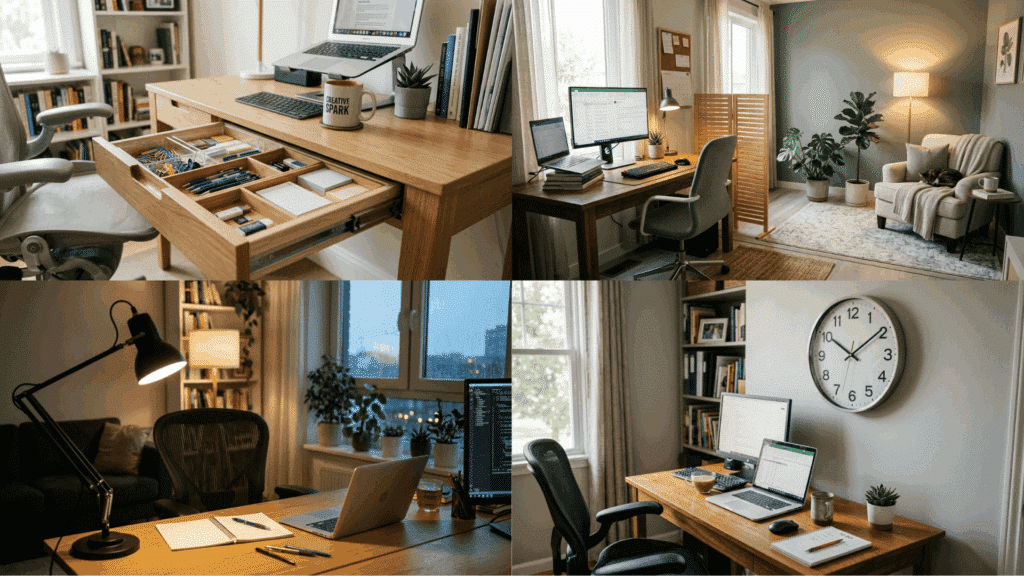
A smart workspace can help you stay focused and organized. Here are small home office design ideas that support better work habits:
46. Place Your Desk Near Natural Light
Natural light can improve focus and reduce eye strain during work hours. Placing your desk near a window helps you stay alert and energized throughout the day.
It also makes the space feel more open and less tiring. Good daylight can reduce the need for artificial lighting, which is better for long work sessions.
47. Invest in An Ergonomic Chair
An ergonomic chair supports your back and helps maintain proper posture. Sitting for long hours can be uncomfortable if your chair is poorly designed.
A good chair reduces strain on your neck and lower back. Look for adjustable features like height and arm support. This helps you customize the chair to your body. Comfort plays a big role in staying focused during work.
48. Use a Monitor Stand to Improve Posture
A monitor stand helps bring your screen to eye level. This prevents you from bending your neck or slouching. Good posture can reduce fatigue and make long work hours easier.
It also creates extra space under the monitor for storage. This helps keep your desk organized. A simple stand can make a big difference in both comfort and productivity.
49. Keep a Planner or To-Do List Visible
A visible planner helps you stay on track with daily tasks. It acts as a reminder of what needs to be done. This reduces the chance of forgetting important work.
You can use a notebook, sticky notes, or a digital screen. Keeping your tasks in sight helps you stay organized. It also gives a sense of progress as you complete each task.
50. Use Drawer Organizers
Drawer organizers help keep small items in place. They prevent clutter from building up inside drawers. This makes it easier to find what you need quickly.
Organized drawers save time and reduce frustration. You can use simple trays or dividers to improve the arrangement. This small step helps maintain a clean workspace.
51. Add Sound-Absorbing Panels
Noise can be a major distraction when working from home. Sound-absorbing panels help reduce background noise.
They create a quieter environment, especially in busy homes. This makes it easier to focus on tasks. These panels can be placed on walls or near your desk. They also add a clean and neat look to the space.
52. Keep Your Desk Clutter-Free
A clutter-free desk helps you stay focused on your work. Too many items can create distractions and slow you down. Keep only the essentials on your desk.
Store the rest in drawers or shelves. A clean surface makes it easier to think clearly. It also makes your workspace look more organized.
53. Use Task Lighting for Better Visibility
Task lighting provides focused light for work activities. It helps reduce eye strain, especially in low-light conditions.
A desk lamp with adjustable brightness works best. Place it so it lights up your workspace without causing glare. Good lighting can improve comfort and accuracy during work. It’s an important part of a productive setup.
54. Add a Whiteboard or Pinboard
A whiteboard or pinboard helps keep ideas and reminders visible. You can use it for notes, schedules, or goals. This makes it easier to stay organized and focused.
It also allows quick updates without using paper. Having a visual reminder can improve planning and productivity. It’s a useful addition to any workspace.
55. Keep Daily Essentials Within Reach
Keeping essential items close saves time and effort. Items like pens, notebooks, and chargers should be easy to access.
This reduces interruptions during work. It also helps maintain a smooth workflow. Organize these items in trays or holders. A well-arranged setup makes daily tasks easier to manage.
56. Label Your Storage
Labeling storage helps you find things quickly. It reduces the time spent searching for items. This keeps your workspace organized and efficient.
Labels also help maintain order over time. You can use simple tags or stickers for this purpose. It’s a small step that improves daily workflow.
57. Keep a Clock Nearby
A clock helps you stay aware of time without having to check your phone often. This reduces distractions and helps manage your schedule.
It also keeps you on track with tasks and breaks. Choose a simple design that is easy to read. A visible clock supports better time management during work hours.
58. Separate Work and Personal Space
Keeping work and personal areas separate helps maintain focus. It creates a clear boundary between work time and relaxation. This is important when working from home.
Even a small divider or separate corner can help. This setup reduces distractions and improves productivity. It also helps maintain a better routine.
59. Try a Standing Desk Setup
A standing desk allows you to switch between sitting and standing. This can reduce fatigue and improve posture.
It also helps keep your energy levels up during the day. You don’t need a full setup; even a small, adjustable desk will do. Changing positions can make long work hours more manageable.
60. Organize Cables Neatly
Messy cables can make your workspace look cluttered. Organizing them keeps the area clean and safe. Use clips, ties, or cable boxes to manage wires.
This makes it easier to maintain a neat setup. It also prevents cables from getting tangled. A clean setup supports better focus.
Creative and Stylish Office Ideas
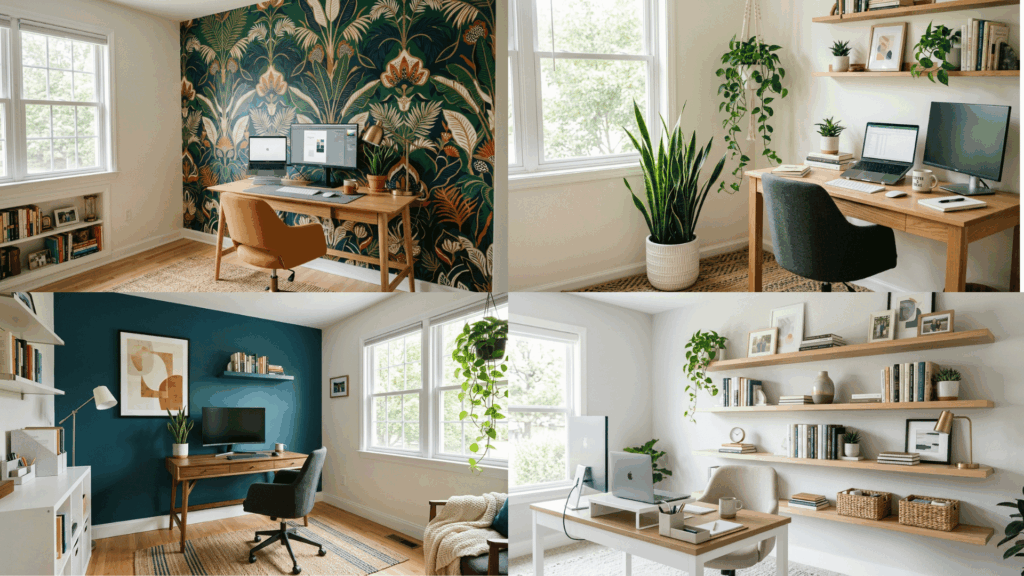
Your workspace should also feel inspiring. These ideas help add personality and style:
61. Create a Gallery Wall with Photos or Art
A gallery wall can bring life to your workspace. It lets you display photos, prints, or artwork you enjoy.
This adds personality without taking up desk space. You can arrange frames in a neat layout or mix sizes for a more relaxed look.
62. Add Bold Wallpaper for Interest
Bold wallpaper can instantly change the look of your workspace. It adds depth and makes the area feel more lively.
Choose patterns or textures that match your overall style. Using wallpaper on one wall can create a focal point without overwhelming the room.
63. Use Colorful Furniture Pieces
Adding colorful furniture can make your workspace feel more energetic. A bright chair or desk can stand out and add character.
This helps break the monotony of neutral setups. Choose colors that complement each other to keep the look balanced. Even one colorful piece can make a big difference. It brings a fresh and lively feel to your office.
64. Bring in Indoor Plants
Indoor plants can make your workspace feel fresher and more relaxed. They add a natural touch and improve the overall environment.
Plants like snake plants or pothos are easy to maintain. Placing them on your desk or shelves can brighten up the area. They also help create a calm setting, which can support focus during work.
65. Mix Materials Like Wood and Metal
Combining different materials can add depth to your workspace. Wood adds warmth, while metal adds a clean, modern touch.
Mixing these materials creates a balanced look. For example, a wooden desk with metal legs can work well. This combination keeps the space interesting without feeling too busy. It also works with many design styles.
66. Use Open Shelves to Display Items
Open shelves let you display books, decor, or personal items. They make the space feel more open compared to closed storage.
You can arrange items neatly to keep the look organized. This also makes it easier to access things you use often.
Open shelving adds both function and style to your workspace.
67. Add a Statement Chair
A statement chair can become the highlight of your office. It can be bold in color, shape, or design. This adds personality without needing too many extra decor items.
A good chair also improves comfort during work. Choosing a chair that stands out can make your workspace feel more unique and inviting.
68. Choose Patterned Rugs
A patterned rug can add visual interest to your office. It helps define the workspace, especially in shared areas. Rugs also make the space feel more comfortable.
Choose patterns that match your overall color scheme. This keeps the design balanced. A rug is an easy way to update your workspace without much effort.
69. Use Unique Lighting Fixtures
Lighting can do more than brighten the room. Unique fixtures can act as decor pieces as well. A stylish lamp or hanging light can add character to your workspace.
It also helps create a comfortable working environment. Choose lighting that fits your style and provides enough brightness for tasks.
70. Display Books in A Creative Way
Books can be both useful and decorative. Instead of stacking them in a usual way, try arranging them by color or size.
You can also mix them with small decor items on shelves. This adds interest to your workspace. A creative display can make your office feel more organized and visually appealing.
71. Pick a Theme for Your Office Style
Choosing a theme can help keep your workspace consistent. It could be minimal, rustic, or modern.
Having a clear style makes it easier to select furniture and decor.
It also keeps the space from feeling random or cluttered. A simple theme can guide your design choices and improve the overall look.
72. Add a Chalkboard Wall
A chalkboard wall is both fun and functional. You can use it for notes, reminders, or creative ideas. It keeps important information visible at all times.
This also reduces the need for extra paper or sticky notes. A chalkboard wall adds a unique touch to your workspace while being practical.
73. Use Fun Desk Accessories
Desk accessories can add small details that make a big impact. Items like pen holders, trays, or organizers can be both useful and stylish.
Choosing designs that match your style keeps the setup consistent. These small additions help make your workspace feel more personal and enjoyable.
74. Paint One Wall in A Bold Color
Painting one wall in a bold color can create a strong focal point. It adds depth without overwhelming the entire room. Choose a color that matches your furniture and decor.
This simple update can change the feel of your workspace. It’s an easy way to refresh the look without major effort.
75. Mix Old and New Furniture Styles
Combining old and new furniture can create a unique workspace. A modern desk paired with a vintage chair can add character.
This mix keeps the space interesting and less uniform. It also allows you to reuse items you already have. Blending styles can make your office feel more personal.
76. Add a Vision Board
A vision board can help keep your goals in sight. You can pin ideas, quotes, or plans that motivate you. This creates a sense of direction during work.
It also adds a personal touch to your space. A vision board can be updated at any time, making it a flexible and useful tool.
77. Change Decor with Seasons
Updating decor with seasons keeps your workspace feeling fresh. You can switch small items like colors, plants, or accessories. This prevents the space from feeling dull over time.
Seasonal changes can also improve mood and keep things interesting. It’s an easy way to refresh your office without major changes.
Conclusion
Creating a home office doesn’t have to feel overwhelming or complicated.
Simple changes like improving lighting, adding smart storage, or choosing a comfortable chair can make a noticeable difference in how the space feels and functions.
These small home office design ideas can improve focus and make daily work more manageable. Over time, even minor improvements can turn any corner into a productive and comfortable workspace.
Instead of trying to change everything at once, start with a few ideas that suit your needs and routine. Build your setup gradually so it works for your lifestyle.

Ava Taylor, holding a Bachelor’s degree in Interior Design from the Pratt Institute, has made her mark in creating engaging and functional living spaces for over 14 years. She began her career with a New York-based design studio, where she gained a reputation for her innovative and user-centric designs. Ava joined our team in 2019, bringing a blend of artistic flair and practicality to our home improvement section. Since the she has been the lead contributor to our room transformation series, inspiring readers with her unique approach to maximizing space utility and aesthetic appeal. Beyond her professional work, Ava is a passionate collector of vintage furniture, a hobby that enriches her design perspective.