
Most people walk past rubberwood furniture every single day without knowing it.
It sits in living rooms, offices, and kitchens across the world, yet very few people stop to ask: What is rubberwood, and why is it used so widely?
That knowledge gap often leads to choosing the wrong material for furniture or construction needs.
This blog breaks down everything you need to know about rubberwood, from its origin and key characteristics to its common uses, pros and cons, and care tips so that readers can make a confident, informed choice about this widely used material.
What is Rubberwood?
Rubberwood comes from the rubber tree, scientifically known as Hevea brasiliensis. It is native to South America but is widely grown across Southeast Asia, particularly in countries such as Malaysia, Thailand, and Indonesia.
The tree is primarily cultivated for latex production, and once it reaches the end of its latex-producing life, typically after 25 to 30 years.
So, what is rubberwood in terms of processing? After the tree is felled, the timber goes through kiln drying and chemical treatment to prevent fungal growth and insect damage.
This processing makes it stable, workable, and suitable for a wide range of applications, particularly in furniture manufacturing and interior construction, where both appearance and function matter.
Key Characteristics of Rubberwood
Understanding what rubberwood is starts with understanding its core physical and functional properties, which directly influence how it performs across different applications.
- Medium-density hardwood: Firm enough for furniture use but not as heavy as teak or oak
- Light, uniform color: Pale cream to light tan tone with a consistent, even grain pattern
- Smooth surface texture: Takes paints, stains, and finishes evenly without much preparation
- Easy to work with: Cuts, shapes, and joins well using standard woodworking tools
- Moderate structural strength: Holds up well under regular indoor use and daily wear
- Low natural resistance: Vulnerable to moisture, pests, and fungi without proper treatment
- Lightweight build: Lighter than most hardwoods, making it easier to handle and transport
Rubberwood vs. Other Types of Wood
The table below compares rubberwood to teak, oak, and pine across key factors.
| Factor | Rubberwood | Teak | Oak | Pine |
|---|---|---|---|---|
| Cost | Low to moderate | High | High | Low |
| Hardness | Medium | High | High | Low to medium |
| Durability | Moderate | Very high | High | Moderate |
| Moisture Resistance | Low without treatment | High | Moderate | Low |
| Grain Pattern | Uniform, subtle | Straight, prominent | Prominent | Knotty, irregular |
| Indoor Use | Suitable | Suitable | Suitable | Suitable |
| Outdoor Use | Not recommended | Highly recommended | Moderate | Not recommended |
| Sustainability | High | Moderate | Moderate | High |
| Price vs Value | High | Low to moderate | Low to moderate | High |
Common Uses of Rubberwood
Rubberwood is widely used across furniture manufacturing and interior construction, and furniture manufacturing remains its most prominent application.
1. Furniture Manufacturing
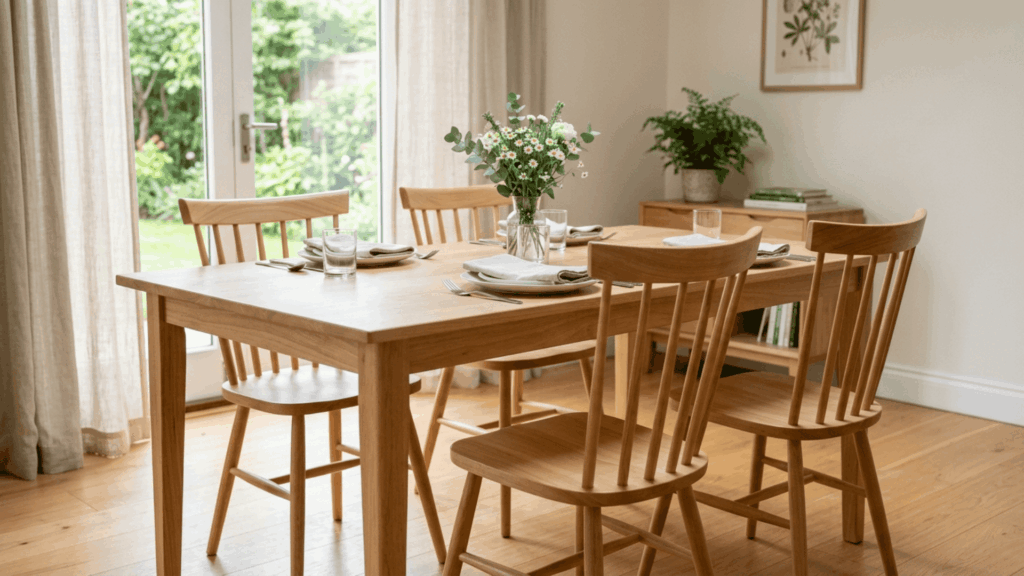
When it comes to what rubberwood is used for, most of the time, furniture manufacturing stands at the top. It is used to make dining tables, chairs, bed frames, cabinets, and study desks.
Its smooth surface accepts stains and paints well, making it easy to produce furniture in various finishes without adding high costs.
For buyers looking for solid wood furniture, rubberwood is a frequently recommended option for mid-range furniture buyers.
2. Interior Construction

What is rubberwood used for inside a home? It is commonly used for wall paneling, indoor flooring, and wooden boards in low-traffic areas.
Its ability to blend into various interior styles makes it a practical fit for a range of design preferences.
Since rubberwood responds well to finishes and coatings, it can be treated to match the look of more expensive wood varieties, making it a practical alternative to pricier wood options in interior settings.
3. Kitchenware and Household Items
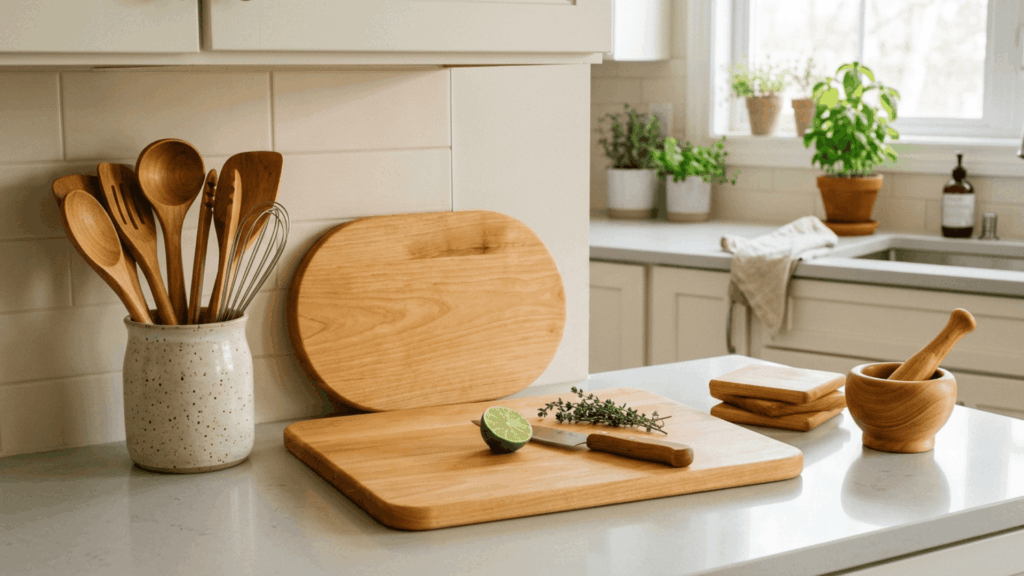
What is rubberwood contributing to beyond furniture and interiors? It finds practical use in everyday household and utility products.
Common examples include cutting boards, kitchen utensils, wooden toys, and small storage items that take advantage of its ease of shaping and food-safe properties once properly finished.
It is also used in the production of medium-density fiberboard and particleboard, which are widely used in construction and interior fittings, showing that rubberwood contributes to building materials beyond just solid timber.
4. Office and Commercial Use

Rubberwood is a common material in office furniture production. It is commonly used for desks, bookshelves, filing cabinets, and storage units across offices and retail spaces.
Its consistent surface and neutral tone make it easy to finish in ways that suit professional environments without requiring expensive materials.
Since rubberwood holds screws and fittings securely, it performs reliably in furniture used daily in offices, retail spaces, and educational institutions.
5. Decorative and Craft Applications
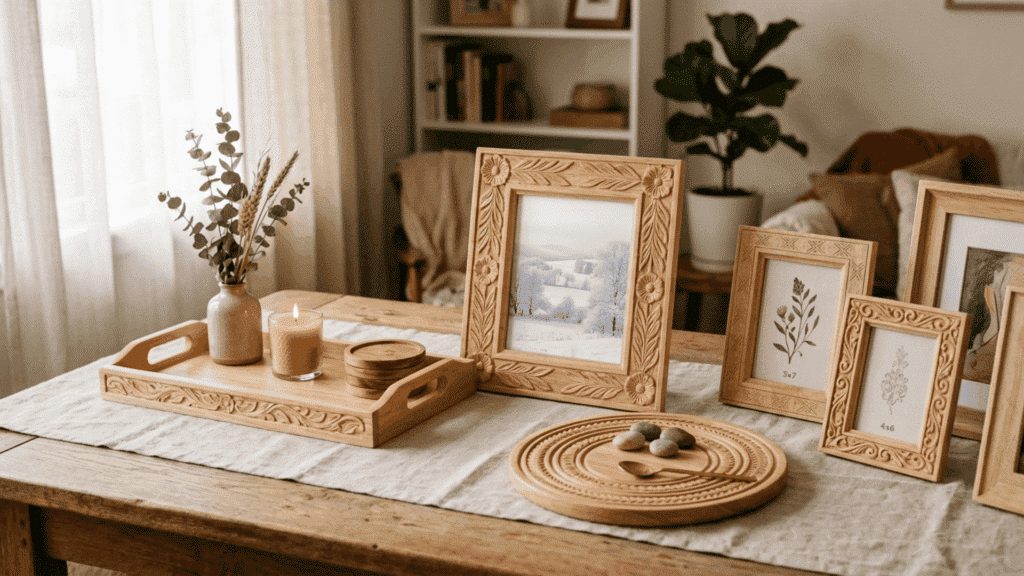
Beyond its functional use, rubberwood is also used in decorative and craft-based products due to its smooth, even surface, which responds well to carving and detailing.
It is commonly used to make picture frames, decorative trays, small sculptures, and wooden display items found in homes and retail stores.
Its light tone makes it easy to paint or stain into a variety of finishes, making it a preferred choice among craft manufacturers looking for a cost-effective, workable material.
6. Toy and Sports Equipment

Rubberwood is widely used in the production of wooden toys, educational blocks, and components for basic sports equipment due to its safe, non-toxic properties after finishing.
Its moderate density makes it firm enough to withstand regular handling by children without being excessively heavy or prone to splintering.
Manufacturers in this sector value rubberwood for its smooth finish, ease of shaping into varied forms, and its ability to meet safety standards required for child-safe products.
Pros and Cons of Rubberwood
What is rubberwood like in real-world use? A balanced look at its advantages and limitations makes that clear. The points below cover both sides to give a complete view of its real-world performance.
| Advantages | Disadvantages |
|---|---|
| Affordable option | Not suited for outdoors |
| Widely accessible | Higher upfront processing |
| Reused material | Limited natural durability |
| Consistent appearance | Finish-dependent appearance |
| Versatile applications | Less premium feel |
| Good value for money | Treatment adds to cost |
How to Care for Rubberwood Products
Rubberwood products are durable and easy to maintain, but proper care helps them last longer and keep their finish. A few simple habits can protect the wood from damage and everyday wear.
- Keep It Clean: Wipe regularly with a soft, damp cloth to remove dust and dirt without damaging the surface
- Avoid Excess Moisture: Keep water exposure minimal to prevent swelling or warping over time
- Use Mild Cleaners: Stick to gentle, non-abrasive cleaners to protect the wood’s natural finish
- Protect From Heat: Use coasters or mats to avoid heat marks from hot items
- Polish Occasionally: Apply wood polish or oil to maintain shine and prevent drying
Final Thoughts
Rubberwood is a practical, cost-effective material that works well for indoor furniture and construction when used correctly.
But what is rubberwood at its core? It is a reused timber that delivers solid performance at an affordable price, making it a dependable option for those prioritizing practicality over premium materials.
For anyone looking to make a well-informed decision about wood materials, rubberwood deserves serious consideration.
Anyone comparing wood options for indoor use will find rubberwood a budget-friendly starting point.

Holding a Master’s in Construction Management from Purdue University, William Ray has dedicated more than two decades to studying and applying construction principles. His professional journey includes a tenure with a prominent construction firm, where he specialized in project management and building technologies. William brought his knowledge to our team, providing in-depth insights into practical construction techniques. As the leader of our beginner’s guide to building since 2019, he has a knack for breaking down intricate processes into easily digestible content. When not involved in writing or onsite consultations, William enjoys woodworking and volunteering in community building projects, which aligns with his passion for hands-on construction and community service.