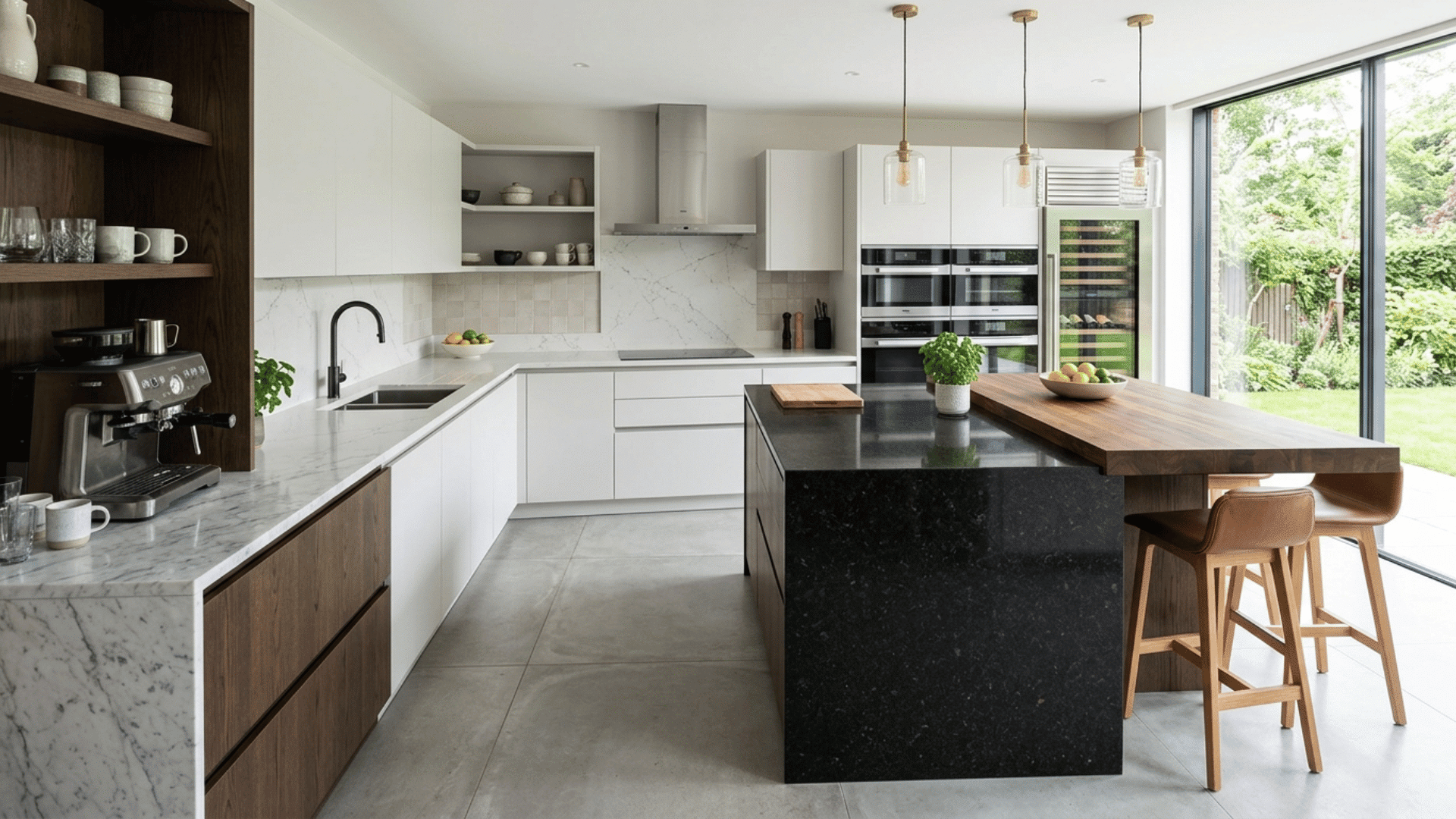

Choosing a countertop sounds simple until you realize how many options are out there and how much each one affects your kitchen’s look, function, and cost.
From sleek quartz to natural stone, every surface tells a different story, and not all of them fit your lifestyle. So, what is the best countertop material for your home? The answer is not as obvious as it seems.
In this blog, we break down the most popular choices, compare their pros and cons, and help you find the one that actually works for how you live, cook, and use your space every day.
How to Choose the Right Countertop Material?
The right countertop material is not just about looks; it is about how well it fits your daily life and long-term plans.
You need to balance your budget with long-term value, since some options may seem affordable upfront but require more maintenance over time.
It helps to adapt to durability, maintenance needs, and the surface’s resistance to heat, stains, and scratches. At the same time, the material should elevate your kitchen’s overall design and blend with your style.
In the market, resale value also matters, so picking a countertop that appeals to future buyers can make a real difference.
Best Countertop Materials for Kitchens
Countertop materials can feel overwhelming with so many options available, each offering different benefits and trade-offs.
The best choice depends on how you use your kitchen, your budget, and the level of maintenance you are comfortable with.
1. Quartz
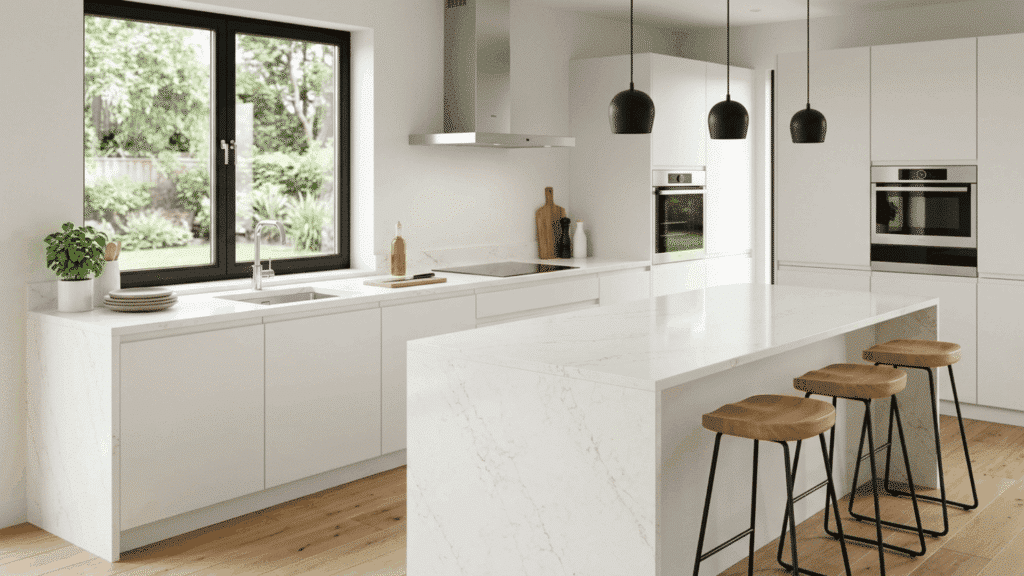
Quartz is one of the most popular developed countertop materials, known for its durability and modern appearance.
It combines natural quartz with resins to create a non-porous, low-maintenance surface. The expected cost typically ranges from $60 to $120 per sq. ft., depending on the design and brand.
It is widely chosen for contemporary kitchens where convenience and consistency matter.
Pros
- Non-porous and highly stain-resistant
- Low maintenance, no sealing required
- Wide range of modern designs
Cons
- Expensive compared to entry-level materials
- Can be damaged by excessive heat
- Very heavy and hard to modify
2. Granite
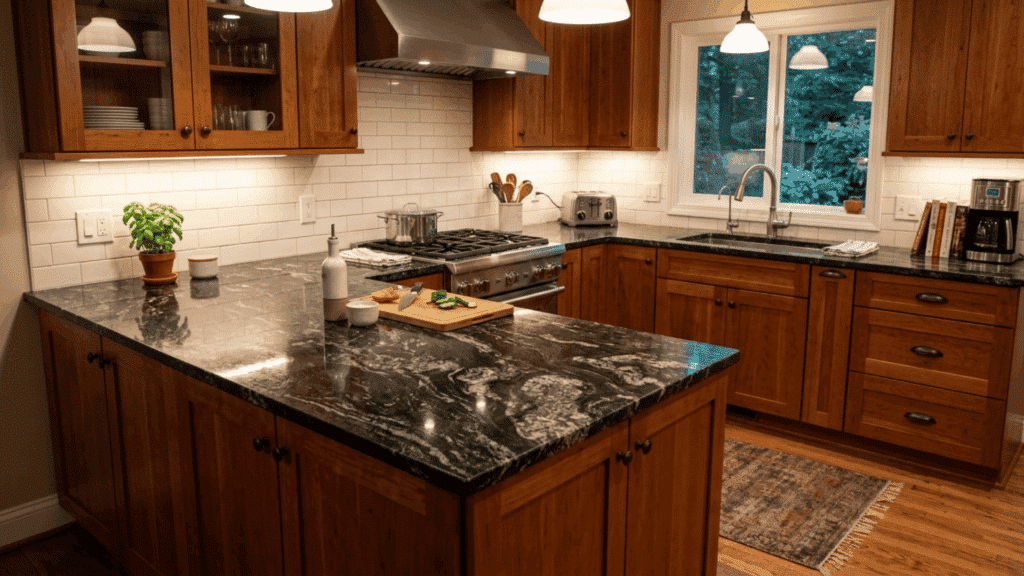
Granite is a natural stone countertop valued for its strength and unique patterns. Each slab is different, giving kitchens a one-of-a-kind look.
The expected cost usually falls between $50 and $100 per sq. ft., depending on the stone’s quality. It remains a top choice for homeowners who want durability with a natural aesthetic.
Pros
- Excellent heat resistance
- Natural, unique patterns
- Adds strong resale value
Cons
- Requires periodic sealing
- Can stain if not maintained
- Heavy and difficult to install
3. Marble
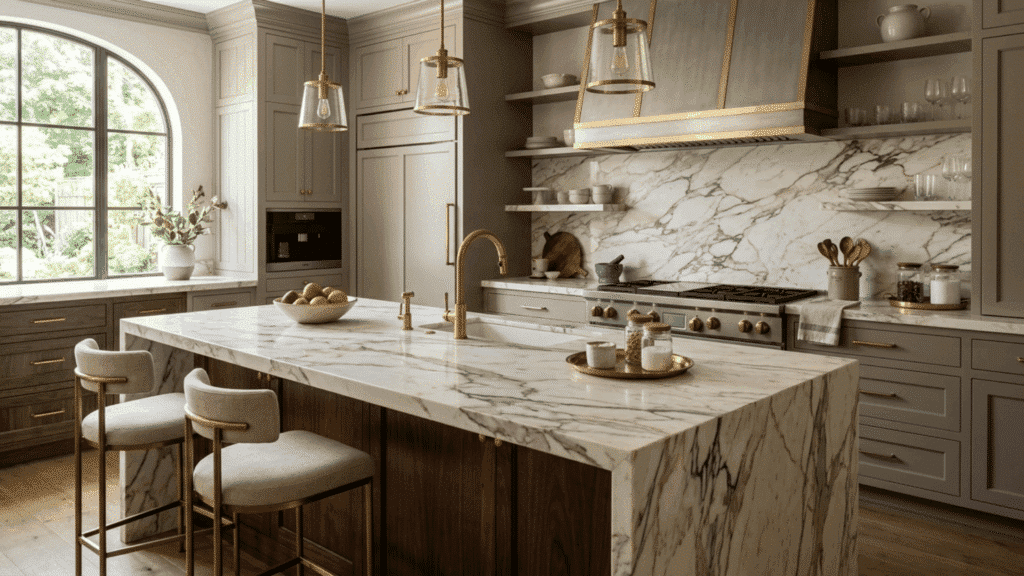
Marble is a premium natural stone known for its elegant veining and never-ending appeal.
It is often associated with luxury kitchens and classic designs. The expected cost ranges from $70 to $150 per sq. ft., making it one of the more expensive options.
While beautiful, it is better suited for low-traffic areas due to its softer nature.
Pros
- Premium, elegant appearance
- Naturally cool surface for baking
- never-ending appeal
Cons
- Prone to scratches and stains
- Requires regular sealing
- High maintenance overall
4. Butcher Block (Wood)
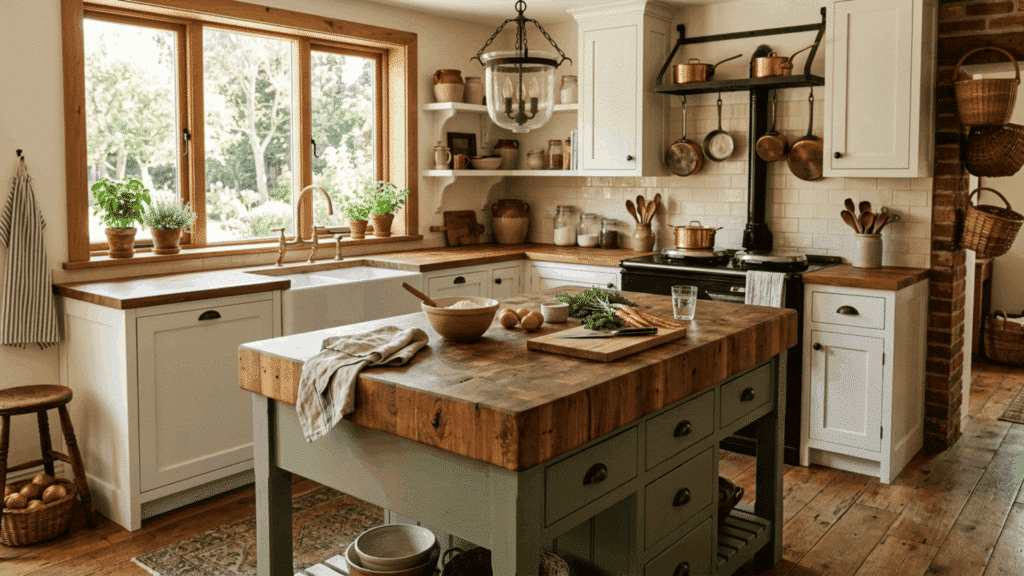
Butcher block countertops bring warmth and a natural feel to kitchens. Made from solid wood strips, they are easy to customize and refinish over time.
The expected cost is around $40 to $100 per sq. ft., depending on the wood type. They are especially popular in farmhouse and DIY-friendly kitchen designs.
Pros
- Warm, natural look
- Can be sanded and refinished
- Easy to customize
Cons
- Requires regular oiling
- Susceptible to water damage
- Can harbor bacteria if neglected
5. Laminate
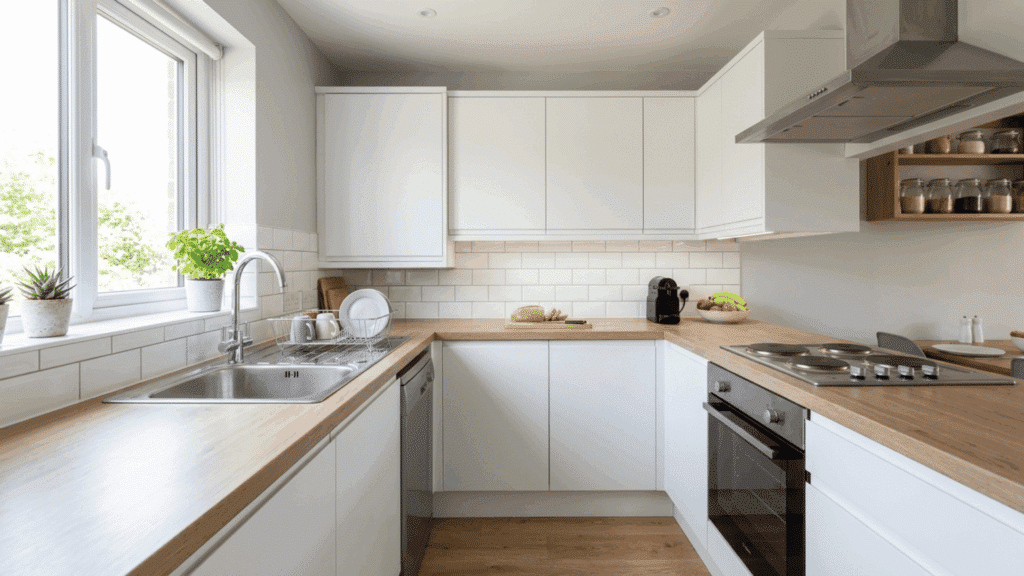
Laminate countertops are one of the most budget-friendly options available. They are made from layered materials with a printed surface that can mimic stone or wood.
The expected cost ranges from $20 to $50 per sq. ft., making them ideal for cost-conscious upgrades. They are widely used in rentals and starter homes.
Pros
- Very affordable
- Lightweight and easy to install
- Wide variety of designs
Cons
- Not heat-resistant
- Prone to scratches and peeling
- Lower durability
6. Solid Surface (Corian)
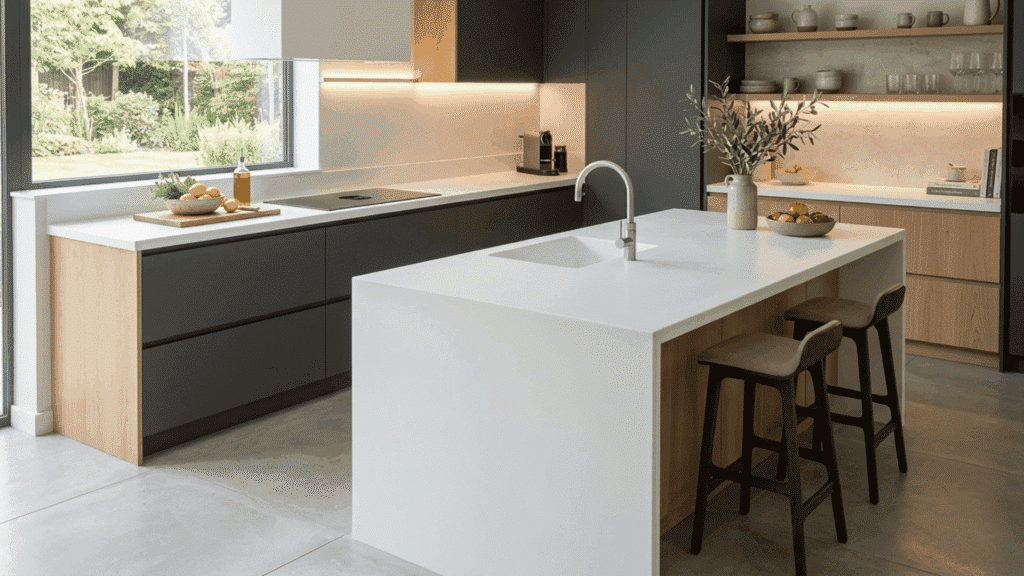
Solid surface countertops, such as Corian, offer a smooth and modern appearance.
They are made from acrylic or polyester blends, allowing for smooth joints and easy repairs. The expected cost typically falls between $60 to$120 per sq. ft.
These countertops are a good middle-ground option between laminate and stone.
Pros
- smooth appearance
- Repairable scratches
- Non-porous
Cons
- Not heat-resistant
- Can scratch easily
- Mid-range durability
7. Concrete
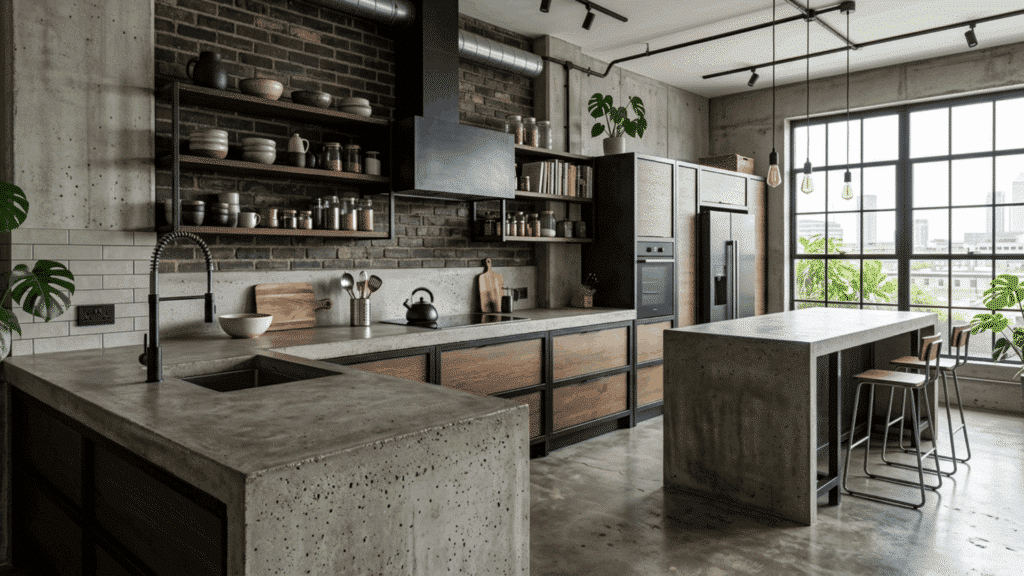
Concrete countertops offer a highly customizable, industrial-style look. They can be molded into different shapes and finishes to suit unique designs.
The expected cost is usually $80–$150 per sq. ft., depending on customization. This option is often chosen for statement kitchens and modern interiors.
Pros
- Fully customizable
- Industrial aesthetic
- Durable when sealed
Cons
- Prone to cracking
- Requires sealing
- Heavy and complex installation
8. Stainless Steel
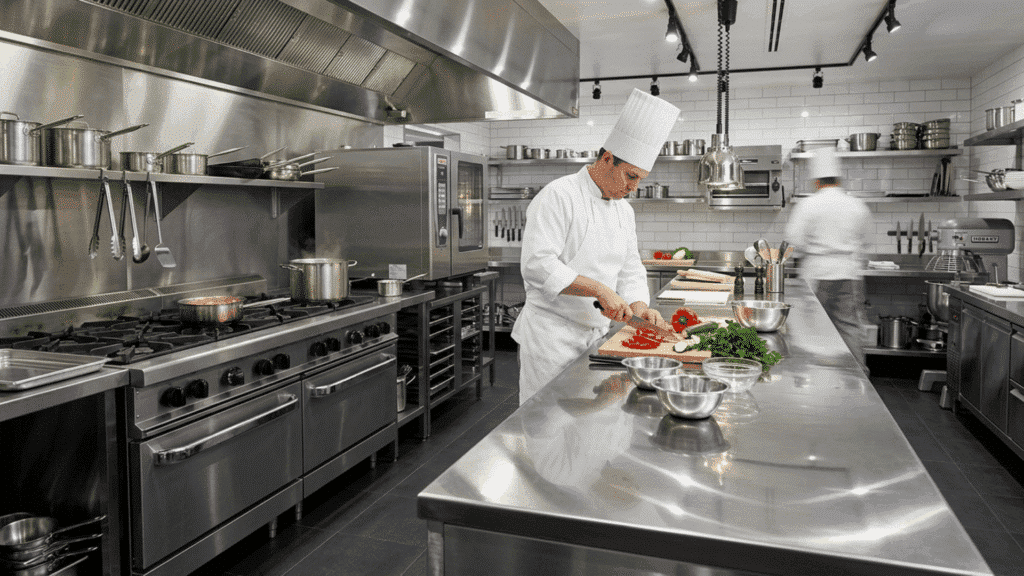
Stainless steel countertops are commonly used in commercial kitchens due to their durability and hygiene.
They offer a sleek, industrial aesthetic that is gaining popularity in modern homes. The expected cost ranges from $90 to $150 per sq. ft. They are ideal for those prioritizing functionality and cleanliness.
Pros
- Extremely durable
- Heat and stain-resistant
- Hygienic and easy to clean
Cons
- Scratches easily
- An industrial look may not suit all homes
- Expensive
9. Soapstone
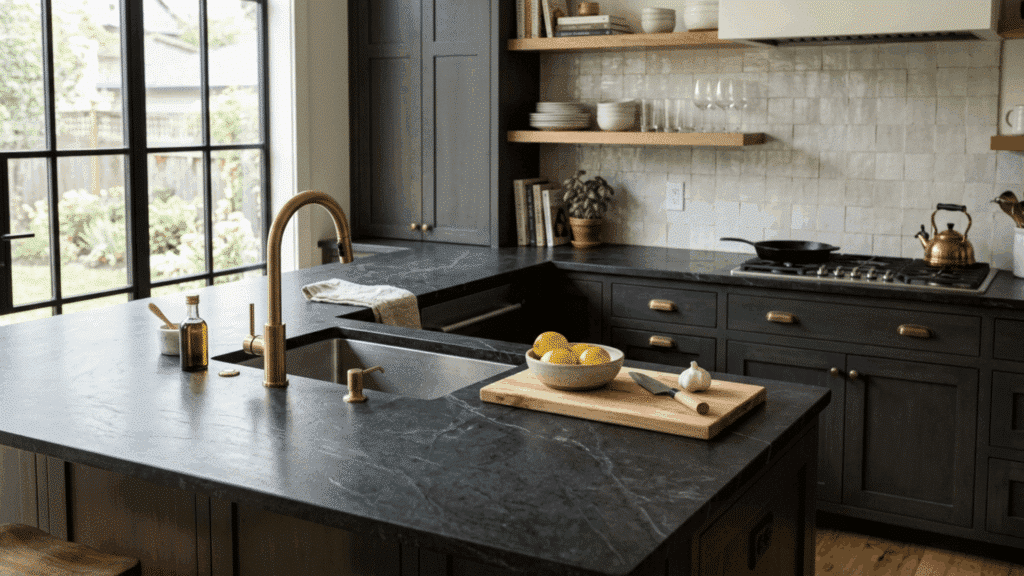
Soapstone is a natural stone known for its smooth texture and matte finish. It develops a rich patina over time, adding character to the surface.
The expected cost typically ranges from $70 to $120 per sq. ft. It is a great choice for those who prefer a softer, more natural aging look.
Pros
- Naturally non-porous
- Resistant to heat and stains
- Develops a unique patina
Cons
- Softer than granite
- Can scratch or dent
- Limited color range
10. Quartzite
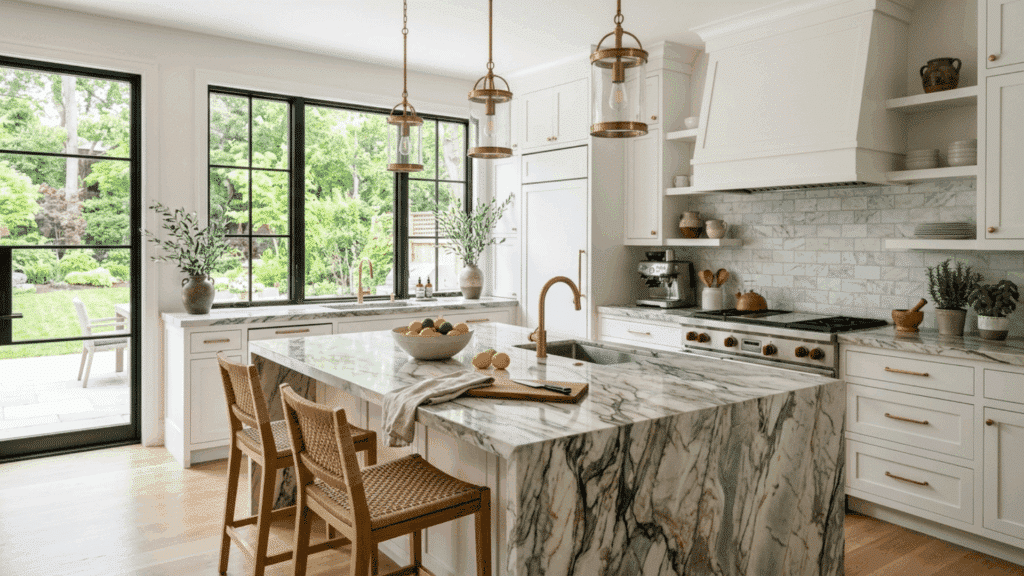
Quartzite is a natural stone that combines the beauty of marble with the durability of granite. It is extremely hard and heat-resistant, making it highly practical.
The expected cost ranges from $80 to $150 per sq. ft. It is often chosen as a premium alternative to marble.
Pros
- Extremely durable
- Heat resistant
- Marble-like appearance
Cons
- Expensive
- Difficult to fabricate
- Requires sealing
11. Tile
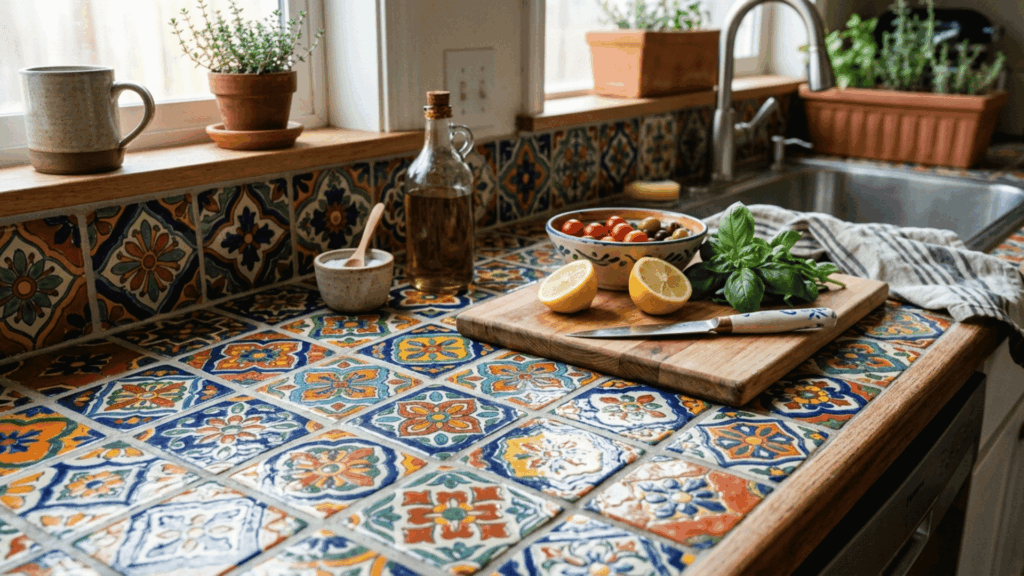
Tile countertops offer design flexibility, allowing creative patterns and color combinations. They are made from ceramic or porcelain tiles arranged with grout lines.
The expected cost typically ranges from $30 to $70 per sq. ft. They are a popular choice for budget-friendly and DIY projects.
Pros
- Affordable and customizable
- Easy to repair individual tiles
- Wide design flexibility
Cons
- Grout lines stain easily
- Uneven surface
- Requires maintenance
12. Recycled Glass
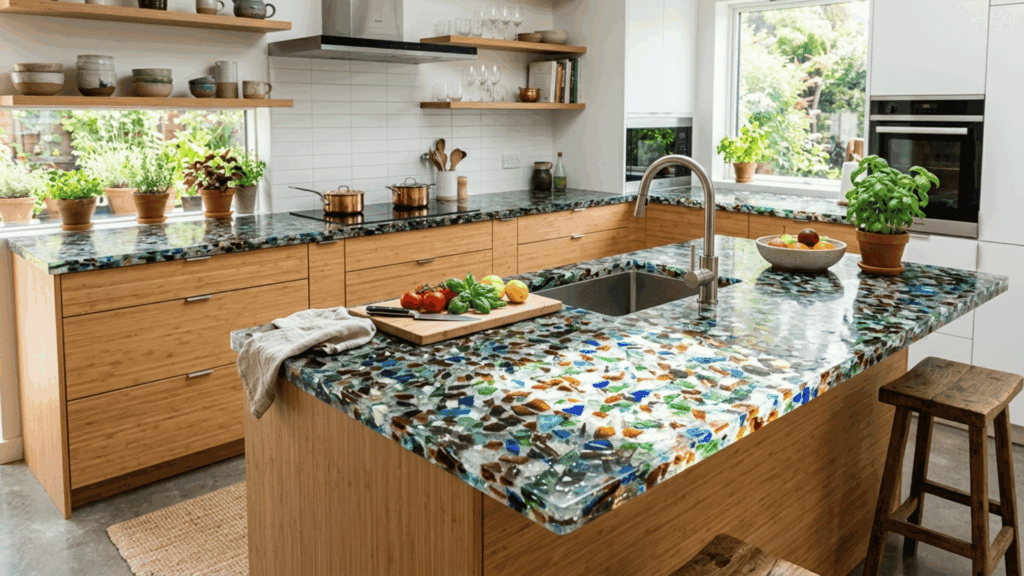
Recycled glass countertops are made from crushed glass embedded in resin or cement. They provide a unique, eco-friendly design with vibrant visual appeal.
The expected cost ranges from $80 to $140 per sq. ft. This option is ideal for homeowners focused on sustainability and style.
Pros
- Eco-friendly
- Unique, eye-catching designs
- Non-porous
Cons
- Expensive
- Limited availability
- Can chip on edges
13. Porcelain
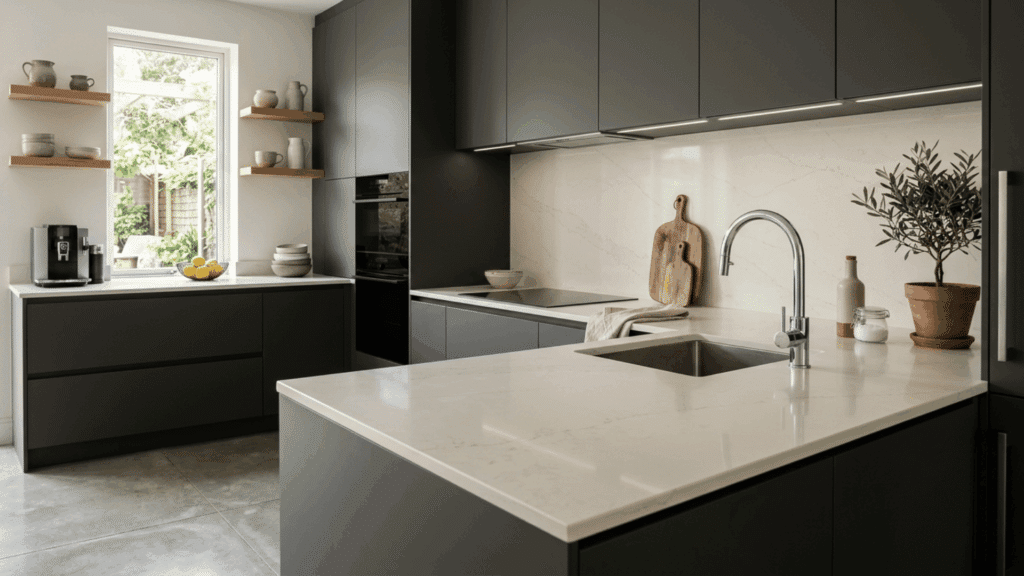
Porcelain countertops are lightweight, durable, and highly resistant to heat and stains. They are manufactured in thin slabs, giving them a sleek, modern look.
The expected cost usually ranges from $70 to $130 per sq. ft. They are increasingly used in both indoor and outdoor kitchens.
Pros
- Heat and stain-resistant
- Lightweight compared to stone
- UV resistant (good for outdoor use)
Cons
- Can chip on edges
- Requires precise installation
- Limited thickness options
14. Dekton
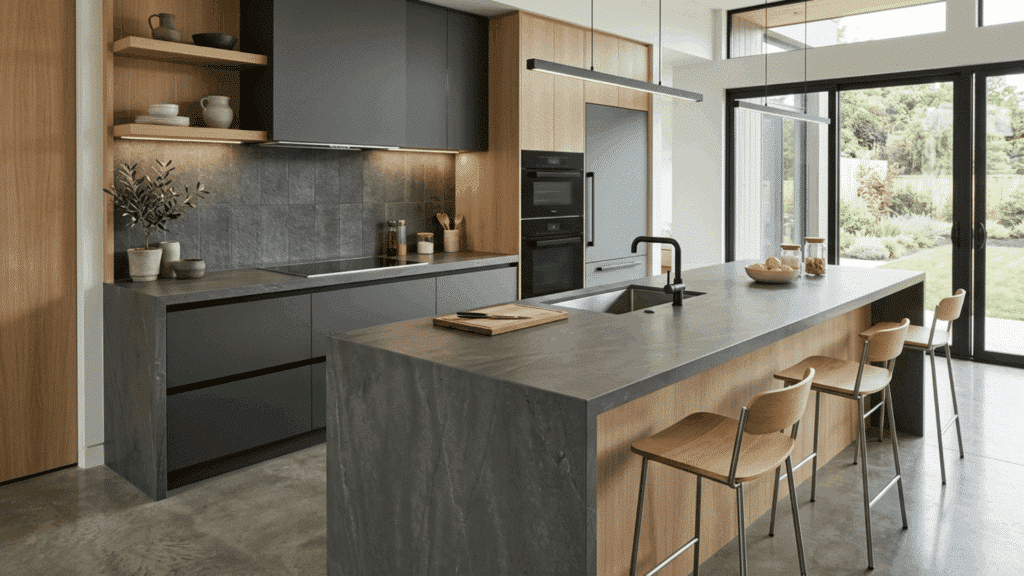
Dekton is an advanced developed surface made from a blend of raw materials used in glass and porcelain. It is extremely resistant to heat, scratches, and UV exposure.
The expected cost ranges from $90 to $160 per sq. ft. It is often used in high-end kitchens that demand long-term performance.
Pros
- Overheat and scratch-resistant
- UV resistant
- Very low maintenance
Cons
- Expensive
- Difficult to fabricate
- Can chip if mishandled
15. Slate
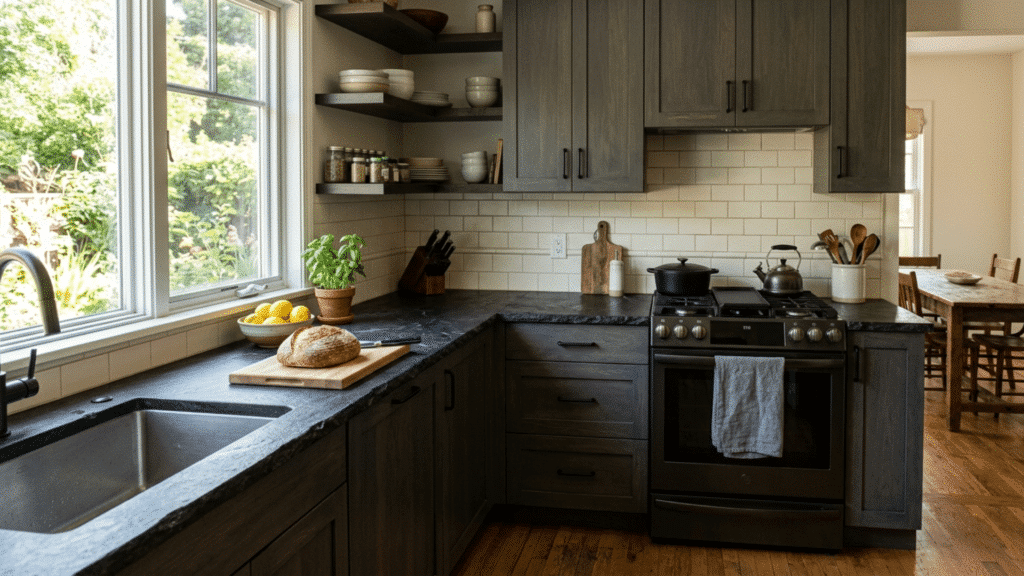
Slate is a natural stone with a subtle, matte finish and good durability. It is less porous than many other stones, making it relatively low-maintenance.
The expected cost typically ranges from $50 to $100 per sq. ft. It is well-suited for rustic and traditional kitchen designs.
Pros
- Durable and less porous than other stones
- Unique matte finish
- Easier to work with
Cons
- Limited color choices
- Can chip
- Needs occasional sealing
16. Terrazzo
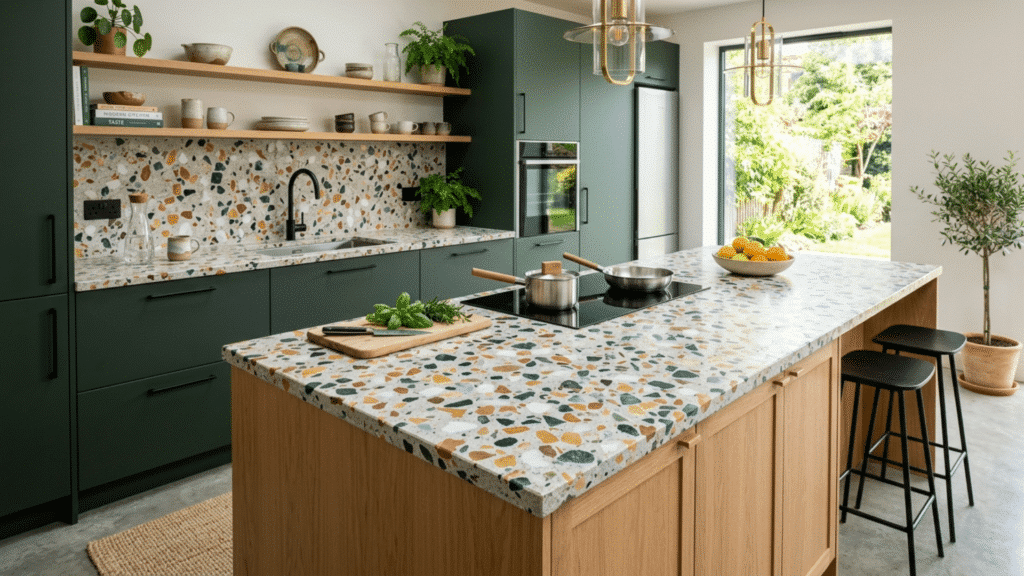
Terrazzo countertops are made by embedding chips of stone, glass, or marble in a cement or resin base. They are known for their durability and distinctive patterns.
The expected cost ranges from $80–$150 per sq. ft. This material is popular in design-focused and custom kitchens.
Pros
- Highly durable
- Unique patterns
- Long lifespan
Cons
- Expensive
- Complex installation
- Heavy
17. Bamboo
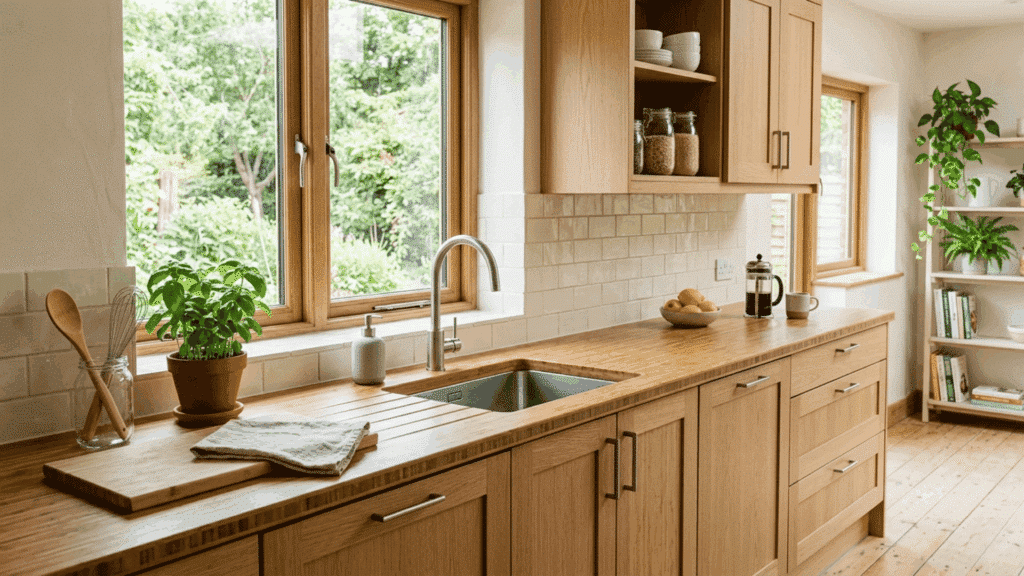
Bamboo countertops are an eco-friendly alternative made from fast-growing grass. They offer a light, natural look and are relatively easy to work with.
The expected cost typically ranges from $40 to $90 per sq. ft. They are ideal for sustainable homes and budget-conscious renovations.
Pros
- Eco-friendly
- Lightweight
- Easy to cut and install
Cons
- Not very heat-resistant
- Can scratch easily
- Requires sealing
Common Mistakes to Avoid
Avoiding common mistakes can save you from unnecessary expenses, maintenance issues, and early replacements when choosing the right countertop material.
- Choosing a countertop based only on appearance without considering daily use
- Ignoring maintenance requirements such as sealing, cleaning, or repairs
- Not matching the material with your cooking habits and lifestyle
- Underestimating long-term costs, including maintenance and replacement
- Selecting materials that cannot handle heat, stains, or heavy use
- Overlooking installation complexity, especially for DIY projects
- Failing to compare multiple options before making a final decision
Final Thoughts
Selecting the best countertop material comes down to aligning your kitchen needs with the right balance of durability, cost, and maintenance.
Each option offers its own advantages, but the right choice depends on how you cook, clean, and use your space daily.
Instead of focusing only on appearance, consider long-term performance and practicality to avoid future issues. By comparing materials carefully and understanding real-life use cases, you can make a more confident decision.
If you are still unsure what the best countertop material is for your home, the next step is to review options in person or consult a professional for better clarity.
Frequently Asked Questions
What Is the Most Durable Countertop Material?
Dekton and quartzite are the most durable due to their extreme resistance to heat, scratches, and wear.
Which Is Better, Quartz or Granite?
Quartz is better for low maintenance, while granite is better for natural beauty and heat resistance.
What Is the Most Popular Countertop Material Right Now?
Quartz is currently the most popular due to its modern look and easy maintenance.
Why Don’t People Use Granite Anymore?
People still use granite, but quartz is preferred more because it requires less maintenance and offers consistent designs.

Tommy Hardy, an alumnus of the Georgia Institute of Technology with a degree in Mechanical Engineering, has been a go-to figure in residential upkeep and innovation for over 18 years. His career commenced in a leading home appliance manufacturing company, where he mastered the intricacies of household systems. Joining our platform in 2020, Tommy quickly became a reader favorite for his practical and easy-to-follow guides. He took the helm of our DIY section in 2019, consistently delivering content that empowers homeowners. Beyond his professional pursuits, Tommy is a passionate gardener and enjoys woodworking, skills enhancing his hands-on approach to home care.