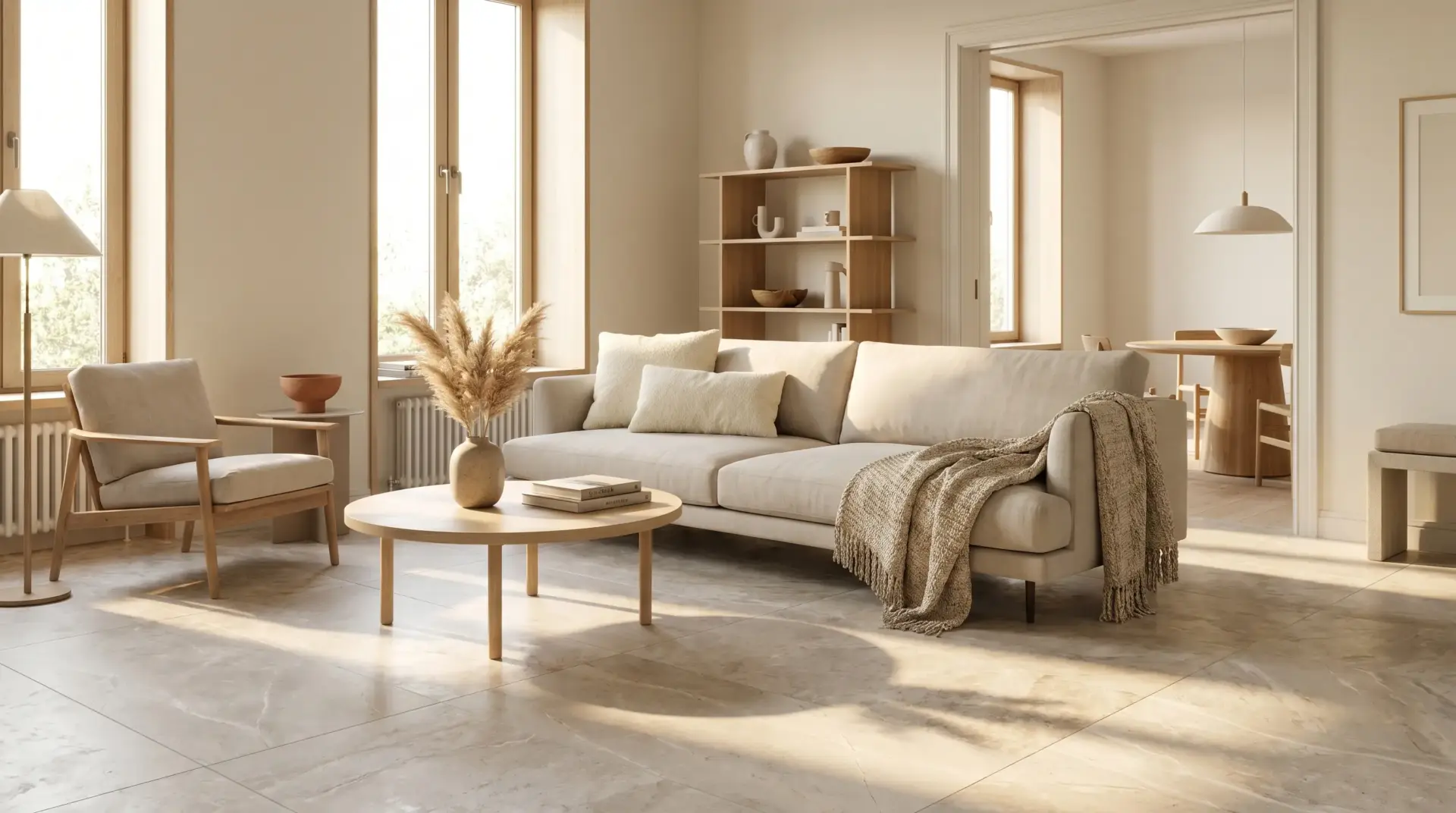

Some homes just feel right the moment you step inside. You might not be able to explain it, but something about the space feels balanced, welcoming, and considered.
More often than not, it’s not the big statement pieces doing the work. It’s the subtle design details quietly shaping how a room looks and feels.
Here are the elements people notice without even realizing they’re noticing them.
Flooring That Feels Effortlessly Cohesive
Floors set the tone for everything else in a room, but when they’re done well, they don’t draw attention to themselves. Instead, they create a seamless backdrop that ties furniture, colors, and textures together.
Natural stone flooring is particularly effective here. Its soft variations and organic tones stop a space from feeling too uniform, while still keeping everything visually calm. It’s one of those details that makes a room feel complete without being obvious.
Light That Moves Naturally Through the Space
People instinctively respond to how light behaves in a room. Spaces that feel bright but not harsh tend to leave the strongest impression.
This often comes down to reflective surfaces, window placement, and material choices. Subtle finishes, like matte stone or lightly textured surfaces, help diffuse light in a softer way compared to high-gloss materials, creating a more relaxed atmosphere.
Transitions Between Rooms That Feel Smooth
You might not consciously think about how one room leads into another, but awkward transitions can make a home feel disjointed.
Consistent flooring, aligned thresholds, and cohesive color palettes allow spaces to flow naturally. When movement through a home feels effortless, it creates a sense of calm and continuity that people pick up on immediately.
Texture That Adds Depth Without Clutter
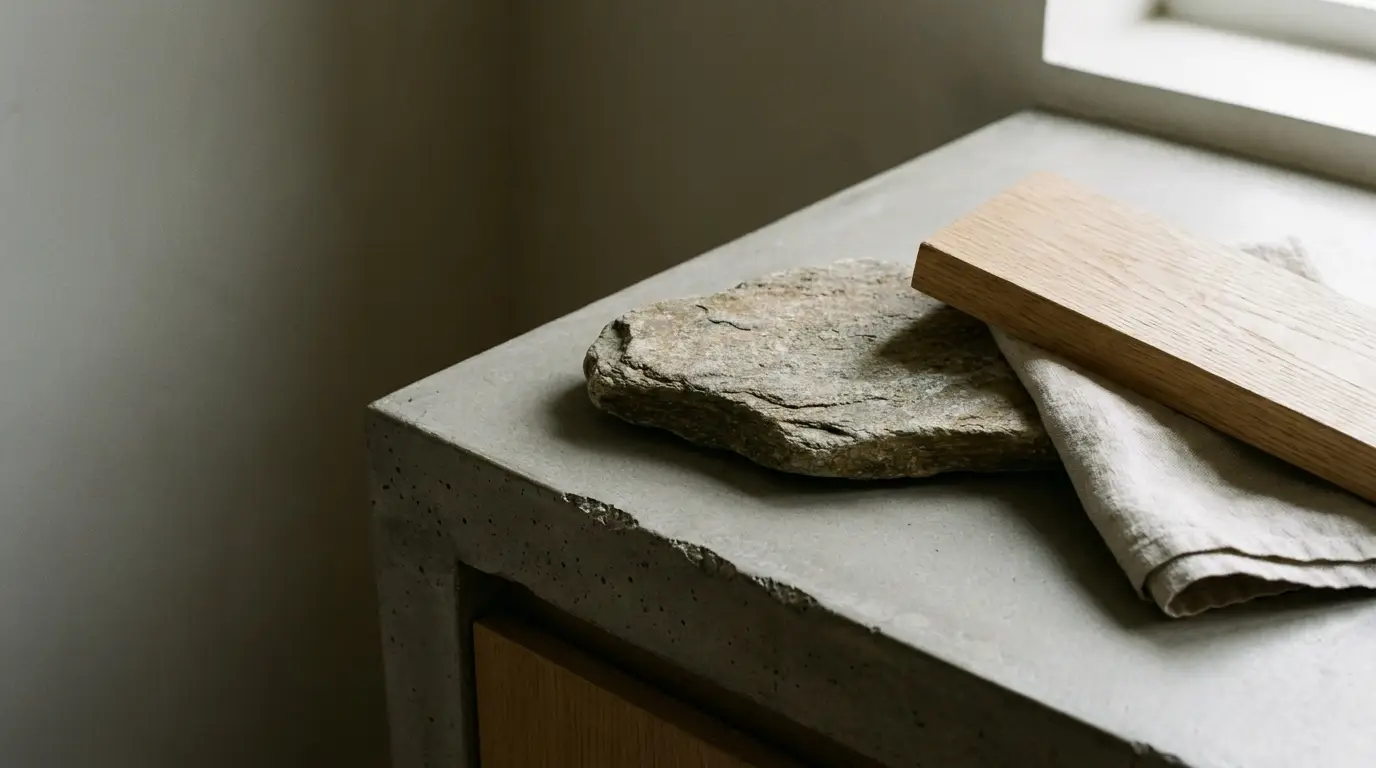
Flat, one-dimensional spaces can feel lifeless, even if they’re tidy. On the other hand, too many competing textures can feel overwhelming.
The balance lies somewhere in between. Materials like natural stone, wood, and soft fabrics introduce depth without visual chaos. It’s this layered simplicity that makes a space feel thoughtfully designed rather than overly styled.
Proportions That Just Feel “Right”
People rarely measure proportions when they walk into a room, but they notice when something feels off.
The relationship between furniture size, ceiling height, and open space plays a big role here. Well-proportioned rooms feel comfortable and intuitive, while poorly balanced ones can feel cramped or oddly empty.
A Color Palette That Doesn’t Compete
Strong colors can be impactful, but when too many are used together, they can create visual tension.
Homes that feel calm often rely on a controlled palette, with neutral bases and carefully chosen accents. Flooring plays a big role in this. A grounded, natural base allows other elements to stand out without clashing.
Materials That Age Gracefully
There’s a subtle difference between something that looks new and something that looks like it belongs.
Materials that age well, like natural stone, develop character over time rather than wearing out. This creates a sense of permanence and authenticity that people notice, even if they can’t quite put their finger on it.
Exploring options from specialists like Quorn Stone can highlight just how much impact these materials have, especially when they’re used to anchor a space rather than dominate it.
Quiet Details That Reduce Visual Noise
Handles, trims, grout lines, and finishes might seem minor, but they contribute to the overall feel of a room.
When these details are consistent and understated, they reduce visual noise. The result is a space that feels calm and intentional rather than busy or overcomplicated.
Comfort That You Feel Instantly
Some spaces feel inviting the second you walk in. That immediate comfort often comes from a combination of temperature, texture, and layout.
Warm underfoot surfaces, soft furnishings, and balanced layouts all contribute to this. It’s not one single element, but the way everything works together that creates that feeling.
A Sense of Effortlessness
Perhaps the most noticeable detail of all is when a space doesn’t feel forced.
Rooms that feel effortless are usually the result of careful decisions made behind the scenes. Nothing is competing for attention, and everything works in harmony. That’s what makes a home feel calm, considered, and easy to live in.
The Details That Do the Heavy Lifting
The most impactful design choices are often the ones people don’t consciously register.
They’re the quiet details working in the background, shaping how a space feels rather than how it looks at first glance. When those elements are right, everything else falls into place naturally.
And that’s what turns a well-decorated house into a home people genuinely enjoy being in.

With a Master in Architectural Studies from University of Pennysylvania, Marwa Haydar has pioneered living spaces since 2005. Her expertise, initially honed in a prestigious architectural firm, is evident in her approach to creating environments. Marwa became part of our team in 2019 and has since been a driving force in our home improvement section, known for her practical yet stylish solutions. She’s been spearheading our design workshops since then, infusing her passion for teaching into her work. In her leisure time, Marwa enjoys exploring historic architecture and is an enthusiastic pottery hobbyist, further enriching her understanding of form and texture.