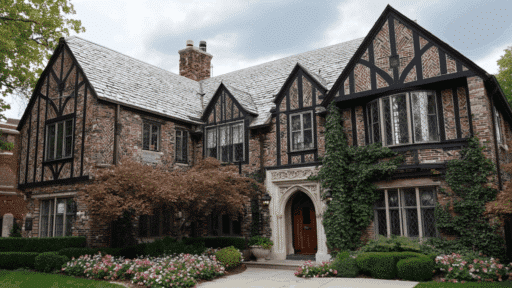
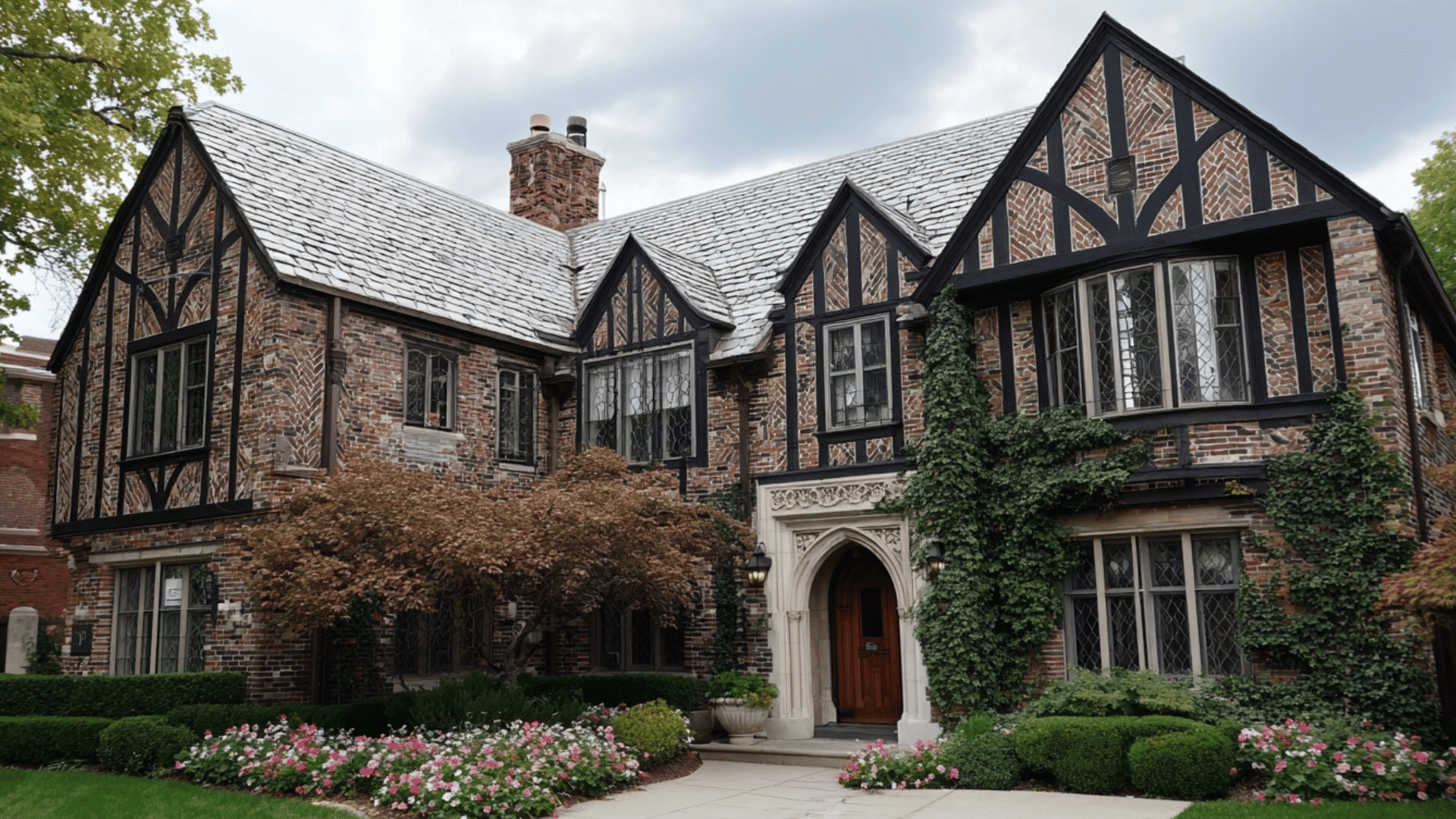

There’s something about Tudor Revival architecture that stops you in your tracks. Maybe it’s the steeply pitched roofs, the decorative half-timbering, or those arched doorways that feel pulled straight out of a storybook.
Whatever it is, these homes have held people’s attention for over a century, and they’re still doing it today.
Tudor Revival doesn’t ask you to choose between character and comfort; you get the old-world feel with all the perks of modern living.
This blog will lead you through the history behind this beloved style, break down its key features, and look at some real-world examples.
What Is Tudor Revival Architecture?
Tudor Revival architecture is a residential style that draws its roots from medieval English homes, particularly those built during the Tudor period in the 1400s and 1500s. But it didn’t actually originate back then.
Architects and builders in the late 19th and early 20th century brought it back, giving it a fresh presence in suburban neighborhoods across the US and UK.
Think steeply pitched roofs, decorative half-timbering, and an overall look that feels like it belongs in a fairytale. It’s charming, distinctive, and surprisingly practical too.
And while it carries deep historical roots, Tudor Revival found its sweet spot in everyday neighborhoods, making that storybook appearance accessible to regular people seeking real character.
Exterior Design Elements of Tudor Revival Homes
Tudor Revival homes have a very specific set of exterior features that make them instantly recognizable, and once you know what to look for, you’ll spot them everywhere.
1. Steeply Pitched Roofs
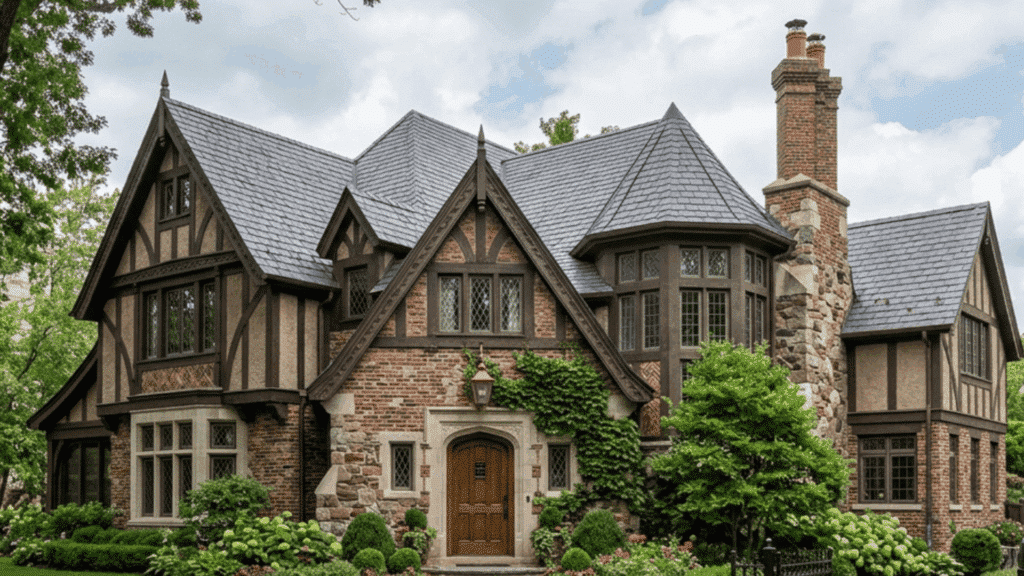
The roofline is usually the first thing you notice. Tudor Revival homes have sharp, steep roof angles that almost feel dramatic.
They’re often paired with multiple gables, which adds a lot of visual interest to the overall shape of the house. It gives the home a bold, structured silhouette that’s hard to miss, even from a distance.
2. Decorative Half-Timbering
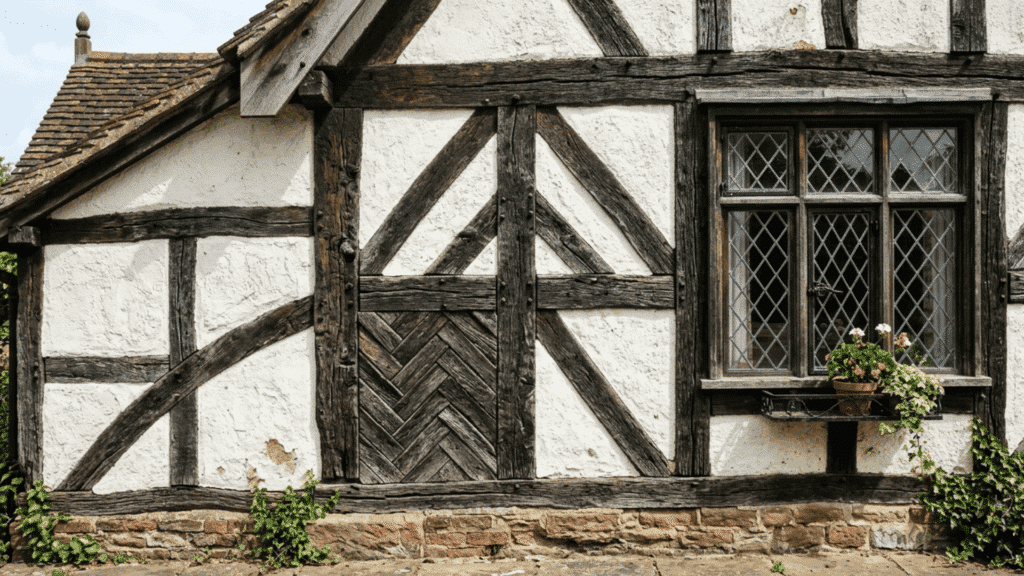
This is one of the most recognizable features. Heavy wooden beams are placed on the exterior walls in a grid-like or diagonal pattern, and the spaces between them are filled with stucco or brick.
It’s not just decorative either. This technique actually draws on real medieval construction methods, giving it a sense of historical grounding.
3. Tall, Narrow Windows
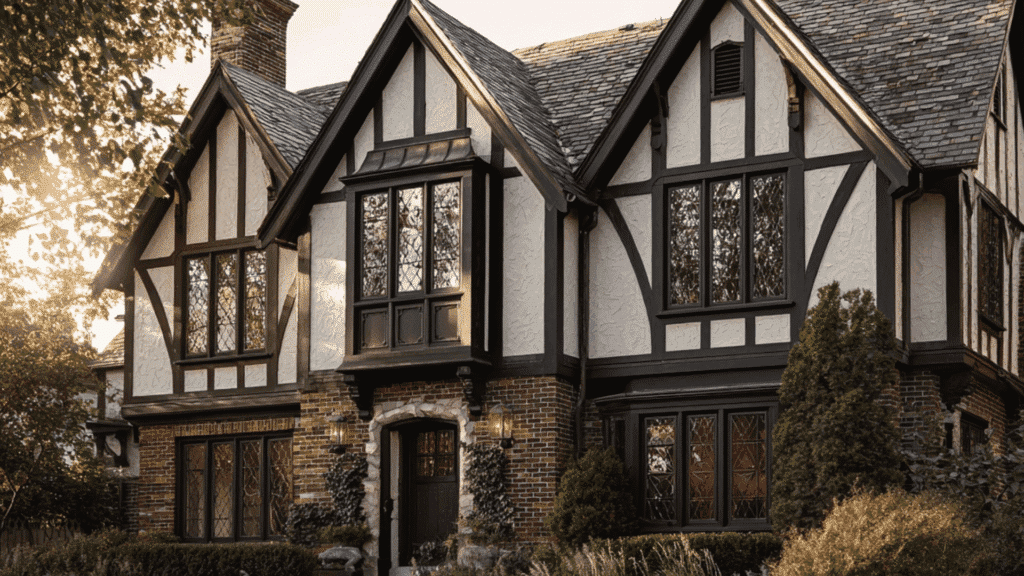
Tudor Revival windows are long, slim, and full of character. They typically feature multi-pane glass divided by thin strips called muntins.
You’ll often find them grouped in rows, which lets in a good amount of light while keeping that classic, old-world look intact. They add a lot of personality to the facade.
4. Brick and Stone Exteriors
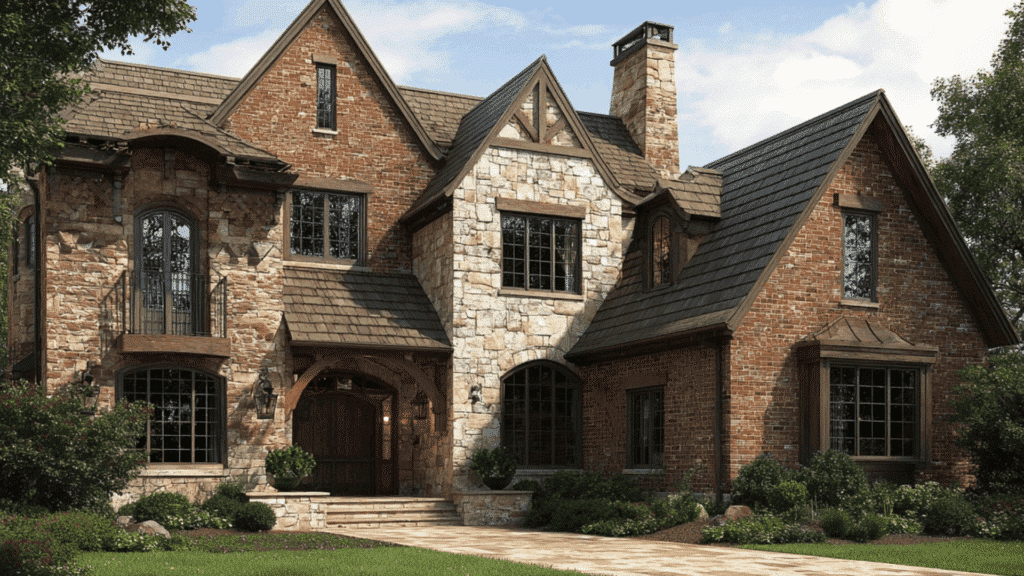
These homes rarely stick to just one material. Brick and stone are often used together, creating a mix of textures that feels rich and layered.
The combination gives the exterior a solid, historic quality that other styles don’t have. And because both materials age well, Tudor Revival homes tend to look even better over time.
5. Prominent Chimneys
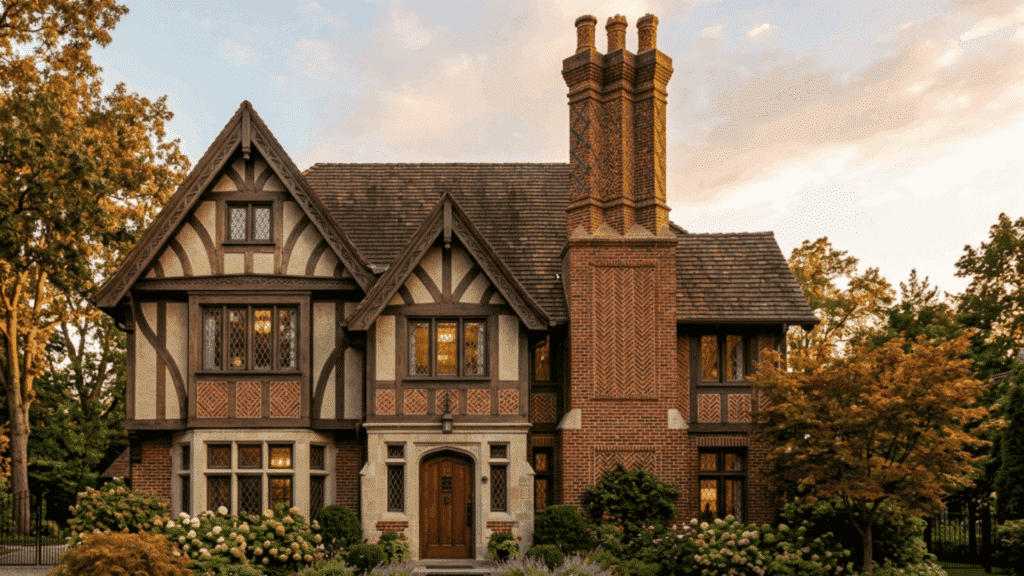
Chimneys on Tudor Revival homes aren’t just functional. They’re a design statement. They tend to be large, tall, and carefully detailed, sometimes featuring decorative brickwork or patterned designs near the top.
A single home might have more than one chimney, and each one adds to that grand, historic feel the style is known for.
6. Arched Doorways
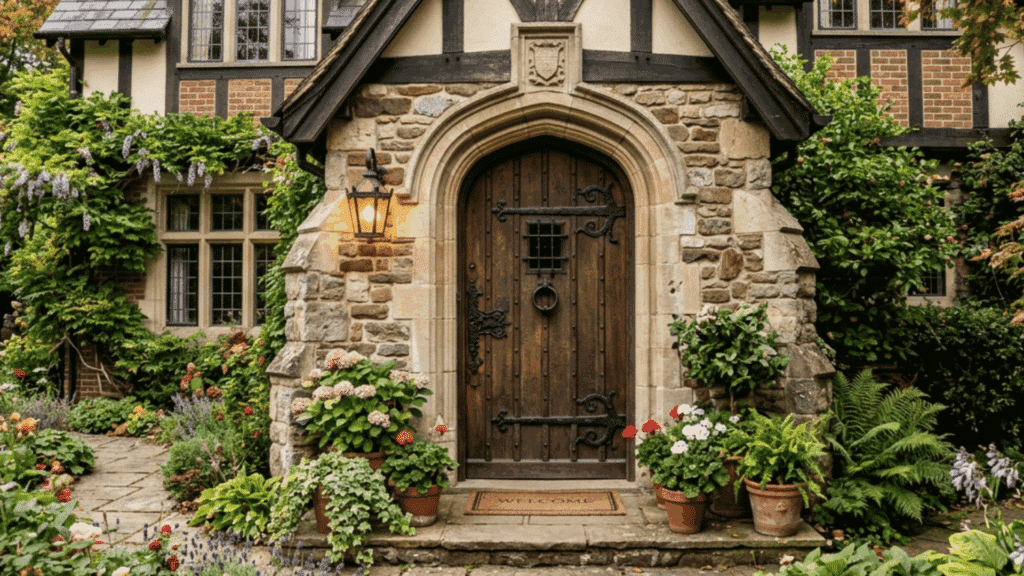
Walk up to a Tudor Revival home, and the entryway will likely stop you. Doorways are typically rounded or pointed at the top, borrowing directly from Gothic and medieval English architecture.
It’s a small detail that carries a lot of weight. Paired with heavy wooden doors and decorative ironwork, the entryway sets the tone for the entire home.
Interior Design Elements of Tudor Revival Homes
Step inside a Tudor Revival home, and the interior feels just as distinctive as the outside. Every detail is intentional, warm, and rooted in that medieval English influence.
1. Exposed Wooden Beams on Ceilings
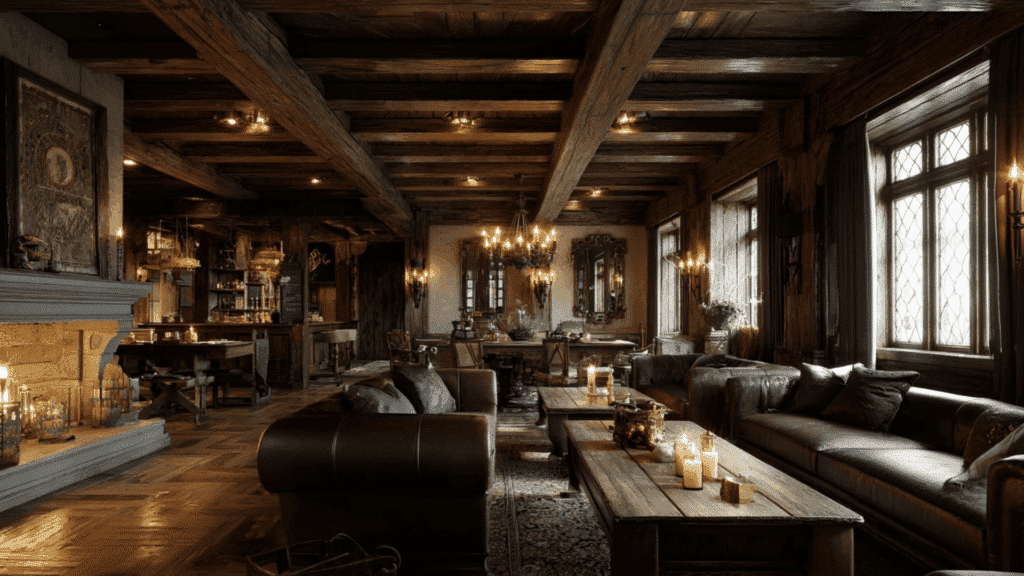
The ceilings in Tudor Revival homes are hard to ignore. Dark, heavy wooden beams run across them, a touch rustic yet refined.
They add depth and structure to a room without trying too hard. Whether the ceiling is flat or vaulted, those beams bring a sense of craftsmanship that modern homes rarely replicate.
It’s one of those details that instantly sets the tone.
2. Dark Wood Finishes
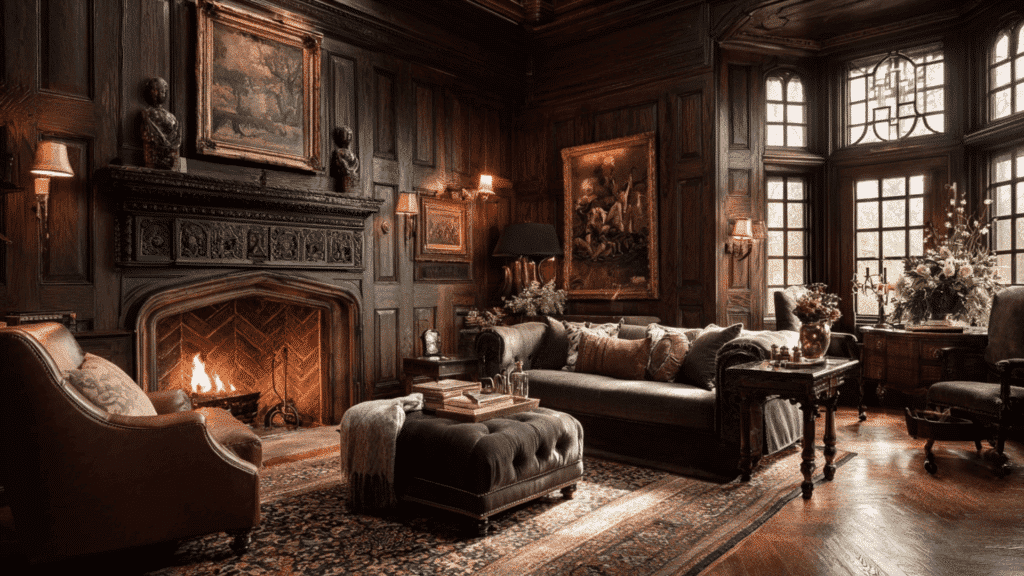
From floors to wall paneling, dark wood is a constant in Tudor Revival interiors. It creates a rich, grounded atmosphere that feels cozy rather than heavy.
Oak was the traditional choice, and many homes still carry that original woodwork today.
It pairs naturally with stone, wrought iron, and deep fabric tones, pulling the whole interior together in a way that feels intentional and cohesive.
3. Cozy Fireplaces as Focal Points
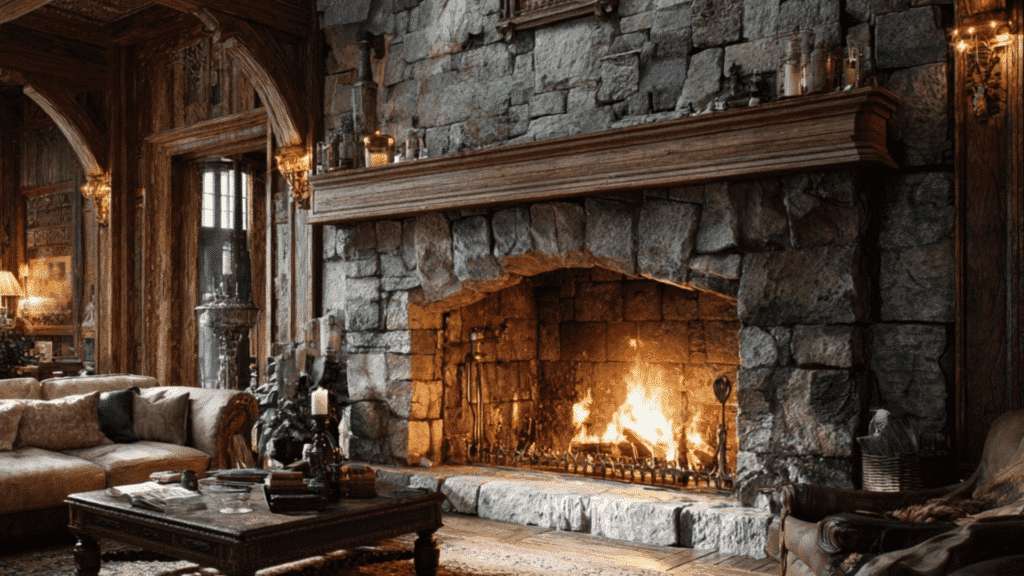
Every Tudor Revival home seems built around its fireplace. These aren’t small, tucked-away features. They’re large and prominent, often framed by detailed stone or brick surrounds.
The mantle is usually substantial, sometimes carved with decorative motifs.
In many rooms, the fireplace is the clear centerpiece, and the rest of the space is arranged around it. It makes even a large room feel warm and intimate.
4. Small, Defined Rooms Instead of Open Layouts
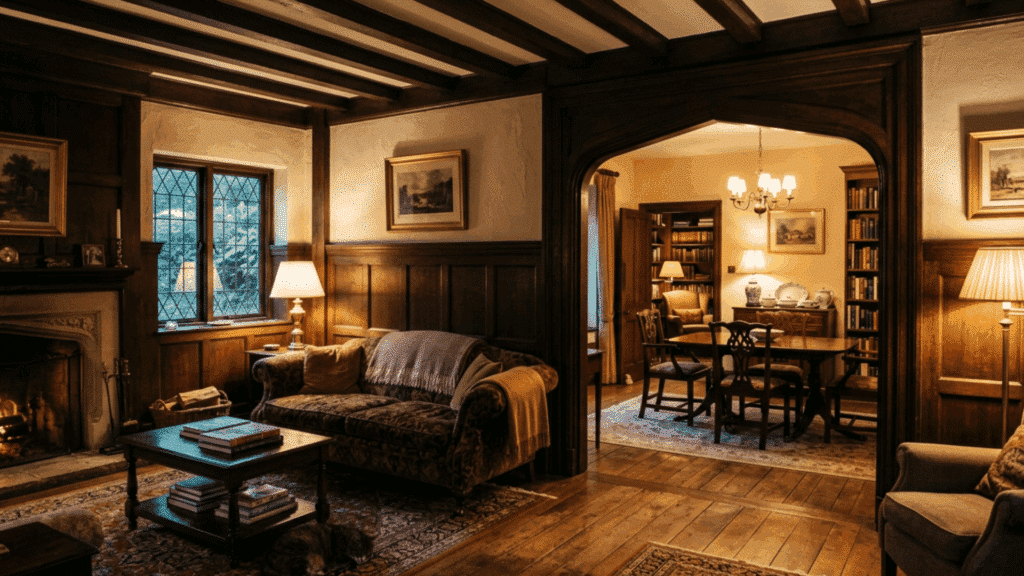
Tudor Revival homes don’t follow the open-plan trend. Rooms are smaller, clearly defined, and separated by walls and doorways.
It might feel different if you’re used to modern layouts, but there’s a real comfort to it.
Each room has its own identity and purpose. The division creates a sense of privacy and enclosure, making the home feel more personal and livable.
5. Leaded Glass Windows
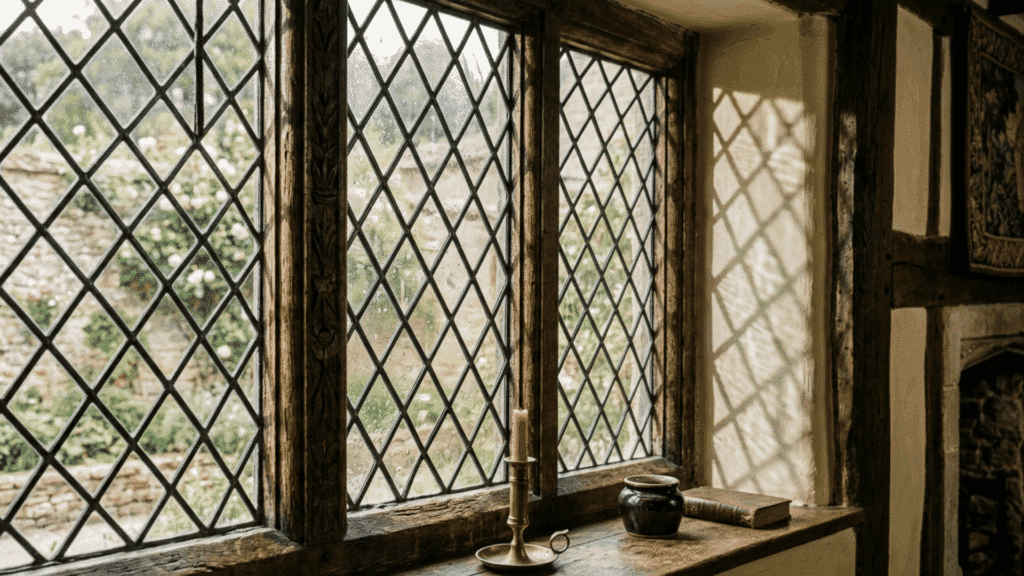
Leaded glass windows are a quiet but powerful interior detail. Small panes of glass are held together by lead strips, creating a grid-like or diamond pattern that filters light in a soft, diffused way.
The effect inside the home is beautiful, especially on sunny days when the light shifts across the room. It’s a detail that connects the interior directly to the home’s medieval English roots.
Famous Examples of Tudor Revival Architecture
Tudor Revival architecture has left its mark across the world, from quiet suburban streets to grand institutional buildings.
- Residential Homes In The United States: Suburban neighborhoods built during the 1920s and 1930s are full of Tudor Revival homes, particularly in cities like New York, Chicago, and Boston. These homes brought old-world character into everyday American neighborhoods.
- University Campuses: Many universities across the US and UK adopted Tudor Revival styling for their halls and academic buildings. The pointed archways, stone exteriors, and tall windows gave campuses a sense of history and permanence.
- Historic Estates And Mansions: Large private estates from the late 19th and early 20th century frequently used Tudor Revival as their style of choice. These properties leaned into the grandeur of the look with sprawling layouts, ornate chimneys, and detailed stonework.
- Tudor Revival Homes In Gated Communities: Often seen in upscale neighborhoods, these homes blend classic Tudor details with modern layouts and amenities.
Pros and Cons of Tudor Revival Homes
Tudor Revival homes come with a lot of appeal, but like any architectural style, there are a few trade-offs worth knowing before you fall in love with one.
| Pros | Cons |
|---|---|
| Distinct and classic look that stands out in any neighborhood | Interiors can feel dark due to heavy wood and small windows |
| Built with strong materials like brick and stone that hold up well over time | Wood elements like beams and half-timbering require regular upkeep |
| Interiors feel warm, cozy, and full of character | The defined room layout may not suit open floor plan preferences |
| Strong curb appeal that can increase property value | Renovation and restoration costs can be higher than those of other styles |
| Rich architectural details create a unique, custom feel | Finding contractors skilled in Tudor-style work can be difficult |
Tips for Adding Tudor Style to Your Home
If you’re updating a single room or your entire home, these tips will help you create a cozy, storybook-inspired look that feels both classic and livable.
- Use brick or stone accents on walls, fireplaces, or entryways to add texture
- Choose arched doors or windows to reflect the Tudor Revival style
- Go for warm, earthy colors like Deep browns, burnt oranges, forest greens, and warm creams
- Include vintage-style lighting such as wrought iron chandeliers, lantern-style pendants, or sconces
- Opt for leaded or multi-pane glass in windows or cabinets
- Layer heavy, textured fabrics like wool throws, velvet cushions, and woven rugs
- Add exposed wooden beams on ceilings for a traditional Tudor look
- Use dark wood furniture and finishes to create a rich, classic feel
Conclusion
Tudor Revival Architecture continues to stand out for its strong character, rich materials, and instantly recognizable details.
From steep roofs to timber accents, every element adds depth and personality that many modern homes lack.
Its blend of history and comfort makes it a favorite for those who want something unique yet classic. If these design ideas caught your attention, consider adding a few Tudor-inspired touches to your own space.
Even small changes can make a big impact. Ready to bring this classic style into your home? Start planning your Tudor-inspired look today.

With a Master’s in Architecture from the University of California, Berkeley, Alexander Martin has dedicated the last 18 years to enhancing outdoor living through thoughtful and robust structure design. His career kicked off in urban planning, giving him a unique perspective on integrating structures into diverse environments. In 2019, Alexander brought his expertise to our website, offering insights into creating versatile outdoor spaces. Since then, he has been the lead advisor for our outdoor design projects and is known for his ability to merge functionality with environmental consciousness. Alexander enjoys rock climbing outside of work and participates in community development projects, activities that reflect his passion for the outdoors and sustainable design.