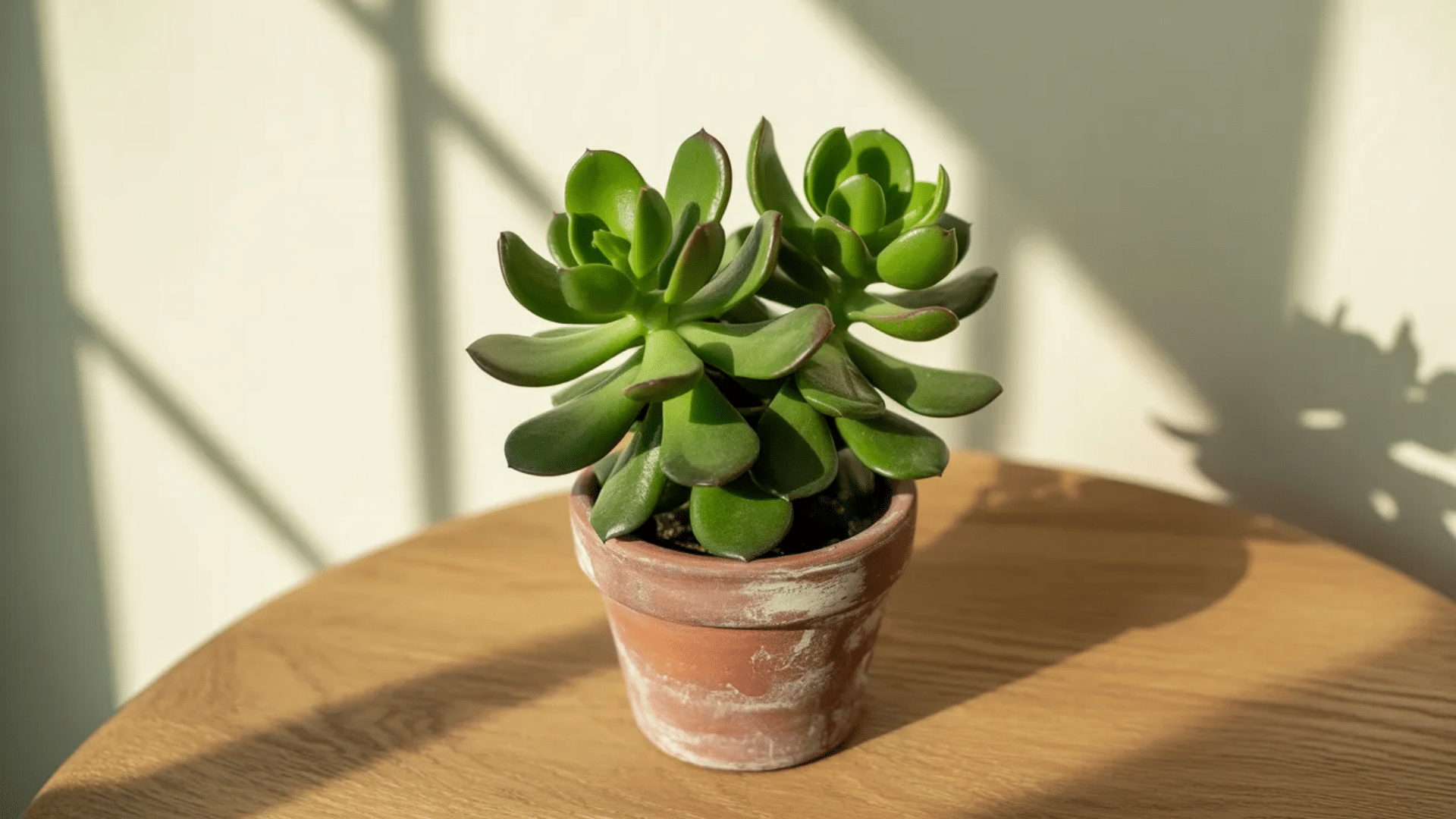

Succulents are the internet’s favorite plant and for good reason. They’re gorgeous, surprisingly forgiving, and grow with minimal attention. But “low maintenance” doesn’t mean “zero maintenance.”
Millions of succulents die each year from overwatering, wrong soil, or poor lighting, all completely avoidable mistakes.
If you’ve just bought your first pot or are building a windowsill collection, knowing how to care for a succulent makes all the difference.
This blog walks you through every fundamental watering schedule, light requirements, soil types, and even how to keep low light succulents alive indoors, no fluff, just what actually works.
Understanding Succulents Before You Care for Them
Most people skip this part, and that’s exactly where the trouble starts. Before you water, repot, or place your succulent on a shelf, you need to understand what kind of plant you’re actually dealing with.
Succulents aren’t just “cute little cacti.” They’re a highly specialized group of plants adapted to survive in some of the harshest environments on Earth, such as deserts, rocky cliffs, and drought-prone regions.
That survival biology is the reason they behave so differently from your average houseplant. Once you understand how to care for a succulent the right way, every care decision you make starts to click into place.
What Makes Succulents Different from Other Plants?
The one word that defines succulents is storage. Unlike most plants, which rely on consistent moisture from the soil, succulents store water in their leaves, stems, and roots.
That thick, fleshy appearance is a built-in water reservoir that keeps the plant alive during long dry spells. Here’s what that means practically for you as a plant owner:
- They Hate Sitting in Wet Soil: Excess moisture causes root rot to spread quickly
- They Prefer Irregular Watering: It should be along with full drying periods in between
- They Work Well Under Stress: Bright light, dry air, and lean soil are their natural habitat
- Their Growth Slows in Fall and Winter: Care needs shift with the seasons
How to Water a Succulent the Right Way?
Water is where most succulent owners go wrong, and ironically, by doing too much of it. The instinct to water regularly works for most houseplants, but it slowly kills succulents.
Their biology is built around drought and recovery, not routine moisture.
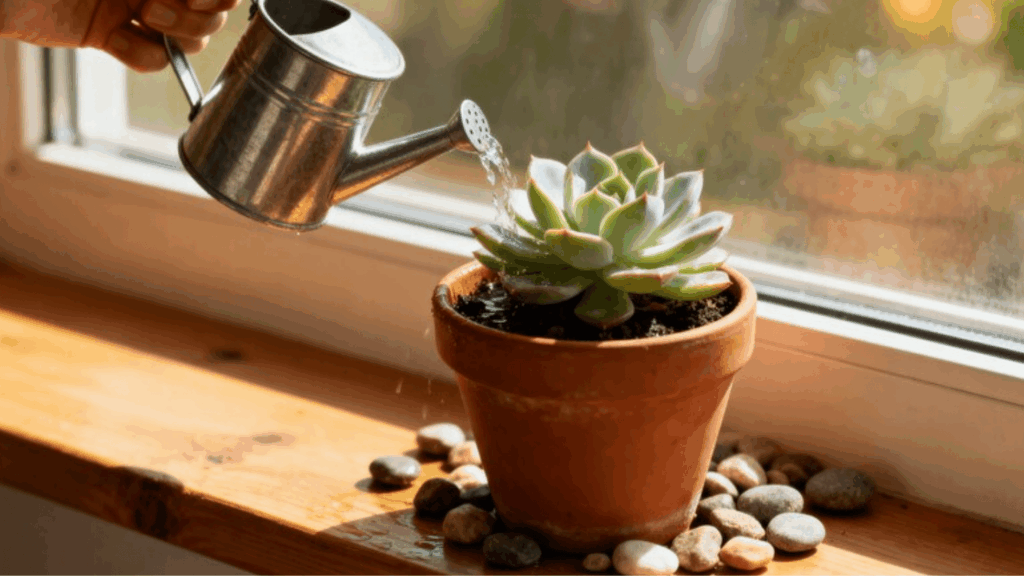
The rule is simple: water deeply, then wait.
Drench the soil until water runs out of the drainage hole, then do nothing until it’s completely bone dry. No misting. No top-ups. In summer, that’s roughly every 10–14 days. In winter, once a month or less.
One more non-negotiable: always use a pot with a drainage hole. Water with nowhere to go means rot, every single time.
Signs You’re Overwatering or Underwatering
Your succulent will always tell you what’s wrong; you need to know what to look for.
Signs of overwatering:
- Leaves feel soft, mushy, or translucent.
- Leaves drop off with the lightest touch.
- The stem base looks dark, brown, or rotted.
- Soil stays wet for more than 2 weeks.
Signs of underwatering:
- Leaves look shriveled, wrinkled, or deflated.
- Soil is pulling away from the edges of the pot.
- Leaves feel thin and flat instead of plump.
Lighting Requirements for Succulents
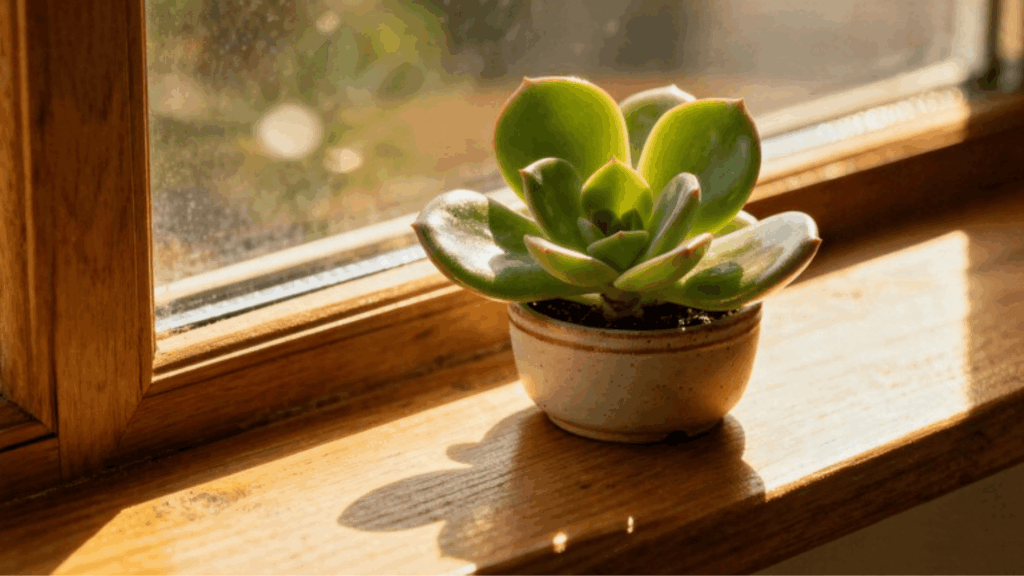
Light is the second most common thing succulent owners get wrong. Succulents are sun-loving plants by nature; without adequate light, they stretch, fade, and weaken over time.
The sweet spot is 6 hours of bright light per day. A south- or east-facing windowsill is ideal for direct morning sun and indirect afternoon light, which keeps them compact and healthy.
Stretching leaves = screaming for more light. If your succulent is growing tall and spaced out, it needs a better spot immediately.
Best Low-Light Succulents for Dim Spaces
Not every home has sunny windows, and that’s okay. If you’re searching for low light succulents that can handle dimmer conditions, here are the best options:
| Plant | Why It Works |
|---|---|
| Haworthia | grows in indirect light, great for desks. |
| Gasteria | Handles low light better than most. |
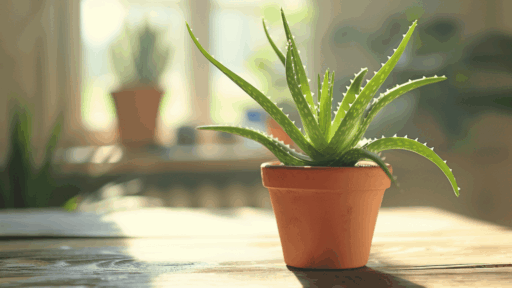
| Aloe Vera | Adaptable in moderate indoor light. |
| Snake Plant | Survives in near-dark conditions. |
| Echeveria | Does well in bright indirect light. |
Pro Tip: Even low-light varieties prefer a windowsill over a dark corner. If natural light is genuinely limited, a basic grow light running 8–10 hours daily solves the problem affordably.
Choosing the Right Soil for Succulents
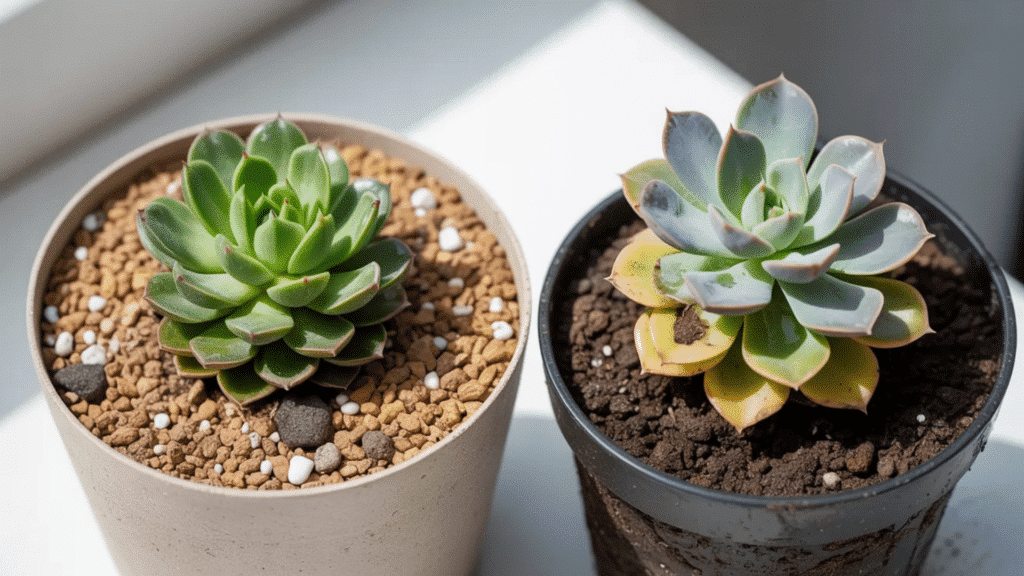
Soil is the silent killer most succulent owners never suspect. Regular potting mix looks harmless, but it’s designed to hold moisture, and that’s exactly what makes it deadly for succulents.
Why Regular Potting Mix Kills Succulents?
Regular potting mix is designed for plants that love moisture; succulents are not. No matter how perfectly you water, the wrong soil will undo it every time. Here’s exactly why it does more harm than good:
- Holds moisture too long: Roots rot fast.
- Too dense: No airflow around roots.
- Too nutrient-rich: Wrong for drought-adapted plants.
Best Soil Mix for Succulents
Not all soil is created equal, and for succulents, choosing the right mix is just as important as how you water them.
- Store-Bought Mix: Grab anything labeled “cactus and succulent mix.” Bonsai Jack and Hoffman’s are the most trusted brands, fast-draining and ready to use straight out of the bag.
- DIY Mix: Combine 60% perlite + 40% regular potting soil. Simple, affordable, and honestly more effective than most store-bought options. Use coarse sand or pumice if perlite isn’t available.
- The Texture Test: Dampen a handful of your mix, then squeeze it. It should fall apart immediately, not clump or hold shape. If it clumps, add more perlite until it doesn’t.
The Role of Drainage in Soil Health
Good soil means nothing without somewhere for the water to go.
- Drainage Hole: Non-negotiable, full stop.
- Pot Material: Terracotta dries out faster. Plastic retains moisture longer.
- Pot Size: Keep it snug. Oversized pots hold excess moisture that succulents don’t need.
Fertilizing and Seasonal Care
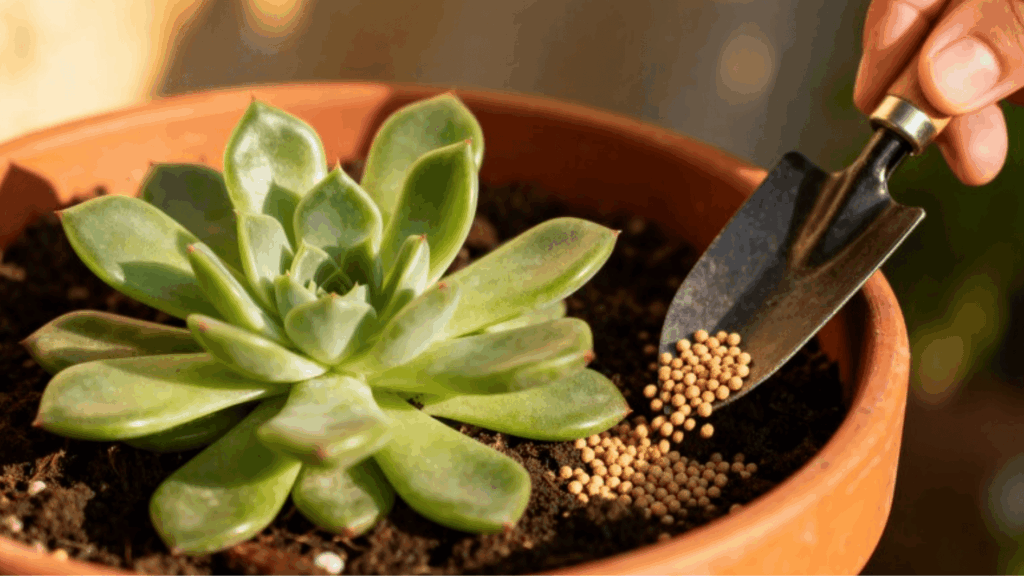
A little attention to feeding, temperature, and seasonal shifts goes a long way in keeping Succulents healthy year-round.
Do Succulents Need Fertilizer? Technically, no, but it helps. Succulents naturally grow in lean, nutrient-poor soil, so they don’t need heavy feeding. Over-fertilizing actually does more damage than skipping it entirely.
Fertilize once a month during spring and summer only, that’s their active growing season. Use a balanced, water-soluble fertilizer diluted to half strength. Nothing more.
How Succulents Change Care Needs Across Seasons
Succulents are not the same plant year-round; their needs shift with every season, and your care routine should, too.
- Spring & Summer: Growth is active, and the plant is at its hungriest and thirstiest. Water every 10–14 days, fertilize once a month at half strength, and make sure they’re getting maximum light.
- Fall: Growth slows, and your care should follow suit. Reduce watering gradually, stop fertilizing completely, and let the plant ease into rest. Forcing nutrients or excess moisture now leads to weak, unstable growth heading into winter.
- Winter. This is dormancy season. Water once a month, skip the fertilizer, and avoid any major changes. Keep the plant in a stable, warm spot and largely leave it alone. This is especially important for low light succulents kept indoors, as reduced winter light can compound the stress of cold temperatures.
Troubleshooting Common Succulent Problems
Even with the best care, problems can still arise. The truth is that most issues are easy to identify and fix if you catch them early. Below are a few common troubleshooting problems.
- Turning Yellow: Almost always overwatering, cut back and let the soil dry out completely
- Mushy Leaves or Stem: Root rot, unpot, trim damaged roots, dry for 2–3 days, repot in fresh soil
- Growing Tall and Leggy: Not enough light, move to a brighter spot immediately
- Dropping Leaves: If leaves look soft and translucent, overwatering is the issue. If healthy, it’s natural shedding
- Mealybugs: White clusters in leaf joints, treat with 70% isopropyl alcohol on a cotton swab
- Spider Mites / Fungus Gnats: Neem oil spray for mites, let the soil dry out completely for gnats
Conclusion
Succulents don’t ask for much: right soil, right light, and water only when they need it. Every mistake traces back to one thing: treating them like ordinary houseplants. They’re not; they’re built for survival.
Stop overwatering, get the soil right, and find them a bright spot. For dimmer spaces, low light succulents like Haworthia or Gasteria are your best bet indoors.
Once you stop fighting their nature and start working with it, everything clicks. The fundamentals of how to care for a succulent never change.
Master the basics, and your succulents will take care of the rest.

With a Master’s in Architecture from the University of California, Berkeley, Alexander Martin has dedicated the last 18 years to enhancing outdoor living through thoughtful and robust structure design. His career kicked off in urban planning, giving him a unique perspective on integrating structures into diverse environments. In 2019, Alexander brought his expertise to our website, offering insights into creating versatile outdoor spaces. Since then, he has been the lead advisor for our outdoor design projects and is known for his ability to merge functionality with environmental consciousness. Alexander enjoys rock climbing outside of work and participates in community development projects, activities that reflect his passion for the outdoors and sustainable design.