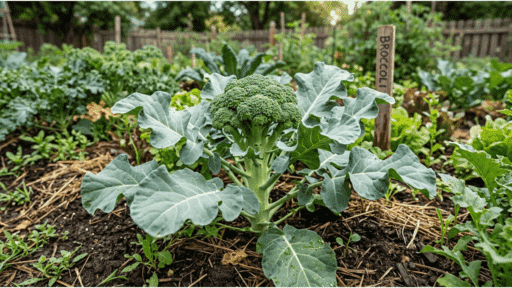
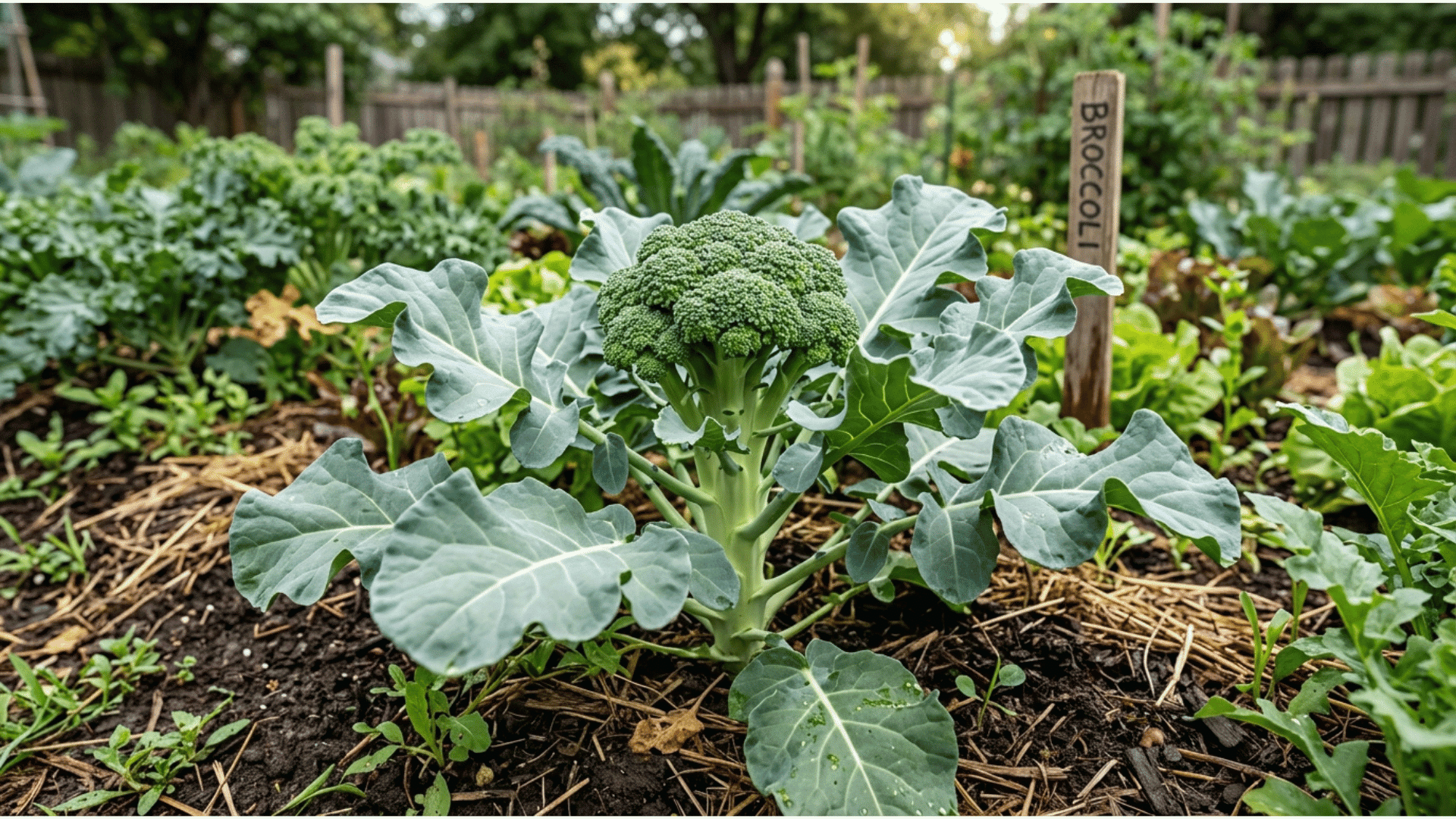

Growing a broccoli plant at home is easier than it sounds, even for beginners. It doesn’t require fancy tools or a large garden space to get started. A small backyard, balcony, or even a few containers can work just fine.
Broccoli is rich in nutrients and tastes much better when picked fresh from your own plant.
With the right steps, anyone can grow healthy broccoli at home. This blog covers planting, daily care, and simple ways to address common problems so your broccoli plant grows strong and produces a good harvest.
Why Grow a Broccoli Plant at Home
Growing a broccoli plant at home comes with many simple benefits, especially for beginners. It gives access to fresh, chemical-free food right from your garden or balcony.
- Store-bought vegetables often lose freshness during transport, but homegrown broccoli stays crisp and nutrient-rich.
- It also helps reduce grocery costs over time, making it a budget-friendly option.
- Broccoli is easy to grow and requires little effort, making it perfect for beginners.
- It also grows well in containers, so even small spaces can work.
- Another great advantage is that one plant can produce multiple harvests.
Overall, it’s a smart and practical choice for starting a home garden.
Best Time to Plant Broccoli
Broccoli grows best in cool weather, so planting at the right time helps you get healthy plants and better harvests.
| Factor | Details |
|---|---|
| Best Growing Season | Cool weather |
| Spring Planting Time | Early spring |
| Fall Planting Time | Late summer (for fall harvest) |
| Ideal Temperature | 15°C to 21°C (60°F to 70°F) |
| What to Avoid | Hot months (can affect head formation) |
How to Plant a Broccoli Plant
Planting broccoli the right way sets the base for healthy growth and ensures your plant produces strong, full heads.
Step 1: Choose the Right Variety
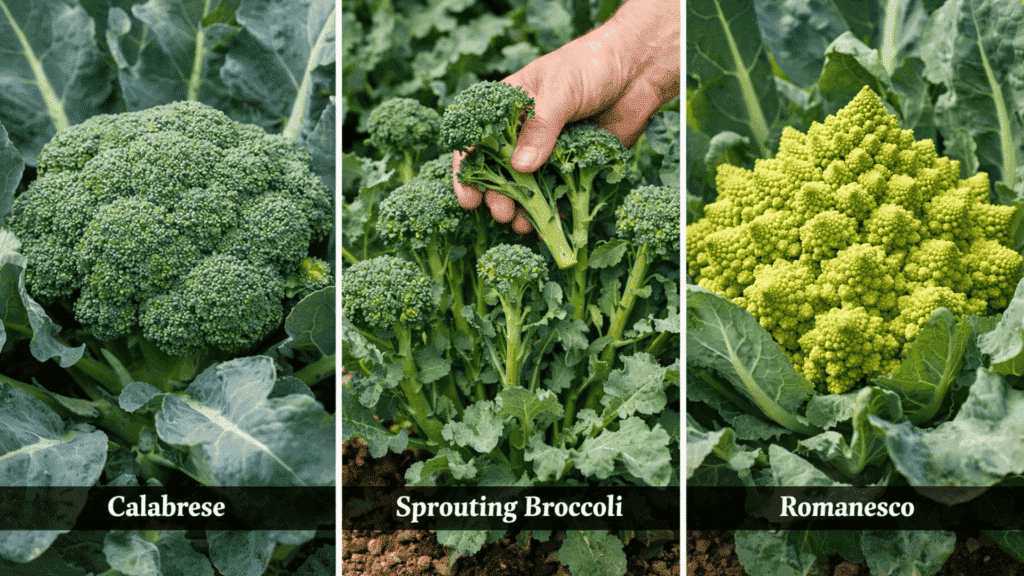
Start by picking a broccoli type that suits your needs and space. Calabrese is a great option for beginners because it grows easily and produces large heads.
Sprouting broccoli produces multiple smaller heads, resulting in more harvests over time. Romanesco stands out for its unique shape and mild flavor.
Think about your climate, available space, and how much you want to harvest. Choosing the right variety makes the growing process smoother and increases your chances of a healthy crop.
Step 2: Decide Between Seeds or Transplants
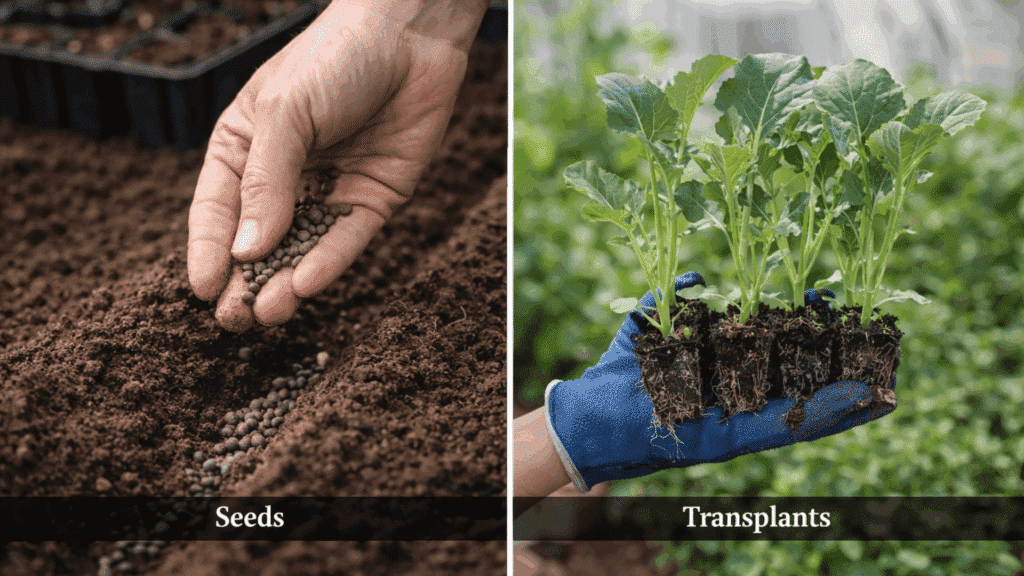
Broccoli can be grown from seeds or ready-to-plant seedlings. Starting seeds indoors 4–6 weeks before the planting season gives you a head start and better control over early growth.
If you want a quicker and easier option, nursery transplants are a good choice. They reduce waiting time and are less risky for beginners. Both methods work well, so it depends on how much time and effort you want to invest at the beginning.
Step 3: Prepare the Soil Properly
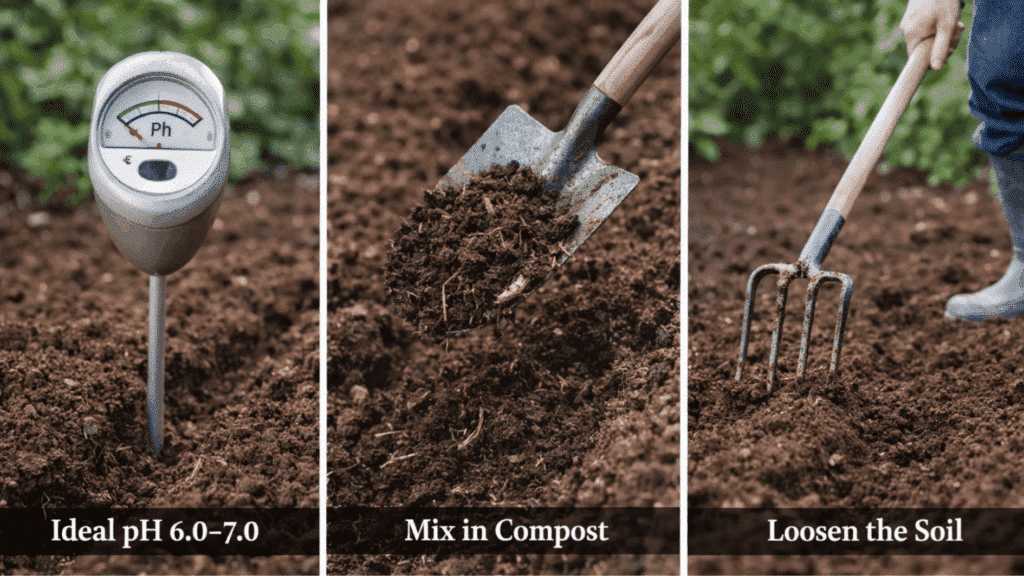
Healthy soil is key to strong broccoli growth. Use well-drained soil that is rich in organic matter. The ideal pH range is 6.0 to 7.0, which helps the plant absorb nutrients more effectively.
Mixing compost into the soil improves its texture and fertility. Before planting, loosen the soil to help roots grow more easily. Good soil preparation supports steady growth and helps the plant develop large, healthy heads.
Step 4: Ensure Proper Spacing
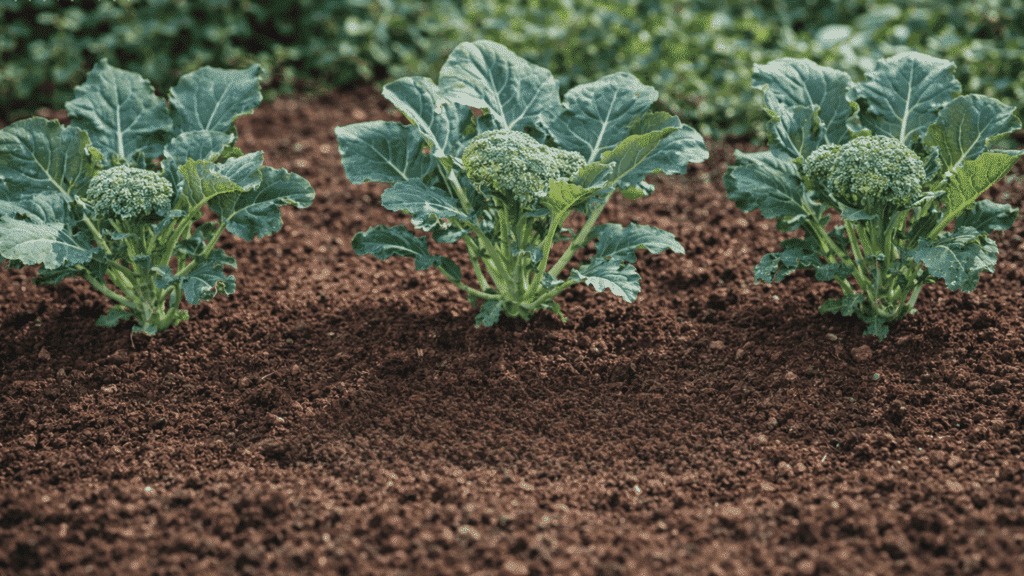
Spacing plays an important role in how well your broccoli grows. Each plant needs enough room to spread and access sunlight and nutrients.
Keep a distance of about 18–24 inches between plants. Crowded plants can lead to poor airflow, which increases the risk of pests and diseases.
Proper spacing also helps each plant grow bigger and produce better heads without competing for resources.
Step 5: Water Right After Planting
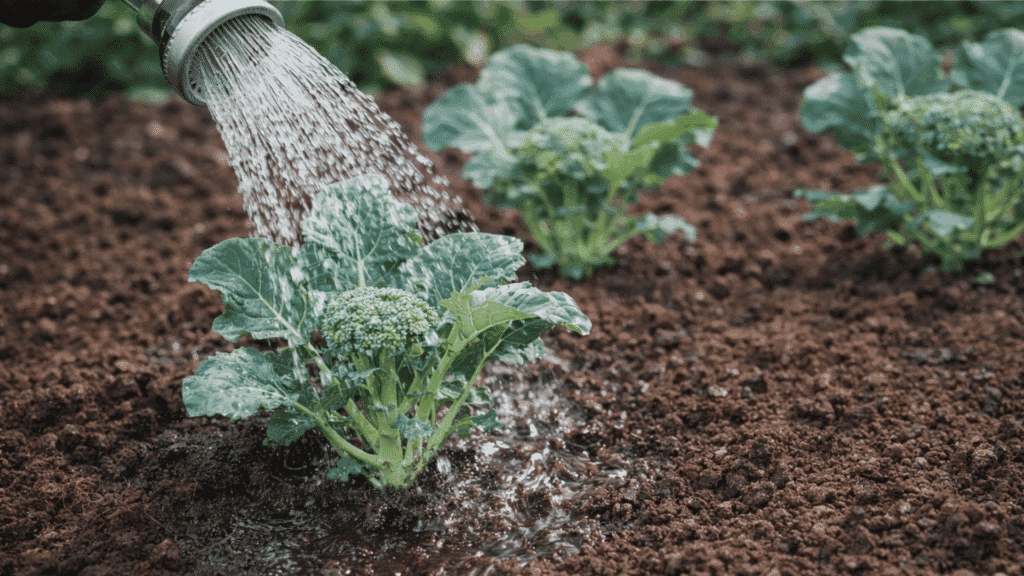
Once your broccoli is planted, give it a good initial watering. This helps the roots settle into the soil and reduces transplant shock. Keep the soil evenly moist but not soggy.
Proper watering at the start helps the plant adjust quickly and begin growing without stress. Consistent moisture during the early stage makes a big difference in overall plant health.
Step 6: Provide Enough Sunlight
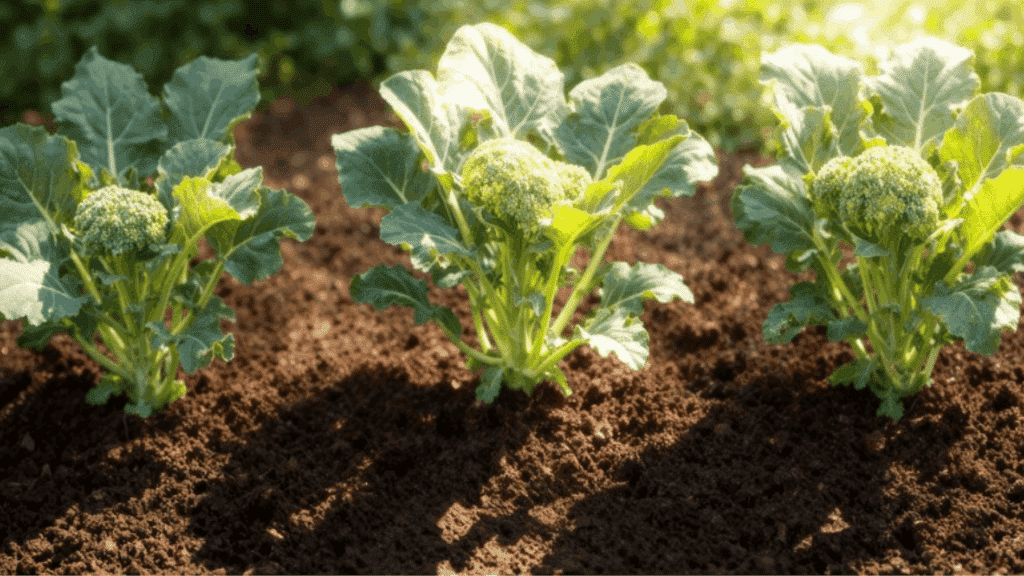
Broccoli needs plenty of sunlight to grow strong and healthy. Make sure your plants get at least 6–8 hours of direct sunlight every day.
Choose a spot that is open and not blocked by walls or taller plants. Good sunlight supports better leaf growth and helps the plant form solid heads. Without enough light, broccoli may grow slowly and produce smaller or weaker heads.
How to Care for a Broccoli Plant
Once planted, regular care helps the plant grow strong and produce healthy heads.
Watering: Consistent watering helps form firm, healthy broccoli heads.
- Keep the soil slightly moist at all times
- Water deeply once or twice a week
- Avoid overwatering or waterlogging
- Water at the base to prevent leaf damage
- Water early in the morning for better absorption
- Increase watering slightly during dry or hot days
Fertilizing: Proper feeding supports leafy growth and helps produce bigger heads.
- Use a nitrogen-rich fertilizer for better growth
- Add compost every few weeks
- Feed the plant during early growth stages
- Avoid over-fertilizing, as it can harm the plant
Note: Mulching Tip- Use dry leaves, straw, or grass clippings as mulch around the plant.
Common Broccoli Plant Problems and Solutions
Broccoli plants can face pests, diseases, and growth issues, but most problems are easy to identify and fix with the right care.
| Issue Type | Problem | Cause | Solution |
|---|---|---|---|
| Pests | Cabbage worms | Feed on leaves | Use neem oil, hand-pick, and use netting |
| Pests | Aphids | Suck sap from leaves | Spray neem oil, wash with water |
| Pests | Flea beetles | Create small holes in leaves | Use row covers, neem spray |
| Diseases | Downy mildew | Fungal infection in moist conditions | Improve airflow, avoid wet leaves |
| Diseases | Clubroot | Soil-borne disease | Rotate crops, use healthy soil |
| Growing Issue | Yellow leaves | Nutrient deficiency | Add compost or fertilizer |
| Growing Issue | Small heads | Heat stress or poor soil | Plant in the cool season, and improve the soil |
When and How to Harvest Broccoli
Harvesting at the right time helps you get the best taste and texture, and if you leave the plant in place, you can enjoy multiple harvests from a single broccoli plant.
You should harvest when the broccoli heads are firm, tight, and deep green, and avoid waiting too long since yellow flowers may start to appear.
The ideal head size is around 4–7 inches wide, and it’s best to use a sharp knife to cut the main head at an angle, leaving a few inches of stem attached.
Make sure you don’t pull the plant out after the first harvest, because smaller side shoots will continue to grow and give you additional harvests. Also, remember to check your plants regularly, as the heads can mature quickly.
Tips to Grow Bigger and Better Broccoli Heads
Small changes can make a big difference in how your broccoli grows. Healthy plants with proper care are more likely to produce large, firm broccoli heads.
- Plant in the right season: Broccoli grows best in cool weather, so plant in early spring or late summer to help the plant develop strong, full heads without stress from heat.
- Feed the plant regularly: Broccoli is a heavy feeder, so adding compost or using a nitrogen-rich fertilizer every few weeks supports steady growth and larger head formation.
- Keep watering consistently: Maintain evenly moist soil by watering regularly, as inconsistent watering can lead to small, uneven, or poorly formed heads.
- Protect from heat stress: High temperatures can slow growth and cause smaller heads, so using mulch or providing light shade during hot days helps keep the plant healthy.
- Choose the right variety: Selecting a variety suited to your climate and growing conditions increases your chances of getting bigger, better-quality broccoli heads.
Final Thoughts
A broccoli plant is a great addition to any home garden, especially for beginners looking for an easy crop to grow. It doesn’t need much space and can thrive in small gardens or even containers.
With just a little effort, it provides fresh, healthy food right at home. Broccoli is known for its nutritional value, and homegrown heads taste much better than store-bought ones.
By planting at the right time and following simple care tips, strong, productive plants can be grown with little trouble.
Even common issues can be managed with quick fixes. Starting with one plant is often enough to build confidence and grow more over time.

With a Master’s in Landscape Architecture from the University of Virginia, Sophia Stephenson has dedicated the last 20 years to creating and maintaining vibrant outdoor spaces. Her professional journey started in landscape design, where she gained a reputation for innovative and sustainable approaches. Sophia became a part of our editorial team as a freelancer in 2019, offering a fresh perspective on outdoor living. Since 2020, she has been the chief for our outdoor design content, blending aesthetic appeal with environmental stewardship. In her leisure time, Sophia is a keen photographer, capturing the beauty of natural landscapes, a hobby that complements her professional expertise.