


Ficus Lyrata care is not as complicated as most people make it out to be. But it does ask for consistency. This plant has a reputation for being fussy, and that reputation is not entirely bad.
It reacts to change quickly and does not forgive neglect for long. Once the right conditions are in place, it rewards that effort with strong, steady growth and bold, striking foliage.
This blog covers everything from light and watering to soil, temperature, and maintenance. Simple, practical, and straight to the point.
What is Ficus Lyrata?
Ficus Lyrata, commonly known as the Fiddle Leaf Fig, is a tropical plant native to the rainforests of West Africa. In its natural habitat, it grows tall under a dense canopy, receiving filtered light and consistent warmth.
Key Characteristics
Understanding the key traits of this plant makes care much easier to approach. Here is what sets it apart from other common houseplants.
- Large, violin-shaped leaves that grow broad and bold, making it a visually striking indoor plant
- Upright, woody stems that give the plant a strong, tree-like structure as it matures indoors
- High sensitivity to environmental changes such as drafts, temperature shifts, and inconsistent light
- Moderate to fast growth rate when placed in the right conditions with proper light and watering
- Strong preference for consistent indoor environments rather than spaces with frequent condition changes
Without a consistent environment, growth slows and leaves suffer. But with the right setup, it can thrive as a lasting addition to any indoor space.
How to Care for a Ficus Lyrata
Ficus Lyrata comes down to consistently getting a few core conditions right. Each factor below directly shapes the plant’s health and stability over time.
Fulfilling Light Requirements

Bright, indirect light is what this plant needs most. A spot near an east- or south-facing window works well.
It provides the plant with strong light without the harsh intensity of direct afternoon sun. Some direct morning light is fine and can actually support steady growth.
Low light is where things go wrong quickly. It leads to leaf drop, slowed growth, and a generally weak plant. Keeping it away from dark corners and poorly lit rooms makes a significant difference in how the plant performs in the long term.
Following a Watering Schedule
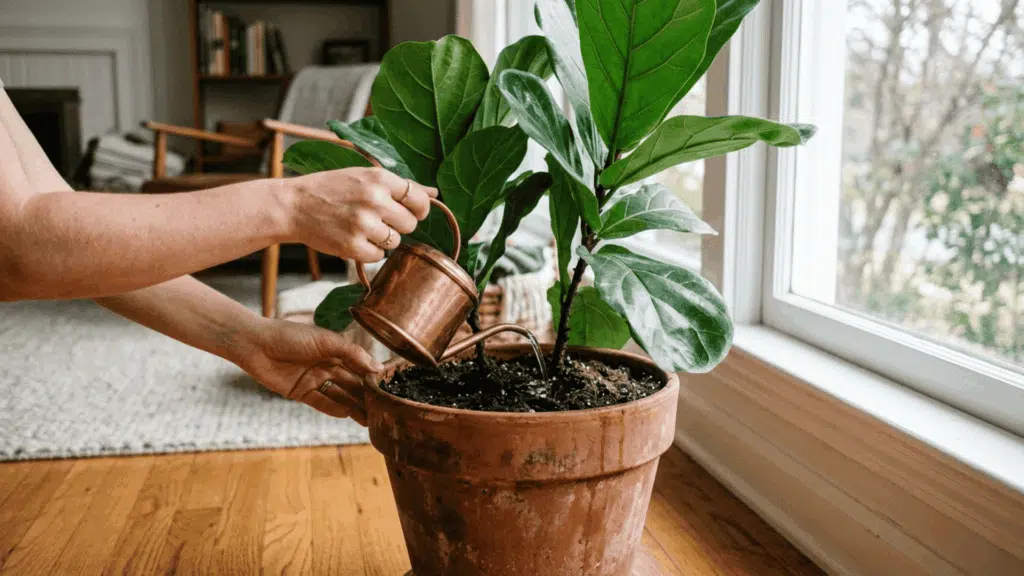
Proper Ficus Lyrata care means watering only when the top 1 to 2 inches of soil feel dry to the touch. Overwatering is one of the most common mistakes and leads directly to root rot, which is difficult to recover from.
Always use pots with drainage holes to allow excess water to escape freely. Watering frequency also changes with the season. During colder months, the plant slows down and needs less water overall.
Cutting back during this period prevents water from sitting in the soil for too long, which keeps the roots healthy and the plant stable during the slower-growing phase.
Using Soil and Potting Mix

Well-draining soil is essential for keeping this plant healthy. A mix of standard potting soil, perlite, and bark is highly effective as it allows water to pass through without sitting around the roots.
Compact or water-retaining soil creates consistently wet conditions that the plant cannot tolerate for long.
Avoid using garden soil or heavy mixes that tend to clump over time. The roots need both moisture and air to function well.
Getting the soil composition right from the start saves a lot of trouble later and gives the plant the best possible start indoors.
Appropriate Temperature and Humidity
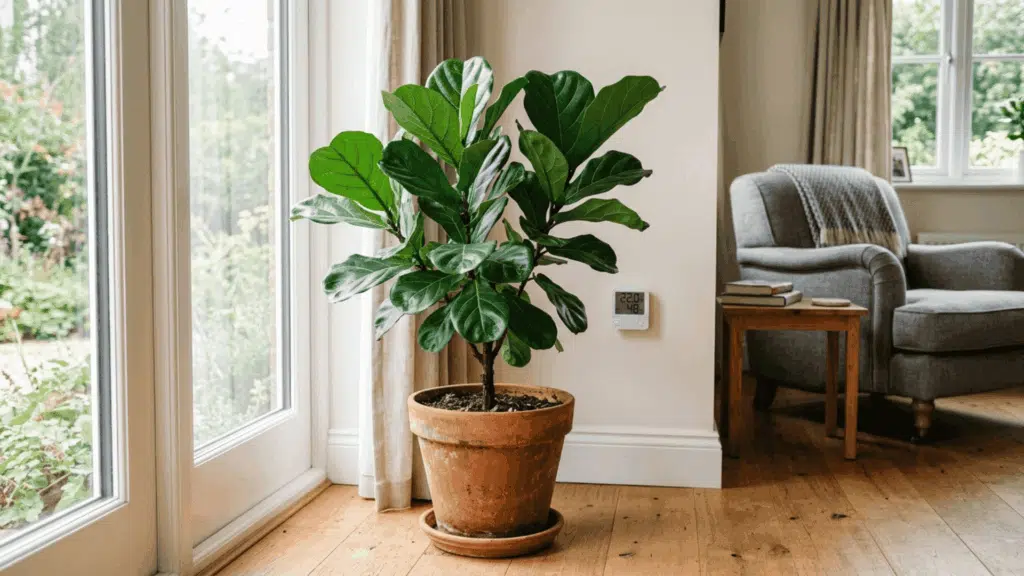
Maintaining the right temperature is a key part of caring for Ficus lyrata. The ideal range is 18°C to 27°C, and the plant does best when temperatures remain consistent throughout the day.
Sudden drops or spikes put the plant under stress and often trigger leaf loss. Humidity matters too. This plant prefers moderate humidity levels and struggles near air conditioning vents, heaters, or drafty windows.
Placing it away from these sources maintains a more controlled indoor atmosphere. A pebble tray with water nearby can help maintain adequate moisture levels in drier indoor spaces.
Using Fertilizers
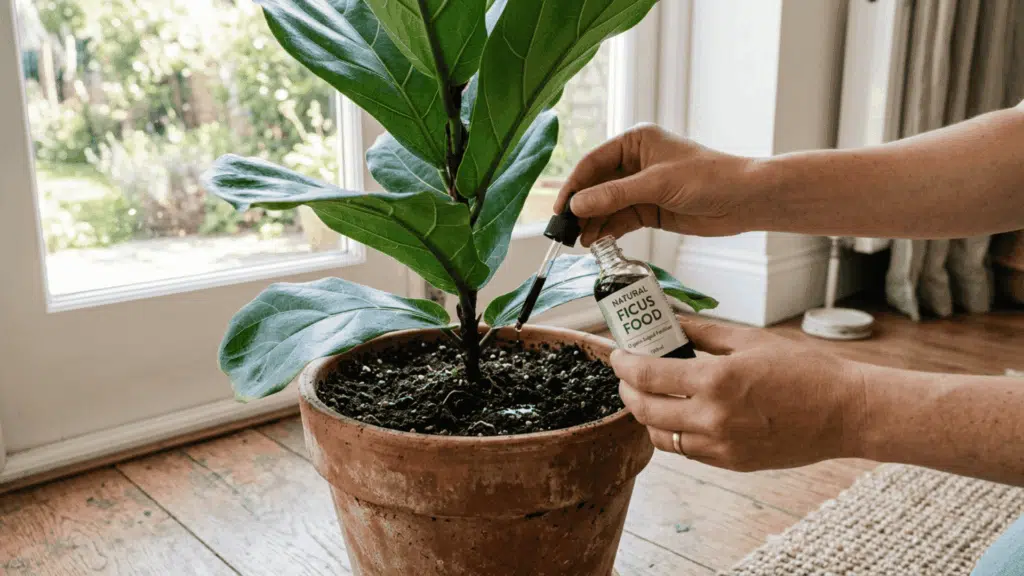
Feeding the plant at the correct intervals directly impacts the quality of new growth. in growth quality. Proper Ficus Lyrata care includes applying a balanced liquid fertilizer every 4 to 6 weeks during spring and summer,
When the plant is actively growing, it can fully use the nutrients being provided. Overfeeding is just as harmful as underfeeding. Too much fertilizer builds up salts in the soil and damages the roots and damages the roots gradually.
During fall and winter, feeding should stop completely as the plant enters its rest period and no longer requires the extra nutrients to support new growth.
How to Re-Pot Ficus Lyrata
Re-potting becomes necessary when roots start pushing out of the drainage holes, or the plant stops growing despite consistent attention.
Choosing a pot that is only slightly larger than the current one works best. Going too large causes excess soil moisture, leading to poor drainage and stunted root development.
When re-potting, gently remove the plant and loosen any tightly packed roots before placing it into fresh, nutrient-rich potting mix.
Water lightly after settling it into the new pot and give it time to adjust before resuming any fertilizing routine. Expect some initial leaf drop as the plant responds to the change. This is normal and settles down once conditions stabilize.
General Maintenance Tips
Staying on top of small, routine tasks is what makes Ficus Lyrata care manageable and keeps the plant in good shape year-round.
- Rotate the plant weekly to ensure all sides receive equal light exposure and growth stays even.
- Wipe leaves regularly with a damp cloth to remove dust buildup and allow better light absorption.
- Prune occasionally to control the plant’s height, remove dead growth, and maintain a clean shape.
- Inspect for pests like spider mites and mealybugs regularly before infestations spread further.
- Support tall stems with a stake or rod if the plant grows upright and begins leaning to one side.
- Avoid frequent repositioning, as moving the plant too often causes unnecessary stress and visible decline.
Conclusion
Ficus Lyrata care is really about building a routine and sticking to it. Light, water, soil, and temperature, each factor plays a role and works best when kept consistent.
This plant does not ask for much beyond stability. The results speak for themselves over time. Healthy leaves, strong stems, and steady growth are all achievable with the right habits in place.
Start with one area, get it right, then move to the next. Small, consistent steps are what keep a Ficus Lyrata doing well in the long term.

With a Master’s in Landscape Architecture from the University of Virginia, Sophia Stephenson has dedicated the last 20 years to creating and maintaining vibrant outdoor spaces. Her professional journey started in landscape design, where she gained a reputation for innovative and sustainable approaches. Sophia became a part of our editorial team as a freelancer in 2019, offering a fresh perspective on outdoor living. Since 2020, she has been the chief for our outdoor design content, blending aesthetic appeal with environmental stewardship. In her leisure time, Sophia is a keen photographer, capturing the beauty of natural landscapes, a hobby that complements her professional expertise.