
Every holiday season, people pick up a gorgeous poinsettia, bring it home, and within weeks, it’s a droopy, leaf-dropping mess. And honestly? I’ve been there too.
Poinsettias are everywhere during the holidays. Those bold, bright red leaves make them impossible to resist, and they look striking indoors, but keeping them alive past December? That’s where most of us struggle.
But proper poinsettia care isn’t complicated. You need to know a few simple things: the right light, the right water, and the right spot.
And once you do, these plants can thrive way longer than you’d expect. Let this blog walk you through it.
Understanding the Poinsettia Plant
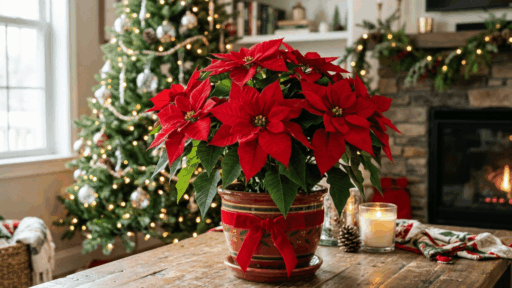
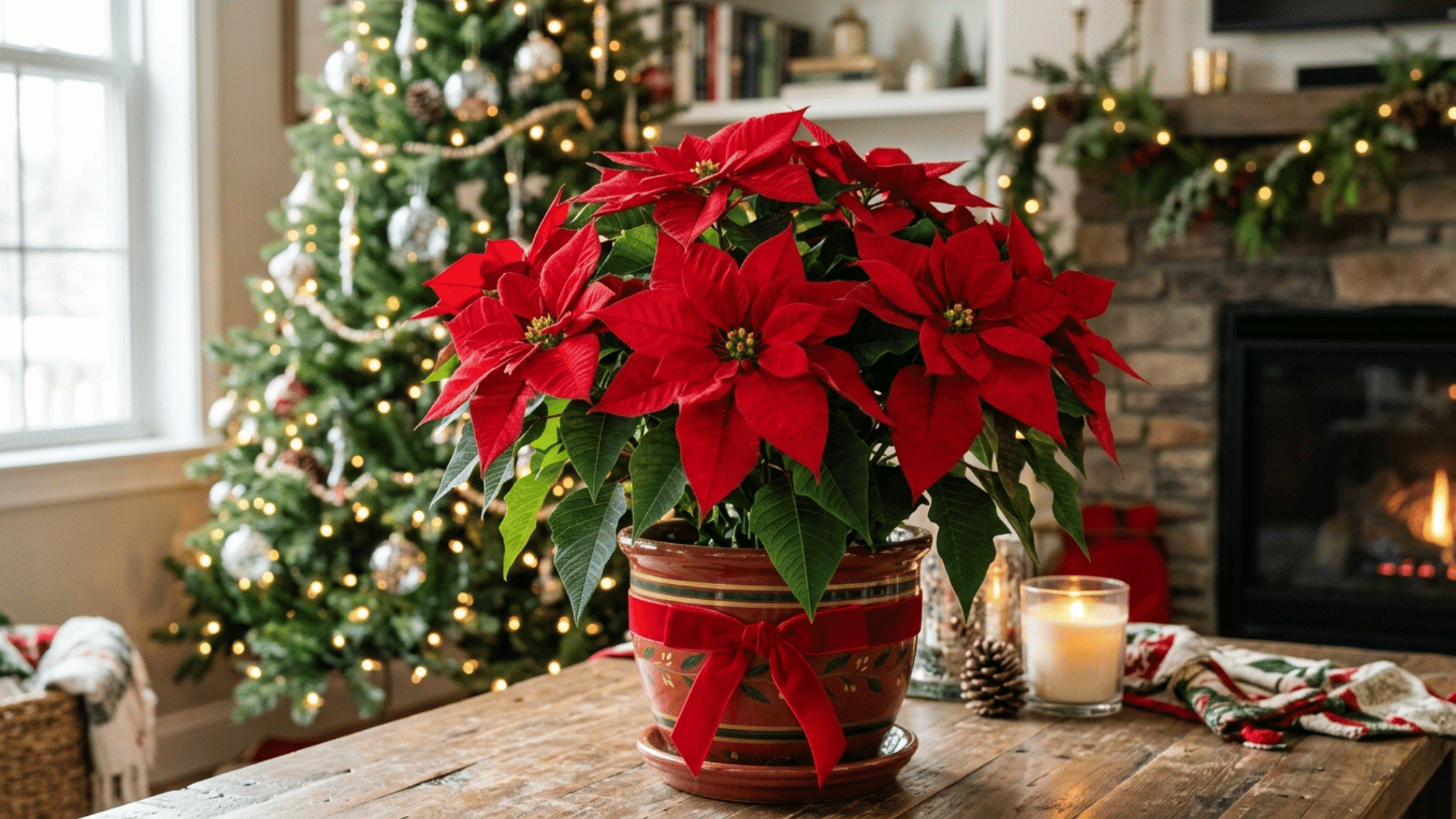
Most people don’t know this, but those bold red parts are not petals. They’re actually leaves, called bracts. The real flowers are the tiny yellow clusters sitting right in the center.
Poinsettias originally come from Mexico, where they grew as wild shrubs and could reach several feet tall. The Aztecs used them for dyes and fever treatments long before they became a holiday staple.
They were later named after Joel Roberts Poinsett, the first U.S. Ambassador to Mexico, who introduced the plant to the United States in the 1820s.
And somewhere along the way, this scrappy Mexican shrub became the holiday plant we all know and love today.
Are Poinsettias Toxic: The Truth
Before getting into care tips, let’s address the big question that keeps many people from even bringing this plant home.
Myth: Poinsettias are highly poisonous and can be deadly to humans, kids, and pets.
Truth: This has been circulating for decades, and it’s mostly overblown. Poinsettias do contain a milky white sap that can cause mild irritation, but they are nowhere near deadly.
The American Poison Control Center confirms that serious poisoning from poinsettias is extremely rare. If a child or pet chews on the leaves, they might experience some stomach upset or mild irritation around the mouth, which is not fatal.
At the end of the day, poinsettias are safe enough to have in your home as long as you’re a little thoughtful about placement.
Essential Care Tips for Healthy Poinsettias
Getting the basics right makes poinsettia care much easier. A few simple habits can keep your plant healthy and long-lasting.
1. Light Requirements and Placement
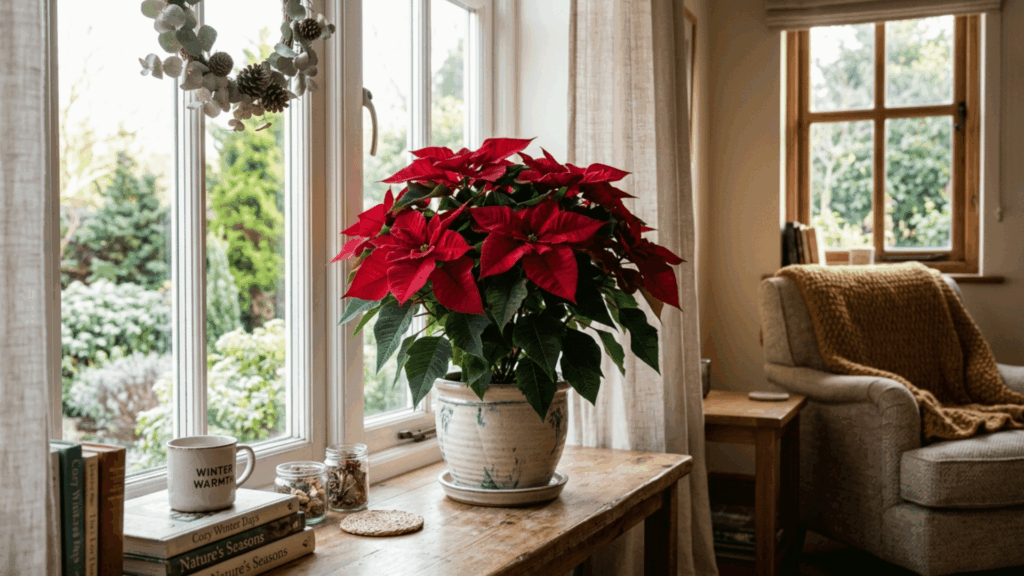
Light plays a big role in poinsettia care, so placing the plant in the right spot is important. Keep it near a bright window with indirect sunlight, as harsh direct rays can damage the leaves.
East or west-facing windows usually work best for balanced light exposure. If the lighting is poor, you may notice yellowing leaves, early leaf drop, or faded red color.
Rotating the plant every few days helps all sides get equal light. This also supports even growth and keeps the plant looking full.
2. Watering Routine
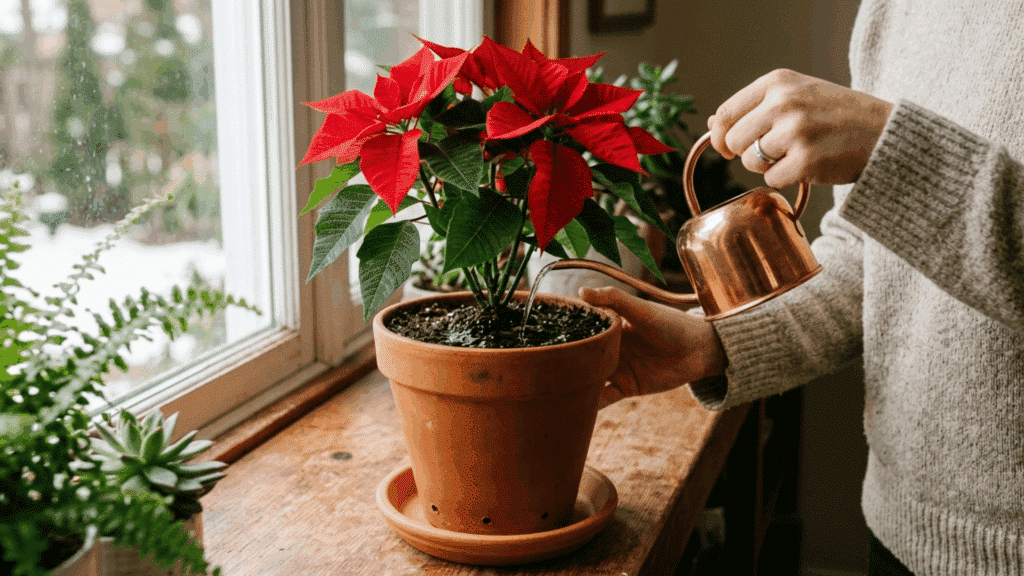
Watering poinsettias correctly is just as important, since overwatering is a common issue. Water only when the top inch of soil feels dry, which is usually every 5–7 days indoors.
Always water thoroughly until excess drains out, and empty the tray so the plant is not sitting in water. This prevents root damage and keeps the soil balanced.
Also, let the plants drink from the bottom up so the roots get exactly what they need without ever wetting the foliage.
3. Temperature and Humidity
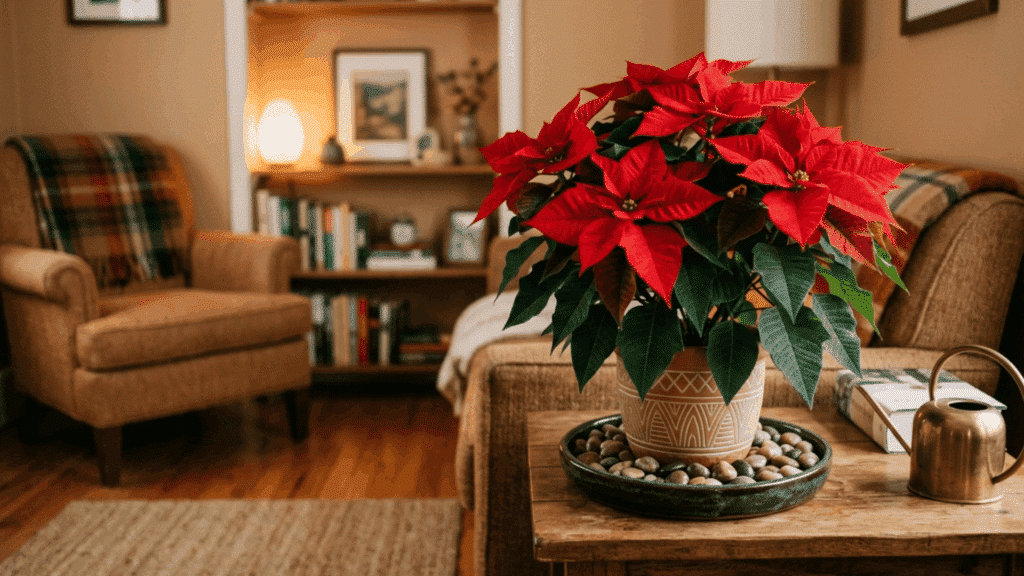
Poinsettias like it warm and consistent. Keep them in a spot that stays between 65 and 70 degrees Fahrenheit.
Avoid placing them near cold drafts, heating vents, or air conditioners, as sudden temperature changes stress the plant out quickly.
A little humidity helps too, so if your home is dry, placing a tray of water nearby can make a noticeable difference.
4. Soil and Potting Needs
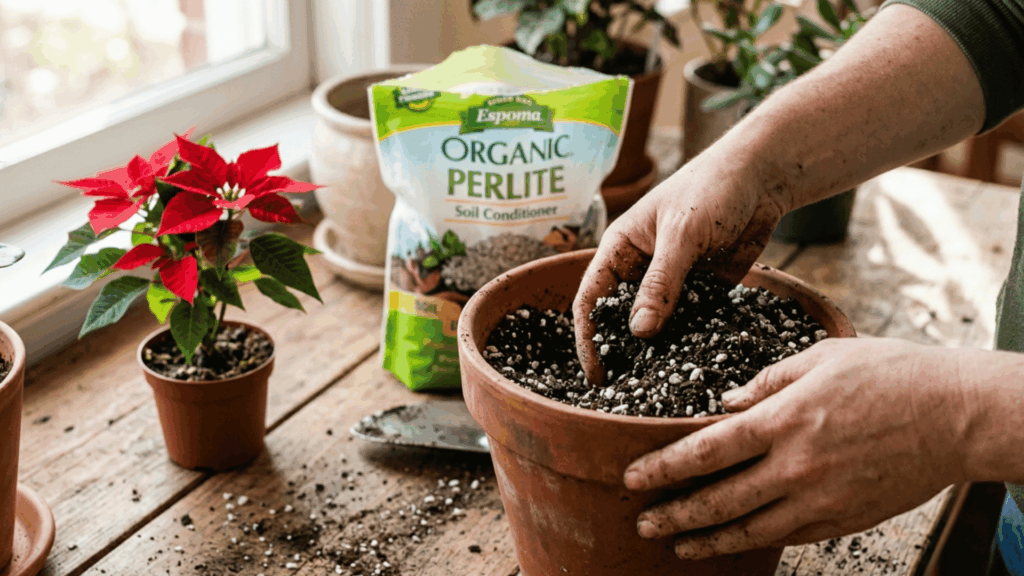
A well-draining potting mix is all you really need. Poinsettias don’t do well in heavy, compact soil that holds too much moisture.
A standard potting mix with a little perlite mixed in works well. Good drainage is the priority here, so if your pot doesn’t have drainage holes, consider repotting into one that does.
5. Fertilizer Needs
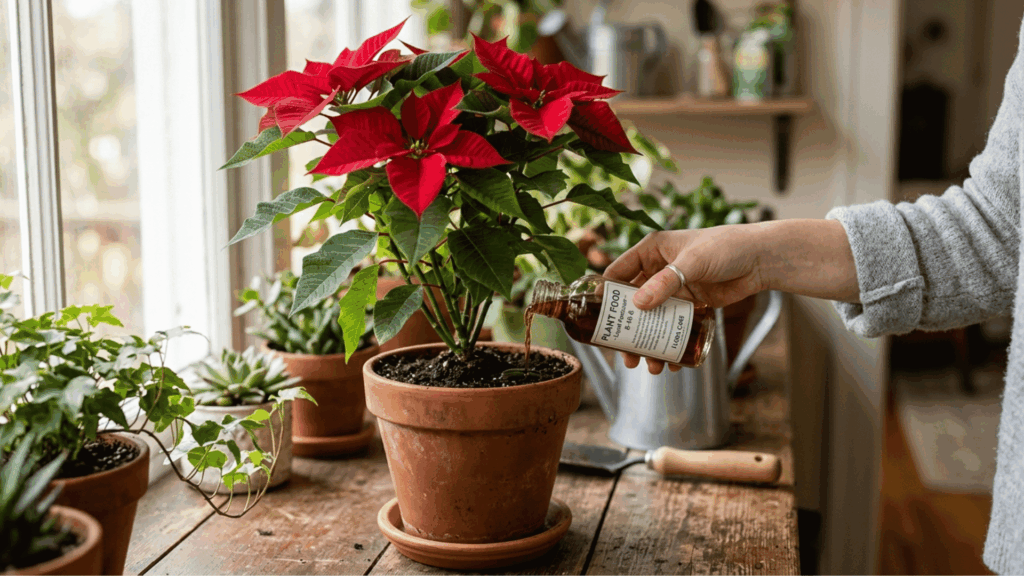
Fertilizing plays an important role in keeping poinsettias healthy after their blooming period. It is best to start fertilizing once the plant finishes blooming, as this is when it resumes active growth.
Use a balanced houseplant fertilizer to provide the right nutrients. Feeding every 3–4 weeks is usually enough to support steady growth without overloading the plant.
Regular but light feeding helps maintain strong stems and fresh green leaves.
How to Get Your Poinsettia to Rebloom?
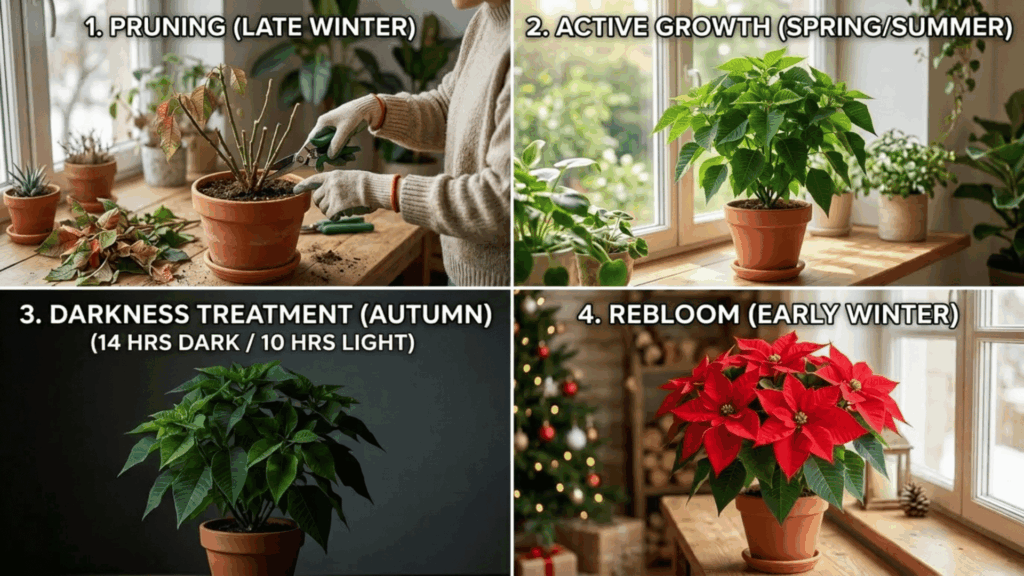
Most people toss their poinsettia after the holidays. But with a little patience and the right steps, you can actually get it to bloom again next season.
1. Prune After the Holidays
Once the bracts start fading, usually around late January or February, trim the plant back to about six inches. It looks a little sad at first, but this is what encourages healthy new growth.
Keep watering it lightly and place it in a bright spot. Think of it as giving the plant a fresh start after the holiday season.
2. Keep It Growing Through Spring and Summer
Through spring and summer, treat your poinsettia like a regular houseplant. Give it bright, indirect light, water it when the soil feels dry, and feed it with a balanced fertilizer every 2 to 3 weeks.
You might even consider moving it outdoors during warmer months. Just make sure it’s in a shaded spot and away from direct harsh sun.
3. Start the Darkness Treatment in Fall
This is the most important step and the one most people skip. Starting around early October, your poinsettia needs:
- At least 14 hours of complete darkness every single day
- A dark closet or covered with a box works fine
- Bright light during the remaining hours of the day
- Consistent temperature, nothing too cold or too warm
Keep this routine going for about eight to ten weeks straight. Even a small amount of light sneaking in during the dark period can interrupt the process, so be consistent about it.
4. Watch for The Color to Return
By late November or early December, you should start seeing the bracts changing color again. Once that happens, you can stop the darkness treatment and move the plant back to its regular bright spot.
From here, continue your normal care routine and let it do its thing as you head into the holiday season.
Common Poinsettia Problems and Solutions
Poinsettias can be a bit sensitive, especially indoors. The good part is that most problems are easy to spot and fix once you know what to look for.
| Problem | Cause | Fix |
|---|---|---|
| Leaf Drop | Temperature changes or inconsistent watering | Keep the temperature stable; water regularly without overdoing it |
| Wilting | Dry soil, extreme heat, or cold | Water thoroughly; move away from direct heat or cold drafts |
| Yellowing Leaves | Overwatering or natural aging | Improve drainage; reduce watering frequency |
| Edge Burn | Too much fertilizer or poor-quality water | Cut back on feeding; use filtered or settled water |
| Pests | Whiteflies, mites, and mealybugs | Treat with neem oil or insecticidal soap |
| Dull or Fading Bracts | Low light | Move to a brighter spot with indirect sunlight |
| Moldy Soil | Overwatering or poor airflow | Let the soil dry between watering; repot if needed |
Final Thoughts
Poinsettias get a bad reputation for being high-maintenance, but honestly, they need a little attention and the right conditions.
Good poinsettia care isn’t about doing a hundred things perfectly. It’s about getting a few basics right and staying consistent.
It is a plant that stays beautiful well past the holiday season, and with enough patience, blooms again the following year.
So this time, don’t toss it once January rolls around. Give it a real chance. Start applying these simple tips today, and enjoy a poinsettia that looks fresh and full for weeks to come.
Frequently Asked Questions
Do Poinsettias Come in Many Colors?
Yes, poinsettias are not just red. They come in white, pink, cream, and even marbled shades, giving more options for home decor.
Can I Prune My Poinsettia in October?
October is not the best time to prune. Pruning is usually done in spring or early summer to support healthy new growth.
What Happens if You Don’t Prune a Poinsettia?
If not pruned, the plant can become tall and leggy. It may also lose its full and bushy shape over time.
How to Trim a Leggy Poinsettia?
Cut back the long stems evenly, leaving a few inches above the soil. This helps the plant grow fuller and more compact.

With a Master’s in Landscape Architecture from the University of Virginia, Sophia Stephenson has dedicated the last 20 years to creating and maintaining vibrant outdoor spaces. Her professional journey started in landscape design, where she gained a reputation for innovative and sustainable approaches. Sophia became a part of our editorial team as a freelancer in 2019, offering a fresh perspective on outdoor living. Since 2020, she has been the chief for our outdoor design content, blending aesthetic appeal with environmental stewardship. In her leisure time, Sophia is a keen photographer, capturing the beauty of natural landscapes, a hobby that complements her professional expertise.