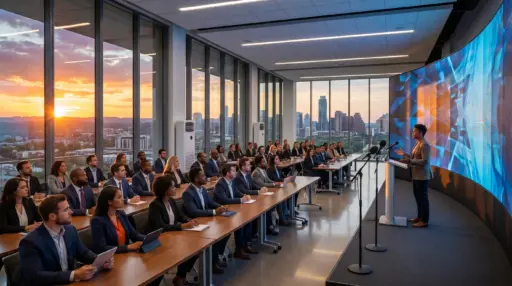
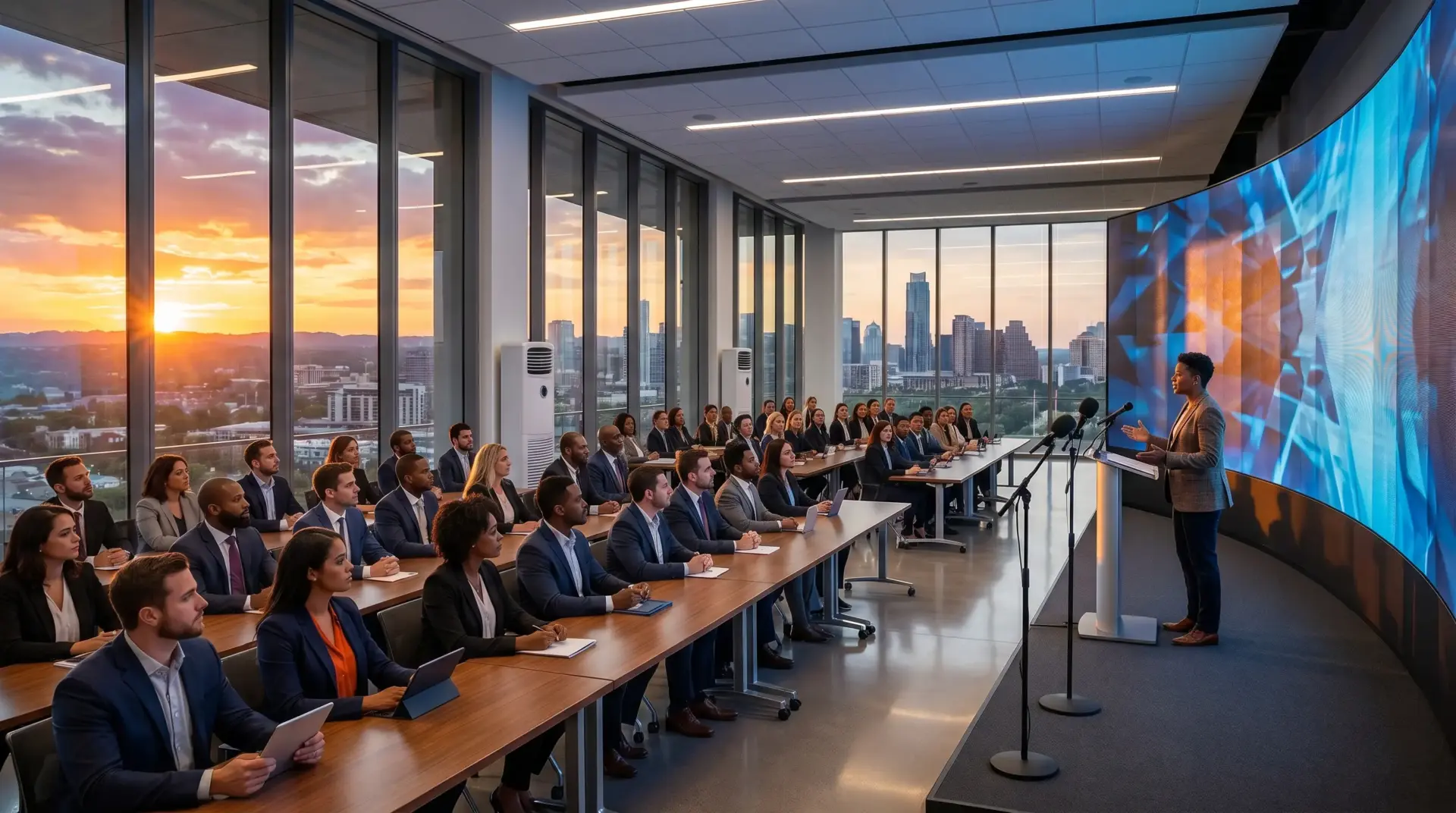
Texas is one of the most active business states in the country. From Dallas to Houston, Austin to San Antonio, the Lone Star State hosts an enormous volume of corporate meetings, team off-sites, client presentations, training sessions, and large-scale gatherings every single year. And whether you’re planning a boardroom meeting for ten or a corporate event for several hundred, two factors consistently determine whether an event lands well or falls flat: a seamless audio-visual experience and a comfortable environment for your guests.
This guide covers both , how to set up your event with the right video conferencing and AV solutions, and how to make sure your attendees stay comfortable no matter what Texas weather decides to do that day.
Why Event Execution in Texas Demands More Attention to Detail
Anyone who has spent a summer in Texas knows that the heat is not a minor inconvenience , it’s a genuine logistical consideration. Temperatures regularly exceed 100 degrees from June through September, and even spring and fall can deliver warm, humid conditions that make outdoor or poorly ventilated spaces genuinely uncomfortable for guests.
Winter brings its own surprises. Texas cold snaps can arrive suddenly and dramatically, as anyone who lived through the 2021 winter storm can attest. For event planners and business hosts, this means climate control isn’t just a comfort issue , it’s a reliability issue.
Beyond weather, Texas business culture tends to be relationship-driven and hospitality-focused. People notice when an event is well-run and when their comfort has been considered. A presentation that cuts out mid-sentence or a room that’s stifling hot leaves a lasting impression , and not the right one. Getting the technical and environmental details right is what separates a forgettable event from one that reflects well on your organization.
The Role of AV and Video Conferencing in Modern Business Events
Today’s business events rarely involve only the people in the room. Remote participants, hybrid teams, clients joining from other cities, and speakers presenting from across the country are now standard elements of corporate gatherings. That makes professional audio-visual and video conferencing solutions not a nice-to-have , but a core requirement.
Poor AV execution is one of the most common and most avoidable ways a business event goes wrong. Choppy video, audio that cuts in and out, screens that aren’t visible from the back of the room, and microphones that don’t pick up clearly all erode the professionalism of an event and frustrate both in-room and remote participants.
The audio visual services of CAS are designed to eliminate these problems , providing businesses with reliable, high-quality video conferencing and audio-visual setups that ensure every participant, whether in the room or joining remotely, has a clear and professional experience. When the technology works seamlessly, it disappears into the background and lets the content of your meeting take center stage.
When planning your AV setup, consider the following:
Room acoustics and microphone placement. Sound quality is often more important than video quality. If remote participants can’t hear clearly, engagement drops immediately. Professional AV solutions account for room size, background noise, and microphone placement to ensure consistent audio throughout.
Display visibility. Every participant in the room should have a clear line of sight to the presentation screen. In larger rooms, this may require multiple displays or a carefully positioned projection setup.
Connectivity and bandwidth. Video conferencing is only as good as the internet connection supporting it. Confirm that your venue has the bandwidth to support your setup, particularly for events with multiple simultaneous streams or large file sharing.
Ease of use. The best AV setups are intuitive. If the presenter needs a technical support person standing by just to run the slides, the setup is too complicated. Simplicity and reliability go hand in hand.
Keeping Your Guests Comfortable: The Climate Control Challenge
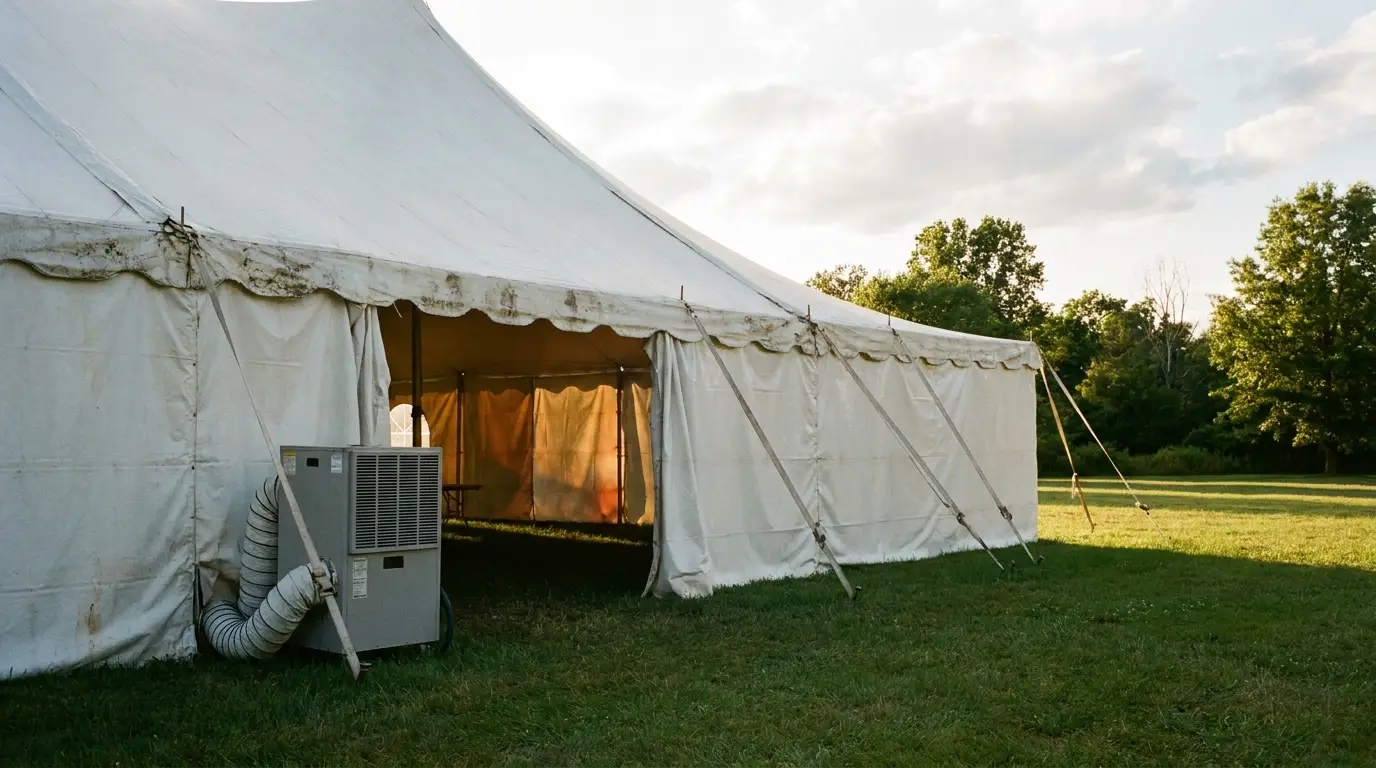
Even the most polished AV setup won’t save an event if the room is uncomfortably hot or cold. Guest comfort is foundational , when people are physically uncomfortable, they disengage, and no amount of great content or professional production can fully compensate.
This is a particular challenge for events held in non-standard spaces: warehouses, tents, outdoor pavilions, construction trailers, rooftop venues, or any temporary structure where the existing HVAC simply wasn’t designed for a large gathering. Even in permanent venues, peak summer heat in Texas can overwhelm fixed systems when a room is packed with people and equipment generating additional heat.
Portable AC and heater rentals in Dallas, TX from Rankin Group offer a flexible, scalable solution for exactly these situations. Units can be sized and positioned to suit the specific space, deployed quickly ahead of the event, and removed cleanly when it’s over , no permanent installation required. For a one-time event or a venue with insufficient climate control, this is far more practical and cost-effective than attempting to work around an inadequate fixed system.
For outdoor summer events in Texas specifically, portable cooling isn’t optional , it’s essential. Heat-related discomfort can cut an event short, reduce engagement significantly, and leave attendees with a negative impression no matter how well everything else was executed.
Planning Your Event: A Practical Timeline
Successful business events don’t come together at the last minute. Here’s a practical framework for making sure both your AV and climate control are sorted well before the day arrives:
Six to eight weeks out: Confirm your venue, date, and expected attendance. Assess the space for both AV requirements and climate control needs , particularly if the event has an outdoor component or is in a non-standard venue.
Four to six weeks out: Book your AV and video conferencing setup. If portable climate control is needed, arrange your rental at this stage, not the week before. Availability can be limited during peak summer months in Texas.
Two to three weeks out: Send formal invitations with all logistics details. Communicate any technology requirements to remote participants so they can test their setups in advance.
One week out: Conduct a full site walkthrough. Test the AV end-to-end, including a test call with remote participants if possible. Confirm climate control deployment timing and positioning.
Day of: Arrive early. Give yourself time to run through everything once more, troubleshoot anything unexpected, and be ready to greet attendees calmly. The tone you set at the start of an event tends to carry through the whole day.
The Details That Elevate a Good Event to a Great One
Beyond AV and climate, a few additional details consistently separate well-regarded business events from forgettable ones:
Start and end on time. Respecting your attendees’ schedules is a form of hospitality. It also signals that the event is professionally managed.
Communicate logistics clearly in advance. Parking, dress code (especially relevant for outdoor events in Texas heat), and any technology requirements should be communicated before the day, not discovered on arrival.
Build in breaks. For events lasting more than two hours, scheduled breaks are not optional , they’re necessary for sustained engagement and give remote participants a chance to step away without missing content.
Follow up promptly. A brief follow-up within 24 to 48 hours , a summary of key takeaways, next steps, or simply a thank-you , reinforces the professionalism of the event and keeps momentum going.
The Bottom Line
Texas is a great place to do business, and a well-executed event can accelerate relationships, build trust, and move things forward in ways that emails and video calls simply can’t replicate. But the execution has to be right. Seamless AV and video conferencing ensures that every participant , in the room or remote , has a professional, frustration-free experience. Reliable climate control ensures that Texas weather never becomes the story of the day.
Plan ahead, invest in the right technology and environment, and take care of your guests. The rest tends to take care of itself.
From corporate meetings to large-scale business gatherings, the right AV setup and the right environment make all the difference. Get those two things right, and everything else is details.

Liam Bennett holds a degree in Computer Science from the University of Edinburgh and has over 15 years of experience in technology and digital innovation. He began his career in software development, focusing on user-friendly systems and backend architecture. Liam joined our platform in 2025 to lead our Tech section, where he simplifies complex topics—from smart home devices and AI tools to cybersecurity and troubleshooting tips. Known for his clear, practical advice, he helps readers navigate today’s fast-evolving tech landscape. Outside of work, Liam enjoys building custom PCs and contributing to open-source projects.