
When it comes to advice on coastal homes, the world seems to view homebuilding in two different ways: there are the brochures advising you on how to panic-proof your house and then there are the magazines that rate the latest video doorbells.
But a coastal home that can stand the test of time is one that considers structure and security as a single, interconnected system. It is designed with the mindset of considering the risk and the location from the very beginning, rather than adding it on later.
Start With the Site, Not the Blueprint
Even before discussing roofs or cameras, the location itself establishes the conditions. FEMA flood zones determine the necessary elevation to build, and that amount is not negotiable. Just an inch of floodwater can lead to as much as $25,000 in damage to an average home, which is why elevation choices locked in at the design stage are possibly the most important factor in whether you protect your investment or feel like you’re pouring money down the drain.
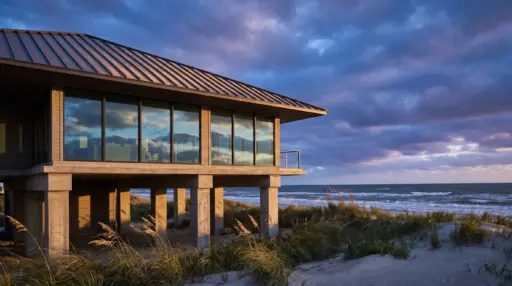
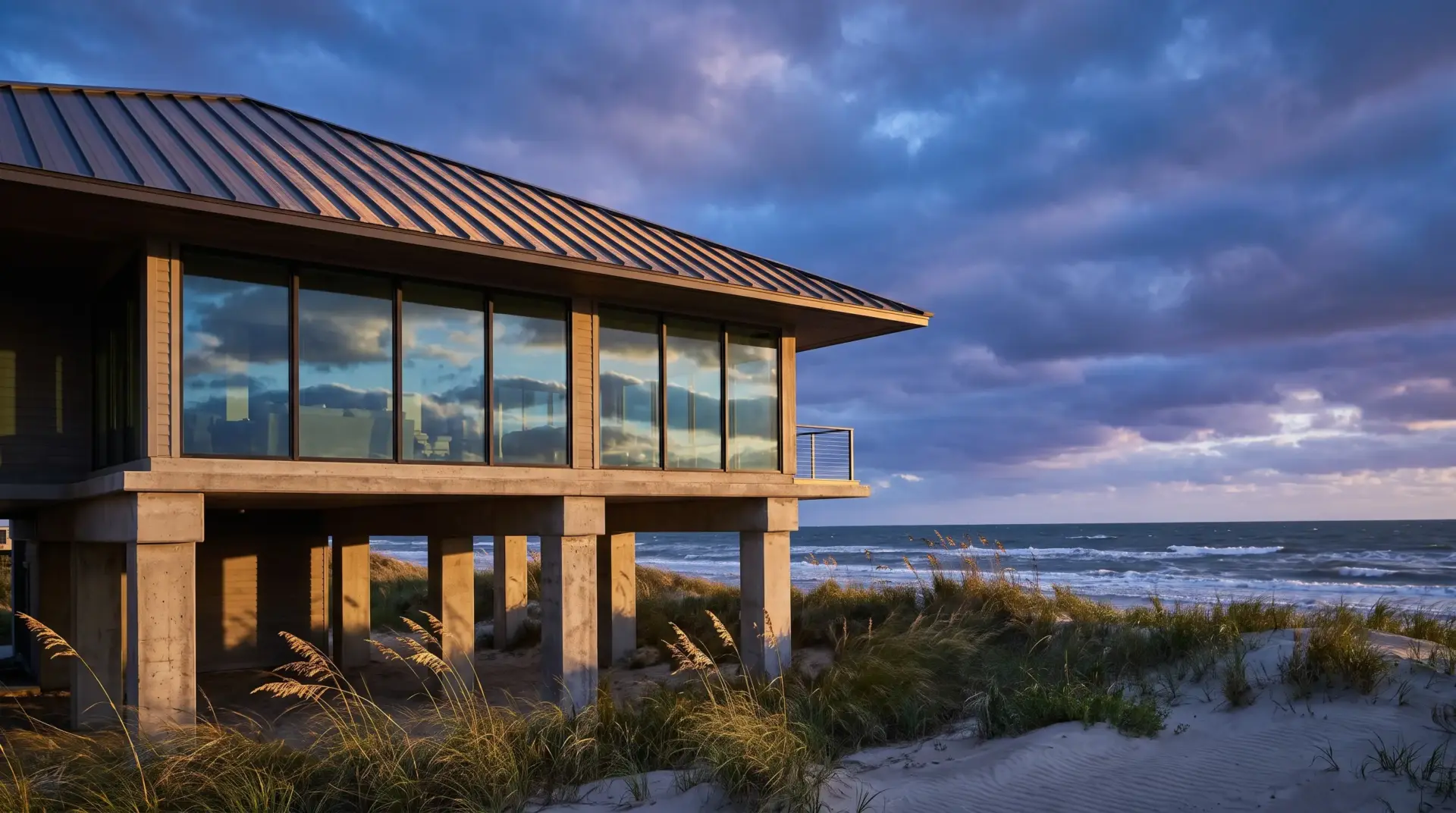
Pile and elevated foundations remove the surge threat by raising the living area above the inundation level. For a shocking percentage of solidly built coastal homes, however, that’s where the buck stops: living area elevated, and everything else, including electrical panels, HVAC condensers, and the subject of today’s article, security system control panels, mounted at ground level.
Anything that makes your home secure, comfortable, and monitored needs to live as high as the living space, no exceptions. Then the flood waters roll in, and your entire home automation system goes dark.
The Structural Shell: Build for Wind Before You Build for Looks
Wind is the structural damage everyone worries about, and rightly so. ASCE 7 wind load calculations wouldn’t be necessary if coastal roofs and walls didn’t take loads that inland homes never approximate. The “she’ll be right” approach on that bit of engineering is what leaves your roof in the neighbor’s yard.
Roofing material usually isn’t what every house in a neighborhood loses. It’s when a continuous load path goes missing, that engineering concept that fastens roof down to wall down to foundation through straps, connectors, and all the fasteners the engineers called for, that the wind looks for the break and peels the whole thing off.
It’s why missing load paths are one of the most common ways houses fail the IBHS FORTIFIED Home standard, which is the go-to cert for reviewable, resilience-rated coastal construction. The builders reaching for that cert don’t do it for the laminated wooden plaque.
They do it because it’s specifically linked to a discount in their insurance premiums, and that means the expensive house they are building isn’t done right if it isn’t engineered to that standard.
Standing seam metal roofs have become the standard choice for a reason. They have much better wind uplift resistance than shingle systems, and they also perform exceptionally well in a marine environment while also providing a low maintenance solution.
When you also add impact-resistant glazing to every door and window in your house, you deal a single blow to the two structurally weakest points. Impact windows are designed to stop debris at speeds of up to 150 mph, and that same glazing also slows down any forced entry attempt. It is difficult to find an upgrade that pays twice, once for the weather and once for the intruder, but impact glass does just that.
The Material for Which No One Has a Budget: Resistance to Corrosion
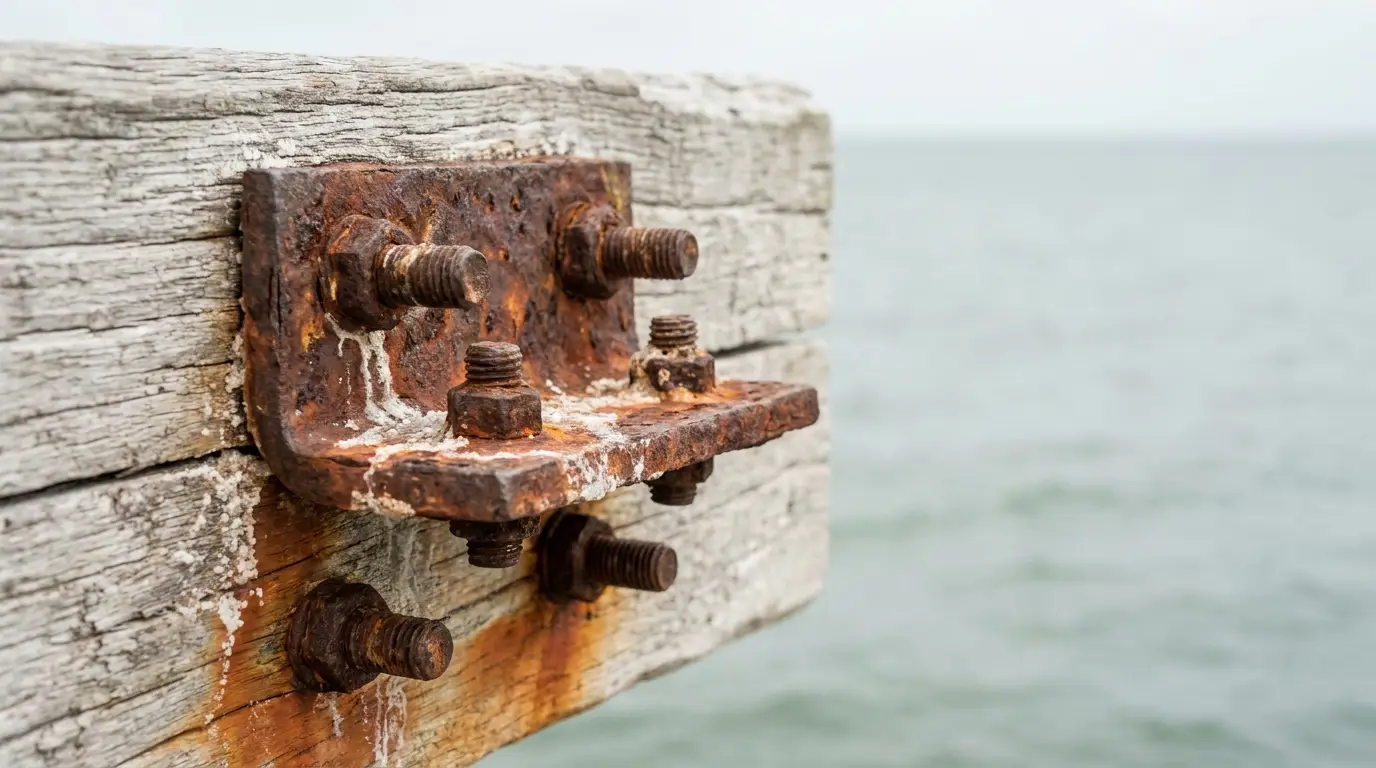
Ask the majority of homeowners what is going to take their coastal house apart and they will say a hurricane. The wrong answer for the most part. Corrosion is a slow, silent way to fail, and it’s constantly underestimated at every stage of construction.
Salt fog doesn’t only damage railings and hinges. It corrodes structural fasteners, hardware, and any exposed metal part during many years of exposure, and it happens whether a storm hits or not. If you plan to use materials in a coastal environment, and they’re not tested to ASTM B117, the accelerated salt fog corrosion standard, you’re taking a risk.
Marine-grade stainless should really be the default spec for every exposed fastener, hinge, and mounting bracket in a coastal build, including the brackets holding your security cameras. A camera mount that falls off the wall after four years isn’t a security device anymore. It’s a liability.
Where Security Stops Being an Afterthought
At this stage of most builds, security becomes an afterthought or separate project. Framing is in place, the envelope is sealed, and last-minute alarm companies are called to retrofit sensors into finished walls. This adds to the cost of installation and, eventually, the system’s long-term reliability.
Simply put, pre-wiring for security during the framing stage entails the process of running conduit through walls and slabs before drywall placement. This helps eliminate the exposed cable runs, which are often degraded by salt air within a few seasons.
In addition, it allows for the planning of control panels, door contacts, and camera wiring to go through the same load path and elevation logic applied to the construction of the house. For instance, an envelope-like fortress, which could include impact glass, a wind-rated roof, and a sealed/elevated structure, is practically a waste if the monitoring and access control wouldn’t be integrated into the construction’s structural design.
Pairing that structural resilience with a properly designed Security Systems for Coastal Homes plan is what turns a well-built house into a genuinely secure one. This is because the two systems should complement each other versus competing for wall space and wiring runs.
But here’s the deal, wireless-only security systems have their limitations even if some of them are not highlighted in the brochure. In a coastal setting, for instance, the salt fog tends to corrode antenna contacts thereby compromising signal reliability in an area where you need it to function optimally.
Wi-Fi networks are also known to fail during power outages and internet downtime caused by storms, a common occurrence in coastal areas. A cellular backup wired system coupled with alarm monitoring might be a bit more expensive but it will continue to work even when the grid is down.
Build the Security Layer in Rings, Not Points
Having just one camera at the front door doesn’t constitute a security system; it’s a single point of failure with a light attached.
So, broad strokes, the outer “ring” covers the perimeter of the property, typically with cameras featuring wide fields of view, lots of ambient lighting, and, on the coast, gate or fence sensors.
The middle ring is the envelope itself, which gets perimeter breaches reported to an interior that’s alarmed by contact sensors on every door and window. If you’ve got the cash, physical security pros usually suggest reinforcing this envelope, not just hinge guards, but upgrading the hardware’s glass mounting so that a whole lot of hitting windows and doors accomplishes precisely nothing.
The third and most wrongly configured ring is the interior motion detection, often married to an alarm sound. People make the mistake of relying solely on interior motion detection because things got past the first two rings, but the result is that every gust of wind and/or raccoon spread-eagled across a motion sensor is hold music to the burglars. This structure matters more along the coast than inland, or at least anywhere that’s prone to big, seasonal occupancy shifts. An unoccupied house should be every bit as secure on month five of being empty as it was on the day you left.
Don’t Ignore the Threat That Isn’t a Burglar
One of the points that we never seem to get around to discussing in our coastal security conversations is the fact that the biggest long-term threat to a coastal home isn’t a bad actor at all, it’s water. The water you didn’t know to be worried about until you see the damage it’s caused.
These environmental leak and flood sensors catch moisture intrusion while it’s still a slow leak behind a wall, a failing seal around a window, a half-inch of water creeping up through a floor after a minor surge event. They get lumped in with “security” more than anything else out of convenience, but their job is functionally different. They’re protecting the building’s lifespan. A slow leak you didn’t know was there, left to sit for weeks or months, will almost always cause more total damage to a coastal home than a smash-and-grab ever could. Putting that under the same tent as cameras and door sensors means one monitoring platform, one stream of alerts, and no holes for things to fall through between “security” and “maintenance.”
Smart Home Control Ties It Together
All of this falls apart if those different systems can’t share information. Smart home automation is the bridge between all of the disparate equipment. It’s a bit of an abstract term since it doesn’t directly refer to a box that you physically wire your systems into, but it’s the glue that holds the whole setup together.
What it means is that all the different parts of your home system (security, temperature control, lighting, cameras, locks, etc) ‘talk’ to each other via Wi-Fi or Bluetooth. It’s also how you access and manage all of these different systems in one place rather than needing separate apps for each one. That’s the ‘control everything from your phone’ part that’s become basically the slogan for all smart device commercials.
Treat It as One Build, Not Four
Ultimately, site elevation is going to determine how much wind hits your house; design and materials will determine how much of that wind your house catches in its sails (and its walls and roof), how well the house sheds the wind as it changes direction, and how much the wind strains the structure of the house with positive and negative pressures; and every one of those elements influences the decisions you should make regarding security and sheltering-in-place plans.

Holding a Master’s in Architecture from the University of Texas at Austin, Emily Rodriguez has dedicated more than two decades to the art and science of building renovation. Starting her journey in historic preservation, she developed a profound respect for blending old with new in building design. Emily became a vital part of our team in 2019, renowned for her insightful and innovative renovation tips. She has been leading our DIY home improvement series since ever since, where she shares her wealth of knowledge in turning outdated spaces into modern havens. When not engaged in writing or consulting, Emily is a passionate advocate for heritage conservation and enjoys exploring vintage architecture, a hobby that complements her professional expertise.