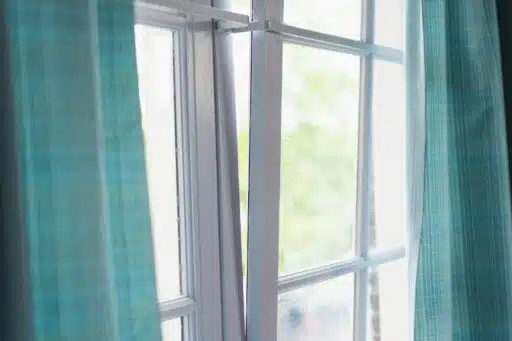


A cracked pane makes a window problem obvious. There’s no debating what happened when a baseball meets glass. Most windows, however, don’t wait for something dramatic to announce that they’re aging. They can look perfectly intact while quietly becoming less effective in several other ways.
The clues tend to show up in everyday life instead. A room feels colder near one wall. A window that once opened effortlessly suddenly sticks. Fog appears somewhere cleaning can’t reach.
These small changes are easy to tolerate because none of them feels particularly urgent on its own. Taken together, though, they can reveal a window that’s no longer doing its full job.
A replacement window company can evaluate whether repair or replacement makes sense, but homeowners can often spot the earliest warning signs themselves. The trick is looking beyond broken glass.
The Draft You Feel Is Trying to Tell You Something
Drafts have a way of becoming part of the furniture. Maybe everyone avoids one chair during winter, or a particular bedroom always feels colder than the hallway. Eventually, people compensate without questioning why that small part of the house behaves differently.
Air movement around a closed window can come from worn weatherstripping, gaps around the frame, or other weaknesses in the assembly.
Even without an obvious breeze, the area beside an aging window may simply feel noticeably colder in winter or warmer during summer than the rest of the room. One draft doesn’t automatically mean an entire window needs replacing.
Some air leaks can be addressed with maintenance or repairs. The important clue is persistence. When a closed, properly latched window repeatedly makes the surrounding area uncomfortable, it’s giving the homeowner useful information about how well the complete assembly is still performing.
Condensation Can Appear Where You Can’t Wipe It Away
Not all window condensation means the same thing. Moisture on the room-facing surface of glass can occur when warm, humid indoor air meets a cold surface. Depending on conditions inside and outside the house, that can happen even when the window itself isn’t failing.
Fog trapped between panes is different. Double- and triple-pane insulated glass units rely on sealed spaces between the layers. When moisture appears inside that space, where neither side can be wiped clean, it generally points to failure of the seal around the insulated glass unit.
That’s why location matters more than simply noticing water on a window. Surface moisture and between-pane fogging can look similar from across a room while telling very different stories. Before assuming the worst, look closely at where the moisture actually sits. Sometimes the most revealing clue is that the cleaning cloth can’t reach it.
Opening the Window Shouldn’t Be a Workout
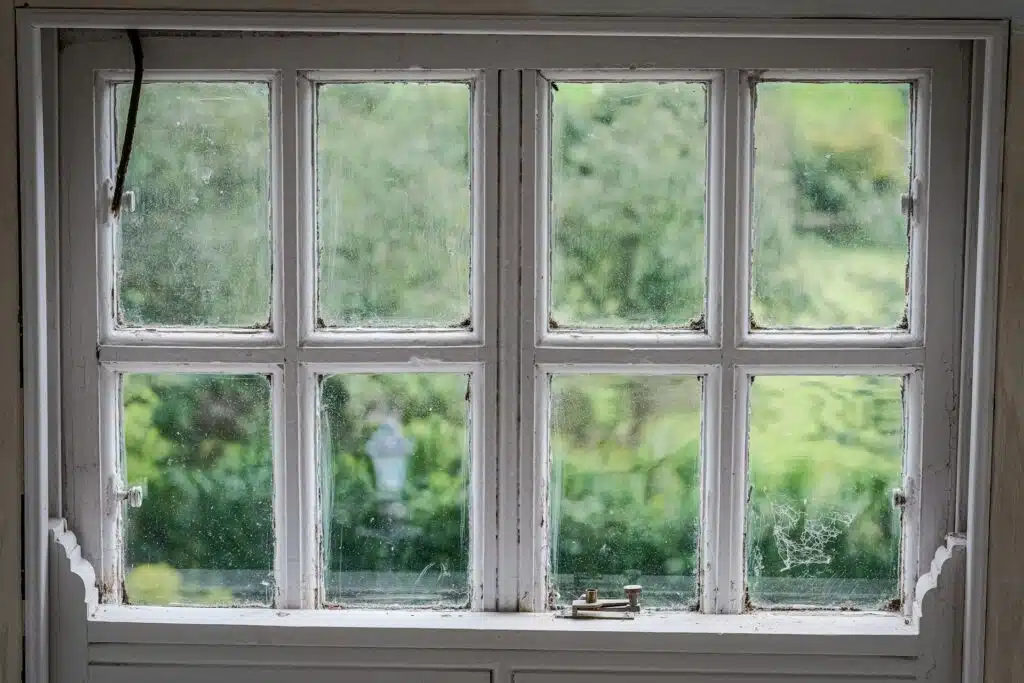
Windows are moving parts of a house, and that movement provides another useful diagnostic tool. An operable window should open, close, and lock without turning an ordinary task into a wrestling match. When that changes, something in the assembly may have changed too.
Sticking can have several causes. Frames or sashes can shift, hardware can wear, and components can fall out of alignment. The problem may begin subtly, perhaps requiring an extra push to close the sash or a little more effort than usual to engage the lock.
It’s tempting to accept that resistance as something old windows simply do. But operation is part of performance. A window that won’t close or lock correctly isn’t functioning as intended, regardless of how clear its glass remains. Increasing difficulty is worth investigating rather than automatically becoming another household quirk everyone learns to work around.
Look Beyond the Glass
Glass naturally gets most of the attention because it’s the largest and most visible part of a window. Yet a quick inspection around its edges can sometimes reveal more than staring through the center. Frames, seals, caulking, sills, and trim all deserve occasional attention.
Look for changes rather than perfection. Caulk may begin separating from adjoining materials. Wood can become soft, swollen, or discolored after repeated moisture exposure.
Frames may warp, finishes can peel, and gaps can develop where components once met cleanly. These signs can point toward deterioration beyond the pane itself.
Context matters here too. A small cosmetic flaw isn’t automatically evidence that a whole window has failed. Multiple changes appearing together are more informative. If deteriorating materials accompany drafts, sticking, or trapped moisture, the window is offering several clues at once. The glass may still be intact, but that’s only one piece of the picture.
Conclusion
Windows rarely announce their decline with a dramatic moment. More often, performance changes gradually enough that homeowners adapt. They avoid the drafty chair, push harder on the stubborn sash, ignore the cloudy patch, and stop noticing the cracked caulk around an aging frame.
Those small inconveniences are worth paying attention to because windows are more than glass. Seals control moisture and air, hardware allows proper operation, and frames help hold everything together. A clear, unbroken pane doesn’t guarantee that all of those surrounding components are still doing their jobs.
The useful question isn’t simply whether the glass has broken. It’s whether the window still behaves the way it should. Drafts, trapped condensation, difficult operation, and visible deterioration can reveal trouble much earlier. Catching those clues means homeowners can investigate the actual problem before waiting for something unmistakably broken to finally demand attention.

With a Master’s in Architecture from the University of California, Berkeley, Mitchell Green has spent over two decades dedicated to the study and practical application of home fixture design. His career started in an architectural firm, providing him a strong foundation in the structural and aesthetic aspects of home interiors. Mitchell brought his comprehensive knowledge to our platform, where he has been an influential voice in our home fixtures and fittings section. Since 2018, he has been guiding our readers through the intricacies of selecting and installing fixtures, combining technical know-how with design flair. In his spare time, Mitchell is a keen photographer, capturing architectural details and design elements, an interest that complements his professional focus.