
If you want to see how long a rental floor can last in Durham, Walltown is a decent place to start. It’s a short walk from Duke’s East Campus, and according to Open Durham, the city’s online architectural history, a lot of it went up in the late 1910s and early 1920s as “row after row of quickly and cheaply built rental houses.” Plenty of houses there, and in nearby Trinity Park and Old West Durham, are still rented out today.
Who rents them has shifted over the years. Duke makes undergraduates live on campus for their first three years, so a lot of the houses around East Campus end up with seniors and grad students in them. Across town, NCCU’s off-campus housing site lists houses and duplexes a few minutes’ walk from the campus on Fayetteville Street. Leases near both schools tend to run on the academic year, so landlords often get one tight stretch a year to deal with whatever the last tenants did to the place.
Mario Vilchis has been putting down and sanding floors around the Triangle since 2009. He’s the owner and CEO of Vilchis Hardwood Floors & Tile, a family-owned flooring company in Durham, and he does the measuring himself before running the crew that installs the job. On his company’s blog he once wrote that if a floor is going into a rental, you should “get LVP and stop thinking about it.” I wanted to know if he really meant that. (He did, mostly.) Our conversation has been edited for length and clarity.
What to Put Down
So, Vinyl Plank and Stop Thinking About it. You Meant that?
Yeah, for most rentals I did. Think about what the floor’s job is. In your own house you might want something that gets better with age, something that helps you when you sell. A rental floor just has to get through the next tenant without costing you a fortune to fix.
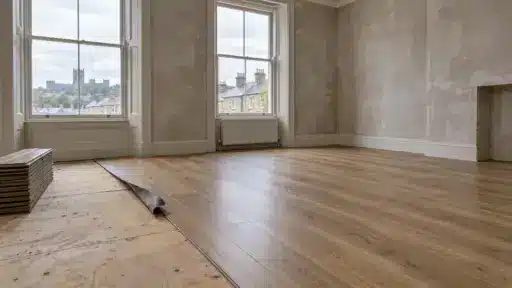
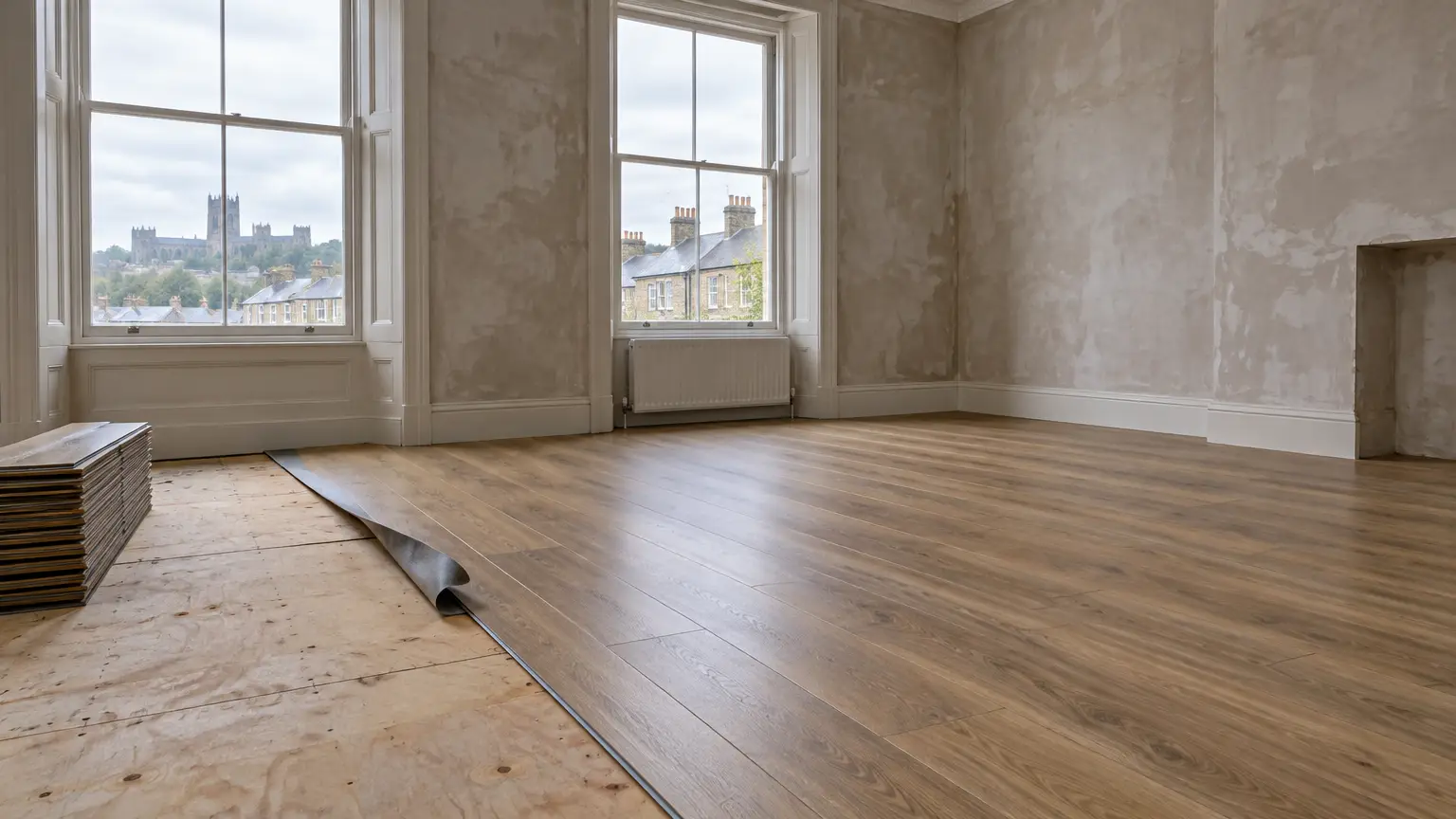
LVP has a waterproof core, so the dog bowl that gets knocked over every morning, or a fridge line that starts leaking, doesn’t do anything to it. It’s a lot harder to scratch than wood, too. And if somebody does gouge a plank, you pull that one plank and put a new one in.
Is one vinyl plank pretty much as good as another?
No, and that’s where landlords get burned. Almost every vinyl horror story you hear, when you trace it back, it’s a bargain plank with a thin wear layer. The wear layer is the clear coat on top. It’s only a few mils thick, and when something cuts through it there’s no fixing it, because you can’t sand vinyl like you’d sand oak.
So I tell people, don’t go grab the cheapest box at the store for this. Most of our Durham customers end up in the mid-range, which is about $6 to $8 a square foot installed, and for that you get a thicker wear layer and a better warranty.
But it’s Waterproof, Right?
The plank is. The seams aren’t sealed, though, and people don’t always realize that. Juice, wet paws, somebody mopping, all fine. A dishwasher that floods or a pipe that bursts, that water can work its way down between the planks to the subfloor. So it gives you some time to catch a problem. I wouldn’t treat it like it’s flood-proof.
Where Does Laminate Come in?
Laminate’s basically a picture of wood with a wear layer over it, sitting on a core of compressed wood fiber. People are surprised by this, but the wear layer on a good laminate is tougher than the finish on hardwood, so it does pretty well with dogs and kids. The core’s the weak spot.
Water gets to it, it swells. Most decent laminate now is water resistant, which means a spill’s fine as long as you wipe it up reasonably soon, and for bedrooms and hallways and living rooms that’s all you need. In a kitchen, or right inside the back door, I’d spend the extra on waterproof laminate or just use vinyl. Around Durham, most laminate jobs come out somewhere between $3 and $8 a square foot installed.
Oh, and nobody should be using a steam mop on laminate. Any laminate, I don’t care what the box says. You’re blasting hot water vapor straight into the seams. If I were a landlord I’d put that right in the move-in paperwork.
What About New Hardwood?
In a rental? I’d usually talk you out of it, and I talk people out of new hardwood pretty much every month anyway. Hardwood scratches. There’s no species and no finish that’s going to hide a 70-pound dog. What wood does have going for it is you can fix it.
A screen and recoat takes care of light wear, and a full sanding basically gives you a new surface, which you can’t do with vinyl. Now if the house already has hardwood in it, that’s a whole different conversation.
At a Glance: Rental Floors in Durham
Installed prices are the 2026 Triangle ranges Vilchis publishes. The subfloor and the size of the job move the final number.
| Floor | Installed cost per sq ft | Good fit in a rental | Think twice when |
|---|---|---|---|
| Refinishing existing hardwood | $3 to $5 | Older houses with oak under the carpet | The boards have already been sanded down to the tongue, or the subfloor is soft |
| Laminate | $3 to $8 | Bedrooms, hallways, living rooms | It’s going by a sink, a dishwasher or an exterior door |
| Mid-range luxury vinyl plank | $6 to $8 | Kitchens, living areas, units that allow pets | The crawlspace under it is damp |
| Engineered hardwood | $7 to $12 | Houses on concrete slabs, higher-end rentals | You expect to sand it often; most engineered floors take one to three refinishes |
| Tile | $9 to $18 | Bathrooms and laundry rooms | You need to cover big rooms on a tight budget |
The Older Houses Near Campus
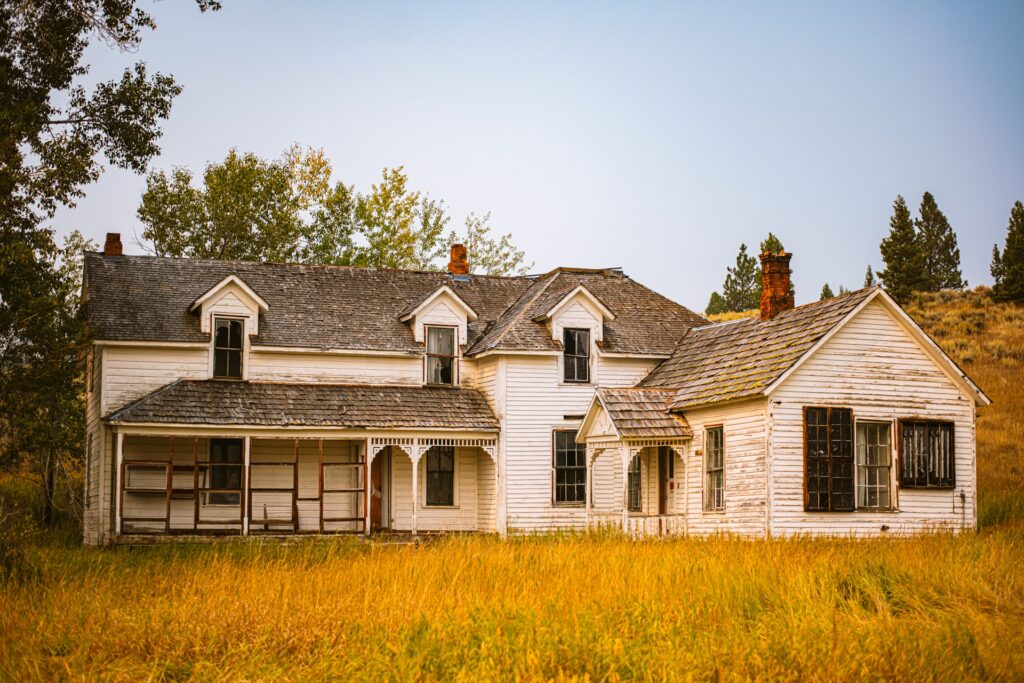
A Lot of The Rentals We’re Talking About are Old Houses. Does that Change Things?
It changes what’s under the floor, which is the part nobody thinks about. Trinity Park, Hillandale, Old West Durham, most of what got built there before 1970 is sitting on a crawlspace.
And most of those crawlspaces went in back when nobody worried much about moisture coming up out of the ground. Our Piedmont clay holds onto water and drains slowly, so if the crawlspace isn’t sealed you’ve got moisture coming up all year long, and then in August it hits the cooler framing under the floor and condenses. Do that for enough summers and the plywood up there is holding a lot more water than it was ever supposed to.
Does that Matter if The Floor on Top is Waterproof?
That’s when it matters most. The vinyl doesn’t care about moisture coming from underneath. The subfloor does, and the glue does. When there was carpet down, or the old hardwood, that moisture had a way to get out through the top. Put vinyl over it and you’ve pretty much put a lid on it, and now it’s stuck in the plywood. I’ve pulled up vinyl that looked brand new, perfect, and the plywood underneath was so far gone I could push a screwdriver through it.
North Carolina’s residential code does set a minimum for closed crawlspaces: a 6-mil polyethylene vapor retarder over all the exposed dirt, seams overlapped by at least 12 inches, plus some mechanical way to dry the space out, which usually means a dehumidifier.
Vilchis isn’t impressed by the minimum. Six mil, he said, is “the floor, not the target,” since plastic that thin tears the first time somebody crawls across it. If a crawlspace doesn’t meet code, he doesn’t want to talk flooring yet. “Fix the crawlspace, then talk about floors,” he said. “It’s cheaper in that order.”
And if There’s Oak Under the Carpet?
Then maybe you don’t need a new floor at all. You’d be surprised how many older Durham houses have hardwood under the carpet and the owners just have no idea.
We did a whole house here in Durham where the owners had lived there four years, and they only found out because a plumber pulled up a corner of carpet in a hall closet. There was 1,450 square feet of original red oak under there. Refinishing what’s already in a house usually runs $3 to $5 a square foot.
If you’re ever going to sell, covering it up hurts you, too. Buyers in a neighborhood like Trinity Park walk in expecting real oak. Agents put “original hardwoods” in the first line of the listing for a reason. Put vinyl over a 1940s red oak floor and you end up paying for it twice, once for the vinyl and again when you sell.
The resale math is on his side. In the 2022 Remodeling Impact Report from the National Association of Realtors and the National Association of the Remodeling Industry, refinishing hardwood floors recovered an estimated 147 percent of its cost at resale, more than any other interior project in the study. New wood flooring came in at 118 percent.
Empty Units and The Thermostat
A Lot of These Places Sit Empty for a Few Weeks Between Leases. Does that Matter?
More than the time of year does. I get asked all the time if it’s okay to put wood down in July. For most houses the month isn’t really the issue, it’s whether the HVAC is running.
With hardwood you want the inside of the house somewhere between 60 and 80 degrees and 30 to 50 percent humidity. If the place is empty and somebody’s shut the AC off in August to save a few bucks, you’re nowhere near that. So leave it on, during the job and after.
Whatever floor it is, let it sit in the house first. Our vinyl sits 48 hours before it goes down. Skip that and you get gaps in January and buckling in August.
What About the Newer Rentals, the Ones that Aren’t Old Bungalows?
A lot of the newer subdivisions, Southpoint, Woodcroft, out toward RTP, are built on concrete slab. People think concrete is dry. It isn’t. Vapor comes up through it constantly, and the waterproof rating on your plank doesn’t help with that at all.
What helps is a vapor barrier under the floor, and on a slab we put one down every single time, even when the product doesn’t call for it. Solid hardwood just doesn’t go on a slab. You’d use engineered, or vinyl.
Deposits, Wear and Dogs
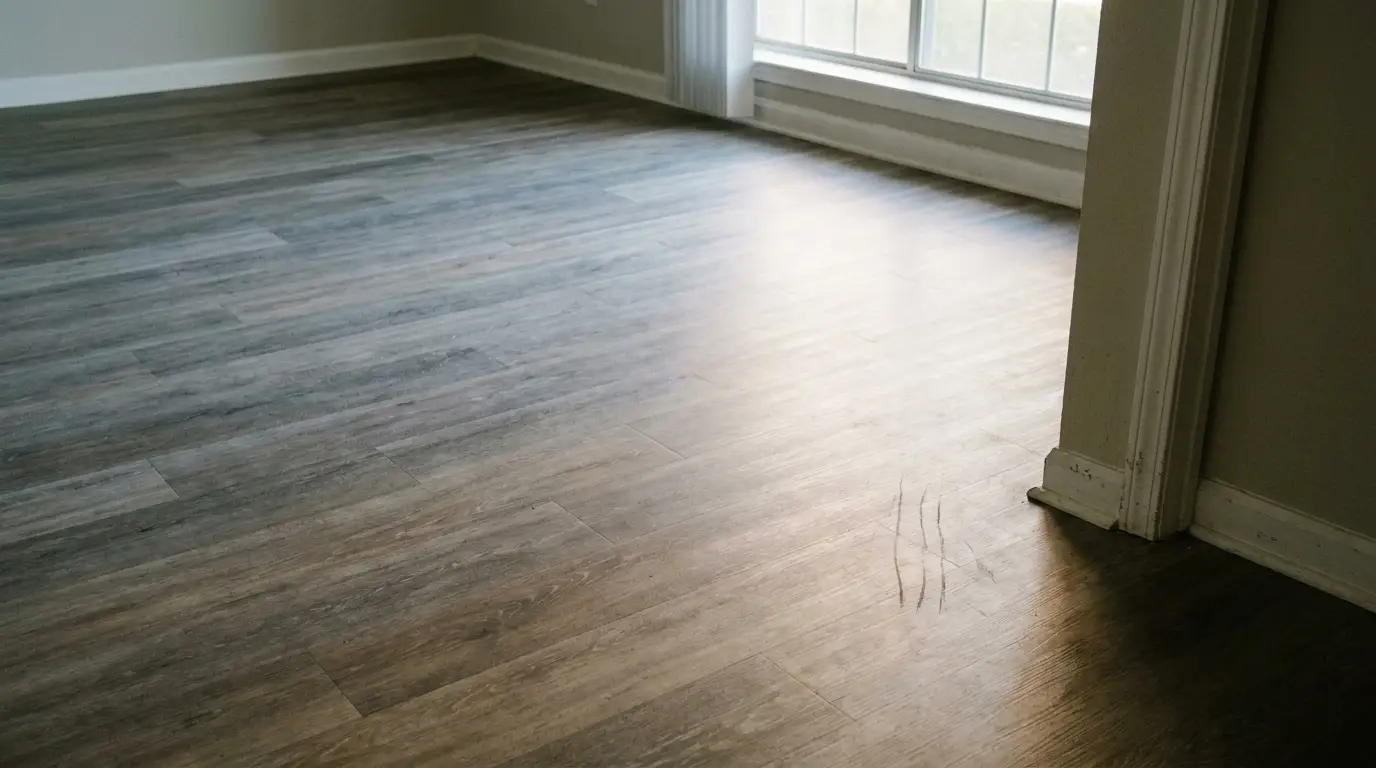
Floors come up a lot when it’s time to settle a deposit. Under North Carolina’s Tenant Security Deposit Act, a landlord can put the deposit toward damage, but the same law says the landlord “may not withhold as damages part of the security deposit for conditions that are due to normal wear and tear.” It never spells out what normal wear and tear actually is. So a floor that wears out fast is mostly the owner’s cost to eat.
How do You Keep Ordinary Wear from Turning Into a Whole New Floor?
So I get called out to look at vinyl that’s gone wrong, I don’t know, maybe a dozen times a year. It’s almost never the product. It’s furniture with the wrong feet on it, or the floor never got an expansion gap, or somebody took really good care of it for two years and then just stopped. With a rental that last one’s pretty much a given, because whoever was taking care of it moves out.
Grit is the big one. It scratches up the wear layer faster than anything. Mats inside the doors, and every so often check that the mats themselves aren’t full of grit. If the unit comes furnished, get felt pads on every leg before the furniture goes back in, not after. Once a chair leg gouges a vinyl plank you’re not sanding that out.
North Carolina also lets landlords charge a “reasonable, nonrefundable fee” for pets. That handles the paperwork side. The floor is another matter.
So What Happens to The Floors when The Tenants Have Dogs?
Most people with pets end up happier with vinyl. It holds up to claws a lot better, and accidents and water bowls aren’t a big deal. If the house already has hardwood and you’re allowing dogs, it can work, you just have to be realistic.
A 70-pound lab with nails that haven’t been trimmed is going to put fine scratches in a satin oak floor inside of a few months. You’ll see it most right where the dog spins around to look at the door. Put rugs down where the dog runs and plan on a recoat every few years.
And skip the gloss. Shiny floors show every scratch, and they’re rough on older dogs. They slip and their legs go out from under them. Matte gives them something to grip.
Between Tenants
Anything a Landlord Should do on Install Day to Make the Next Turnover Easier?
Keep a box of the leftover flooring. Garage, attic, a closet in the unit, I don’t care where, as long as nobody throws it out. You can swap out a single vinyl plank, but if that product’s been discontinued by the time you need it, matching it five years later is close to impossible. With a spare box it’s a small repair. Without one you might be redoing the whole room.
When a Tenant Moves Out, Where do You Look First?
Anywhere one floor meets another. Where the floor meets the bathroom, or at the back door, that’s where water gets in from above. Then I’d go to the kitchen and look around the dishwasher and the fridge line.
On wood, a slow leak shows up as boards cupping or staining. On vinyl you kind of have to walk it and feel for a spot that’s hollow or spongy, because the vinyl’s going to look fine. It’s the subfloor that’s going bad.
Ask the tenant on the way out what leaked while they were there, too. Takes ten seconds, and it tells you where to look.
His point about catching leaks early lines up with the EPA’s guidance on mold, which says to dry water-damaged areas and items within 24 to 48 hours; in most cases, that keeps mold from growing. The agency also suggests keeping indoor humidity below 60 percent, ideally between 30 and 50, which is another reason not to shut the air off in an empty unit.
Hiring for a rental job
If You Were a Landlord Hiring Somebody for this, What Would You Ask?
First thing, who’s actually going to be in the unit on day three. A lot of the jobs we get called in to fix started with a salesperson who sold it, handed a work order to some crew and never came back.
The crew has no idea what was promised and nobody owns the mistake. I’d ask if they use subcontractors, too. That’s not automatically bad, but you want to know before, and you want to know the subs have their own insurance.
And ask for the insurance paperwork, not just somebody telling you they’re covered. Any legit contractor can email you a certificate of insurance the same day. Most of us send them to property managers all the time. People don’t think about workers’ comp enough. If somebody gets hurt at your property and the crew’s not covered, that can come back on you.
Plenty of Landlords Aren’t Around While the Work’s Being Done. What Should They Watch for?
Surprises. Ask what they do when they find something under the old floor. On one whole-house job here in Durham we hit rot partway through demo. We stopped, took pictures and called the owner with a number before we touched anything else.
Nine minutes on the phone. If a crew just fixes it and keeps going, the owner sees it on the final invoice and feels ambushed, even if the work had to be done and the price was fair. The work’s the same either way, but without that call it feels like a bait and switch.
Vilchis also brought up a licensing line that bigger jobs can run into. Under North Carolina General Statute 87-1, a project whose total cost reaches $40,000, labor and materials together, has to be handled by a licensed general contractor.
A flooring job in one unit usually comes in well under that. A whole-house renovation, or flooring bundled in with a bunch of other work, might not. The N.C. Licensing Board for General Contractors has a free license lookup on its site, and splitting one project into smaller contracts to stay under the number doesn’t get you around the rule.
How Far Ahead Should a Landlord Call?
Six to eight weeks out is comfortable. April, May and October are our heaviest months every year, because that’s when people are listing houses and closing on houses and finishing up renovations. If your turnover lands in one of those, call earlier than you think you need to.
Last Question. One Thing a Landlord Near Campus Should do this Year?
Get somebody under the house before you pick a floor. You’re looking for standing water, a vapor barrier that’s torn or missing, insulation hanging down out of the joists, wood with stains on it. If there’s bare dirt down there, that’s the headline, and that’s what you deal with first. Once that’s fixed, whatever you put down has a real chance of lasting through a lot of tenants.

Holding a Master’s in Architecture from the University of Texas at Austin, Emily Rodriguez has dedicated more than two decades to the art and science of building renovation. Starting her journey in historic preservation, she developed a profound respect for blending old with new in building design. Emily became a vital part of our team in 2019, renowned for her insightful and innovative renovation tips. She has been leading our DIY home improvement series since ever since, where she shares her wealth of knowledge in turning outdated spaces into modern havens. When not engaged in writing or consulting, Emily is a passionate advocate for heritage conservation and enjoys exploring vintage architecture, a hobby that complements her professional expertise.