
Underfloor heating has an image problem. It is seen as the preserve of new-builds, grand renovations, and homeowners with budgets that stretch well beyond the ordinary. The very phrase suggests excavation, screed, and a bill that arrives in instalments.
The reality is different. Costs have fallen, systems have diversified, and the entry point is now far lower than most people assume. In many cases, the decision comes down not to whether underfloor heating is affordable, but to which version of it suits the room.
The Two Systems, and Their Very Different Costs
Much of the confusion around price comes from treating underfloor heating as a single product. It is not.
Wet systems circulate warm water through pipes connected to a boiler or heat pump. They require insulation, pipework, and a screed layer, which makes them a significant undertaking. They are also efficient, cheap to run, and ideal for whole-house installations during a major renovation. Installation costs are substantial, though the running costs are low.
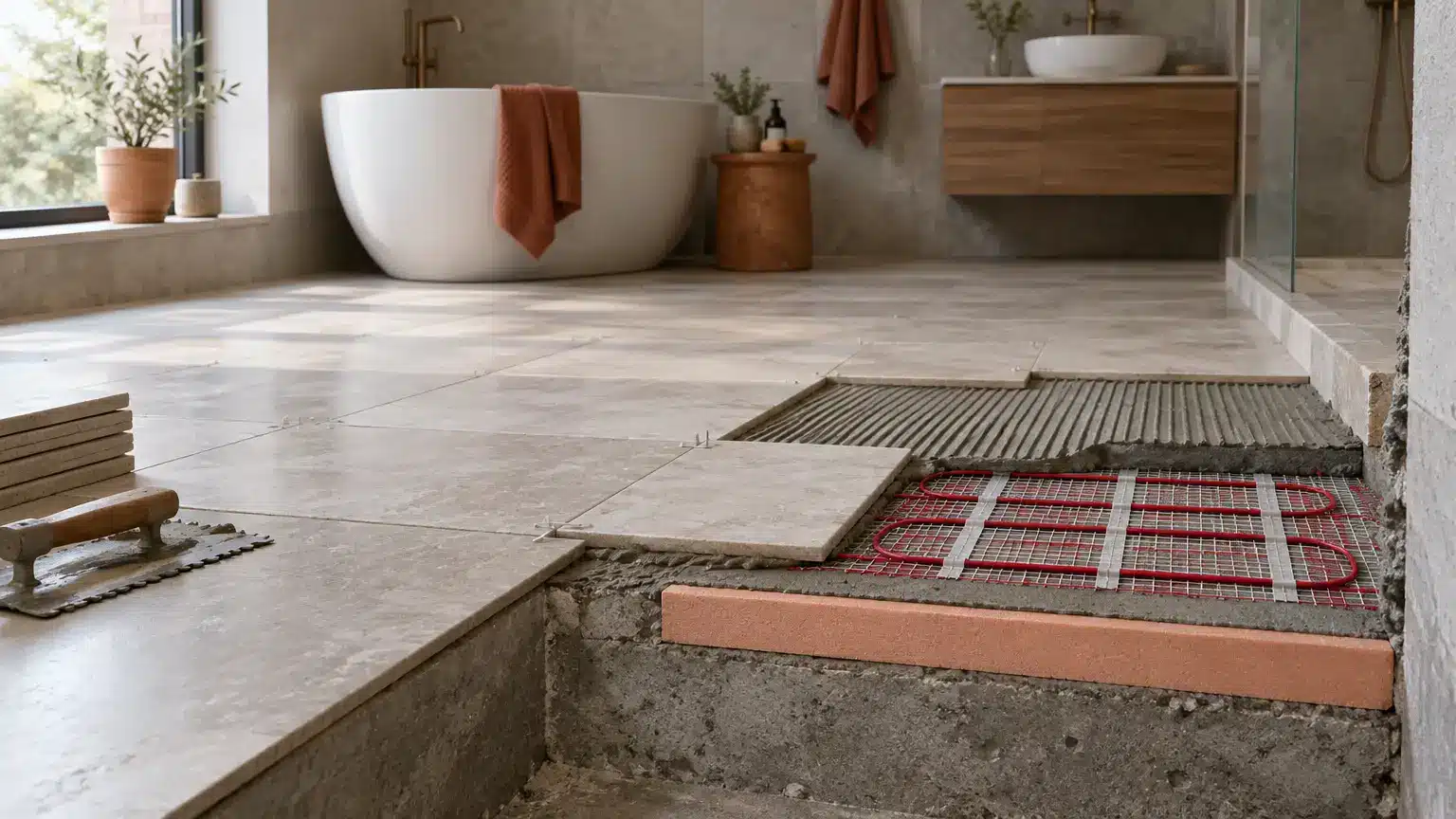
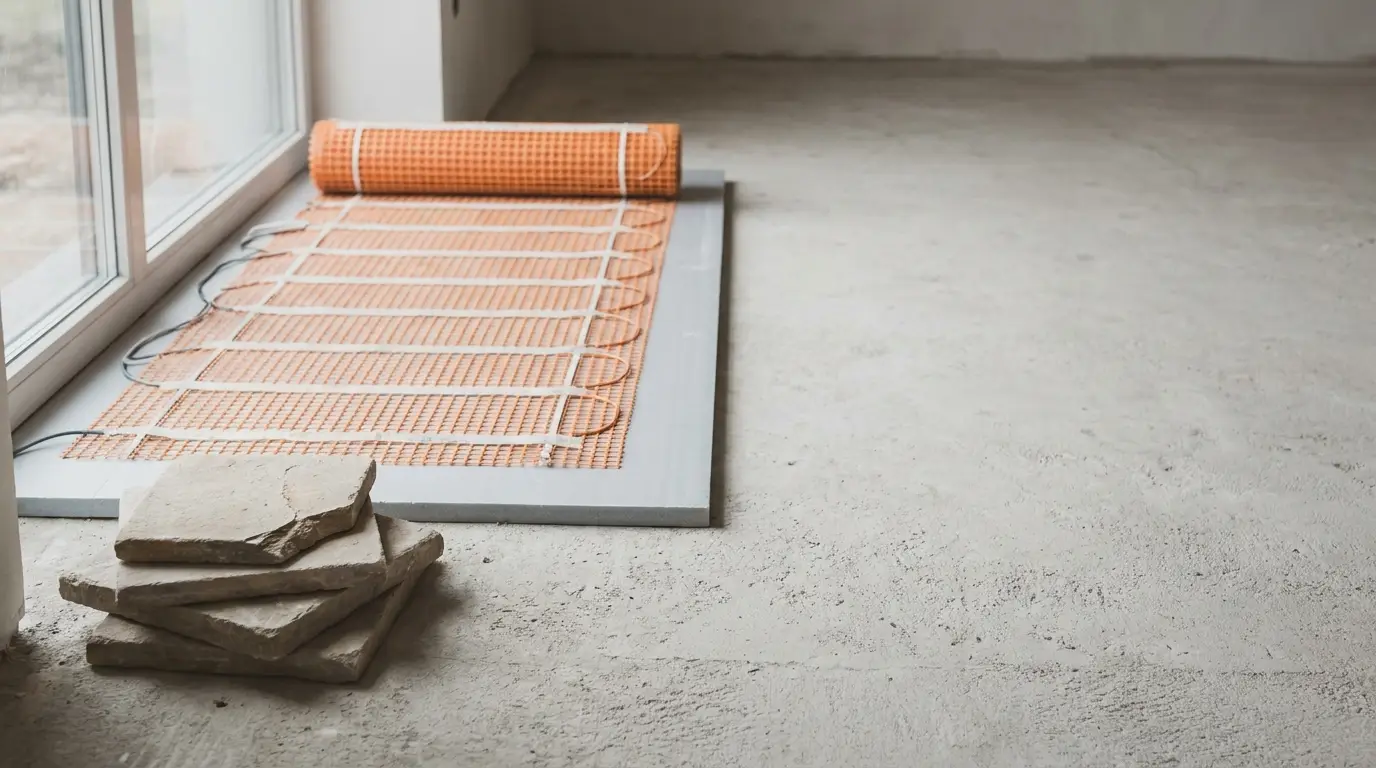
Electric systems use heating cables or mats beneath the floor surface. They require no pipework, no boiler connection, and no screed. Installation is fast, straightforward, and far cheaper. This is where the affordable end of the market sits, and it is where most retrofits begin.
Treating these as the same thing leads to inflated expectations of cost. For a single bathroom or a small extension, an electric mat is often the obvious answer, and its price reflects that.
Where Cheap Underfloor Heating Makes Sense
The phrase cheap underfloor heating tends to raise eyebrows, as though affordability must mean compromise. In practice, cheap underfloor heating is a perfectly sensible category, provided it is matched to the right application.
A modest electric mat in a bathroom is genuinely inexpensive to buy and simple to install. A small kit for a hallway or a downstairs cloakroom costs little more than a decent radiator, and it removes the radiator from the wall at the same time. For these spaces, cheap underfloor heating delivers most of the comfort of a premium system at a fraction of the price.
The key is honesty about scale. Cheap systems suit small areas used for short periods. They are not designed to heat a whole house, and expecting them to do so will lead to disappointment and higher bills. Used within their limits, they perform admirably.
What You Are Actually Paying For
Understanding the cost breakdown helps to separate value from expense.
The heating element. Cable or mat, priced by area. This is the core cost and varies with quality and output.
The thermostat and controls. A good thermostat is essential and is often where cheap kits cut corners. A precise, programmable thermostat improves efficiency and comfort considerably.
Insulation and preparation. A level, insulated subfloor improves performance and reduces running costs. Skipping this step is a false economy.
Installation. Electric mats can be fitted by a competent DIYer in some cases, though an electrician will be needed for the connection. Professional installation adds cost but ensures safety and warranty compliance.
Floor covering. Tile and stone conduct heat best. The covering itself may be an additional cost, though it would be needed anyway.
The element is rarely the largest line item. Controls, preparation, and installation often account for more of the total, and these are the areas where quality matters most.
The Running Cost Question
Upfront cost is only half the story. Underfloor heating is often assumed to be expensive to run, and this deserves scrutiny.
Electric underfloor heating costs more per unit of heat than gas. That is arithmetic, and it does not change. What does change the picture is how the system is used. Zoning means heating only the room you are in, only when you are in it. A thermostat and timer mean the bathroom floor is warm for an hour in the morning and an hour in the evening, not around the clock. Insulation beneath the mat means the heat goes into the room rather than into the floor structure.
A well-controlled electric mat in a bathroom often costs less to run than the alternative: heating the whole house to make one cold room tolerable. Set against that comparison, the running costs look far more reasonable.
Wet systems, meanwhile, run at lower flow temperatures than radiators and pair efficiently with modern boilers and heat pumps. Over years of use, the running cost advantage can offset much of the installation premium.
The Value Beyond the Bill
Cost is not the only measure. Underfloor heating delivers benefits that are difficult to price but easy to feel.
Warm floors underfoot in winter. No radiator consuming wall space in a small room. Even heat without cold corners or draughts. Silence. Cleaner air, since there is no convection to circulate dust. A room that feels considered rather than merely heated.
In a bathroom, this changes the daily experience more than almost any other upgrade. In a hallway, it softens the transition from outdoors. In a kitchen, it makes hard floors pleasant rather than punishing.
These are not luxuries in any meaningful sense. They are comfort, delivered quietly and permanently.
Avoiding False Economies
Affordability should not be confused with cutting corners.
Choose a thermostat with genuine accuracy and programmability. Insulate beneath the system. Use an electrician for the connection. Buy from a manufacturer with a clear warranty. Match the output to the room rather than guessing.
A cheap kit installed badly will cost more over time than a mid-priced system installed properly. The savings that matter are the ones that last.
Final Thoughts
Underfloor heating is not as expensive as its reputation suggests. Electric systems have brought the entry point down dramatically, and for small rooms the cost is modest indeed. Cheap underfloor heating is a real option, not a contradiction in terms, provided it is used where it belongs.
The larger systems remain a significant investment, but they reward that investment through efficiency and comfort over many years. For most households, the question is not whether underfloor heating is affordable, but which version of it fits the room and the budget.
Warm floors are closer than most people think.

With a Master’s in Architecture from the University of California, Berkeley, Mitchell Green has spent over two decades dedicated to the study and practical application of home fixture design. His career started in an architectural firm, providing him a strong foundation in the structural and aesthetic aspects of home interiors. Mitchell brought his comprehensive knowledge to our platform, where he has been an influential voice in our home fixtures and fittings section. Since 2018, he has been guiding our readers through the intricacies of selecting and installing fixtures, combining technical know-how with design flair. In his spare time, Mitchell is a keen photographer, capturing architectural details and design elements, an interest that complements his professional focus.