
Choosing custom curtains involves more than selecting an attractive color or pattern. Fabric texture, material composition, light-filtering performance, and drape all influence how curtains look and function. A fabric that appears beautiful online may look different under natural daylight or beside existing furniture.
Comparing physical fabric samples before purchasing helps homeowners make informed decisions. By examining materials in their own spaces, buyers can identify options that complement their interiors, provide suitable light control, and meet their design preferences.
Why Curtain Fabric Samples Matter Before Purchasing
Custom curtains are made to selected dimensions and specifications, so it is important to confirm the fabric, finished size, heading style, and lining before production. Physical samples help you assess the fabric before committing to those choices.
Online photographs offer inspiration, but screen settings and lighting can affect how colors and textures appear.
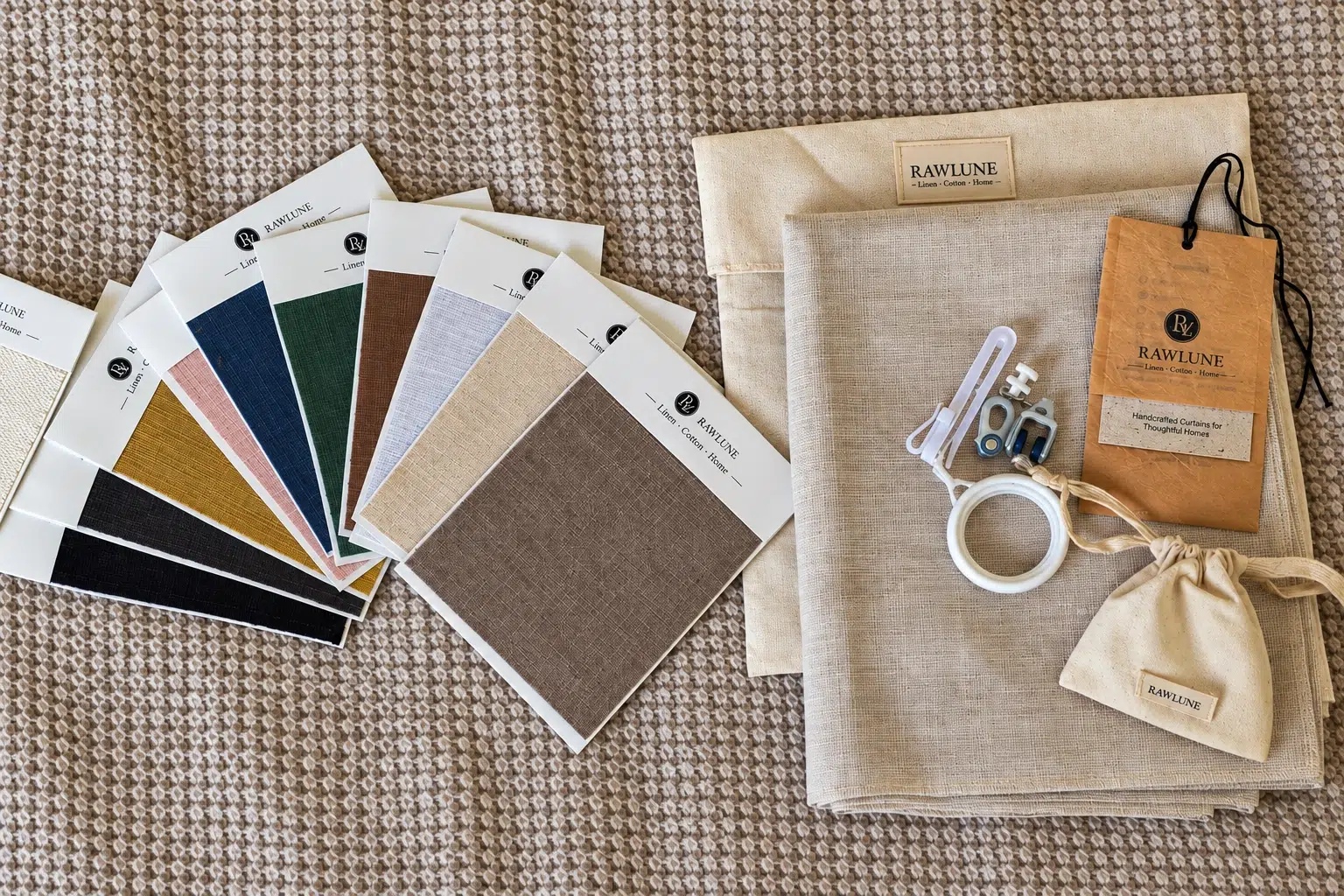
For homeowners considering Rawlune’s custom window treatments, a curtain sample kit provides an opportunity to examine fabrics before purchasing full-sized curtains.
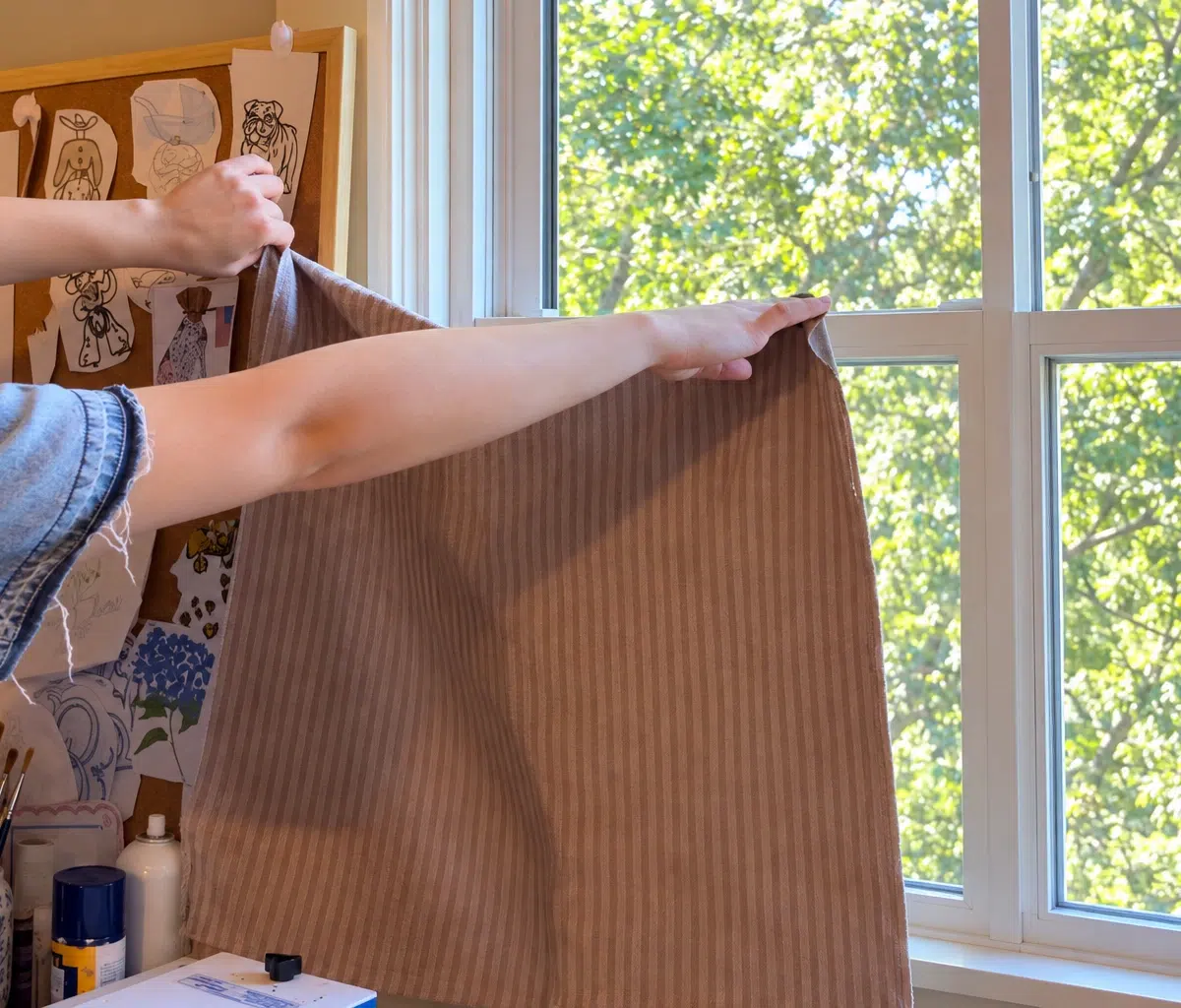
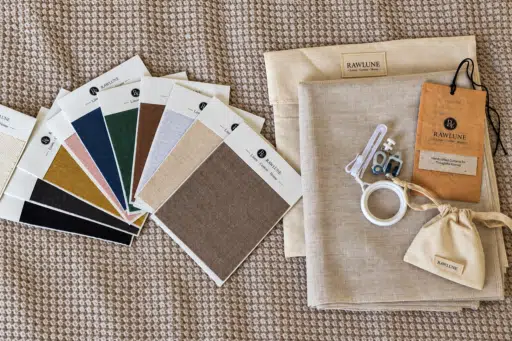
The kit includes one oversized fabric sample measuring approximately 20 × 47 inches (50 × 120 cm), smaller color swatches measuring approximately 8 × 6 inches (20 × 16 cm), and hardware samples such as rings, adjustable hooks, and gliders.
These materials allow buyers to compare fabric characteristics and explore installation accessories in person.
Compare Fabric Colors Under Different Lighting Conditions
Curtain colors can change depending on natural light, artificial lighting, and nearby surfaces. The same beige fabric may appear warmer or cooler depending on the direction of daylight, the color temperature of your lamps, and nearby finishes.
Instead of choosing immediately, place samples near the window where the curtains will eventually hang.
Examine Samples Throughout the Day
Observe each fabric under different conditions:
- Morning: Check the sample in the daylight your window receives.
- Afternoon: Compare it again as the direction and intensity of daylight change.
- Evening: View it under the lamps and ceiling lights you normally use.
Hold samples beside walls, flooring, furniture, and decorative accessories.
For example, a room with oak furniture and cream-colored walls might suit warm neutral curtains. However, cooler shades can also create attractive contrast depending on the intended design.
The goal is to find colors that complement the room rather than follow fixed matching rules.
Evaluate Fabric Texture and Composition
Fabric texture influences the overall appearance of custom curtains. Smooth materials often create a refined look, while visibly woven fabrics introduce a relaxed, natural aesthetic.
Rawlune offers linen, cotton, blended fabrics, and decorative designs. However, exact compositions should always be confirmed on individual product pages.
Understand Different Fabric Options
Compare each sample across four features:
- Fiber composition: Check the product’s stated fiber percentages rather than judging composition by appearance alone.
- Surface texture: Feel the fabric and inspect whether the weave looks smooth, slubby, or visibly textured.
- Weight and flexibility: Notice how substantial the sample feels and how easily it falls into folds.
- Pattern and scale: View the design up close and from across the room to see how noticeable it remains.
For example, Rawlune’s Elegant Tonal Pattern Linen Curtain features a subtle decorative design, with shades including Ivory Frost, Natural Flax, and Aged Linen. 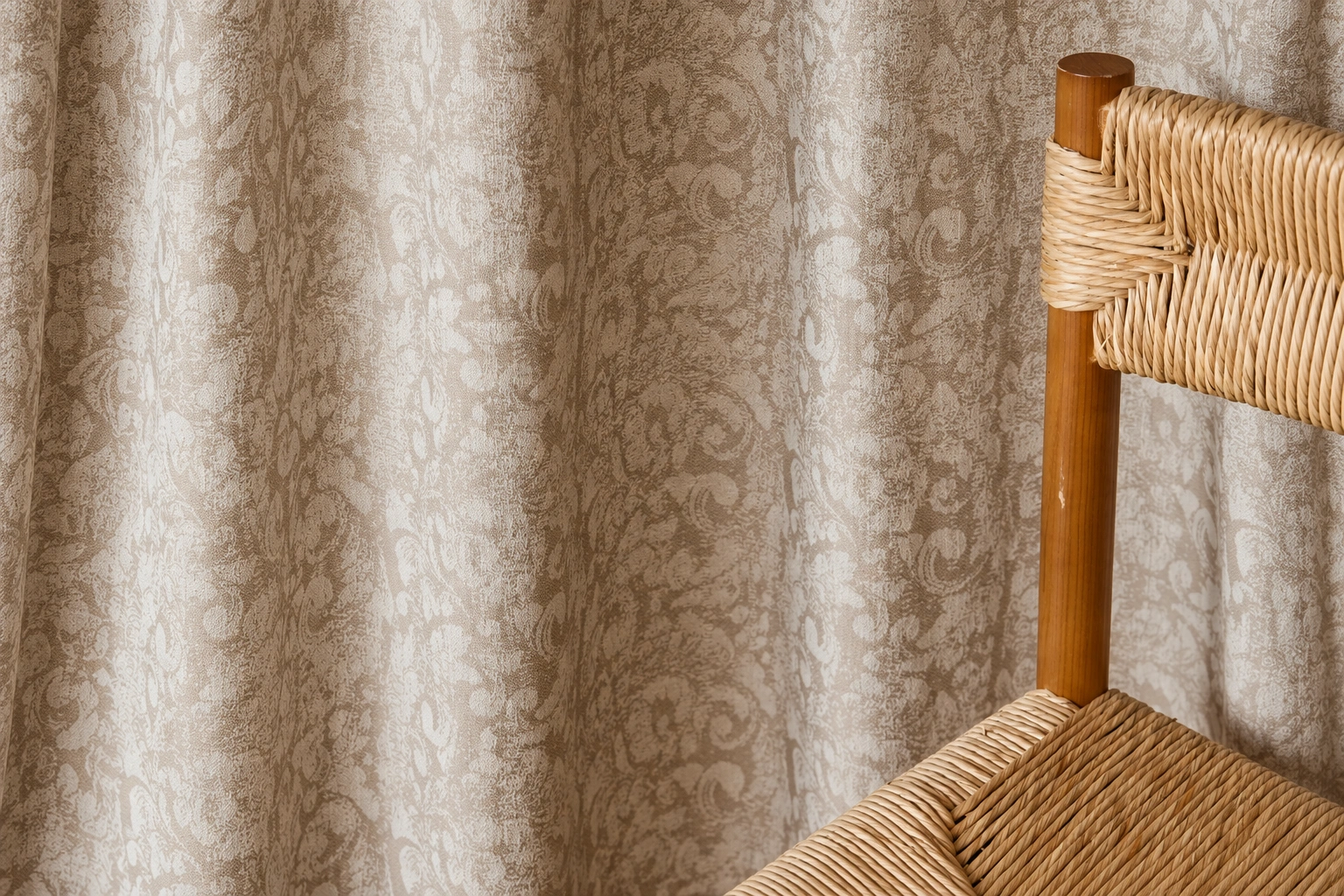
Comparing these colors against existing furniture can help homeowners select a suitable tone.
Examine patterned samples both closely and from several feet away. Fine details may become less noticeable across a room.
Compare Light Control at Home
Light control is especially important when selecting curtains for bedrooms, living rooms, and home offices.
Rawlune provides four light-control categories:
| Category | Main Characteristic |
|---|---|
| Sheer | Allows substantial natural light through |
| Light Filtering | Softens incoming daylight |
| Room Darkening | Reduces more incoming light |
| Blackout | Provides stronger light-blocking performance |
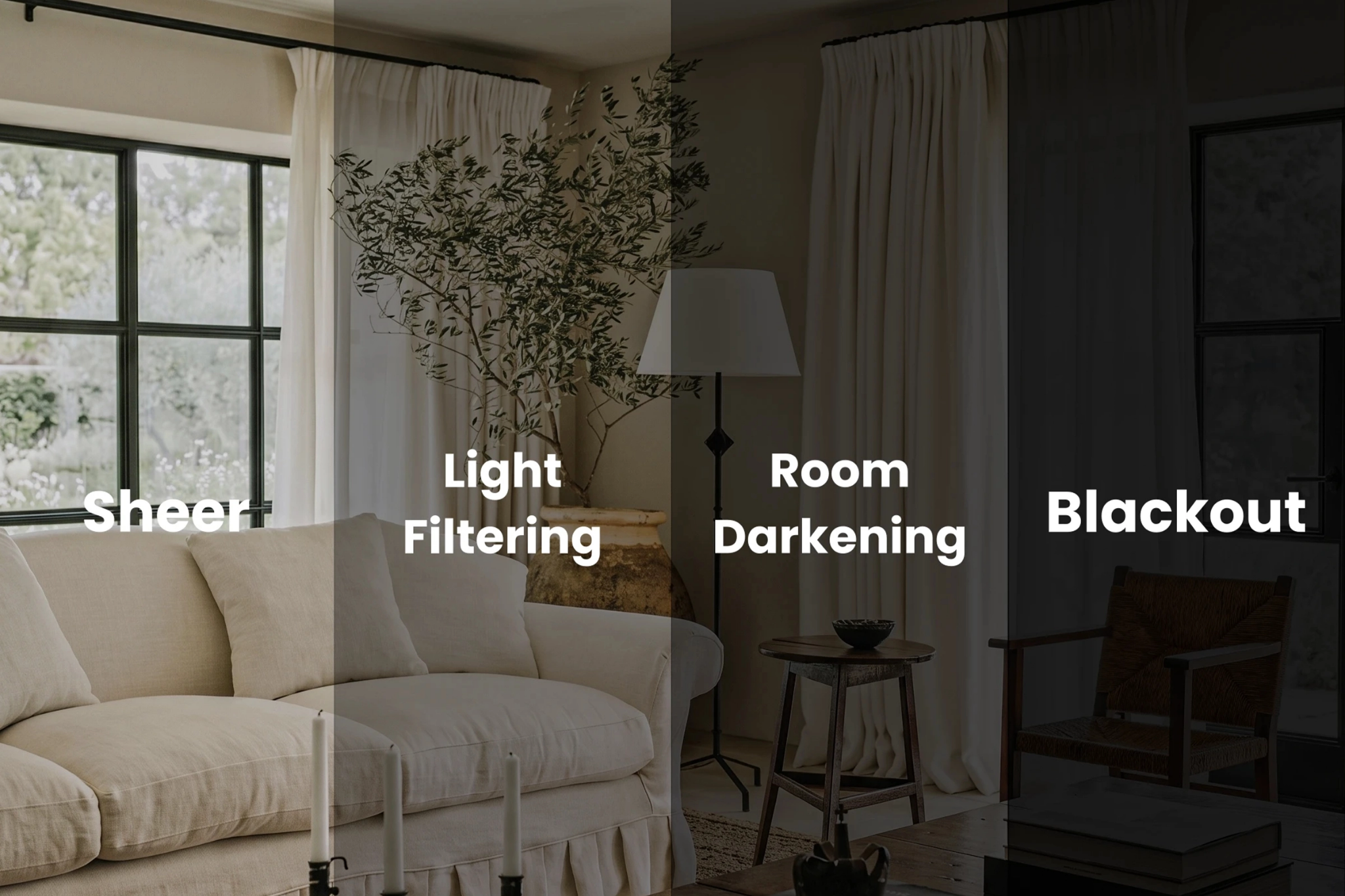
Actual light control depends on the fabric, any selected lining, and the installation. A blackout fabric can block light through the material while gaps around the curtain still admit light into the room. Sheer curtains may not provide sufficient privacy when indoor lights are on after dark.
Try a Simple Window Test
Hold each sample against the intended window during daylight.
Observe how much light passes through and whether the fabric’s appearance changes when backlit. If you plan to add a lining, it’s also worth checking whether the sample includes it, as an unlined sample may not accurately show the light control of the finished lined curtain.
For example, someone decorating a sunny home office might compare light-filtering and room-darkening materials to determine which better manages brightness near computer screens.
This comparison provides useful guidance but cannot reproduce the exact performance of fully installed curtains.
Consider Fabric Drape and Curtain Pleats
The way curtains hang affects whether an interior feels relaxed or structured.
Rawlune’s Sand Linen™ and Field Cotton™ collections do not use Memory Shaping, allowing a softer, more natural drape.
By comparison, the Eclipse Blackout™ collection uses Memory Shaping by default to encourage cleaner, more structured pleats.
When examining an oversized sample, gently gather the fabric to observe its flexibility and texture.
However, finished curtain folds also depend on panel dimensions, fullness, heading style, and installation.
Review Measurements and Installation Accessories
Selecting suitable fabric is only part of ordering custom curtains. Buyers should also consider the available configurations and compatible hardware.
Before purchasing, review these details:
- Measurements: Follow the manufacturer’s instructions for the selected configuration.
- Header styles: Check available pleat and heading options.
- Mounting systems: Confirm compatibility with curtain rods or tracks.
- Accessories: Examine rings, hooks, gliders, and other necessary components.
- Panel quantity: Verify whether curtains are sold individually or as pairs.
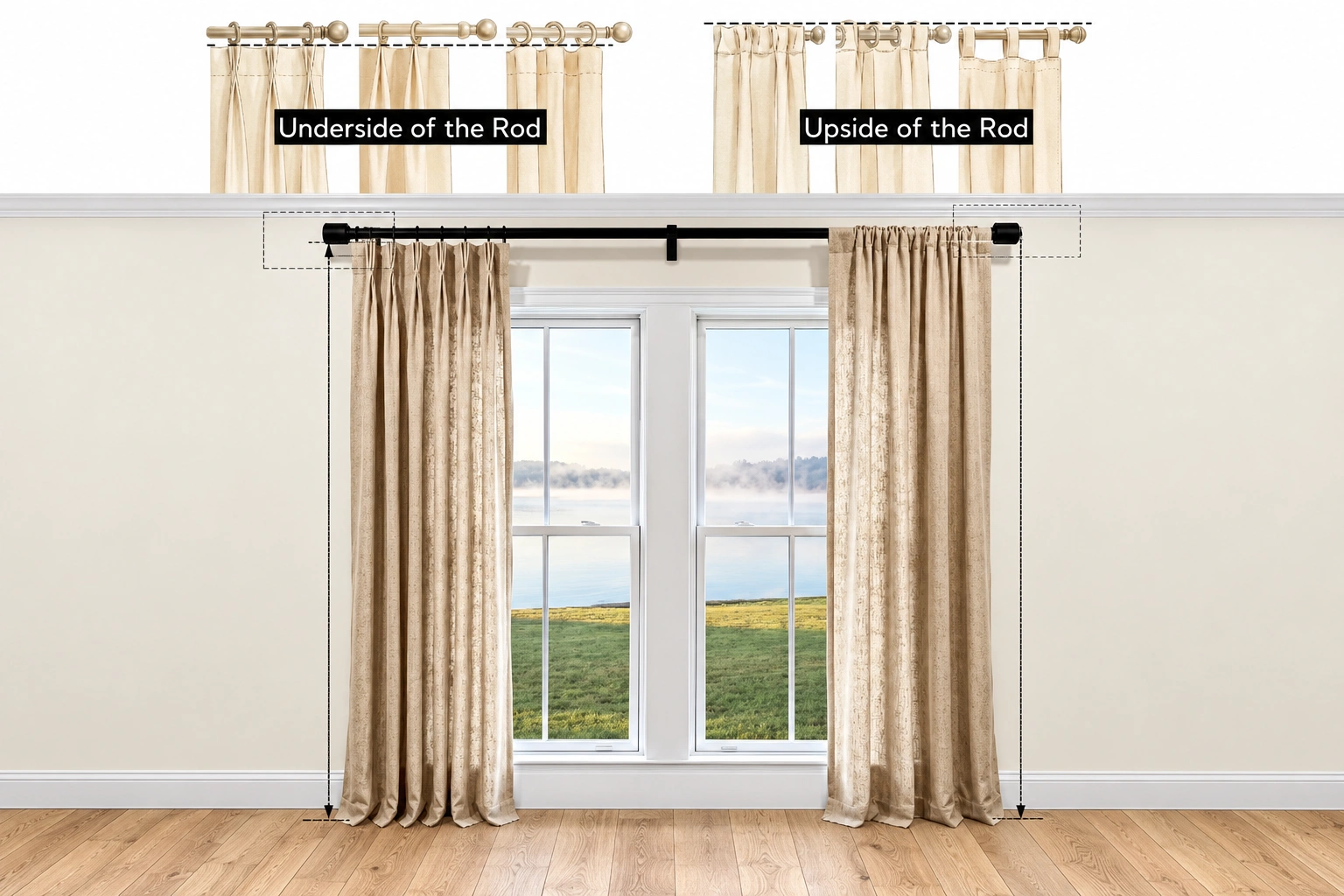
Rawlune provides an official measurement guide for different curtain configurations. Following these instructions helps buyers understand the dimensions and installation requirements relevant to their selection.
Create a Final Fabric Comparison Checklist
After examining the samples, narrow the selection to two or three suitable fabrics.
Compare each option using four practical questions:
- Does the color complement the room under different lighting conditions?
- Does the texture match the preferred interior style?
- Does the fabric provide suitable light control?
- Is the material available with the required curtain configuration?
Photograph shortlisted samples together near the intended window as a reference, but make the final color decision using the physical fabrics. Camera settings and screens can shift how colors appear.
Before ordering, confirm fabric composition, available colors, measurement instructions, and hardware requirements on the relevant product page.
Remember that physical samples offer guidance rather than guaranteeing the exact appearance of finished curtains.
Conclusion
Choosing curtain fabric samples before ordering custom curtains helps homeowners make informed decisions about color, texture, light control, and installation. Comparing materials in the intended room can reveal differences that online photographs may not communicate.
Rawlune’s sample options support this process by allowing buyers to explore fabric characteristics and relevant accessories before purchasing. Although the finished appearance may vary, careful sample comparison can reduce uncertainty and help homeowners select curtains that complement their interiors and everyday needs.

Tommy Hardy, an alumnus of the Georgia Institute of Technology with a degree in Mechanical Engineering, has been a go-to figure in residential upkeep and innovation for over 18 years. His career commenced in a leading home appliance manufacturing company, where he mastered the intricacies of household systems. Joining our platform in 2020, Tommy quickly became a reader favorite for his practical and easy-to-follow guides. He took the helm of our DIY section in 2019, consistently delivering content that empowers homeowners. Beyond his professional pursuits, Tommy is a passionate gardener and enjoys woodworking, skills enhancing his hands-on approach to home care.