
Choosing the right window material is not always straightforward.
There are several options available in the market, and PVC windows are among the most commonly selected by builders, residents, and contractors alike.
But what makes them so widely used? And which type actually fits a specific project? This blog covers everything you need to know about these windows.
From the different types manufacturers offer, key performance features to compare, pricing factors, and how to identify the right supplier, you’ll find everything here.
What are PVC Windows?
They are made from polyvinyl chloride, a strong, weather-resistant material used in residential and commercial construction projects.
Manufacturers supply them in multiple styles and configurations to suit different building layouts and requirements.
Their widespread use stems from a combination of budget-friendly pricing, long-term use, and broad supplier availability.
Builders and contractors prefer them because they perform consistently across different climates, come in standard and custom sizes, and stay within mid-range project budgets.
Key Features of PVC Windows
PVC windows are selected for their performance, durability, and minimal long-term maintenance. Manufacturers highlight these features to help buyers compare products and make informed decisions.
- Thermal Insulation: Keeps indoor temperatures stable by reducing heat transfer through the frame
- Sound Insulation: Reduces outside noise levels, making spaces quieter and more comfortable
- Moisture Resistance: Performs well against rain, humidity, and direct water exposure
- Termite and Corrosion Resistance: Does not attract termites or corrode over time
- Long Service Life: Durable frame construction supports consistent performance for years
- Fire Resistance: Meets established fire-resistant requirements under normal conditions
- Smooth Locking Systems: Comes fitted with modern hardware for secure and easy operation
Types of PVC Windows
Manufacturers offer these windows in several designs based on opening style, ventilation needs, and available space. Each type serves a specific purpose and is selected based on space constraints and functional needs.
1. Sliding PVC Windows

Sliding windows operate on a horizontal track, allowing one panel to move across the other.
This design works well in compact spaces where outward-opening windows are not practical. They are commonly used in apartments and smaller rooms where space efficiency matters.
2. Casement PVC Windows

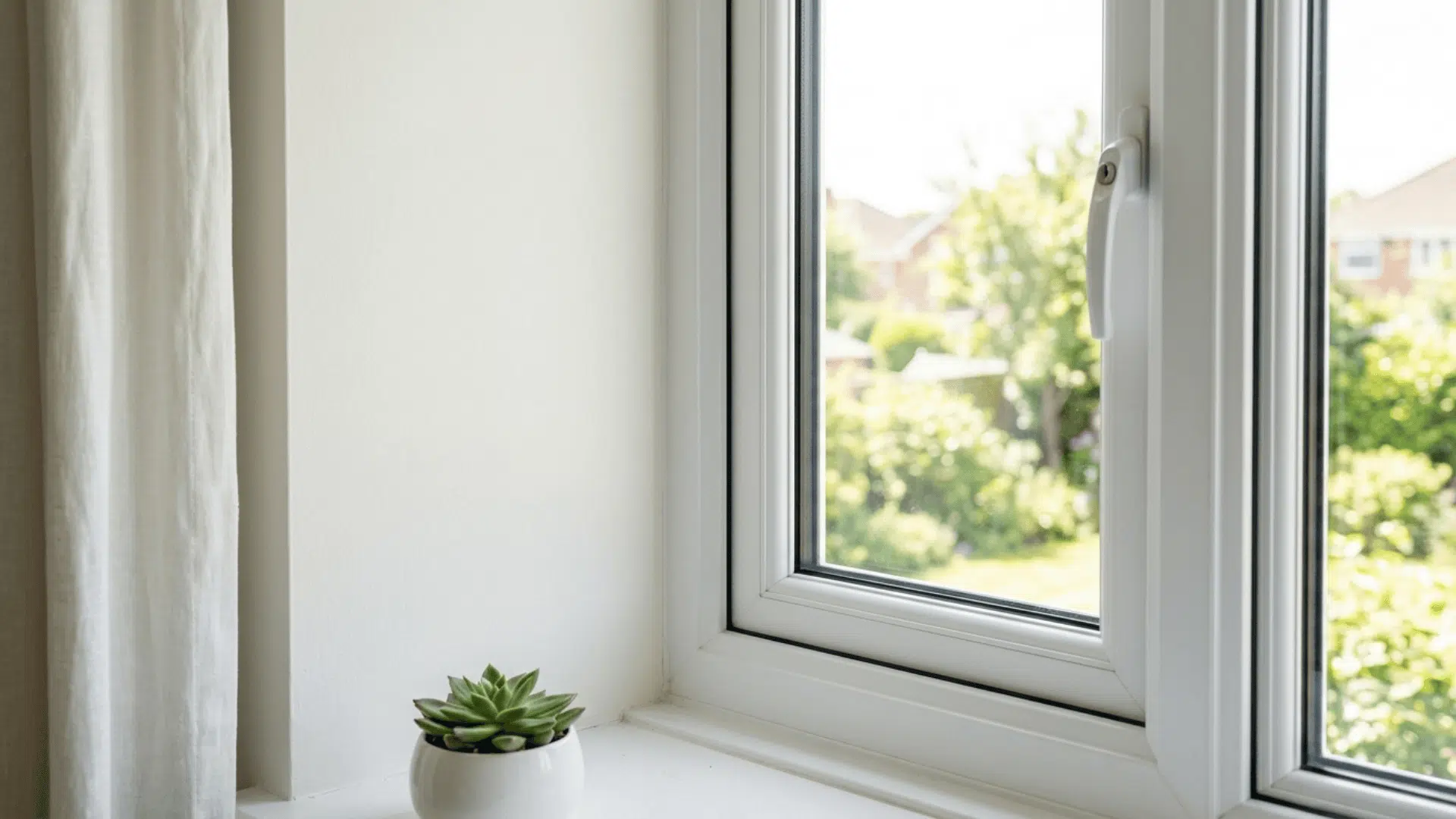
Casement windows are hinged on the side and open outward with a handle mechanism. This design provides a tight seal when closed, making them effective for both insulation and airflow control.
They are widely used in homes and office spaces where ventilation and weather resistance are key concerns. Many manufacturers offer single and double-casement options depending on the opening size.
3. Tilt and Turn PVC Windows

Tilt-and-turn windows offer two opening modes: a tilt position for controlled ventilation and a full inward turn for complete opening.
This dual function makes them a preferred choice in premium residential and commercial projects.
The inward opening also makes cleaning the outer glass surface straightforward from inside the room. Suppliers often position this type as a higher-specification option within their product range.
4. Fixed PVC Windows

Fixed windows do not open and are designed purely to allow natural light into a space.
They are commonly installed in areas where ventilation is handled separately through other window types or mechanical systems.
Because they have no moving parts, fixed PVC windows tend to have a longer trouble-free service life. They are frequently used in combination with casement or sliding units to create larger window arrangements.
5. Combination PVC Windows

Combination windows bring together fixed, sliding, or casement panels within a single frame unit. This design allows builders to create customized configurations that balance light, airflow, and space requirements.
Across varied project types, combination units are used where a single window type does not meet all requirements. Manufacturers typically offer these as configurable options with multiple panel arrangements available.
PVC Windows Vs Other Window Materials
Selecting the right window material depends on cost, performance, and project requirements. The table below compares PVC, aluminum, and wooden windows across key criteria.
| Feature | PVC Windows | Aluminum Windows | Wooden Windows |
|---|---|---|---|
| Cost | Moderate | Moderate to High | High |
| Maintenance Required | Very Low | Low | High |
| Thermal Insulation | High | Medium | High |
| Sound Insulation | High | Medium | Medium |
| Durability | High | High | Medium |
| Weather Resistance | Strong | Strong | Moderate |
| Moisture Resistance | Excellent | Good | Poor |
| Corrosion Risk | None | Low | High |
| Customization Options | Standard + Custom | Standard + Custom | Mostly Custom |
| Installation Complexity | Moderate | Moderate | High |
| Lifespan | 20 to 30 Years | 20 to 25 Years | 10 to 15 Years |
Choosing the Right Manufacturer and Installation Process
Selecting a good PVC window manufacturer starts with checking the quality of the materials, the frame reinforcement, and the available certifications.
- Buyers should consider customization options, delivery timelines, and whether installation support is included in the overall package.
- The installation process begins with precise on-site measurements of each window opening, followed by manufacturing the units to the required dimensions.
- Once delivered, trained installers fit the frames, apply proper sealing around the edges, and test all hardware for correct functionality.
- The overall timeline varies depending on order size and design complexity.
Working with an established supplier ensures the process runs efficiently and the final result meets both functional and structural requirements.
Common Problems and Maintenance Tips for PVC Windows
These windows require minimal upkeep, but certain issues can develop over time without basic care. Addressing these early helps retain their efficiency and extend the overall service life.
- Condensation Buildup: Forms between panes when double-pane seals fail or deteriorate, reducing visibility and overall insulation performance
- Track Dirt Accumulation: Debris in sliding tracks restricts smooth movement and puts strain on the mechanism
- Hardware Loosening: Handles and hinges loosen gradually and need periodic tightening or replacement
- Blocked Drainage Holes: Clogged drainage points trap water inside frames, leading to potential moisture damage
- Locking System Wear: Regular inspection of locks and latches ensures continued security and smooth daily operation
The Bottom Line
PVC windows remain one of the most practical and cost-effective choices for new builds and renovation work.
From sliding and casement styles to tilt-and-turn configurations, manufacturers offer a wide range of options to suit different layouts and performance needs.
Selecting the Proper type, manufacturer, and installation directly impacts window performance longevity and installation quality.
For anyone planning a new build or renovation, taking time to evaluate available PVC window options and the credentials of suppliers is a step worth prioritizing.

Holding a Master’s in Construction Management from Purdue University, William Ray has dedicated more than two decades to studying and applying construction principles. His professional journey includes a tenure with a prominent construction firm, where he specialized in project management and building technologies. William brought his knowledge to our team, providing in-depth insights into practical construction techniques. As the leader of our beginner’s guide to building since 2019, he has a knack for breaking down intricate processes into easily digestible content. When not involved in writing or onsite consultations, William enjoys woodworking and volunteering in community building projects, which aligns with his passion for hands-on construction and community service.