
Choosing between an apron sink and a farmhouse sink can feel confusing because the two look almost the same at first glance.
Today, I’ll walk you through the small but important details that set them apart, including how each one fits into different kitchen styles, what they’re like to live with every day, and the things most people don’t learn until after installation.
I’ll also highlight practical tips that help you decide what works best for your space and your routine. Before we get into materials, care, and long-term use, let’s start with the basics.
Apron Sink vs. Farmhouse Sink: Key Differences
Apron sinks and farmhouse sinks look similar, but they aren’t the same. Here’s a quick breakdown of the key differences:
| Feature | Apron Sink | Farmhouse Sink |
|---|---|---|
| Category | A broad sink style with an exposed front panel | A classic style within the apron sink category |
| Design Look | Works with modern, transitional, or traditional kitchens | Best suited for traditional or rustic kitchens |
| Basin Depth | Comes in shallow, medium, and deep options | Usually deep and wide for handling large cookware |
| Materials | Stainless steel, copper, composite, engineered stone, and more | Commonly fireclay or cast iron, with some newer options |
| Installation | More flexible with standard and custom cabinets | Often needs cabinet modification or reinforced support |
| Cost Range | Wider range due to varied materials | Higher on average because of size and material |
| Durability | Varies by material | Very strong, especially fireclay and cast iron |
| Best For | Homeowners wanting design variety | Homeowners wanting a more traditional kitchen feel |
What is a Farmhouse Sink?

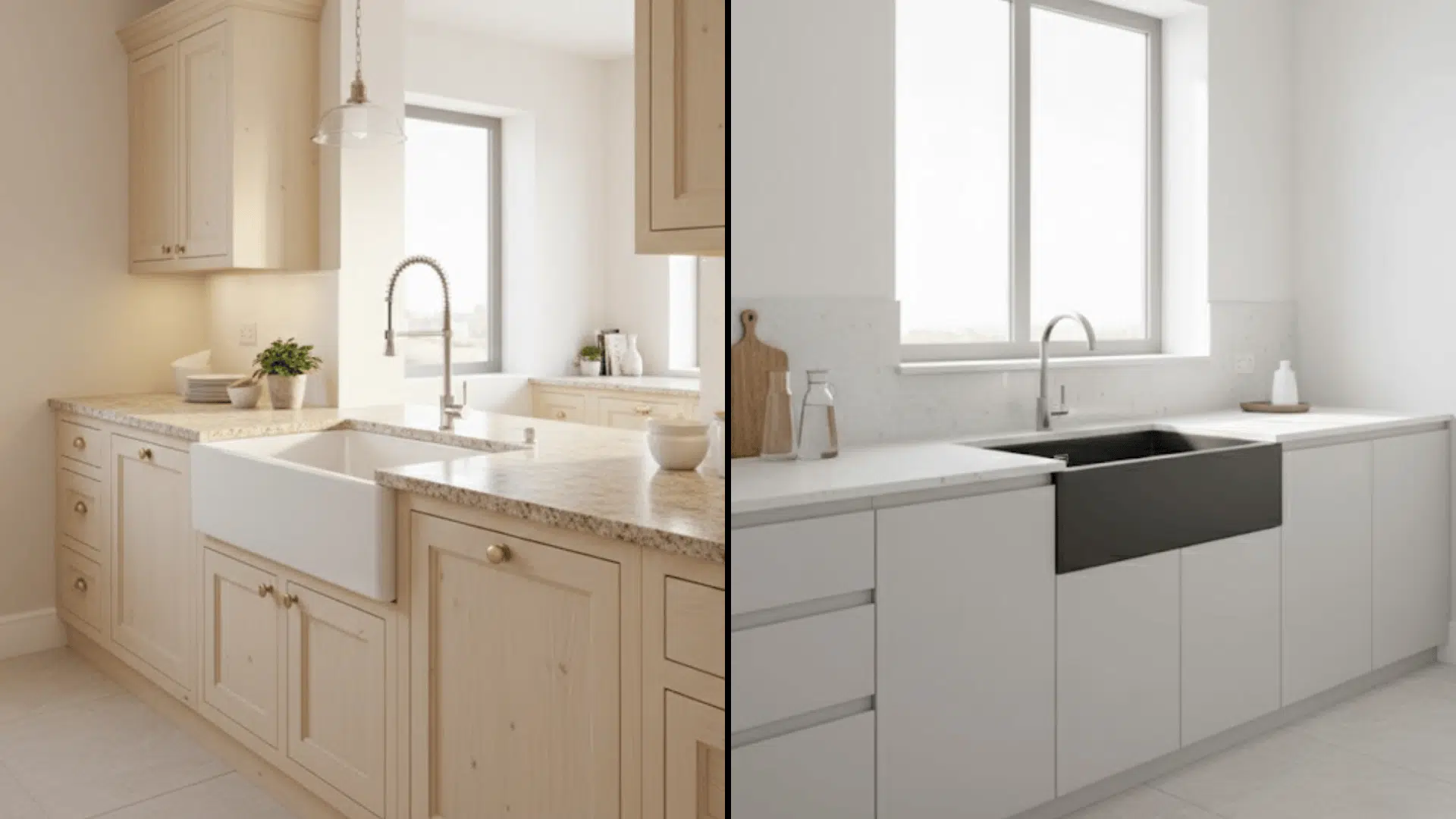
A farmhouse sink is a subset of apron sinks, sharing the same exposed front design. The difference is in the softer, more classic details that define its style.
A farmhouse sink features a deep, wide basin that extends past the cabinet frame. This design brings you closer to the sink and makes daily tasks feel easier. It also provides extra room for large pots, pans, and baking sheets.
These sinks are most often made from fireclay or cast iron, both strong materials. Fireclay offers a glossy, durable finish that resists stains and heat. Cast iron gives a classic enamel look and long-lasting strength.
What is an Apron Sink?

An apron sink has a front panel that stays visible after installation. This exposed front replaces the cabinet face and creates a bold look. It also brings you closer to the basin for easier daily use.
An apron sink is defined by its deep, wide bowl and extended front edge. This design gives you more room for washing and prepping large items. It also feels more comfortable because you don’t lean over the counter.
These sinks come in fireclay, cast iron, stainless steel, copper, and composites. Each material offers a different level of strength, shine, and upkeep. This makes it easy to match your sink to your kitchen style and needs.
Sizes usually range from 30 to 36 inches, with other options available. Traditional styles have soft curves, while modern ones use clean lines.
Comparing Farmhouse and Apron Sink
Choosing between a farmhouse sink and an apron sink depends on how you want your kitchen to look, feel, and function. These sections break down the differences so you can make the choice with confidence:
1. Design & Style Differences
Farmhouse sinks lean toward a softer, traditional look with rounded edges and a smooth front. They pair naturally with cabinets that include warm finishes or classic detailing, making them a good fit for kitchens with a more familiar or heritage-inspired feel.
Apron sinks offer a wider range of looks, especially for homeowners who want more design flexibility. Options such as fluted fronts, metal panels, flat faces, or textured finishes allow them to blend into modern, transitional, or custom kitchen styles without feeling tied to one design era.
2. Basin Depth & Width
Farmhouse sinks often lean deeper overall, which helps if you cook often and want extra room inside the bowl. The added height supports busy meal prep without feeling cramped and works well in kitchens that prioritize function over compact layouts.
Apron sinks come in more depth options, giving you greater control over how the sink fits your cabinet height and workflow. Shallower versions work well in contemporary spaces or for homeowners who prefer a sink that feels easier to manage and clean.
3. Material Options
Farmhouse sinks typically rely on heavier, traditional materials, which support their classic look and long lifespan. These materials keep the front panel smooth and consistent, reinforcing the style most homeowners expect when choosing this sink type.
Apron sinks expand your material choices, making it easier to match the sink to your kitchen’s finish, weight needs, or upkeep preferences. This flexibility works well in remodels where the sink must coordinate with hardware, appliances, or modern cabinet colors.
4. Installation Requirements
Installation comes down to how much cabinet and countertop work each sink needs. Farmhouse sinks usually require more precise shaping, while apron sinks offer options that fit better into remodels.
Cabinet Structure
Farmhouse sinks often need the cabinet opening reshaped so the sink sits cleanly in place. The front section must be cut to match the sink’s exposed face, and the base adjusted so the sink aligns properly with the surrounding cabinetry.
Apron sinks can fit into existing cabinets more easily, especially when they’re designed for updates. These models reduce the amount of trimming needed and make it simpler to keep the original cabinet layout.
Retrofits
Farmhouse sinks don’t usually come in retrofit styles, so replacing a standard sink with one often requires altering the cabinet’s front rail and opening.
Apron sinks with retrofit designs work well for swaps because their thinner or adjustable fronts slide into a wider range of cabinet styles without major changes.
Plumbing Changes
Farmhouse sinks may require small plumbing adjustments because the bowl often sits lower than a standard setup, which can change the drain height needed for proper flow.
Apron sinks may need similar adjustments, but retrofit-friendly designs usually make it easier to reposition the drain or trap without major rework.
Countertop Considerations
Farmhouse sinks require the countertop to be cut precisely around the front face since it remains visible after installation.
Apron sinks give you more reveal choices, letting you match the countertop edge style without the strict front-edge cut that farmhouse designs require.
Cost Differences Between Farmhouse and Apron Sinks
Here’s a quick look at what you can expect to spend in the U.S. Farmhouse sinks usually cost more because they’re heavier and need extra work. Apron sinks offer a wider range of prices and are easier to install.
Farmhouse Sink Costs
- Sink price: $600–$1,400 for fireclay or cast iron; $200–$1,500 for stainless; $1,500–$3,500+ for premium materials
- Installation: $300–$1,500, depending on cabinet rebuilds and countertop work
- Cabinet changes: Often required for support and depth
- Total cost: $500–$5,000+ depending on size, weight, and labor
Apron Sink Costs
- Sink price: $250–$800 for stainless or composite; $600–$1,500 for mid-range materials; $1,500+ for specialty fronts
- Installation: $200–$800 for most setups
- Cabinet changes: Sometimes needed but usually minimal
- Total cost: Moderate range, varies by material and design
These ranges help you plan for the full budget, not just the sink itself. Farmhouse sinks cost more overall, while apron sinks offer more flexibility and easier installation.
Alternatives to Farmhouse and Apron Sinks
There are plenty of sink styles that offer different looks and features depending on your kitchen needs. If a farmhouse or apron sink doesn’t feel right, these choices may fit your space better.
1. Drop-In Farmhouse

A drop-in farmhouse sink gives you a farmhouse-style look but with a quicker and simpler install. The sink rests on top of the counter, so it often fits standard cabinets without major changes. This makes it a good choice for remodels.
The rim, however, can collect water and crumbs, which means more cleaning. It also doesn’t look as seamless as a true apron-front sink. Style options are improving, but are still more limited compared to full farmhouse sinks.
2. Standard Top-Mount

A standard top-mount sink is one of the easiest and most budget-friendly options. It fits almost any countertop and works well for rental homes, starter kitchens, or quick upgrades.
The raised rim can trap water and food, making the edges harder to clean. It also lacks the bold look of apron or farmhouse styles. Still, it offers dependability and simple installation, which many homeowners appreciate.
3. Workstation Sinks

A workstation sink includes built-in ledges that hold tools like cutting boards, strainers, drying racks, and trays. These features help you save counter space and create a more organized cooking setup.
Workstation sinks tend to cost more because of the added accessories and heavier design. They can also feel overwhelming if you prefer a simple, open sink area. But for cooks who prep often, they offer unmatched convenience.
Material Strength and Upkeep: Fireclay vs. Stainless
The durability of a sink depends on the material and how it handles daily use. Here’s a quick look at how fireclay and stainless steel compare in long-term care and upkeep:
| Category | Fireclay Sinks | Stainless Steel Sinks |
|---|---|---|
| Durability | Very strong and resistant to heat and daily use; can chip if hit with heavy cookware. | Durable and long-lasting; may show dents or surface wear over time. |
| Scratching | Surface stays smooth and resists scratches well. | More prone to visible scratches, especially in thinner gauges. |
| Soundproofing Undercoats | Usually does not include sound-dampening layers. | Often includes undercoating or pads to reduce noise and vibration. |
| Cleaning Routine | Clean with mild soap and a soft cloth; avoid abrasive cleaners. | Wipe daily to prevent water spots; use gentle cleaners to protect the finish. |
| Preventing Stains & Chips | Avoid dropping heavy items; gentle care prevents chipping and stains. | Use soft sponges; avoid harsh chemicals to reduce spotting and scratches. |
| How Long Do They Last | It can last several decades with proper care. | Many years of reliable use, especially with thicker, high-quality steel. |
How to Choose the Right Sink for Your Kitchen
Choosing the right sink comes down to how your kitchen looks, how much space you have, and what you use the sink for each day. These points help you narrow your choices with less guesswork.
- Kitchen Style: Modern kitchens pair well with straight-front apron sinks or stainless options, while traditional spaces often look more balanced with curved farmhouse designs in fireclay or cast iron.
- Kitchen Size: Smaller kitchens benefit from compact or single-bowl sinks that save counter space. Larger kitchens can handle deeper farmhouse bowls that work well for frequent cooking.
- Household Use: Busy households often need wider, deeper sinks. Smaller homes or individuals may prefer designs that are easier to clean and maintain.
- Cleaning Preferences: Stainless steel is simple to wipe and care for. Fireclay keeps a smooth surface that stays durable with regular upkeep.
As you look at your layout and daily habits, choose the sink that supports your routine instead of working against it.
Conclusion
Choosing between an apron sink vs. a farmhouse sink comes down to how you cook, clean, and move through your kitchen each day.
The right choice often becomes clear when you focus on comfort, cabinet setup, and the material you’re willing to maintain long-term.
Both styles bring strong design impact, but the best fit is the one that supports your daily habits without extra effort or upgrades you didn’t plan for.
Take a moment to picture how you use your sink now and what would make that easier. When you’re ready, start comparing options for your space and move one step closer to a kitchen that works better for you.

With a Master’s in Architecture from the University of California, Berkeley, Mitchell Green has spent over two decades dedicated to the study and practical application of home fixture design. His career started in an architectural firm, providing him a strong foundation in the structural and aesthetic aspects of home interiors. Mitchell brought his comprehensive knowledge to our platform, where he has been an influential voice in our home fixtures and fittings section. Since 2018, he has been guiding our readers through the intricacies of selecting and installing fixtures, combining technical know-how with design flair. In his spare time, Mitchell is a keen photographer, capturing architectural details and design elements, an interest that complements his professional focus.