
Tearing out old tile is messy, time-consuming, and honestly, something most people would rather skip altogether.
That is where the question comes up: Can you put vinyl flooring over tile? And the good news is, in most cases, yes, you can.
Vinyl flooring is one of the few options that can go directly over existing tile without a full demo, saving both time and money.
But it is not as simple as just laying it down and calling it done; a few things need to be checked first. This guide covers everything, from surface prep to installation, in simple, clear steps.
What is Vinyl Flooring?
Vinyl flooring is a popular synthetic flooring option made from layers of PVC (polyvinyl chloride). It is designed to look like natural materials such as wood, stone, or tile, but at a more affordable cost.
This type of flooring is known for its water resistance, durability, and ease of maintenance, making it a practical choice for busy homes.
It comes in different forms, including luxury vinyl planks (LVP), luxury vinyl tiles (LVT), and sheet vinyl.
Each option offers flexibility in design and installation. Vinyl flooring is also softer underfoot compared to hard surfaces, which adds comfort.
Its low upkeep and wide range of styles make it a go-to option for many residents.
Can you Put Vinyl Flooring Over Tile?

Yes, vinyl flooring can be installed over tile in many situations, making it a convenient way to update your floors without removing the existing surface.
However, the condition of the tile plays a big role in the final result. The tiles should be smooth, level, and firmly in place. Any cracks, loose tiles, or deep grout lines can affect how the vinyl looks and performs over time.
When It Works Best:
- Tiles are flat and even
- No cracks or loose pieces
- Grout lines are shallow
- Surface is clean and dry
- No moisture issues underneath the tile
When It’s Not Ideal:
- Uneven or broken tiles
- Deep grout lines
- Moisture problems
- Height issues near doors
Advantages Vs Disadvantages of Installing Vinyl Over Tile
Installing vinyl over tile can be a smart shortcut, but it comes with a few trade-offs. Here’s a quick look at the key pros and cons to help you decide.
| Advantages | Disadvantages |
|---|---|
| No tile removal needed, which saves time, labor, and avoids demolition mess | Uneven tiles may show through and affect the final look |
| Faster installation since the existing tile acts as a ready base | Grout lines can become visible, especially with thin vinyl |
| More budget-friendly as it reduces labor and disposal costs | Floor height increases and may impact doors and transitions |
| Less mess and dust because there is no breaking or hauling tiles | Proper surface prep is required, or it can cause adhesion issues |
| Keeps the original tile intact, which is useful if you want to revert later | Repairs are harder later if problems occur underneath |
| Works with many vinyl types, and thicker options help hide minor flaws | Moisture can get trapped and affect long-term durability |
How To Prepare Tile Before Installing Vinyl
Proper preparation ensures a smooth finish and helps your vinyl flooring last longer without issues.
- Clean the surface thoroughly: Remove all dirt, grease, dust, and any old residue so the vinyl adheres properly and stays in place over time
- Fill grout lines evenly: Use a floor leveling compound to smooth out grout lines and create a flat surface that prevents lines from showing through
- Fix any damaged tiles: Repair, secure, or replace cracked and loose tiles to ensure the base is strong and stable before installation
- Check for level and smoothness: Sand high spots and use a leveler where needed to create an even surface for better results
- Allow the surface to dry completely: Make sure there is no moisture trapped, as it can weaken the adhesive and cause lifting later
Best Types of Vinyl Flooring for Tile Surfaces
Not all vinyl flooring performs the same over tile. Choosing the right type can help hide imperfections and give a smoother, longer-lasting finish.
1. Luxury Vinyl Plank (LVP)

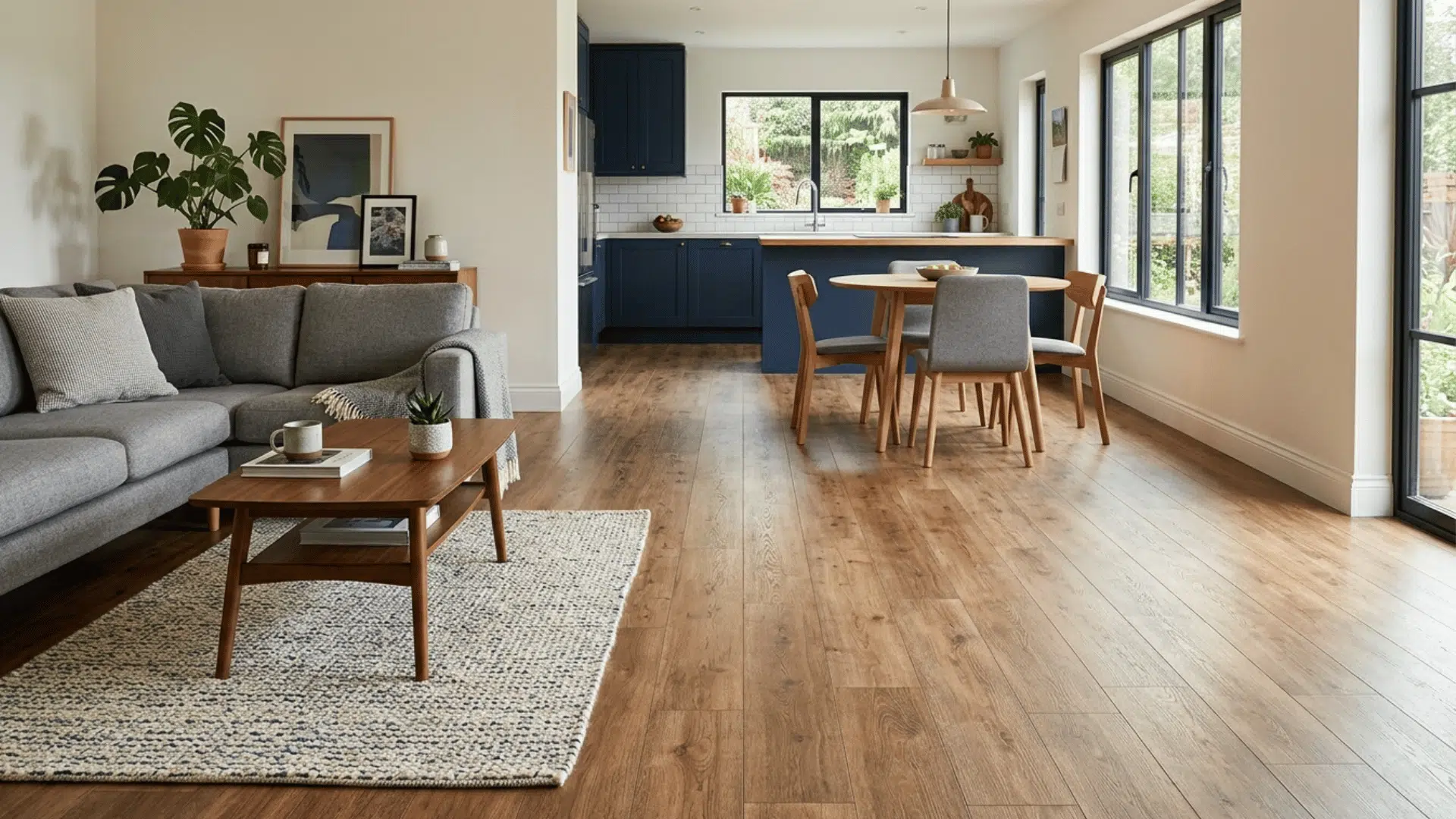
Luxury Vinyl Plank (LVP) is a popular choice for installing over tile because it offers strength and better coverage of minor flaws.
- Thick and durable: Designed with multiple layers, making it strong enough to handle daily wear, foot traffic, and long-term use
- Covers small imperfections well: Its thickness helps smooth out minor uneven spots and reduces the visibility of grout lines underneath
- Great for living areas and bedrooms: Provides a comfortable feel underfoot and works well in spaces where both durability and comfort matter
2. Luxury Vinyl Tile (LVT)

Luxury vinyl tile offers the look of real tile with easier installation and better comfort underfoot.
- Looks like real tile: Designed to mimic ceramic or stone tile, giving a similar look without the high cost
- Works best on flat surfaces: Performs well when the tile underneath is smooth and even, as imperfections can show through
- Water-resistant material: Handles moisture well, making it suitable for kitchens, bathrooms, and laundry areas
- Low maintenance option: Easy to clean and maintain, requiring only regular sweeping and occasional mopping
3. Sheet Vinyl

Sheet vinyl is a good option for a clean, uniform floor, especially in areas where a smooth look is preferred.
- Smooth and smooth look: Comes in large rolls, creating a clean finish with fewer visible seams
- Needs a very even base: Requires a perfectly level surface since bumps and grout lines can easily show through
- Water-resistant surface: Helps protect against spills and moisture, making it suitable for kitchens and bathrooms
4. Peel-And-Stick Vinyl

Peel-and-stick vinyl is a simple, budget-friendly option ideal for quick updates without professional help.
- Easy to install: Simple application makes it a popular choice for quick DIY updates
- Requires a perfectly smooth surface: Any unevenness or debris underneath can affect adhesion and final appearance
- Budget-friendly option: Usually more affordable than other vinyl types, making it great for low-cost projects
- Quick replacement: Individual tiles can be removed and replaced easily if damaged
- Best for low-traffic areas: Works well in spaces like laundry rooms or guest areas where wear is minimal
5. Rigid Core Vinyl (SPC/WPC)

Rigid core vinyl is a strong and stable option that performs well over tile, even if the surface has minor flaws.
- Highly durable structure: Built with a rigid core that resists dents, scratches, and heavy foot traffic
- Handles slight unevenness better: Strong core helps reduce the impact of minor tile imperfections
- Water-resistant design: Suitable for moisture-prone areas like kitchens, bathrooms, and basements
- Easy click-lock installation: Often comes with a floating floor system that simplifies installation over tile
Cost Comparison: Tile Removal Vs Installing Over Tile
Choosing between removing tile and installing over it often comes down to cost, time, and effort. Here’s a simple comparison to help you decide.
| Factor | Removing Tile | Installing Over Tile |
|---|---|---|
| Labor Cost | Higher due to demolition work | Lower since no removal is needed |
| Time Required | Takes longer due to breaking and cleanup | Faster installation process |
| Disposal Cost | Extra cost for hauling and dumping debris | No disposal cost is involved |
| Preparation Work | May need subfloor repairs after removal | Requires surface leveling and prep |
| Overall Cost | More expensive overall | More budget-friendly option |
Simple Installation Tips for Better Results
A few small tips can help you get a cleaner, more professional-looking finish.
- Choose thicker vinyl for better coverage, as it helps hide minor imperfections and creates a smoother overall appearance
- Use underlayment if needed to improve comfort, reduce noise, and help even out slight surface flaws
- Test a small section first so you can check how the vinyl looks and fits before installing the entire floor
- Follow product instructions carefully to ensure proper installation and better long-term performance
- Leave space for expansion around edges to prevent buckling or damage over time
Conclusion
Vinyl flooring over tile can be a smart and practical way to refresh your space without a full renovation. It helps save time, reduce mess, and keep overall costs lower compared to removing old tiles.
However, the condition of the existing tile plays a key role in how the final result turns out. A smooth, level surface ensures better performance and appearance.
With proper preparation and the right type of vinyl, the flooring can look neat and last for many years. Spending a little extra time on surface prep can make a big difference in achieving a clean, long-lasting finish.

Tommy Hardy, an alumnus of the Georgia Institute of Technology with a degree in Mechanical Engineering, has been a go-to figure in residential upkeep and innovation for over 18 years. His career commenced in a leading home appliance manufacturing company, where he mastered the intricacies of household systems. Joining our platform in 2020, Tommy quickly became a reader favorite for his practical and easy-to-follow guides. He took the helm of our DIY section in 2019, consistently delivering content that empowers homeowners. Beyond his professional pursuits, Tommy is a passionate gardener and enjoys woodworking, skills enhancing his hands-on approach to home care.