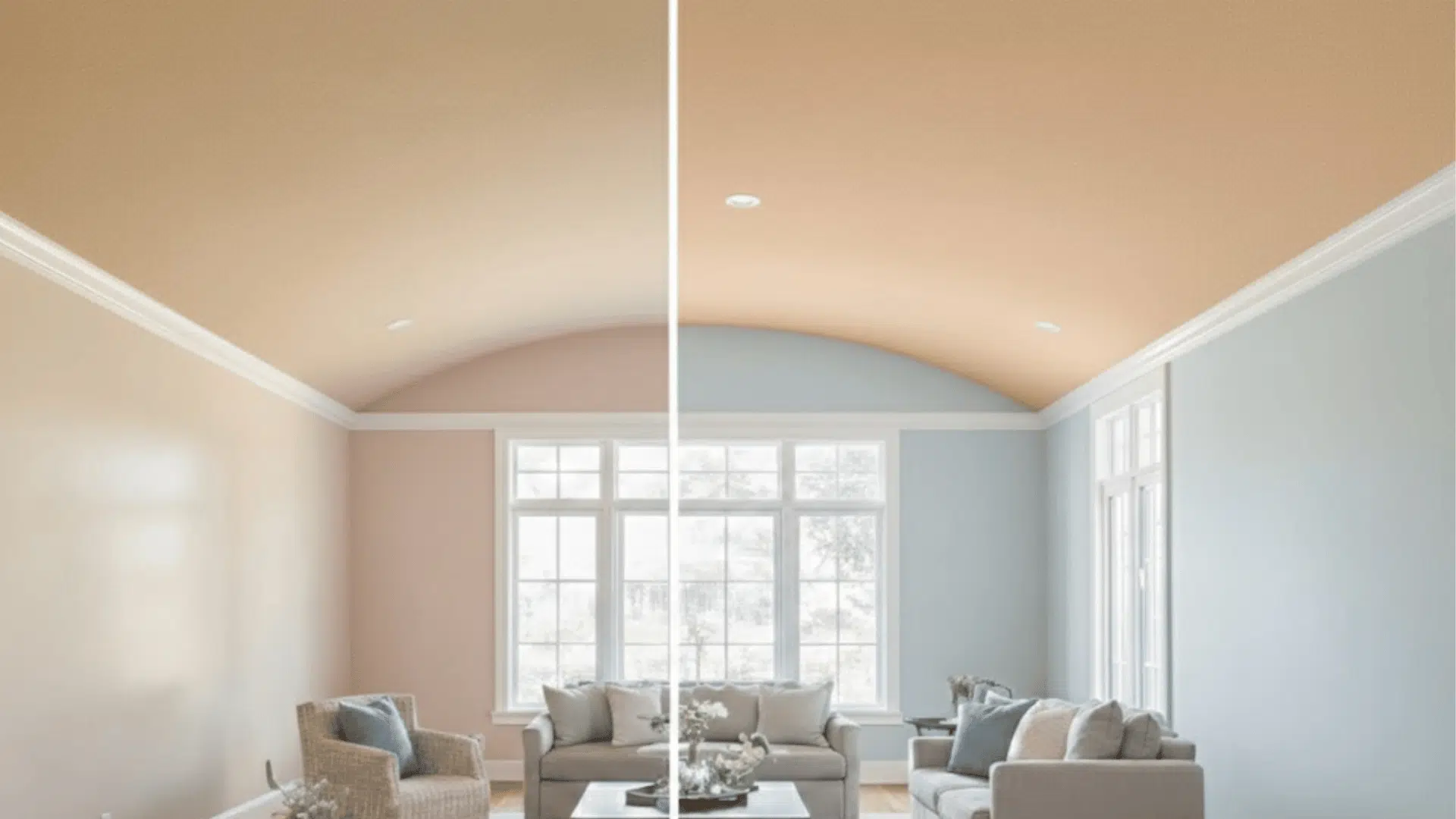

Standing in the paint aisle often raises one common question: Is ceiling paint really different from wall paint?
At first glance, both products may seem similar. However, their composition, finish, and purpose are not the same. Using the wrong type can affect coverage, durability, and the final look of a room.
This blog breaks down ceiling paint vs. wall paint in simple terms. It explains the differences in application and performance, so the right choice becomes clear for any painting project.
What is Ceiling Paint?

Before comparing ceiling paint vs wall paint, it helps to understand what ceiling paint is made for.
Ceiling paint is specially designed for overhead surfaces.
Since ceilings are harder to reach and more likely to drip during application, this paint is formulated to make the job easier and cleaner.
Composition of Ceiling Paint
Ceiling paint has a different formula than wall paint. Its thickness and finish are designed to control drips and improve coverage.
- Thicker Consistency: Ceiling paint is thicker than wall paint. This helps it stay in place instead of running down the roller.
- Higher Viscosity Formula: The heavier texture reduces dripping, which is especially helpful when painting above your head.
- Drip-Resistant Design: Most ceiling paints are made to limit splatter and mess during application.
- Flat or Matte Base: The formula usually dries with no shine, helping conceal bumps and uneven areas.
Purpose of Ceiling Paint
Ceiling paint is created with a specific job in mind. It focuses on coverage, flaw control, and a smooth overhead finish.
- Made for Overhead Surfaces: It is designed specifically for ceilings, where gravity can cause thinner paints to drip.
- Hides Surface Imperfections: The flat finish helps mask cracks, patches, and minor texture flaws.
- Reduces Light Reflection: A non-shiny surface prevents glare from lights and windows.
- Minimizes Roller Marks: The thicker texture helps create more even coverage.
Typical Finish Options
Ceiling paint does not come in as many finish choices as wall paint. Most options focus on keeping the surface flat and simple.
- Flat Finish Is Most Common: Most ceiling paints come only in flat because shine highlights flaws. The flat surface helps create a smooth, even look without drawing attention overhead.
- Limited Color Range: Ceiling paint is usually available in white or off-white shades.
- Color Changing Options Available: Some brands offer light pink or blue formulas that dry white to help track coverage.
What is Wall Paint?

Before comparing ceiling paint vs wall paint, it helps to understand what wall paint is made for.
Wall paint is designed for vertical surfaces that get daily use. It focuses on color, durability, and cleanability. Unlike ceiling paint, it needs to handle touch, stains, and regular cleaning.
Composition of Wall Paint
Wall paint is formulated for smooth application and long-term durability.
- Smoother Consistency: Wall paint has a thinner texture than ceiling paint, making it easier to spread evenly across large wall areas.
- Balanced Viscosity: It is thick enough to prevent heavy drips but smooth enough for controlled rolling and brushing.
- Durability Additives: Many wall paints include resins and binders that improve strength and long-term performance.
- Stain And Scrub Resistance: Some formulas include washable or scrubbable technology for easy cleaning.
Purpose of Wall Paint
Wall paint focuses on both appearance and performance.
- Adds Decorative Color: Wall paint is available in thousands of shades to match different room styles. This allows more flexibility when designing or updating a space.
- Handles Daily Wear: Designed for high-traffic areas like hallways, kitchens, and living rooms. It resists scuffs, fingerprints, and minor surface damage.
- Creates a Washable Surface: Most finishes allow light cleaning without damaging the paint. This makes maintenance easier over time.
- Improves Room Appearance: Different finishes help control light reflection and overall room feel. The right sheen can make a room look brighter or softer.
Common Finish Types
Wall paint comes in several finish options to suit different needs. Each finish affects how shiny the surface looks and how easy it is to clean.
- Matte Finish: Soft, low-shine finish. Good for low-traffic rooms. It helps hide small wall imperfections, but it is harder to clean.
- Eggshell Finish: Slight sheen with better durability than matte. It offers a balance between appearance and easy maintenance.
- Satin Finish: Smooth and easy to clean. Popular for family spaces. It works well in living rooms, bedrooms, and hallways.
- Semi Gloss Finish: Noticeable shine. Often used on trim and kitchens. It stands up well to moisture and frequent wiping.
- Gloss Finish: Very shiny and highly durable. Best for doors and accents. It highlights details but can also show surface flaws.
Quick Comparison Table: Ceiling Paint vs. Wall Paint
Understanding the differences helps in choosing the right product for better results and longer-lasting coverage. Below is a simple comparison table that breaks down the key differences.
| Feature | Ceiling Paint | Wall Paint |
|---|---|---|
| Thickness | Thicker formula with higher viscosity to reduce drips when painting overhead | Smoother and slightly thinner for easy rolling on vertical surfaces |
| Splatter Control | Designed to minimize splatter and dripping | May drip more when used overhead |
| Finish | Usually flat or matte only | Available in matte, eggshell, satin, semi-gloss, and gloss |
| Durability | Not made for frequent cleaning or scrubbing | Built to handle daily wear, stains, and washing |
| Coverage | Focuses on hiding stains and imperfections | Focuses on rich color and smooth decorative finish |
| Color Options | Limited to white and light tones | Wide range of colors and custom shades |
| Application Method | Best for overhead rolling with thick nap rollers | Designed for vertical rolling and brushing |
| Best Use Case | Ceilings and low-touch surfaces | Walls in living spaces, kitchens, bedrooms, and hallways |
Which Paint Should You Choose for Your Project?
The right choice depends on where and how the paint will be used. When comparing ceiling paint vs wall paint, think about finish, durability, and ease of application.
Each type is made for a specific purpose, so choosing correctly helps avoid future repainting.
Choose Ceiling Paint If
Ceiling paint is the better choice when painting large ceilings or overhead areas where drips can become a problem. Its thicker formula helps control splatter and provides smoother coverage above your head.
If a flat, no-shine look is important and you want to hide small surface flaws, ceiling paint is usually the right option.
Choose Wall Paint If
Wall paint works best on surfaces that are touched, cleaned, and seen up close every day. It offers more color choices and comes in multiple finishes that handle washing and daily wear.
For high-traffic rooms like hallways, kitchens, and living areas, wall paint provides better durability and design flexibility.
Cost Comparison: Ceiling Paint vs. Wall Paint
Price is another factor to consider when choosing between the two. While both products may look similar on the shelf, their cost and long-term value can differ.
| Category | Ceiling Paint | Wall Paint |
|---|---|---|
| Average Price Per Gallon | $15 to $35 per gallon | $25 to $70 per gallon |
| Budget Brands | Around $15 to $25 | Around $25 to $40 |
| Mid Range Brands | Around $25 to $35 | Around $40 to $55 |
| Premium Brands | Limited premium options | $55 to $70 or more |
| Coverage Per Gallon | 350 to 400 square feet | 350 to 400 square feet |
| Color Customization Cost | Usually standard white included | Custom tinting is often included but may cost more |
| Best Value For | Large ceilings with simple finish | Durable and decorative wall surfaces |
Conclusion
Understanding ceiling paint vs wall paint can save you time, money, and frustration. While both may look similar, they are designed for different surfaces and different purposes.
Ceiling paint is thicker, flat, and made to reduce drips overhead. Wall paint is more durable, washable, and available in many finishes and colors.
Choosing the right one depends on where you’re painting and how the surface will be used. When in doubt, use each product for its intended purpose for the best results.
Frequently Asked Questions
Can You Use Ceiling Paint on Walls?
Yes, but it may not hold up well in high-traffic areas since it is less durable and harder to clean.
Can You Use Wall Paint on Ceilings?
Yes, but it may cause more drips and unwanted shine if the finish is not flat.
Which Paint Lasts Longer, Ceiling or Wall Paint?
Wall paint typically lasts longer on surfaces that need regular cleaning and durability.

With a Master in Architectural Studies from University of Pennysylvania, Marwa Haydar has pioneered living spaces since 2005. Her expertise, initially honed in a prestigious architectural firm, is evident in her approach to creating environments. Marwa became part of our team in 2019 and has since been a driving force in our home improvement section, known for her practical yet stylish solutions. She’s been spearheading our design workshops since then, infusing her passion for teaching into her work. In her leisure time, Marwa enjoys exploring historic architecture and is an enthusiastic pottery hobbyist, further enriching her understanding of form and texture.