
Bathrooms are one of the most frequently used spaces in any building, which makes them prone to moisture buildup, germs, and visible residue.
Without a clear routine, dirt can accumulate quickly and turn simple upkeep into time-consuming work.
A structured bathroom cleaning checklist, combined with a realistic bathroom cleaning schedule, helps maintain hygiene while keeping cleaning tasks manageable.
Instead of reacting to messes, a planned system ensures that surfaces, fixtures, and floors stay clean through regular care.
This approach supports consistency in homes, schools, and other shared spaces where cleanliness directly affects comfort and health.
Why is a Bathroom Cleaning Checklist Important to Keep?
Bathroom maintenance involves more than wiping visible surfaces.
High-touch points, hidden corners, ventilation, and restocking all play a role in keeping the space functional and sanitary.
Without a checklist, important steps can be missed, especially in busy households or high-traffic facilities.
A bathroom cleaning checklist helps standardize cleaning quality, improve accountability, and ensure that every task is completed at the right time.
Over time, this reduces odor issues, limits moisture damage, and keeps fixtures in better condition.
Daily Bathroom Cleaning Checklist
Daily cleaning focuses on prevention rather than deep scrubbing. Short, consistent actions help stop the buildup before it becomes difficult to remove.
Each day, the bathroom should be visually checked for spills, debris, or safety concerns.
Soap, paper products, and other essentials should be refilled as needed so users are never left without supplies.
High-touch areas such as door handles, flush handles, light switches, and dispenser buttons benefit from regular wiping.
Sink areas should be quickly cleaned to remove toothpaste splashes and water marks, while toilet seats and exterior contact areas should receive a brief wipe.
A quick pass over the floor to remove visible hair or debris helps keep the space presentable between deeper cleans.
| Task | ☐ |
|---|---|
| Inspect the bathroom for spills, debris, or safety issues | ☐ |
| Refill hand soap, toilet paper, and paper towels | ☐ |
| Wipe door handles, light switches, and flush handles | ☐ |
| Clean sink surface and faucet handles | ☐ |
| Wipe the toilet seat and exterior touch areas | ☐ |
| Remove visible hair or debris from the floor | ☐ |
Weekly Bathroom Cleaning Checklist
Weekly cleaning serves as the reset point between daily upkeep and deeper maintenance.
It focuses on restoring overall cleanliness across fixtures, surfaces, and floors rather than quick touch-ups.
This level of cleaning helps control residue from regular use, limits odor sources, and supports hygiene in shared spaces.
Following a weekly rhythm also makes monthly and seasonal tasks easier, as buildup is less likely to harden or spread.
Using a checklist at this stage ensures consistency, especially when multiple bathrooms or cleaners are involved.
| Task | ☐ |
|---|---|
| Clean and disinfect the toilet (inside and outside) | ☐ |
| Wash sink, countertop, and faucet thoroughly | ☐ |
| Scrub the shower or bathtub walls and floor | ☐ |
| Clean mirrors and visible fixtures | ☐ |
| Check and clear sink and shower drains | ☐ |
| Sweep or vacuum the bathroom floor | ☐ |
| Mop floor, focusing on corners and edges | ☐ |
| Empty the trash bin and replace the liner | ☐ |
Monthly Bathroom Cleaning Checklist
Monthly bathroom cleaning addresses areas that tend to be skipped during routine care.
These tasks help manage moisture exposure, surface wear, and hidden buildup that develops gradually over time.
Monthly attention also supports early detection of leaks, ventilation issues, or storage problems that may not be obvious during weekly cleaning.
Pairing these tasks with a checklist helps maintain long-term surface condition and reduces the need for intensive deep cleaning later.
| Task | ☐ |
|---|---|
| Scrub grout lines and tile edges | ☐ |
| Wash the shower curtain and liner | ☐ |
| Wash bath mats and bathroom rugs | ☐ |
| Dust vents, light fixtures, and baseboards | ☐ |
| Wipe cabinet doors and drawer handles | ☐ |
| Organize cabinets and remove expired items | ☐ |
| Check under sinks and around the toilet base for moisture | ☐ |
Seasonal and Deep Cleaning Tasks
Seasonal bathroom maintenance focuses on preventive care rather than appearance alone.
These tasks support proper airflow, fixture performance, and hardware stability, particularly in high-use or shared bathrooms.
Performing deeper cleaning and inspections a few times a year helps extend the life of bathroom components and lowers the risk of unexpected repairs.
A checklist is especially useful at this stage to ensure nothing is missed when tasks are less frequent.
| Task | ☐ |
|---|---|
| Descalcify showerheads and faucets | ☐ |
| Clean the exhaust fan cover and the nearby vent areas | ☐ |
| Wash the trash can interior thoroughly | ☐ |
| Clean walls and hard-to-reach edges | ☐ |
| Inspect bathroom hardware for looseness or damage | ☐ |
| Reseal stone or specialty surfaces if required | ☐ |
| Review the overall condition for repairs or upgrades | ☐ |
Bathroom Cleaning Schedule
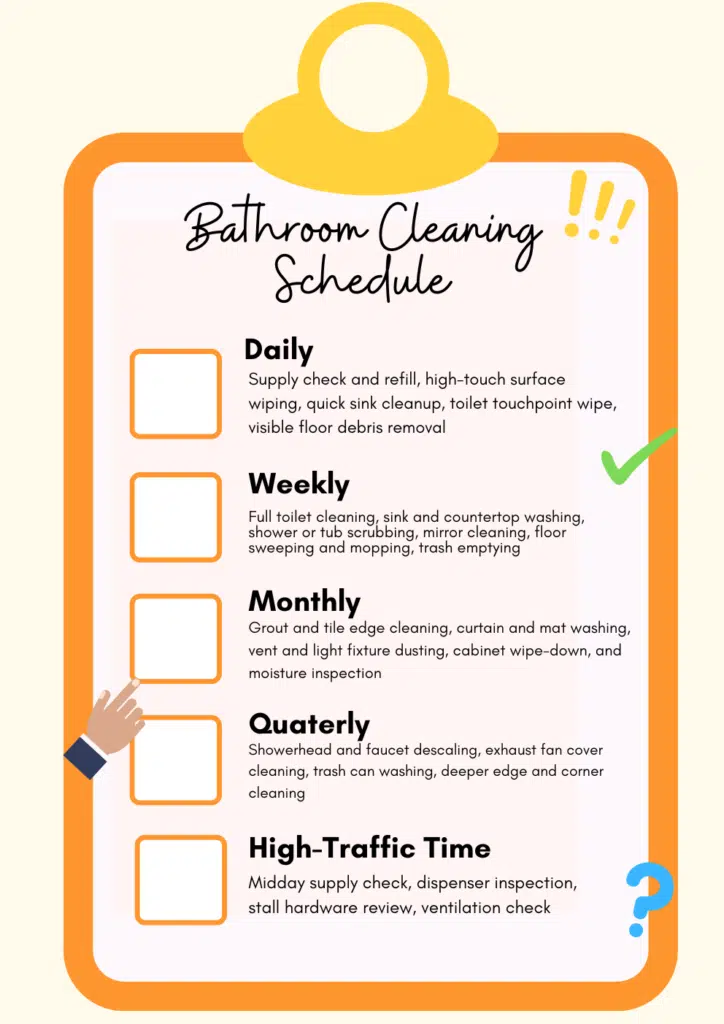
A bathroom cleaning schedule assigns clear timing to each task so nothing is forgotten. Daily care focuses on restocking, touchpoint cleaning, and quick surface wipes.
Weekly cleaning handles toilets, showers, mirrors, and floors. Monthly routines cover grout, vents, storage areas, and washable items.
Seasonal maintenance supports ventilation, fixture care, and inspections.
For school or high-traffic bathrooms, additional midday supply checks and regular hardware inspections help maintain usability throughout the day.
A schedule removes guesswork and ensures cleaning tasks stay consistent, even when multiple people share responsibility.
Essential Bathroom Cleaning Supplies
To maintain a hygienic environment, it is vital to have a specialized set of products ready for use. Having the correct inventory ensures that staff can perform deep cleaning efficiently while maintaining safety standards and preventing the spread of bacteria.
Core Cleaning Toolkit:
- Disinfectants: Solutions suitable for all restroom surfaces to kill germs.
- Toilet Cleaners: Specialized formulas for removing grime and mineral buildup.
- Glass Cleaners: Professional-grade sprays for mirrors and glass partitions.
- Floor Solutions: Concentrated liquids designed for sanitizing bathroom flooring.
- Microfiber Cloths: High-absorbency cloths for dust and liquid removal.
- Non-scratch Sponges: Abrasive tools that clean surfaces without leaving marks.
- Gloves: Protective gear to keep hands safe from harsh chemicals.
- Mops: Essential equipment for washing and drying large floor areas.
- Trash Liners: Durable bags for the sanitary disposal of restroom waste.
Conclusion
Keeping a bathroom clean is easy when you do a little bit every day.
By using these simple lists, you can stop germs from spreading and keep your bathroom looking brand new.
You won’t have to spend hours scrubbing if you follow a steady plan and use the right tools.
A clean bathroom makes a house feel healthy and happy for your family and guests.
It also helps your sinks and showers last a long time without breaking. We want to know what you think!
Do you have a special trick to keep your mirrors shiny? Please leave a comment below and tell us your favorite way to clean!

Tommy Hardy, an alumnus of the Georgia Institute of Technology with a degree in Mechanical Engineering, has been a go-to figure in residential upkeep and innovation for over 18 years. His career commenced in a leading home appliance manufacturing company, where he mastered the intricacies of household systems. Joining our platform in 2020, Tommy quickly became a reader favorite for his practical and easy-to-follow guides. He took the helm of our DIY section in 2019, consistently delivering content that empowers homeowners. Beyond his professional pursuits, Tommy is a passionate gardener and enjoys woodworking, skills enhancing his hands-on approach to home care.