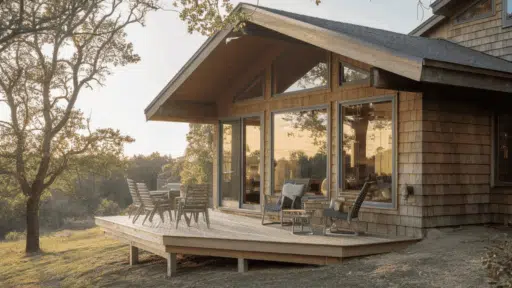
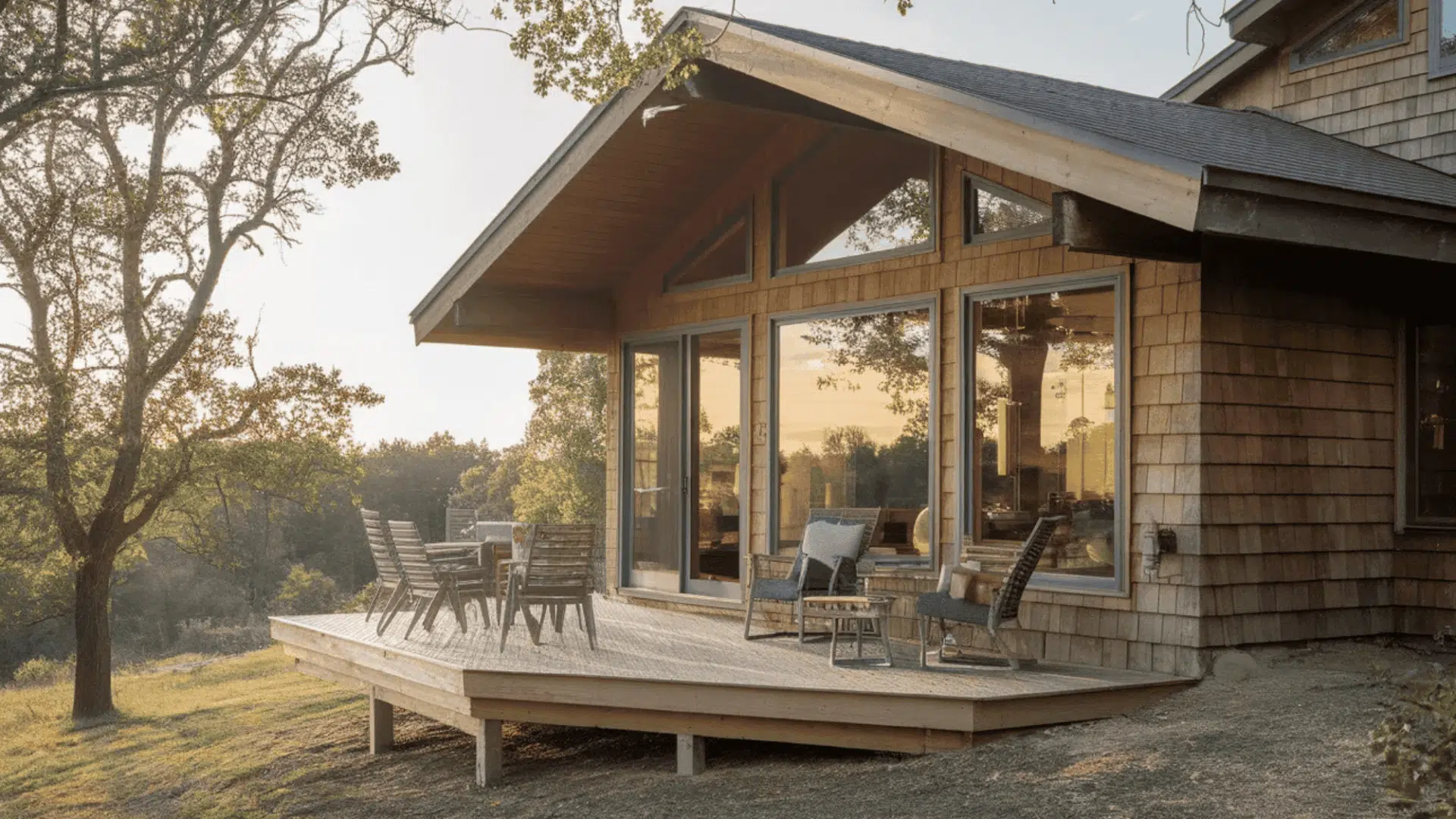

Have you ever walked past a low, glass-filled home tucked into trees and thought, “What style is that?”
Chances are, you were looking at a deck house.
In this guide, learn what makes a deck house special, how it started, and why people still love this style today. If you’re into architecture or thinking about buying or renovating one, this will give you clarity.
What is a Deck House?
A deck house is a prefabricated home built using a post-and-beam system. Unlike traditional homes built entirely on-site, many deck house components are manufactured in a factory.
Wall panels, beams, and structural sections are prepared in advance, then delivered and assembled on the lot.
This approach enables precision, efficiency, and design consistency while still allowing homeowners to maintain layout flexibility.
At its core, a deck house is a modern home built around visible structure and natural light.
The framing system supports wider spans, which reduces the need for interior support walls. That’s why the spaces feel open and fluid rather than divided into small rooms.
Connection Between Deck Houses & Mid-Century Modern Design
To understand a deck house, it helps to see how it fits into the larger mid-century modern movement. The connection isn’t random. It’s structural, visual, and philosophical. Have a look at how they align:
- Shared Design Principles: Both deck-house homes and mid-century modern design emphasize clean, simple geometry, minimal ornamentation, and function-driven layouts. The design avoids excess. Every element serves a purpose.
- Rooflines And Exterior Form: Mid-century modern homes are known for flat or low-pitched roofs. Deck house designs follow the same approach. Deep overhangs and long horizontal profiles give the structure a grounded, modern feel.
- Light and Openness: Natural light is central to both styles. There are large glass panels, floor-to-ceiling windows, and open main living areas. The goal is to create bright, breathable spaces rather than closed-off rooms.
- Indoor-Outdoor Living: Deck house homes emphasize outdoor views, attached decks, and seamless transitions between inside and outside. This reflects the broader mid-century belief that architecture should respond to its surroundings.
Key Architectural Features of a Deck House
If you’re trying to recognize a true deck house, the details matter. The style isn’t just about how it looks from the outside. It’s about how it’s built and how it feels inside.
1. Post-and-Beam Construction
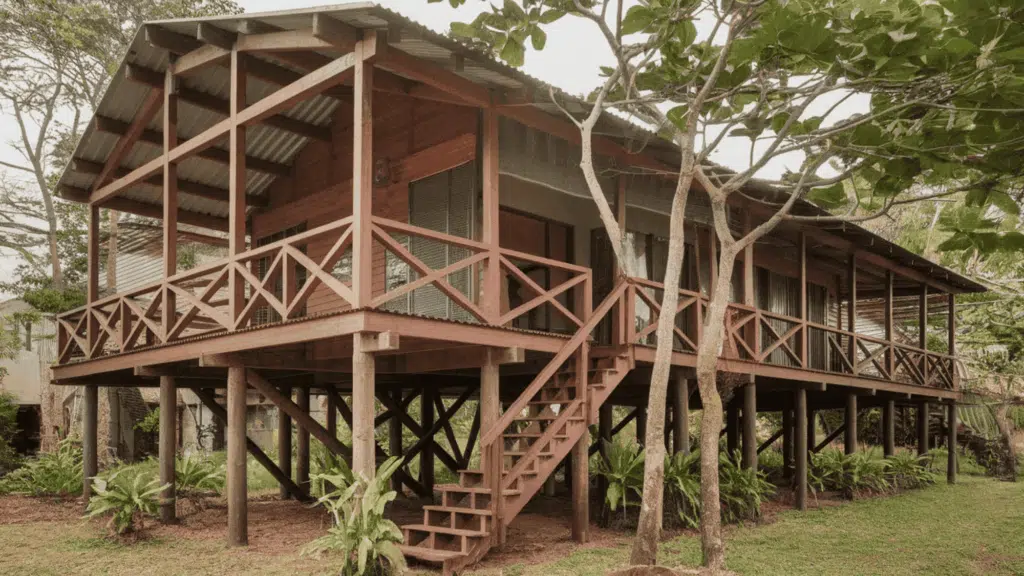
The foundation of a deck house is its post-and-beam system.
- Structural beams remain visible inside
- Fewer interior load-bearing walls
- Greater flexibility in layout design
Because the beams carry the structural load, the interior doesn’t rely on many support walls. That’s what makes wide, open living spaces possible.
Instead of small, boxed-in rooms, you get larger areas that flow naturally from one space to another. This structural approach is what allows the open floor plan actually to work.
2. Walls of Glass and Natural Light
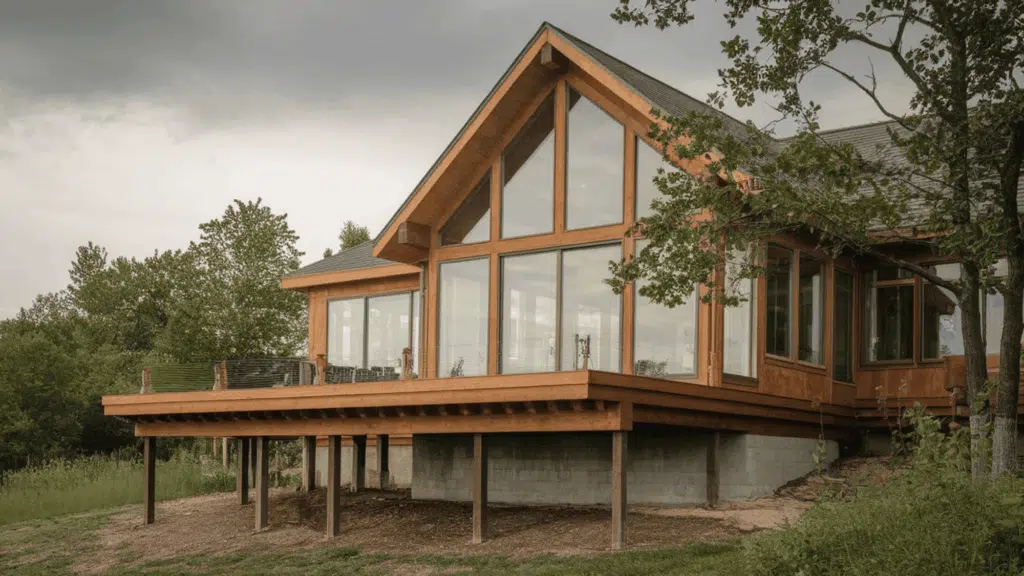
Light plays a central role in deck house design.
- Floor-to-ceiling windows
- Clerestory windows above eye level
- Large sliding glass doors
The goal isn’t just brightness. Windows are positioned to frame outdoor views and bring nature into daily life. Rather than treating windows as decorative features, deck house designs prioritize them as structural and visual elements.
3. Open Floor Plans
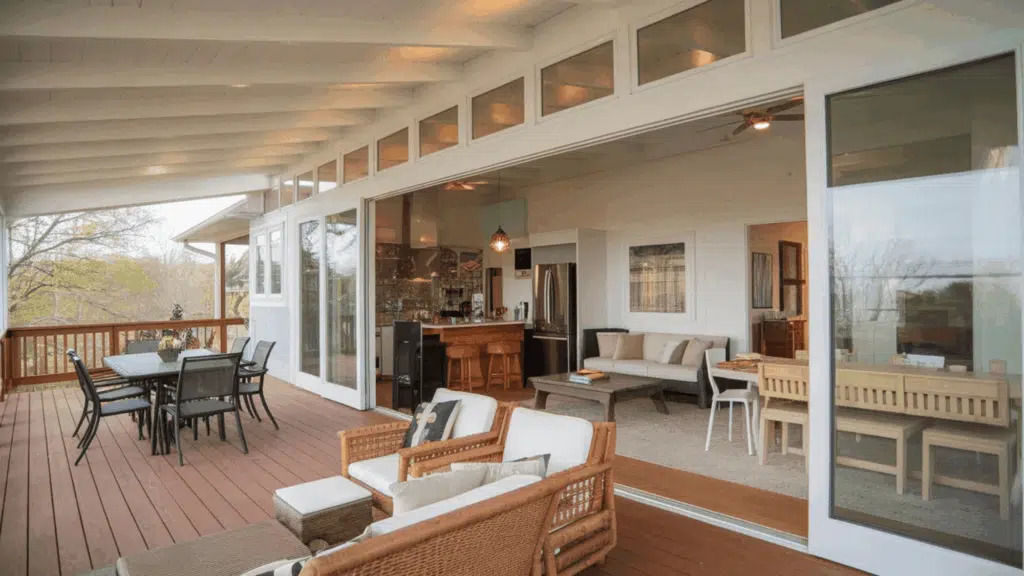
The interior layout reflects how people want to live.
- Kitchen, dining, and living spaces connect
- Minimal hallways
- Shared central gathering areas
This setup encourages interaction and flexibility. It works well for families, entertaining, and everyday movement. Long before open-concept living became a trend, the deck house was already built around it.
4. Natural Materials Inside and Out
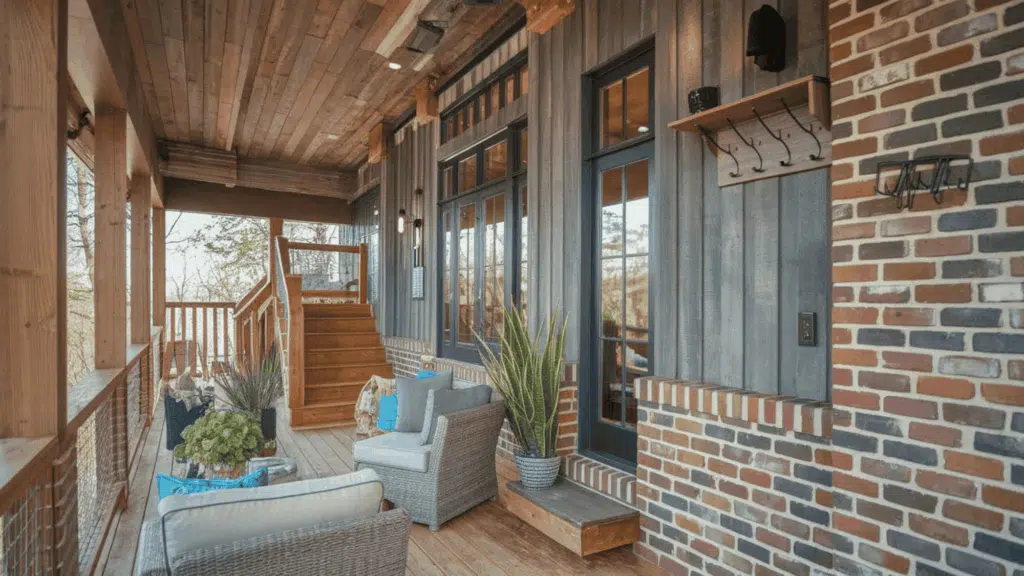
One of the most recognizable features is the use of warm, organic materials.
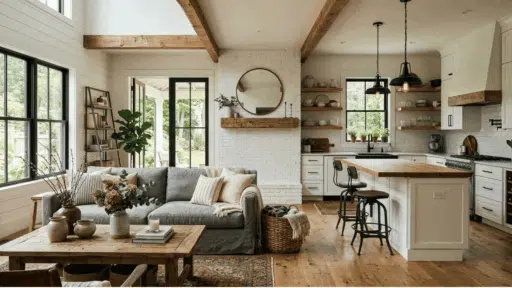
- Cedar plank ceilings
- Wood paneling
- Brick or stone accents
These materials soften the clean lines of the architecture. While the structure feels modern, the finishes keep it grounded and welcoming.
The contrast between strong geometry and natural texture creates balance.
5. Low Rooflines and Overhangs
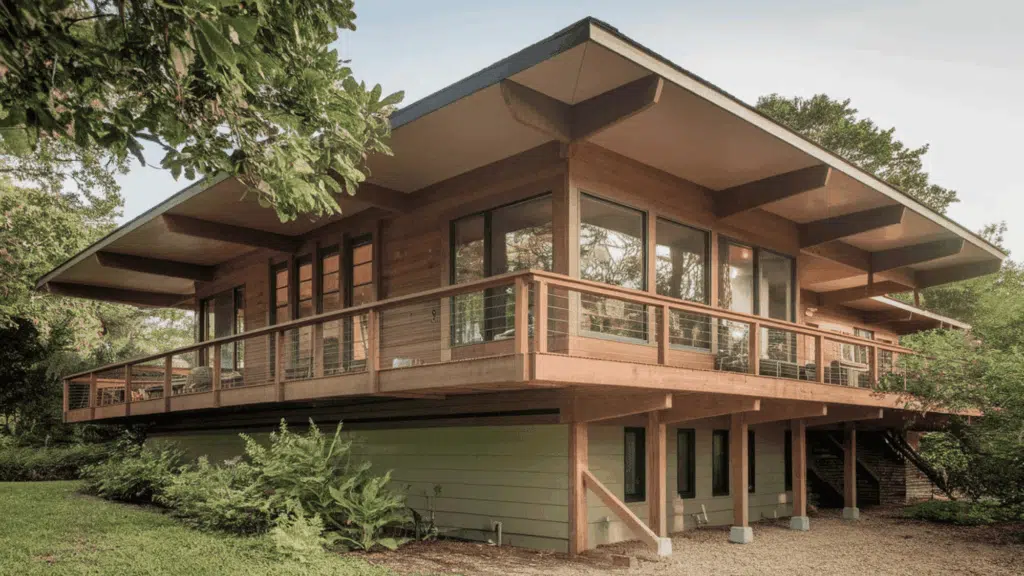
From the outside, the roofline makes a strong statement.
- Flat or gently sloped roofs
- Deep overhangs
- Emphasis on horizontal lines
This horizontal focus ties directly to mid-century modern design principles. The home appears settled into the landscape rather than towering over it.
Deck Houses vs. Other Mid-Century Modern Homes
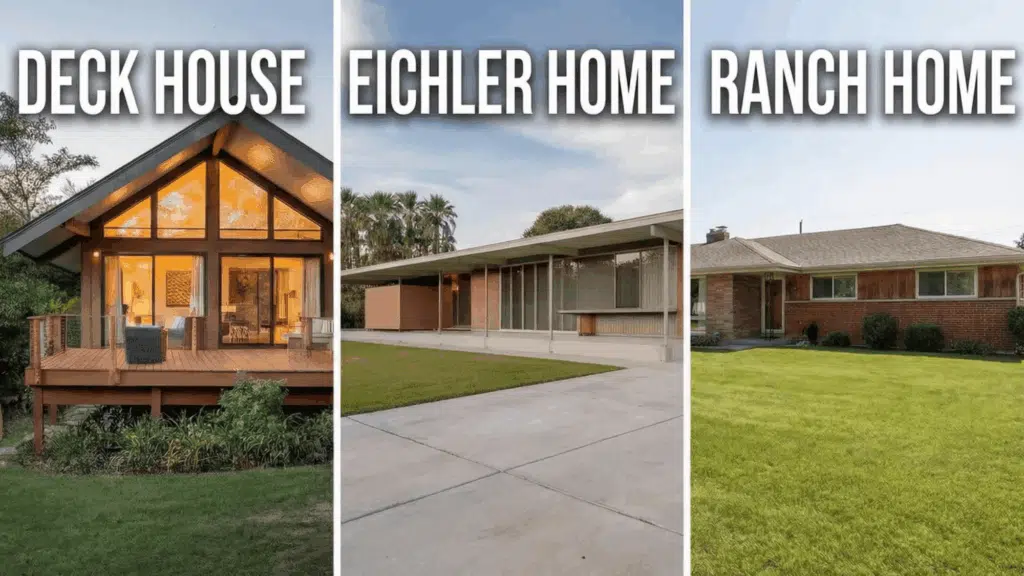
It’s easy to group everything from the 1950s and 1960s into one category. But not all mid-century homes are the same. If you’re trying to understand what sets a deck house apart, this comparison will help clear things up.
| Aspect | Deck House | Eichler Homes | Ranch Homes |
|---|---|---|---|
| Design Philosophy | Modernist, site-driven, strong connection to nature | Post-and-beam, open interiors, glass emphasis | Traditional suburban comfort, practical layout |
| Geography | Common in Northeast and wooded regions | Primarily built in California, West Coast | Built widely across suburban America |
| Construction | Often incorporates natural materials, open design | Slab-on-grade with post-and-beam framing | Single-story, practical layout, straightforward |
| Feel | Architectural, modern, blends with the landscape | Glass-heavy, open space, connection with outdoors | Conventional, neighborhood-centered, cozy |
Why Deck Houses Still Feel Special
Even today, deck houses continue to attract homeowners who appreciate thoughtful design and a strong connection to nature. The deck house isn’t just a trend from the past. People still love it for a few simple reasons.
1. Timeless Mid-Century Appeal
It doesn’t feel stuck in the 1960s. The structure is simple enough to grow with changing styles.
- Clean lines that still look fresh
- Simple design that doesn’t feel busy
- Natural materials that age well
- Open spaces that fit modern living
2. Strong Resale Value in Certain Markets
In the right area, it attracts people who specifically want this style.
- Popular with design-focused buyers
- Limited number of original homes
- Stands out from typical suburban houses
3. Perfect for Nature Lovers
If you like the idea of coffee with a view and more sunlight in your day, this style is a good fit.
- Large windows with open views
- Decks that extend your living space
- Quiet, tree-filled settings
How to Identify a Deck House
A deck house is easily identifiable by its modernist design, which emphasizes a strong connection to nature and the surrounding landscape.
These often feature open interiors, large windows, and natural materials like wood and stone. The design philosophy prioritizes architectural aesthetics and site-driven layouts, making each Deck House unique to its location.
Typically single-story, Deck Houses blend seamlessly with wooded or natural settings. Unlike traditional suburban homes, Deck Houses have a more contemporary, architectural feel, focusing on minimalism and functionality.
They are commonly found in the Northeast and other wooded regions.
Conclusion
At its core, a deck house is about architecture done with intention. The structure isn’t hidden. The beams, proportions, and layout all play an active role in how the home looks and functions.
It represents a time when residential design focused on clarity, balance, and connection to the site.
No unnecessary detailing. No dramatic statements. Just thoughtful construction and smart spatial planning.
If you appreciate architecture that values structure as much as style, the deck house stands out for a reason. It’s a reminder that strong design principles don’t expire; they continue to prove their relevance over time.

With a Master in Architectural Studies from University of Pennysylvania, Marwa Haydar has pioneered living spaces since 2005. Her expertise, initially honed in a prestigious architectural firm, is evident in her approach to creating environments. Marwa became part of our team in 2019 and has since been a driving force in our home improvement section, known for her practical yet stylish solutions. She’s been spearheading our design workshops since then, infusing her passion for teaching into her work. In her leisure time, Marwa enjoys exploring historic architecture and is an enthusiastic pottery hobbyist, further enriching her understanding of form and texture.