
Recessed lighting has become a staple of modern home design, offering a clean, streamlined look that enhances any space.
No matter you’re looking to brighten your kitchen, create ambiance in your living room, or focus light on specific areas, recessed lighting is a versatile, space-saving solution.
In this guide, I’ll cover the various types of recessed lighting, trim styles, and design options, and provide helpful tips to help you choose the best lighting for your home’s needs.
What are Recessed Lights?
Recessed lighting consists of light fixtures installed in the ceiling, creating a clean, minimalist look in which the light is hidden inside a canister. The result is a sleek, modern aesthetic that doesn’t take up any visible space.
Recessed lighting offers several key benefits, making it a popular choice in modern homes.
First, it’s space-saving since the fixtures are hidden in the ceiling, leaving floor and wall spaces open for other uses.
Its sleek and unobtrusive appearance makes it perfect for rooms with low ceilings or modern décor, as it blends seamlessly into the space.
Recessed lights are versatile, providing task, accent, and ambient lighting for a range of needs.
Types of Recessed Lighting
Recessed lighting comes in various types, each offering unique features and design options to meet specific lighting needs. Understanding the different styles, trims, and sizes can help you choose the best option for your space.
1. Baffle Trim
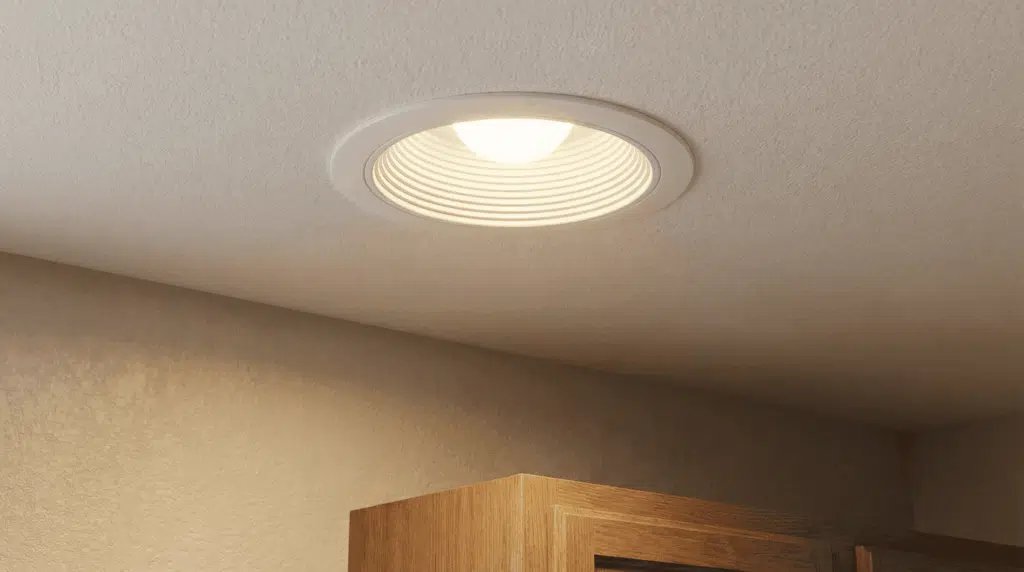
Baffle trims feature a ribbed interior designed to reduce glare and soften the light output. This trim helps in creating even lighting without being too harsh on the eyes, making it a great choice for general lighting.
Best Uses:
- Ideal for general lighting in living rooms, kitchens, and bedrooms where soft, diffused light is needed.
- Helps reduce shadows and softens the light, making it perfect for creating a relaxed, ambient atmosphere.
2. Reflector Trim
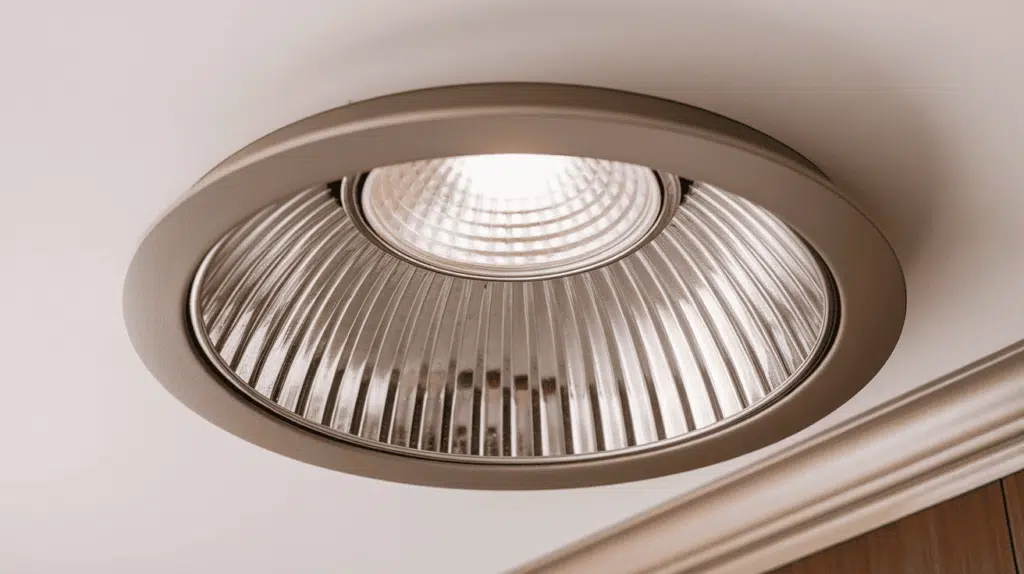
Reflector trims have a smooth, shiny surface that redirects light, increasing the brightness of a room. This trim is great for focusing more light in specific areas, making it a good option for task lighting.
Best Uses:
- Perfect for areas like kitchens, bathrooms, and workspaces that require brighter, more focused lighting.
- Great for task lighting over counters, sinks, and cooking areas where you need clear, bright light.
3. Adjustable or Gimbal Trim
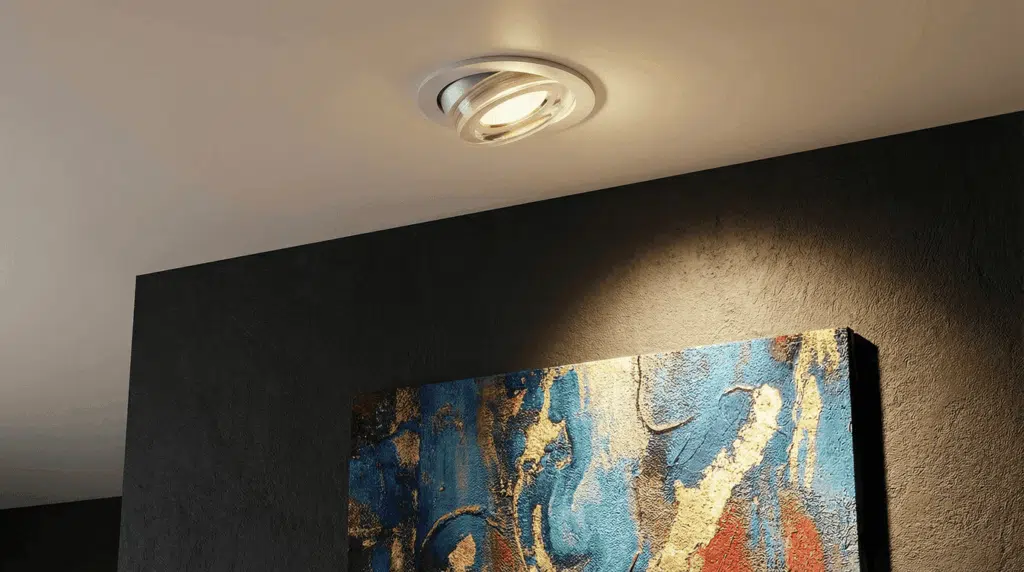
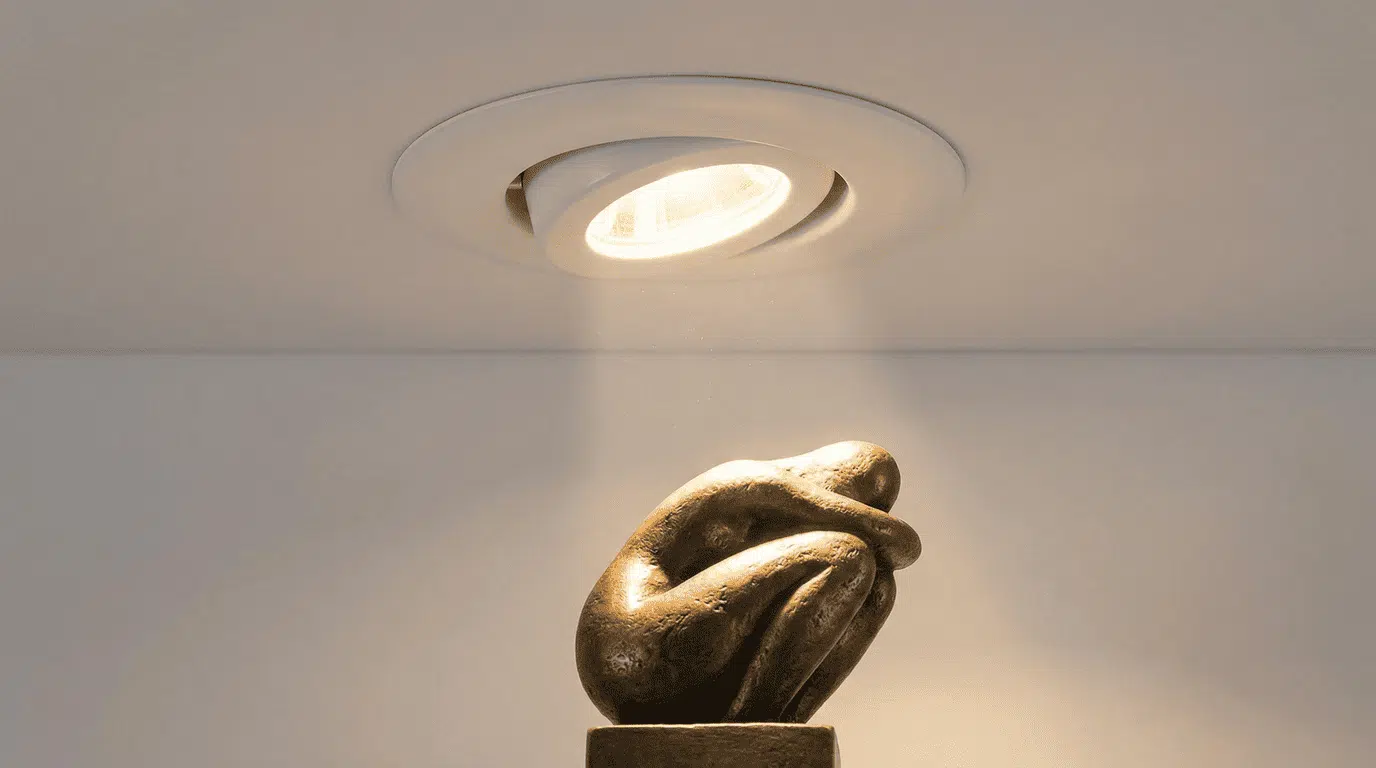
The adjustable gimbal trim allows the light to be tilted and directed at different angles. This feature provides flexibility and makes it a versatile option for accent lighting.
Best Uses:
- Ideal for highlighting artwork, architectural features, or accent walls.
- Perfect for kitchens, living rooms, or spaces that need directional light for specific tasks or to create mood lighting.
4. Wall wash trim
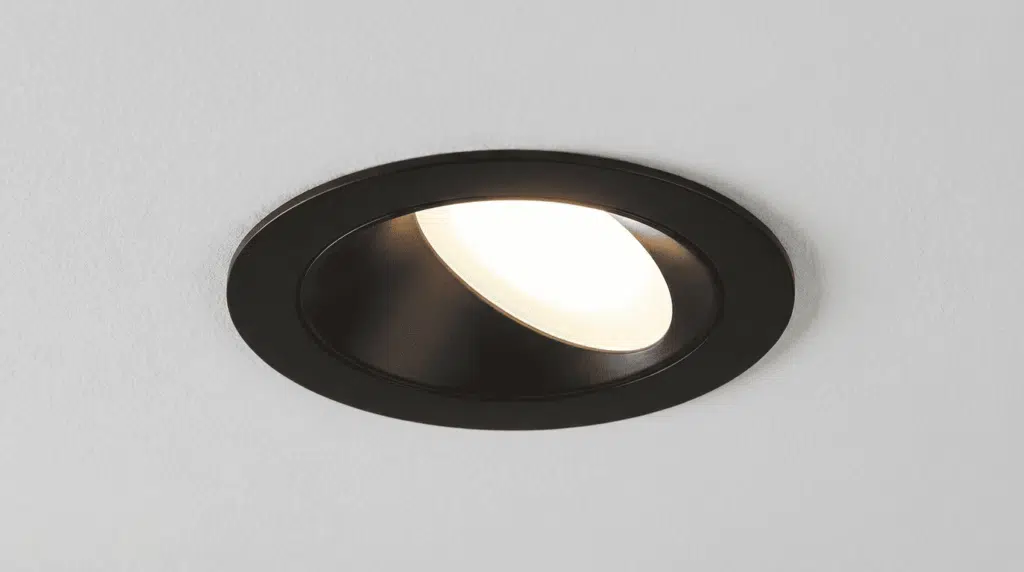
Wall wash trims are designed to evenly distribute light across a wall. Most often used for highlighting art or creating a gallery wall effect, wall wash trims are similar to gimbal trims in that they allow you to adjust the direction of light, but they offer broader light coverage.
Best Uses:
- Ideal for illuminating entire walls to create a uniform light effect, perfect for enhancing the overall mood of a room.
- Great for lighting up textured walls or feature walls to emphasize their design.
5. Eyeball Trim
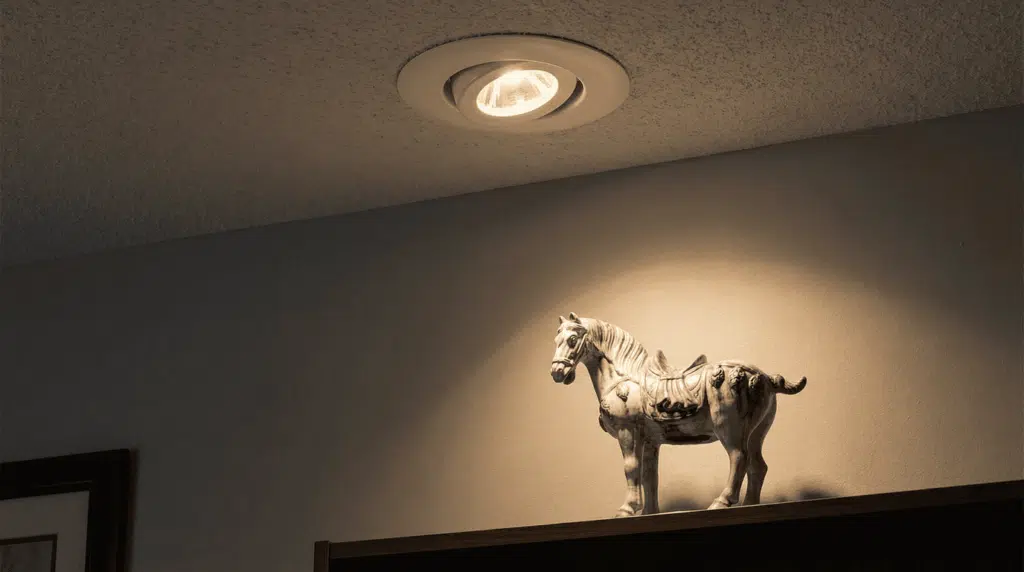
Eyeball trims feature a swivel that lets you direct the light to specific objects or areas in a room. This makes it an excellent option for accent lighting.
Best Uses:
- Perfect for accent lighting in living rooms, dining areas, or art galleries where you want to draw attention to specific objects or features.
- Ideal for highlighting artwork, sculptures, or architectural details.
Recessed Lighting: Trim Styles & Their Impact on Your Design
Trim styles play a significant role in the overall look of your recessed lighting. The choice of trim can affect both lighting distribution and the aesthetic of the room. Here’s how different trim styles can impact your design:
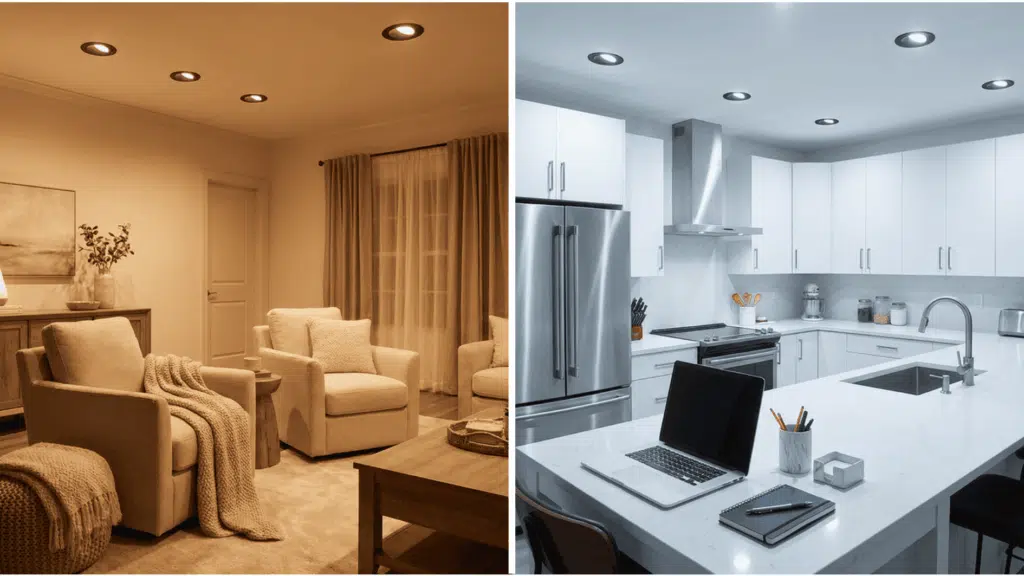
Soft White vs. Daylight Bulbs
| Bulb Type | Light Characteristics | Best For | Impact on Your Design |
|---|---|---|---|
| Soft White Bulbs | Warm, cozy light that creates a relaxed, inviting atmosphere | Living areas, bedrooms, relaxing spaces | Enhances mood, perfect for cozy evenings or intimate gatherings |
| Daylight Bulbs | Bright, cool light that mimics natural daylight, ideal for task lighting | Kitchens, bathrooms, workspaces | Brightens rooms, improves visibility, and enhances focus for tasks |
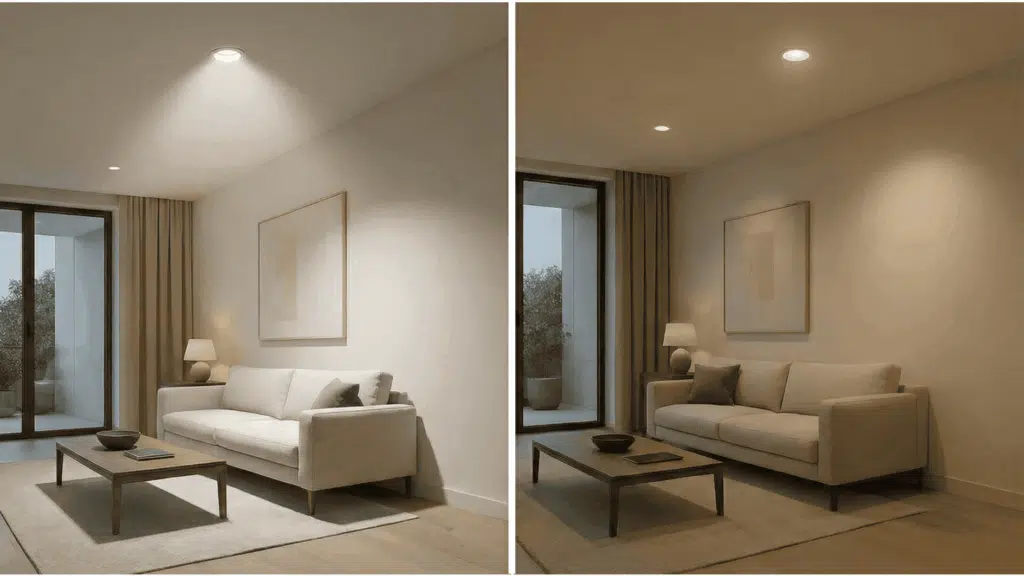
Open Trim vs. Closed Trim
| Trim Type | Light Characteristics | Best For | Impact on Your Design |
|---|---|---|---|
| Open Trim | No covering around the bulb, allowing light to spill directly into the room | Kitchens, large living rooms, open spaces | Provides brighter, more intense light, ideal for large spaces; can create bold effects |
| Closed Trim | Encloses the bulb, softening light and reducing glare | Smaller rooms, bedrooms, and dining rooms | Creates soft, ambient lighting for cozy settings, minimizing glare and harshness |
Choosing the Right Recessed Lighting for Different Areas
Choosing the right recessed lighting depends on the space and lighting requirements. Here are some tips for different rooms:
Kitchen Lighting
Consider using recessed lights above counters, islands, and sinks to provide effective task lighting.
For areas requiring more focused lighting, such as food preparation spaces, use reflector trims. These trims direct the light downward, offering brighter illumination where precision is needed, ensuring the work areas are well-lit.
Living Room and Bedroom Lighting
In these spaces, opt for baffle or closed trims for softer, more ambient light. This will create a warm and inviting atmosphere without harsh shadows.
Foraccent lighting, adjustable trims are ideal to highlight artwork, furniture, or unique architectural features, giving the room a touch of personality and flair.
Bathroom Lighting
Choose moisture-resistant recessed lights to withstand the bathroom’s high humidity levels and prevent issues like rusting or corrosion.
A combinationofambient and task lighting is essential to provide adequate light for both grooming and general use, ensuring the bathroom is both functional and well-lit.
Tips for Choosing the Right Recessed Lighting
Choosing the right recessed lighting can significantly enhance the ambiance and functionality of any room. Here are some tips to help you select the best recessed lighting for your space.
- Size Guide: Choose the size of the recessed light based on the size of the room. Larger rooms may need larger fixtures to provide even lighting. For general lighting, 6-inch lights are common, while 4-inch lights are better for smaller spaces.
- Placement Tips: Lights should be spaced about 4 to 6 feet apart to ensure even illumination across the room. Consider placing lights near walls, especially in rooms with high ceilings, to achieve a balanced distribution of light.
- Consider the Room’s Function: In task-oriented spaces like kitchens or bathrooms, use brighter lights for focused tasks like cooking or grooming. In relaxing spaces, opt for softer, ambient lighting for a cozy atmosphere.
Conclusion
Choosing the right recessed lighting for your home involves understanding your specific needs, from creating ambient light to providing focused task lighting.
By considering trim styles, bulb types, design options, and placement, you can enhance the functionality and aesthetic appeal of your space.
If you’re unsure which type of recessed lighting is best for your home, consult with a lighting expert or check out various styles to find the perfect match for your needs.

James McLaren, with a rich background in architecture from the University of Manchester, has been contributing his expertise to the world of creative construction and home innovation for over 20 years. His journey began as a project manager for a leading construction firm, where he honed his skills in bringing complex designs to life. James joined our platform as a freelancer in 2019, quickly becoming a favorite for his insightful and practical advice. He has been a pivotal force to our wing ever since, bringing our readers a blend of technical know-how and creative flair. Beyond his professional life, James is an avid woodworker and enjoys restoring vintage furniture, a hobby that complements his professional insights beautifully.