
Picture a space in your home where you can enjoy the outdoors without worrying about the weather. A 3-season room offers just that, providing a comfortable environment to experience nature in the spring, summer, and fall.
No matter if you’re relaxing or hosting friends, this room keeps you safe from rain, bugs, and cooler temperatures while still offering a great connection to the outside.
In this guide, I’ll discuss what a 3-season room is, how it compares to other types of sunrooms, and why it might be the perfect addition to your home.
What is a 3-Season Room?
A 3-season room is a partially enclosed space designed for use during the warmer months – spring, summer, and fall.
It provides a comfortable, weather-protected area to enjoy the outdoors while keeping you shielded from rain, bugs, or cooler temperatures.
These rooms are perfect for relaxing, dining, or entertaining, offering an open and airy atmosphere that connects you to nature without the discomfort of unpredictable weather.
With its simple design, a 3-season room is a cost-effective way to extend your living space and enhance your home’s connection to the outdoors.
Whether used as a lounge area, dining space, or playroom, it’s an ideal spot to make the most of the warmer months in comfort.
Key Features of a 3-Season Room
3-season rooms offer a unique way to enjoy the outdoors while staying comfortable and protected. Let’s discuss the key features that make these spaces perfect for seasonal use, from open windows to durable flooring options.
1. Windows and Screens

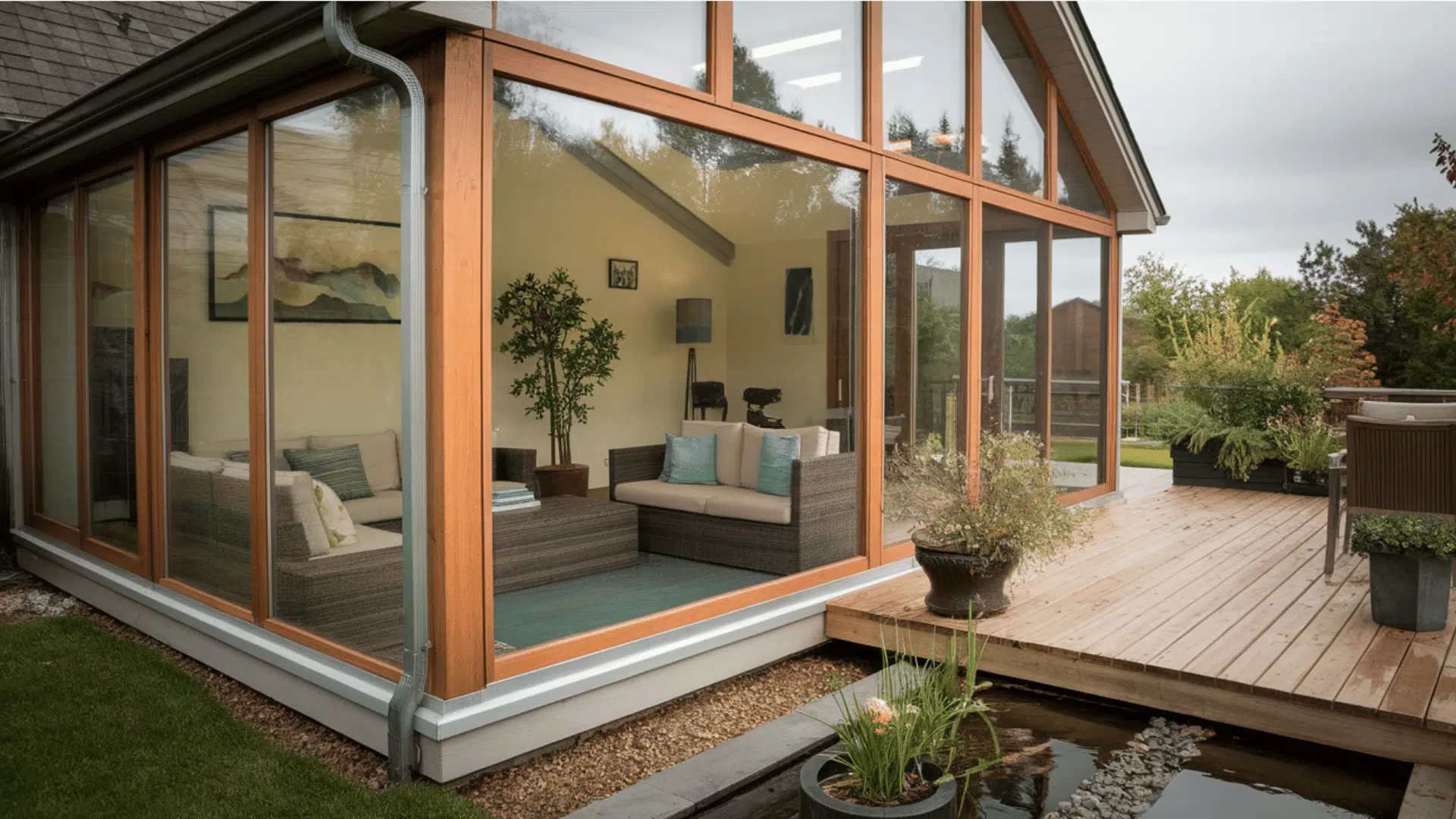
A key feature of 3-season rooms is their large windows, designed to bring in plenty of natural light. Many of these windows can be opened or removed, allowing fresh air to flow through, making the space feel open and inviting.
Screens are often added to keep insects out, ensuring a comfortable experience. This setup allows you to enjoy the outdoors while staying protected from the elements.
2. Flooring Options

The flooring in 3-season rooms is chosen for durability, as it needs to withstand varying weather conditions. Common materials include wood, tile, and concrete, all of which are sturdy enough for outdoor environments.
These flooring options also contribute to the room’s beauty, offering both functional and aesthetic appeal while enhancing the room’s natural, open atmosphere.
3. Open Air Feel

Although a 3-season room is enclosed, its design is meant to create an open, airy feel. With large, uninsulated windows and doors, the space maintains a light, spacious atmosphere, ideal for enjoying the outdoors without fully exposing yourself to the elements.
This feature makes it perfect for spring, summer, and fall, but it isn’t designed for colder winter months. The open-air feel offers a relaxing environment where you can unwind and enjoy nature, even in the comfort of your own home.
4. Roof Style

A 3-season room’s roof design plays a significant role in creating a bright, welcoming space. The roof can be traditional, sloped, or feature a glass ceiling to maximize natural light.
These roof styles enhance the room’s connection to the outdoors while still offering shelter and protection from the weather.
5. Structural Materials

3-season rooms are typically built using lightweight materials like wood, aluminum, or vinyl. These materials are ideal because they are both cost-effective and durable, providing a solid structure without the need for heavy insulation.
Compared to year-round sunrooms, which often require more expensive and robust materials, 3-season rooms offer a more affordable option for homeowners looking to expand their living space.
Benefits of a 3-Season Room
A 3-season room offers a comfortable, versatile space for enjoying the outdoors while staying protected from the elements.
- Extended Living Space: Adds extra square footage to your home, perfect for use as a dining area, lounge, or office without the cost of a full room addition.
- Increased Home Value: Enhances resale value by appealing to buyers looking for homes with extra versatile spaces that connect indoor and outdoor living.
- Cost-Effective: More affordable than 4-season rooms, as they don’t require insulation or heating systems, saving on construction and maintenance costs.
- Improved Indoor-Outdoor Living: Offers a seamless connection to nature with its open design and large windows, providing comfort without exposure to the elements.
- Flexible Use: Can serve multiple purposes, including entertaining, dining, reading, or even as a playroom for kids, based on your needs.
How a 3-Season Room Differ From Other Types of Sunrooms
While 3-season rooms are great for mild weather, they are distinct from other sunrooms. Let’s look at how they compare to two other popular types: 4-season rooms and screened-in porches.
4-Season Room vs. 3-Season Room

When choosing between a 3-season or 4-season room, it’s important to consider factors like temperature control, cost, and purpose.
| Feature | 4-Season Room | 3-Season Room |
|---|---|---|
| Temperature Control | Insulated with HVAC for year-round comfort | No insulation, best for spring, summer, fall |
| Cost & Construction | More expensive to build and maintain | More affordable, simpler construction |
| Purpose | Designed for year-round use | Designed for seasonal use |
Screened-in Porch vs 3-Season Room

Choosing between a screened-in porch and a 3-season room depends on your needs for protection, comfort, and seasonal use.
| Feature | 3-Season Room | Screened-in Porch |
|---|---|---|
| Functionality | Offers more protection with windows and screens | Open to the elements, lacks windows |
| Seasonality | Designed for use in spring, summer, and fall | Ideal for mild weather, less protection in harsh conditions |
| Climate Control | Offers temperature control with windows | No climate control, best for warm, mild weather |
Materials and Furniture for 3 Season Rooms
When designing an outdoor living space, choosing the right materials for furniture, flooring, and structural elements is key to creating a functional and stylish area.
- Furniture: Wood, rattan, or composite decking for durability and style.
- Flooring: Outdoor tiles, concrete, or composite decking for lasting use.
- Walls & Windows: Vinyl or aluminum framing, large glass windows or screens for open views.
- Roof: Traditional roofing materials like shingles or metal, or glass/polycarbonate for a modern touch.
- Structural Materials: Wood, aluminum, or vinyl framing for sturdy support, and storage benches for added functionality.
Choosing the right materials ensures your outdoor space will look great and last for years.
Conclusion
A 3-season room is a perfect way to extend your living space and enjoy the beauty of nature without the discomfort of extreme weather. It offers a balance of openness and protection, making it ideal for seasonal use.
Whether you’re looking to create a relaxing lounge area or a dining space that connects to your garden, a 3-season room can be the perfect addition to your home.
Ready to add a 3-season room to your home? Consider your space, budget, and how you plan to use the room to get started on designing your ideal indoor-outdoor retreat!

With a Master’s in Architecture from the University of California, Berkeley, Alexander Martin has dedicated the last 18 years to enhancing outdoor living through thoughtful and robust structure design. His career kicked off in urban planning, giving him a unique perspective on integrating structures into diverse environments. In 2019, Alexander brought his expertise to our website, offering insights into creating versatile outdoor spaces. Since then, he has been the lead advisor for our outdoor design projects and is known for his ability to merge functionality with environmental consciousness. Alexander enjoys rock climbing outside of work and participates in community development projects, activities that reflect his passion for the outdoors and sustainable design.