
Choosing the wrong paint finish can turn a simple room refresh into months of frustration.
Flat vs satin paint might sound like a minor detail, but this decision affects how your walls handle everyday life, from fingerprints and scuff marks to cleaning routines and lighting effects.
One finish hides imperfections beautifully but struggles with stains.
The other withstands regular contact but shows every surface flaw.
Most homeowners pick based on appearance alone, only to regret it later when maintenance becomes a headache.
Understanding how these finishes perform in real-world conditions helps you avoid costly repainting and choose walls that actually work for your lifestyle, not against it.
Why Paint Finishes Matter?
Paint finishes influence more than surface appearance.
They affect how walls respond to light, how visible surface marks form, and how well-painted areas hold up over time.
The right finish can reduce maintenance effort, improve visual balance in a room, and support the long-term condition of the surface.
Selecting an appropriate finish also helps align wall performance with the room’s function, ensuring painted surfaces remain visually consistent and practical in everyday use.
What Is Flat Paint?

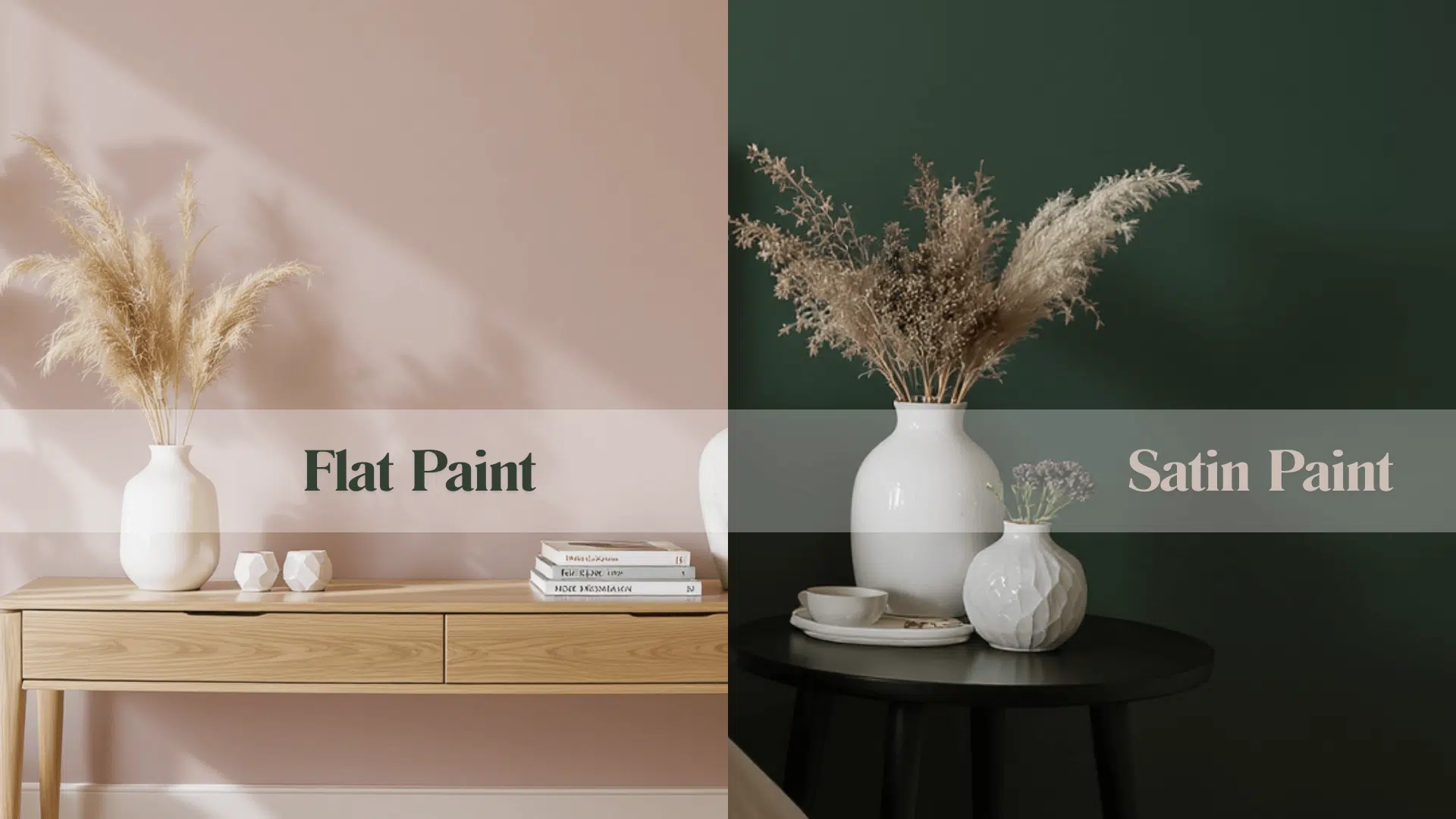
Flat paint is a low-sheen wall finish known for its smooth, non-reflective surface.
It absorbs light rather than reflecting it back, which helps hide visual flaws.
People choose this finish when they care more about how uniform their walls look than how easy they are to clean.
Finish and Appearance
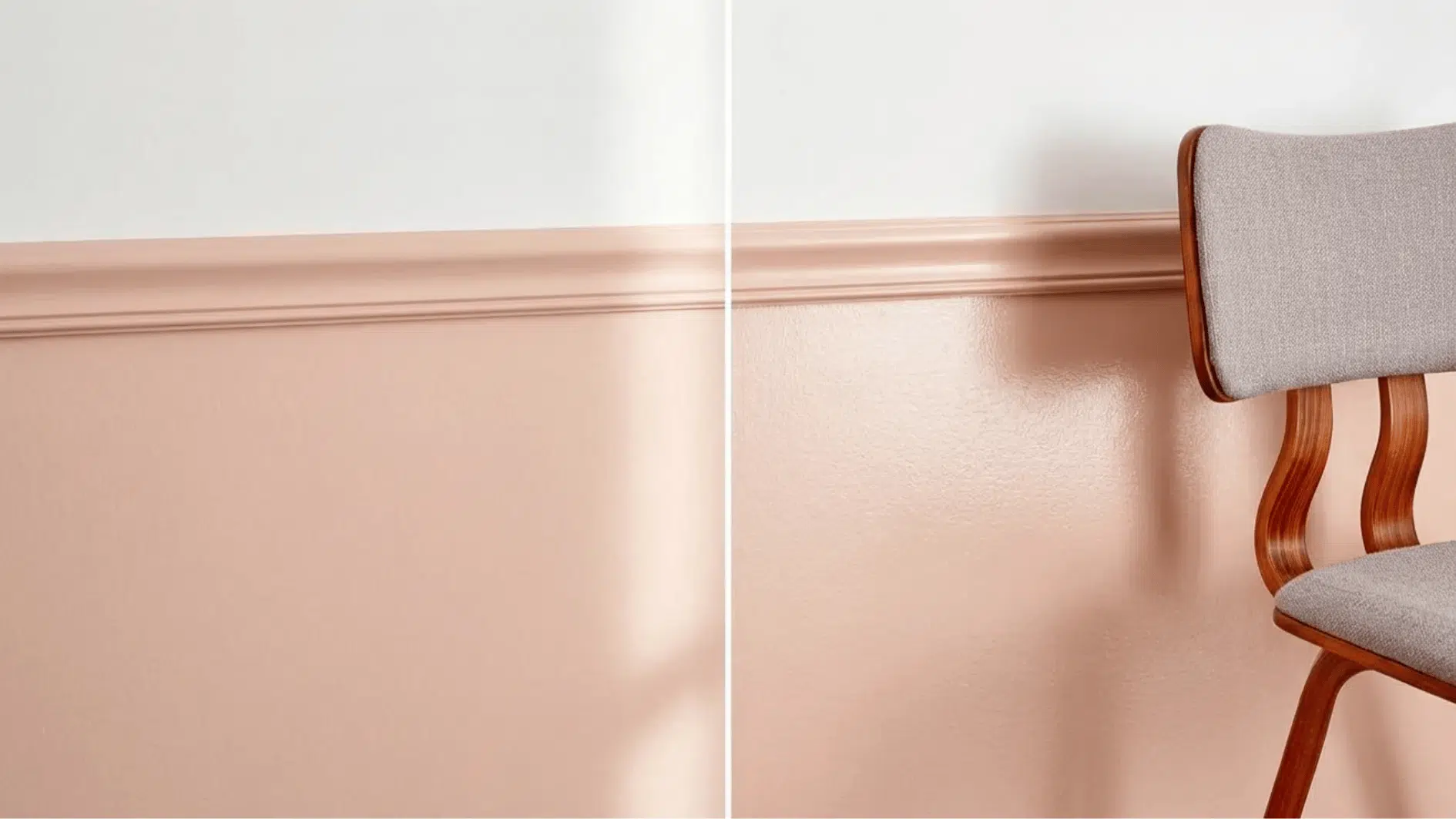
Flat paint gives you a matte surface with zero shine. Because it doesn’t reflect light, you won’t notice dents, patches, or bumpy spots as much.
Your walls will look more even, especially when bright or direct light hits them. The smooth appearance creates a soft, uniform look that many homeowners prefer for their interior spaces.
Durability and Maintenance
This finish doesn’t handle moisture, stains, or regular contact very well. When you try to clean it, you’ll often end up with scuff marks or faded areas.
That’s why flat paint works best on surfaces you rarely need to touch.
The limited washability means you should avoid using it in areas where walls are frequently dirty or need frequent wiping.
Common Uses
Flat paint is commonly used in interior spaces where visual consistency is more important than durability.
Typical applications include the following areas:
- Ceilings commonly use flat paint.
- Adult bedrooms often apply flat paint.
- Formal living rooms suit flat paint.
- Low-traffic rooms favor flat paint.
- Walls with surface flaws are painted flat.
Tip: Flat paint works best when applied to surfaces you’ve prepared carefully. Any touch-ups you make later will show more than they would with shinier finishes.
What Is Satin Paint?

Satin paint is a mid-sheen wall finish that balances visual smoothness with practical durability.
It reflects a small amount of light, giving walls a soft glow while providing better wear resistance. This makes it suitable for areas that need regular upkeep without sacrificing appearance.
Finish and Appearance
Satin paint produces a smooth, gentle sheen that catches light without appearing glossy.
This subtle reflection adds depth to wall color and creates a cleaner look, especially in rooms with natural or artificial lighting.
The finish falls between matte and shiny, offering a polished look that remains understated and refined in most home interiors.
Durability and Maintenance
Compared to flat finishes, satin paint handles moisture, stains, and light scrubbing more effectively. Marks can usually be wiped away without damaging the surface.
This makes it a reliable option for spaces where walls experience occasional contact.
You can clean satin-painted walls with a damp cloth without worrying about leaving scuff marks or removing color from the surface underneath.
Common Uses
Satin paint is commonly used in interior spaces that require a balance between appearance and durability.
Typical applications include the following areas:
- Living rooms commonly use satin paint.
- Hallways often apply satin paint.
- Home offices frequently use satin paint.
- Children’s bedrooms suit satin paint well.
- Dining areas regularly use satin paint.
Tip: Applying satin paint evenly is important, as overlapping strokes can become noticeable once the surface dries.
Flat vs Satin Paint Finish Key Differences
Flat and satin paints differ in finish and performance. The direct purpose depends on the wall’s use.
Flat suits low-contact areas, while satin fits regular-use spaces. Durability remains the deciding factor.
The table below highlights the main differences between flat and satin paint in terms of finish, durability, maintenance needs, and typical interior use:
| Feature | Flat Paint | Satin Paint |
|---|---|---|
| Sheen level | No shine, fully matte | Soft sheen with light reflection |
| Surface appearance | Masks uneven textures well | Shows minor surface details |
| Cleaning ability | Limited, prone to marks | Handles gentle wiping |
| Moisture handling | Poor moisture tolerance | Better resistance to humidity |
| Best use case | Low-contact interior areas | Moderate-use interior walls |
Flat paint prioritizes visual consistency, while satin paint supports routine upkeep.
Choosing between them depends on how often walls are touched, cleaned, or exposed to moisture.
Flat vs Satin Paint Cost and Coverage
Flat and satin paints vary in pricing and coverage due to differences in formulation and performance.
Satin finishes typically cost more because of added resins and binders, while flat paint is usually more affordable but may require additional coats for uniform results.
Paint quality, resin content, brand, surface preparation, and the number of coats required directly influence the total cost of both finishes.
Approximate price ranges for standard interior wall paint are outlined below:
- Flat paint typically ranges from $15 to $30 per gallon.
Satin paint generally ranges from $25 to $45 per gallon.
These are approximate costs and may vary based on brand, region, and finish quality.
Flat paint may reduce upfront expense, while satin paint can offer longer-lasting results that limit repainting frequency in regularly used interior spaces.
Difference Between Gloss, Semi-Gloss, Satin, and Flat
Gloss level directly affects durability, light reflection, and ease of cleaning.
Flat suits low-contact areas; satin balances use and appearance; semi-gloss handles moisture well; and gloss suits surfaces needing frequent cleaning.
Here is a table outlining the differences and best uses for each paint finish:
| Paint Finish | Sheen Level | Durability | Ease of Cleaning | Best Uses |
|---|---|---|---|---|
| Flat | No sheen | Low | Difficult | Ceilings, low-traffic rooms, uneven walls |
| Satin | Soft sheen | Medium | Moderate | Living rooms, hallways, bedrooms |
| Semi-gloss | Noticeable shine | High | Easy | Kitchens, bathrooms, trim |
| Gloss | High shine | Very high | Very easy | Doors, cabinets, high-touch surfaces |
Each finish serves a specific purpose, and selection should be based on wall contact, moisture exposure, and cleaning needs rather than appearance alone.
How to Choose the Right Paint Finish?
Choosing the right paint finish depends on how a space is used, how often walls are cleaned, and the condition of the surface.
The correct finish supports both long-term maintenance and visual consistency without overemphasizing shine or texture.
- Consider how frequently the walls are touched or cleaned
- Assess lighting conditions and wall smoothness
- Match the finish to moisture exposure levels
A practical choice balances surface performance with upkeep needs rather than appearance alone.
Flat vs Satin Paint Reddit

Discussions from Reddit highlight mixed experiences with Sherwin-Williams Super Paint in flat and satin finishes.
Many homeowners note that flat Super Paint creates a softer look and hides wall imperfections well, especially in bedrooms and low-traffic rooms.
However, users report it marks easily and stains from light wiping or water, making cleanup difficult.
Satin Super Paint is often described as more forgiving for routine maintenance. Reddit users point out that satin doesn’t appear overly shiny and handles light cleaning without visible damage.
It’s commonly favored for hallways, living rooms, and homes with children or pets.
Flat vs Satin Paint: Which One Wins?
Flat vs satin paint comes down to where you’re painting and how you live.
Flat paint gives you a smooth, matte look that hides wall imperfections beautifully, but it won’t hold up to kids, pets, or frequent cleaning.
Satin paint costs a bit more upfront but handles real-life better: moisture, stains, and the occasional scrub won’t ruin it.
Low-traffic bedrooms and ceilings work well with flat finishes.
High-traffic spaces like hallways, kitchens, and kids’ rooms need the durability of satin.
Neither finish is universally better; they each solve different problems.
Your choice should match how often those walls get touched, cleaned, or exposed to humidity. The right finish saves you time, money, and frustration down the road.
What’s your experience with these finishes? Share your favorite paint choice below!

Millie Anderson, a graduate of Textile Design from the Fashion Institute of Technology, has carved her name in fabric and material finishes for over 16 years. Her career took flight in a renowned textile manufacturing company, where she mastered combining textures and patterns. Millie joined our team in 2018, becoming a cornerstone for readers interested in the latest trends in textiles. Since then, she has been the lead editor for our home decor fabrics section, blending her deep knowledge of materials with a flair for contemporary design. Beyond her professional achievements, Millie is an enthusiastic quilter and often participates in community arts and crafts workshops, further nurturing her passion for fabrics and design.