
Choosing the right roof isn’t just about looks; it affects your home’s safety, energy bills, and resale value for decades.
Hip roofs and gable roofs are the two most popular styles in residential construction, but they perform very differently in real conditions.
One handles hurricanes better. The other gives you more attic space and costs less to build.
Picking the wrong style for your climate can mean higher insurance rates, storm damage, or wasted money on features you don’t need.
This guide breaks down the key differences between hip roofs and gable roofs, including cost, wind resistance, space, and maintenance.
You’ll know exactly which roof type fits your home, budget, and local weather.
What is a Hip Roof?
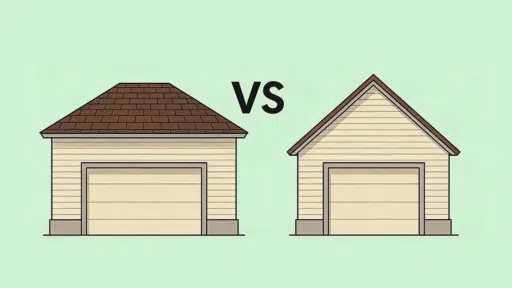
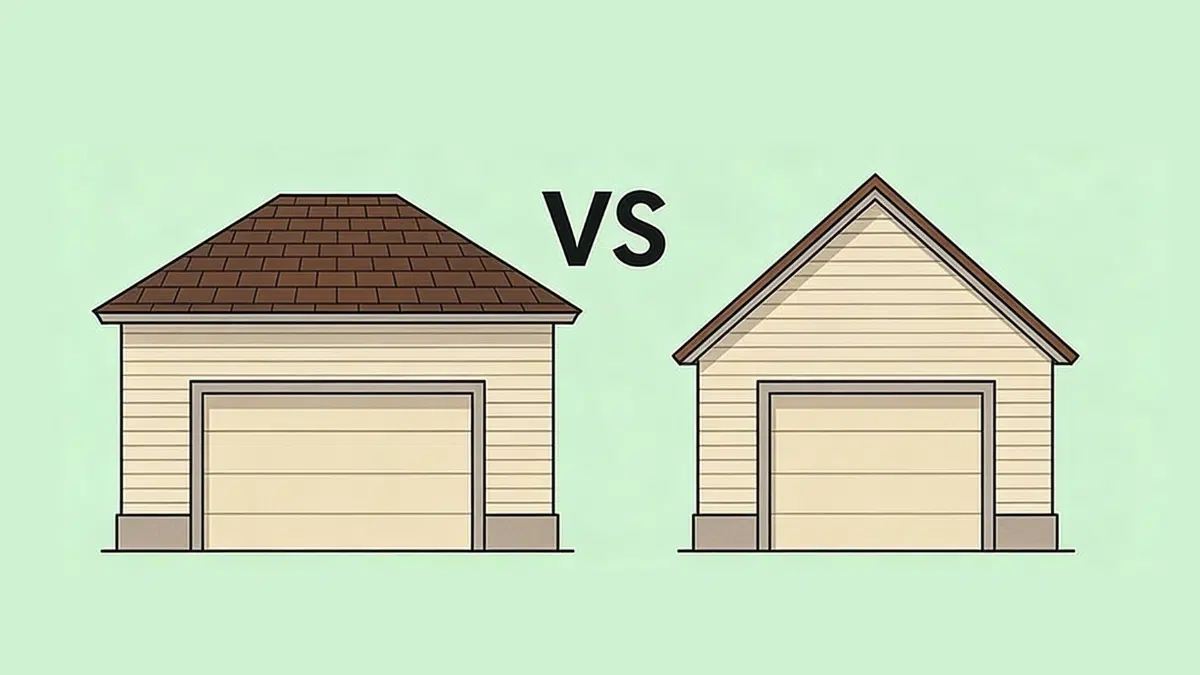
A hip roof is a roof style where all sides slope downward toward the walls of the house. There are no flat or vertical ends.
On a square structure, the slopes meet at a single point. On a rectangular structure, the slopes meet along a horizontal ridge.
Because all sides slope, the roof forms a compact and balanced shape around the building.
This design spreads weight evenly across the structure. It also reduces exposure to strong winds because there are no flat ends for wind to push against.
Hip roofs are commonly used in areas that experience storms, heavy rain, or high winds.
Features of a Hip Roof
A hip roof has a distinct structure that affects strength, space, and cost. The following features explain how this roof type functions in real-world use.
- All sides of the roof slope downward toward the walls, creating a balanced and enclosed shape
- The design is naturally stable and requires less additional bracing
- Eaves usually run evenly around the entire home, helping with consistent water drainage
- Wind pressure is reduced because there are no flat or vertical ends
- Attic space is smaller due to the sloping on all sides
- More roofing materials and labor are required, which increases the construction cost
What is a Gable Roof?
A gable roof is a roof style with two sloping sides and two vertical ends. The vertical ends form a triangular shape called a gable.
These gables are part of the house’s walls and are usually covered with the same exterior material as the rest of the home.
Gable roofs are one of the most common roof styles in residential construction. They are easy to recognize, easy to build, and widely used in many climates, especially colder regions.
Features of a Gable Roof
A gable roof has a simple and familiar design that affects space, ventilation, and construction cost. The following features highlight what defines this roof type.
- Two roof sides slope downward and meet at a central ridge
- Vertical triangular ends, called gables, form part of the exterior walls
- The design creates more usable attic space near the roof peak
- Construction is simpler and requires fewer materials than a hip roof
- Gable ends allow for easy installation of vents, improving airflow
- Flat gable walls can be more exposed to strong winds if not reinforced
What is the Difference Between a Hip Roof and a Gable Roof?
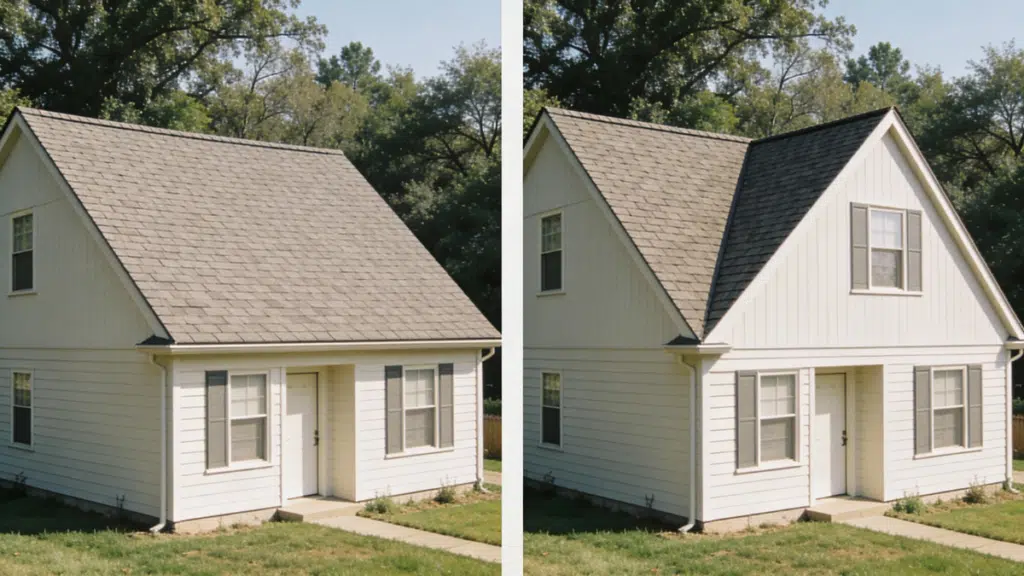
While both roof styles serve the same purpose, their structure leads to clear differences in cost, performance, and interior space.
The table below shows how a hip roof and a gable roof compare side by side.
| Feature | Hip Roof | Gable Roof |
|---|---|---|
| Roof shape | Slopes downward on all sides | Slopes on two sides with vertical ends |
| Wind performance | Handles strong winds better | More vulnerable in high winds |
| Snow performance | May hold snow due to the lower pitch | Sheds snow more easily |
| Construction cost | Higher due to complexity and materials | Lower and simpler to build |
| Attic space | Less usable attic space | More attic and storage space |
| Ventilation options | Relies on ridge and soffit vents | Allows gable vents for airflow |
| Maintenance | More seams to maintain | Fewer seams, easier upkeep |
What are the Similarities Between Hip Roofs and Gable Roofs?
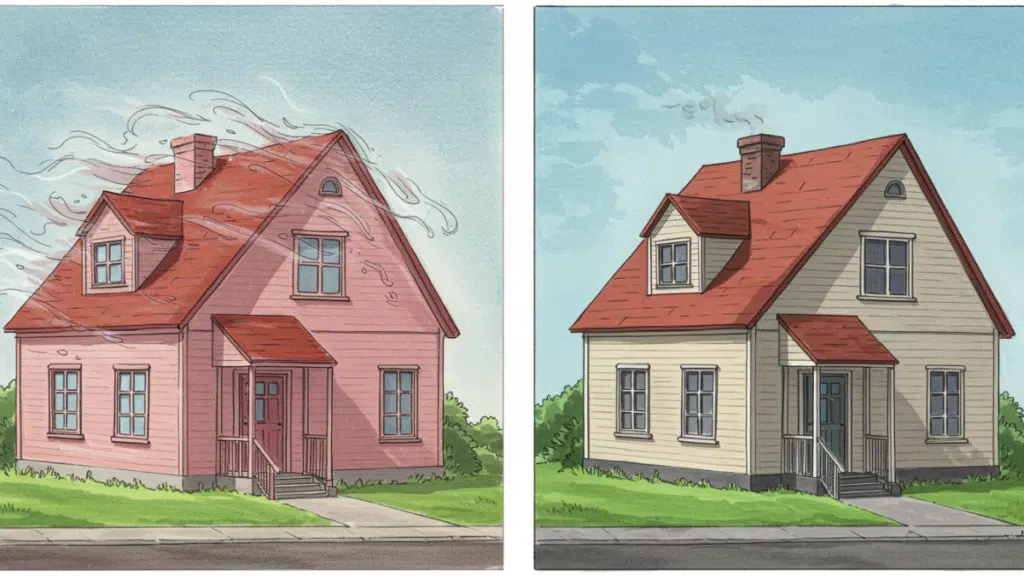
Both hip roofs and gable roofs serve the same primary purpose, which is to protect the home from weather and support proper drainage.
Both roof types can be built using common roofing materials such as asphalt shingles, metal panels, clay tiles, or slate.
Each design can be adapted to different architectural styles and combined with other roof features like dormers.
Both roof types are suitable for residential construction and can last for decades when built correctly and maintained over time.
The choice between them is less about quality and more about fit.
Hip Roof vs Gable Roof: Pros and Cons
Both roof styles offer benefits and drawbacks that affect cost, durability, and interior space. Understanding these trade-offs makes the comparison easier.
| Roof Type | Pros | Cons |
|---|---|---|
Hip Roof |
|
|
| Gable Roof |
|
|
Which One is Better: Hip Roof or Gable Roof?
Neither roof is better in every situation. A hip roof is often the better choice in areas with strong winds or hurricanes and may qualify for insurance discounts in those regions.
A gable roof is usually the better option for colder climates, tighter budgets, or homes where attic space and ventilation matter more.
The best choice depends on climate, budget, insurance requirements, and how the space under the roof will be used.
In some cases, a combination of both designs may provide the right balance.
Conclusion
Hip roofs and gable roofs are both reliable and widely used roof styles.
A hip roof offers strength and wind resistance but comes at a higher cost and with less interior space.
A gable roof provides affordability, simplicity, and more attic room, but requires careful design in windy areas.
Understanding these differences helps homeowners make informed decisions that suit their location, budget, and long-term plans.
The right roof is not about trends but about choosing what works best for the home and environment it will protect.
Share thoughts or experiences in the comments because all of us bring a different perspective, and your opinion matters.

Holding a Master’s in Construction Management from Purdue University, William Ray has dedicated more than two decades to studying and applying construction principles. His professional journey includes a tenure with a prominent construction firm, where he specialized in project management and building technologies. William brought his knowledge to our team, providing in-depth insights into practical construction techniques. As the leader of our beginner’s guide to building since 2019, he has a knack for breaking down intricate processes into easily digestible content. When not involved in writing or onsite consultations, William enjoys woodworking and volunteering in community building projects, which aligns with his passion for hands-on construction and community service.