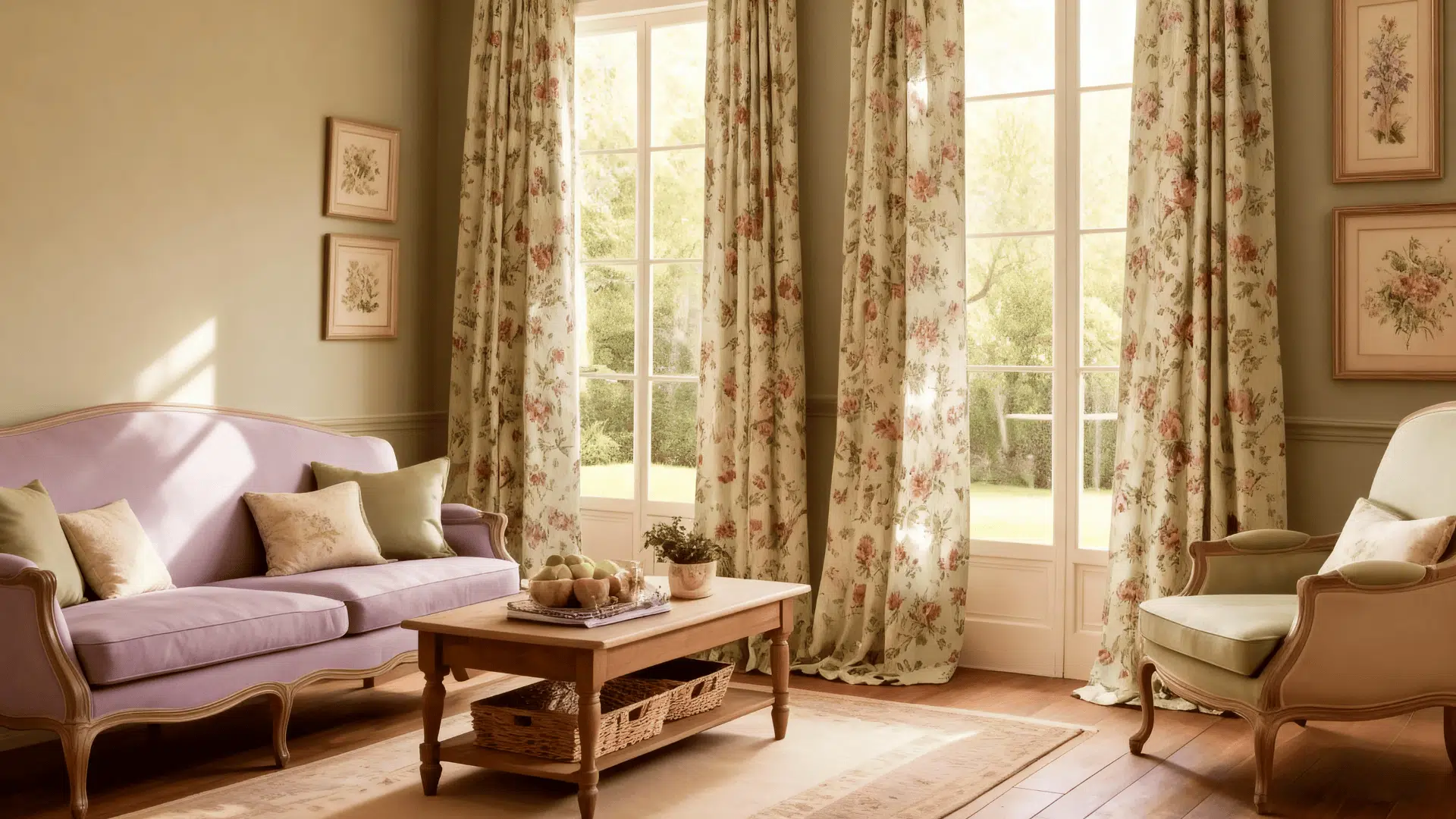

Choosing the right curtains can change the entire feel of a living room, and it starts with understanding what the space needs.
From light control to color harmony, every detail shapes the mood of the room in subtle ways.
The process becomes easier once you know what to look for, and small choices often create the most significant impact.
As you think about how to choose curtains for living room setups, you’ll find that fabric, length, and placement all work together to create a calm, balanced space that feels naturally complete.
How to Choose Curtains for Living Room?
Choosing curtains for your living room starts with knowing the purpose they will serve: light control, privacy, or style.
From there, focus on the right fabric weight, color, and length to match the room’s layout and mood.
Measure the window carefully, decide whether you want a simple or layered look, and pick hardware that fits the room’s overall style.
When these elements come together, the curtains feel natural in the space and support both comfort and design.
Also Read: Stylish Curtains for Closet Door Solutions
How to Choose Curtain Color for Living Room
Choosing curtain colors comes down to matching your room’s palette, adjusting for natural light, and deciding how bold or subtle you want the space to feel.
A few simple checks can help you pick a color that fits the room with ease.
1. Match With Wall and Furniture Tones

Curtains work best when their color blends smoothly with the room’s main shades.
Look at your walls, sofa, rugs, and large décor pieces. Pick a curtain color that either gently matches or lightly contrasts with them.
This keeps everything looking connected and avoids overwhelming the space.
Holding a sample near the wall or sofa can help you see how the color will look in real life.
2. Impact of Natural Light

Light changes the way specific colors appear, so it’s worth checking how the fabric looks throughout the day.
Bright sunlight can make intense colors look even stronger, while dim rooms can make pale shades appear flat.
Place the fabric by the window for a few minutes at different times to see its proper tone.
This simple step helps avoid choosing a shade that feels off once installed.
3. Pattern or Solid Colors

Choosing between patterns and solid colors depends on how busy your room already feels.
Patterns bring movement and interest, especially when the rest of the space is simple.
Solid colors work well in rooms with plenty of texture or prints.
The goal is balance; let one element be the highlight. If you feel unsure, solids are usually the easiest and safest way to keep the look clean.
4. Setting the Room Mood

Color shapes the atmosphere of your living room.
Warm tones create a cozy and welcoming feel, while cooler tones keep things calm and relaxed.
Darker shades add depth, and lighter shades brighten the space. Think about how you want the room to feel during everyday use.
If picking a mood seems harsh, neutral tones offer a steady base that works with almost any style.
Different Types of Fabric for Curtains
Choosing the right curtain fabric depends on how much light you want, how formal or relaxed the room feels, and how much maintenance fits your routine.
Each fabric type brings its own look, texture, and level of coverage:
1. Sheer Fabrics

Sheer fabrics allow soft light to fill the room while still giving a bit of privacy. They’re great for bright, airy spaces where you want a gentle glow during the day.
Since they feel light and flowy, they work well in living rooms that already have heavier furniture or darker colors.
If you enjoy a calm, open feel, sheer curtains are an easy choice.
2. Semi-Sheer and Lightweight Fabrics

Semi-sheer and lightweight fabrics offer a balanced mix of brightness and coverage.
They filter light without making the room feel dim, which makes them perfect for areas where you want both comfort and clarity.
These fabrics also drape nicely and suit a wide range of living room styles. If sheer curtains feel too thin but heavy fabrics feel too much, this type sits right in the middle.
3. Medium-Weight Fabrics

Medium-weight fabrics provide more privacy and structure while still looking soft and relaxed.
They work well in living rooms that need extra coverage without blocking all the light. These fabrics also hold their shape, which gives your curtains a neat, tailored appearance.
If you want something dependable that fits both casual and formal spaces, medium-weight options are a solid pick.
4. Blackout and Thermal Fabrics

Blackout and thermal fabrics are ideal when you need strong light control or better insulation.
They’re great for living rooms that get intense sunlight or feel too warm or cold throughout the day.
These fabrics help stabilize the room’s temperature while keeping glare away from screens.
If comfort and function matter most, blackout or thermal curtains make a noticeable difference.
5. Textured Fabrics

Textured fabrics like linen blends or woven cotton add depth without overwhelming the room. They bring a soft, natural look that suits both modern and classic styles.
Their subtle texture helps the curtains stand out gently, especially in neutral or minimal rooms.
If you want something simple yet visually pleasing, textured fabrics are a friendly middle ground.
Ideal Measurement for Living Room Curtains
Correct measurements make curtains look polished and help the room feel balanced.
Start by measuring the window width and multiplying it by 1.5–2 for proper fullness.
Curtain length can vary based on the style you prefer: sill length, below-sill, floor length, or a slight puddle.
Place the rod 4–6 inches above the frame to add height. With these measurements in place, the curtains hang smoothly and fit the room naturally.
| Length Type | Description |
|---|---|
| Sill length | Ends right at the window sill |
| Below-sill length | Falls 2–3 inches below the sill |
| Floor length | Touches the floor for a clean finish |
| Slight puddle | Extends 1–2 inches beyond the floor for a soft look |
Want help choosing the right length?
Check the Curtain Length Guide for clear sizing steps.
How to Hang Curtains for the Living Room?
Curtain placement can change how your living room feels, from making windows appear larger to adding gentle layers of texture.
A few simple hanging methods can shape the room in ways that feel natural and stylish:
1. High and Wide Placement
This method helps your living room feel taller and more open.
By lifting the curtains above the frame and widening the rod beyond the window edges, you create the illusion of bigger windows and add smooth visual flow.
Steps:
- Place the rod about 4–6 inches above the frame.
- Extend the rod 6–10 inches past each side.
- Check that curtains clear the window when pulled open.
- Hang full-length panels for a clean drop.
2. Layered Hanging (Sheer + Main Curtains)
Layering gives you control over light and privacy while adding softness to the room.
Sheers handle daytime light, while the main curtains add warmth and coverage when needed.
Steps:
- Hang the sheer curtains on the inner rod.
- Add the main curtains on the outer rod.
- Keep both sets slightly fuller for better drape.
- Adjust layers based on the time of day.
3. Double Rod Setup
A double rod system makes it easy to mix fabrics and switch between open and private moments.
It’s also great for adding both texture and function without overcomplicating the look.
Steps:
- Install a double rod with enough spacing between each bar.
- Place lighter fabric on the back rod. Put heavier panels on the front rod.
- Ensure both sets can slide smoothly.
4. Floor-Length With a Slight Puddle
This approach creates a soft, relaxed look. Allowing the curtains to touch the floor adds warmth and gives the room a gentle sense of comfort.
Steps:
- Measure for curtains that extend 1–2 inches beyond the floor.
- Make sure fabric pools slightly without bunching. Keep the rod level for an even drape.
- Use this style in low-traffic areas to avoid tripping.
Looking to add depth to your curtains? Check Ways to Layer Curtains with One Rod.
Conclusion
Curtains become far more enjoyable once you see how each decision shapes the room’s personality.
By understanding color balance, fabric types, measurements, and hanging techniques, the steps to choosing curtains for a living room turn into a smooth, practical process.
Every choice, whether it’s a soft sheer, a bold tone, or a creative hanging style, adds character and comfort to the space.
With these ideas in mind, finding the right curtains becomes less about guessing and more about creating a room that feels naturally inviting.
Share your favorite curtain style or your own experience below. I’d love to know what worked for you.

With a Master in Architectural Studies from University of Pennysylvania, Marwa Haydar has pioneered living spaces since 2005. Her expertise, initially honed in a prestigious architectural firm, is evident in her approach to creating environments. Marwa became part of our team in 2019 and has since been a driving force in our home improvement section, known for her practical yet stylish solutions. She’s been spearheading our design workshops since then, infusing her passion for teaching into her work. In her leisure time, Marwa enjoys exploring historic architecture and is an enthusiastic pottery hobbyist, further enriching her understanding of form and texture.