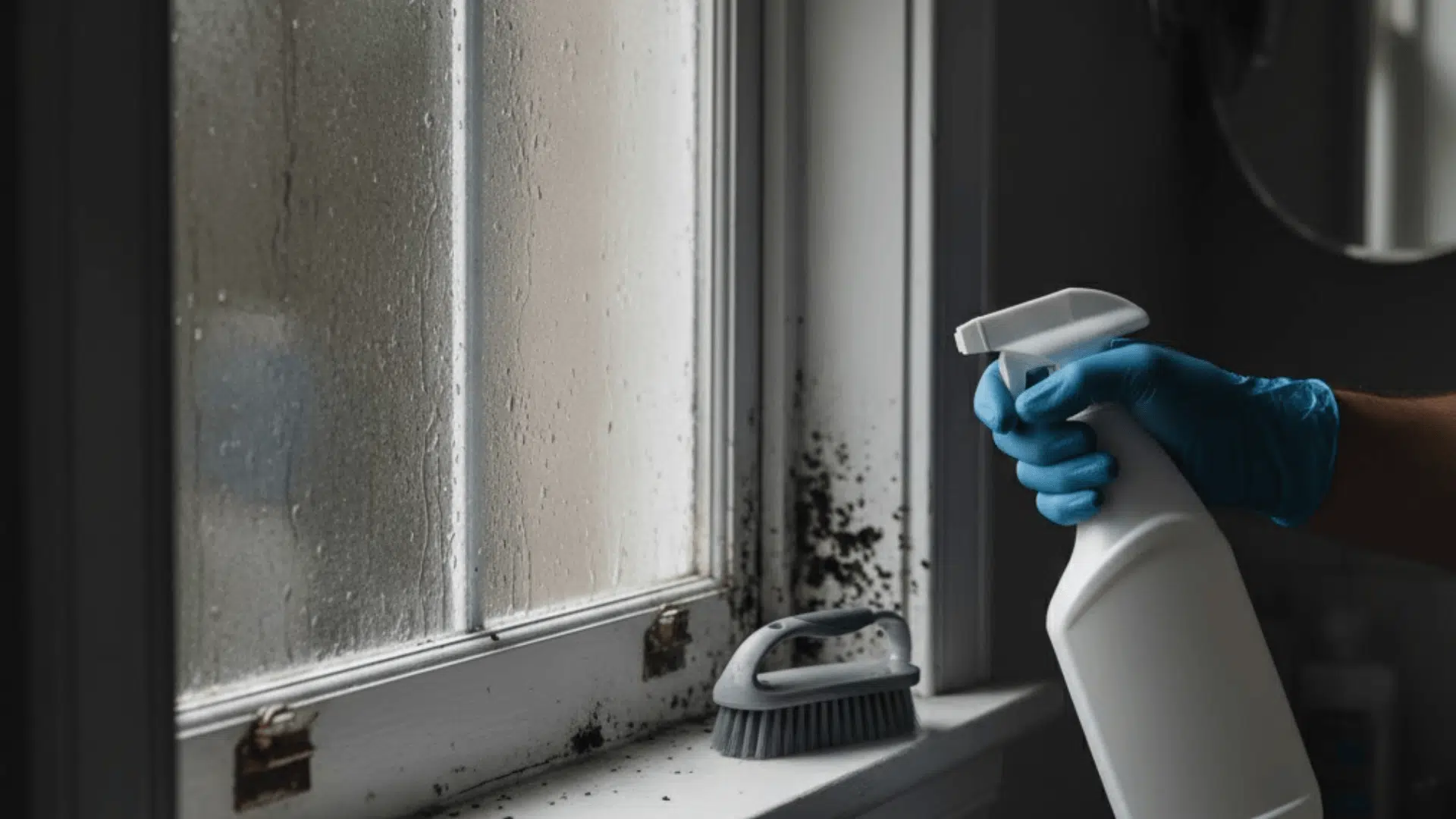

Dealing with mold on a windowsill is one of those home issues that looks small at first but can point to bigger moisture problems. Many people wipe it away without thinking about what caused it or how to keep it from returning. This guide clears up the confusion by explaining why mold forms, how to remove different types safely, and what steps actually stop it from coming back. You’ll also learn how to spot early warning signs, what to avoid while cleaning, and when it might be time to call a professional.
With all that in mind, let’s start with the basics before getting into the cleaning steps.
What is Mold on a Window Sill?
Mold on a windowsill is a small patch of fungus that grows when moisture collects around the window. It often looks like black or fuzzy spots on the sill, frame, or corners of the glass.
Most window sill mold is surface mold, which means it sits on the top layer and is easy to clean. But if it keeps coming back, it may be a sign of leaks or poor insulation.
Types of Mold:
- Black Mold (Stachybotrys): Black mold looks dark and slimy. It grows in very damp areas and can cause stronger reactions in people who are sensitive.
- Green Mold (Aspergillus or Penicillium): Green mold is fuzzy or powdery. It spreads quickly on damp window sills and is one of the most common household molds.
- White Mold (Cladosporium): White mold appears light and soft. It blends into surfaces, grows under dust, and is easy to miss until it spreads.
- Yellow or Orange Mold: Yellow or orange mold looks bright and slimy. It appears in very humid rooms and grows when moisture sits for long periods
Step-by-Step Guide for Removing Mold from Window Sills
We will go from prep to cleaning to prevention, so you do not miss anything important and do not spread mold around your home by mistake.
Step 1: Before You Touch Any Mold, Protect Yourself

Wear waterproof gloves to keep mold and cleaners off your skin. A mask helps you avoid breathing in spores, which can irritate your nose and lungs. Safety goggles prevent dust, spray, or loosened mold from getting into your eyes.
If you’re cleaning near curtains, blinds, or fabric, move them away so they don’t catch spores or cleaning products. It also helps to keep a trash bag nearby so you can throw out used cloths right away.
Step 2: Start With Natural Cleaners

Natural cleaners work well for small or early mold spots.
White Vinegar Method:
- Pour white vinegar into a spray bottle (no need to dilute).
- Spray the mold until the area is wet.
- Let it sit for 45–60 minutes so the vinegar can break down the mold.
- Scrub gently with a sponge or soft brush.
- Wipe the area with a damp cloth and Dry the sill fully with a clean towel.
Baking Soda Paste Method:
- Mix 1 tablespoon of baking soda with a small amount of water to make a thick paste.
- Spread the paste over the mold using a cloth or your gloved fingers.
- Let it sit for 10–15 minutes.
- Scrub lightly to lift the mold.
- Rinse with warm water or wipe clean. Then dry completely.
Tea Tree Oil Method:
- Mix 1 teaspoon of tea tree oil with 1 cup of water in a spray bottle.
- Shake the bottle well.
- Spray the mold and let it sit for 30–60 minutes.
- Scrub the area, wipe clean, and dry fully.
Natural cleaners are gentle on surfaces, but they don’t always kill deeper mold. If the spot lightens but doesn’t disappear, a second round usually helps. This step is ideal for maintaining the window once the main mold is gone.
Step 3: Use Chemical Cleaners for Stubborn Mold

Chemical cleaners are stronger and should only be used when the mold is dark, thick, or keeps coming back.
How to Use Any Chemical Cleaner (Shared Steps):
- Apply the cleaner to the mold (spray or sponge).
- Let it sit for several minutes so it can break down the mold.
- Scrub the area using a soft brush or sponge.
- Wipe or rinse off the residue.
- Dry the windowsill fully to stop new mold from forming.
Breakdown of Chemical Cleaning Methods:
| Method | Mix / How to Use | What Makes It Different | Best For | Things to Watch Out For |
|---|---|---|---|---|
| Bleach (Diluted) | Mix 1 cup bleach + 1 gallon water. Apply with sponge, let sit 5–10 minutes, scrub, rinse, dry. | Strongest and fastest at killing heavy mold | Thick, dark, stubborn mold patches | Can discolor paint, weaken wood, and must be rinsed off |
| Hydrogen Peroxide (3%) | Use 3% hydrogen peroxide directly in a spray bottle. Spray, let bubble 10 minutes, scrub, wipe, dry. | Bubbles to lift mold from small cracks | Stubborn mold on most surfaces | Slight bleaching effect on some finishes |
| Borax Solution | Mix 1 tablespoon borax + 1 cup hot water. Apply, scrub, wipe dirt, leave a thin film, dry. | Leaves a protective layer that slows regrowth | Wood surfaces and repeat mold issues | Must dissolve fully in hot water |
Always keep the window open or the fan on to lower the chemical smell. Use only one cleaner at a time; mixing products can create dangerous fumes. If you’re unsure which to use, test a small spot first to make sure the surface doesn’t discolor.
Step 4: Do a Full Deep Clean

Dry the windowsill before you apply anything. A dry surface helps the cleaner stick and soak into the mold better.
Spray or spread your cleaner and wait five to ten minutes. This waiting time gives the cleaner a chance to release the mold from the surface.
Use a soft brush or non-scratch sponge to scrub the area. Scrubbing too hard on painted wood can leave marks, so be firm but gentle.
After scrubbing, rinse or wipe the area clean with a damp cloth. Follow with a dry cloth to remove leftover moisture. Mold grows in damp spots, so drying the sill fully is one of the most important parts of the process.
To finish, use a mold-control spray. This adds a protective layer and slows down future mold growth, especially during humid seasons.
Common Mistakes to Avoid
- Cleaning only the visible spots: Mold often hides in corners, under dust, and behind blinds, so cleaning just the surface leaves spores behind.
- Ignoring daily condensation: Wiping moisture helps, but not fixing humidity or insulation makes mold return quickly.
- Skipping the outside of the window: Damaged caulk or gaps outside let water seep in, causing repeat mold no matter how well you clean indoors.
- Scrubbing painted wood too hard: Strong scrubbing scratches the surface and traps moisture, making future mold grow faster.
- Putting items back too soon: Closing blinds or placing plants on the sill before it fully dries traps moisture and brings the mold back.
Watching out for these small issues helps you get longer-lasting results and keeps your windows healthier with less effort.
Is Black Mold on Window Sills Dangerous?
Black mold on a windowsill isn’t always serious, but it does need attention. Most small spots are surface mold, which forms when moisture sits on the sill. This type wipes away easily and usually doesn’t mean your home has a deeper problem.
The concern rises when the mold is darker, slimy, or keeps coming back. Black mold can spread faster than other types and may cause irritation for people who are more sensitive.
Common reactions include:
Sneezing, coughing, or itchy eyes, especially for children, older adults, or anyone with asthma. If these symptoms improve after cleaning and drying the area, it’s usually a simple moisture issue.
Problems start when mold returns quickly, the odor becomes musty, or the window frame feels soft or damaged. These signs often point to hidden moisture, a leak, or poor insulation inside the window. In those cases, cleaning alone won’t solve it.
You should call a professional if the mold spreads, the moisture doesn’t go away, or you see signs of structural damage. A trained inspection can locate leaks, check insulation, and rule out deeper growth behind the sill.
Addressing the cause, not just the stain, keeps your home safer and prevents the mold from returning.
Mold Causes and Prevention Methods

| Issue | Cause | Prevention |
|---|---|---|
| Condensation from daily activities | Warm indoor air hits cold glass, turns into water droplets, and leaves the sill damp. | Improve airflow, use fans, keep blinds slightly open, and open windows when humidity is lower. |
| High indoor humidity | Humidity above 50% keeps windows damp. Cooking, showering, and drying clothes add excess moisture. | Use a dehumidifier, monitor humidity with a hygrometer, and keep levels between 40–50%. |
| Poor ventilation in bedrooms/bathrooms | Warm, moist air gets trapped, especially overnight or after showers, keeping sills wet. | Open windows when possible, use exhaust fans, and improve airflow. |
| Dust and debris on sills | Dust and organic buildup act as food for mold when moisture is present. | Clean sills weekly, remove dust, and check for damp spots. |
| Leaks, drafts, or window damage | Damaged seals or cracks let water in, causing hidden moisture inside the sill. | Inspect for soft spots or peeling paint; replace caulk, seal gaps, or repair frames. |
| Cold window surfaces in winter | Cold glass causes heavy condensation when warm indoor air hits it. | Use insulating film, thermal curtains, weatherstripping, and wipe moisture each morning. |
| Moisture from indoor plants near windows | Plants release moisture, raising humidity around the sill. | Move plants away from the window or water less often. |
Long-Term Fixes and When to Consider New Windows
When mold keeps coming back, it usually means moisture is finding a way in. Long-term fixes help you control that moisture so the problem doesn’t repeat.
Start by sealing gaps and cracks around the window frame to stop outside water from slipping in.
Improvinginsulation with weatherstripping or window film also helps by reducing cold surfaces that cause constant condensation. If you see soft wood, peeling paint, or bubbling trim, you may have a hidden leak that needs repair.
Betterventilation in nearby rooms and steady indoor humidity between 40–50% also play a big role in preventing damp window sills.
Sometimes repairs aren’t enough, and replacing the window becomes the safer option.
If you notice daily condensation, even after upgrades, the window may not be insulating well anymore.
Damaged frames, such as warped or rotting wood, can trap moisture deep inside. Moisture or fog between double panes often signals a failed seal, which lets humidity in and encourages mold.
If mold returns quickly after each cleaning, it may be hiding inside the window structure. In these cases, new windows can stop the cycle and help maintain a dry, healthy space.
Conclusion
Keeping mold on a windowsill under control becomes much easier once you understand what causes it and how to clean it the right way.
The key is staying ahead of moisture, checking your windows often, and giving the area time to fully dry after every cleaning. Even small changes in airflow and daily habits can make a big difference in keeping mold from showing up again.
If you notice new spots forming, acting quickly helps prevent bigger problems later.
Take a moment to read other home-care guides on the website. They’ll help you stay prepared and handle common issues with more confidence.

Tommy Hardy, an alumnus of the Georgia Institute of Technology with a degree in Mechanical Engineering, has been a go-to figure in residential upkeep and innovation for over 18 years. His career commenced in a leading home appliance manufacturing company, where he mastered the intricacies of household systems. Joining our platform in 2020, Tommy quickly became a reader favorite for his practical and easy-to-follow guides. He took the helm of our DIY section in 2019, consistently delivering content that empowers homeowners. Beyond his professional pursuits, Tommy is a passionate gardener and enjoys woodworking, skills enhancing his hands-on approach to home care.