

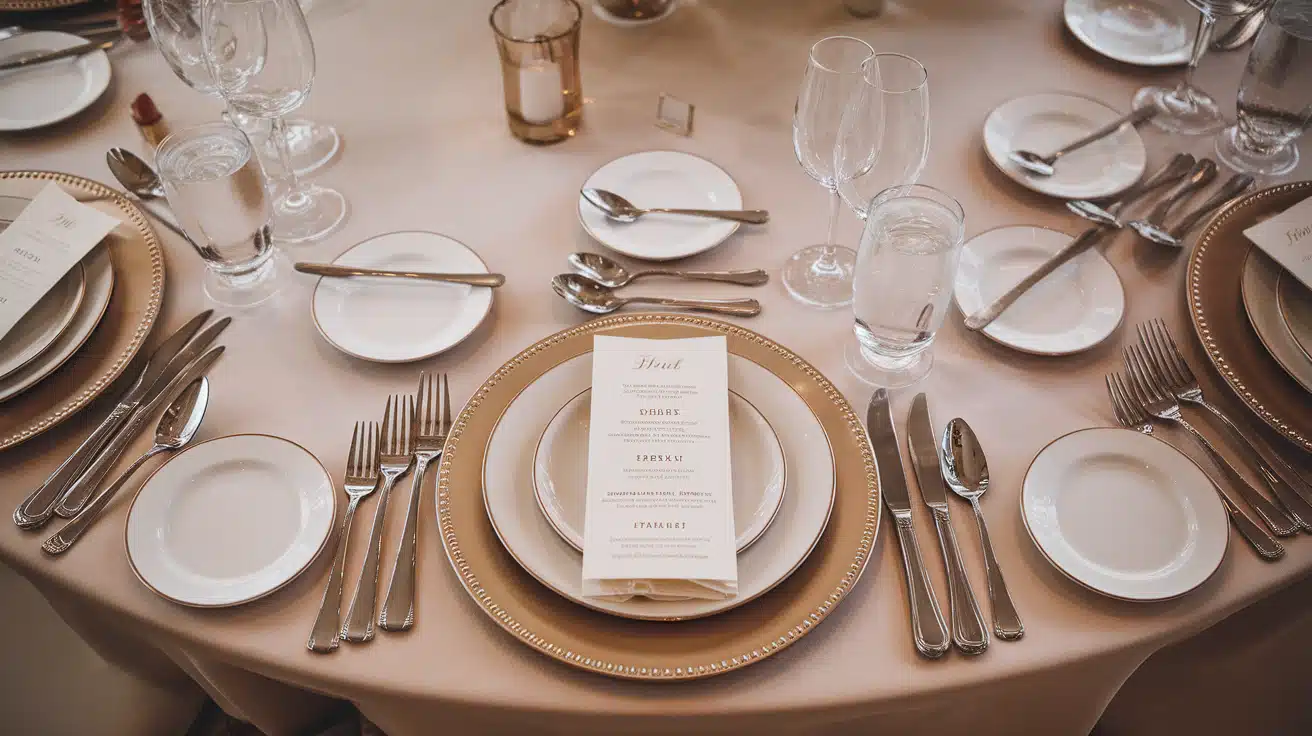

Setting a table can feel confusing at first, especially when different rules apply to casual and formal meals.
Many people want a setup that looks right without overthinking every detail.
The good news is that learning how to set a table becomes simple once the basic order and spacing are understood.
The steps explained here show that setting a table for dinner does not require special tools or strict formality.
Clear placement of plates, flatware, and glassware already creates structure and ease.
By following these steps, a table can feel organized, welcoming, and practical. With regular use, these habits become second nature and make every meal feel more prepared and comfortable.
Basic Rules of Table Setting
Understanding how to set a table starts with a few clear rules that apply to almost every dining situation. These rules help keep the table organized, functional, and easy to use.
Rule 1: The dinner plate is always placed at the center of each setting, positioned about one inch from the edge of the table.
Rule 2: Flatware is arranged in the order it will be used, starting from the outside and moving inward toward the plate.
Rule 3: Forks are placed on the left side of the plate, while knives and spoons are placed on the right, with knife blades facing inward.
Rule 4: Glassware is placed above the knives, starting with the water glass closest to the plate.
Rule 5: Napkins should be easy to reach and placed either on the plate or beside the fork.
These rules form the foundation for both everyday meals and a formal table setting.
Once the basic rules are clear, setting the table becomes a straightforward process that can be followed the same way each time. These steps work for everyday meals and can be expanded for a formal table setting when needed.
How to Set a Table Step by Step?
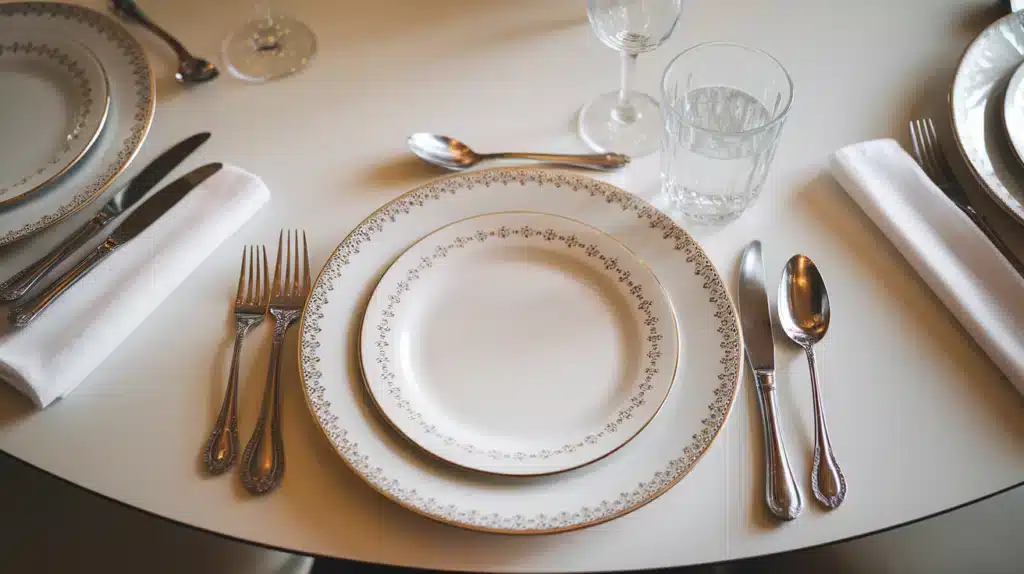
Once the basic rules are clear, setting a table becomes a simple process that can be followed the same way each time.
The table below explains each step in detail, making it easier to apply for everyday meals and more structured dinners.
Step 1: Place the Dinner Plate
Start by placing the dinner plate directly in front of each seat. The plate should sit about one inch from the edge of the table to allow enough space for comfort. This plate acts as the center point for the entire table setting.
Step 2: Arrange the Flatware
Place the fork on the left side of the plate. Position the knife on the right side with the blade facing inward. If a spoon is needed, place it to the right of the knife. Flatware should be placed in the order it will be used, starting from the outside and moving inward.
Step 3: Set the Napkin
Place the napkin where it is easy to reach. It can be placed on the plate, beside the fork, or folded neatly under the fork. The placement should feel natural and not interfere with other items on the table.
Step 4: Position the Glassware
Set the water glass above the knife. If additional glasses are needed, place them slightly to the right of the water glass. Glasses should be spaced to prevent crowding and allow easy handling.
Step 5: Adjust for the Type of Meal
Review the table and adjust based on the meal being served. For everyday dining, the setup can remain simple.
For a formal table setting, additional flatware or glassware can be added following the same placement order. This final step ensures the table is ready for the occasion.
How to Set a Table for Dinner at Home?
Setting a table for dinner does not need to feel complicated. For everyday meals, simplicity matters more than strict rules.
Plates, one fork, one knife, and a glass are often enough. Napkins can be cloth or paper, depending on the occasion. The goal is to keep the table comfortable and uncluttered while still looking intentional.
Candles, a small centerpiece, or placemats can be added if desired, but they should never block conversation or reach across the table.
Formal Table Setting Explained
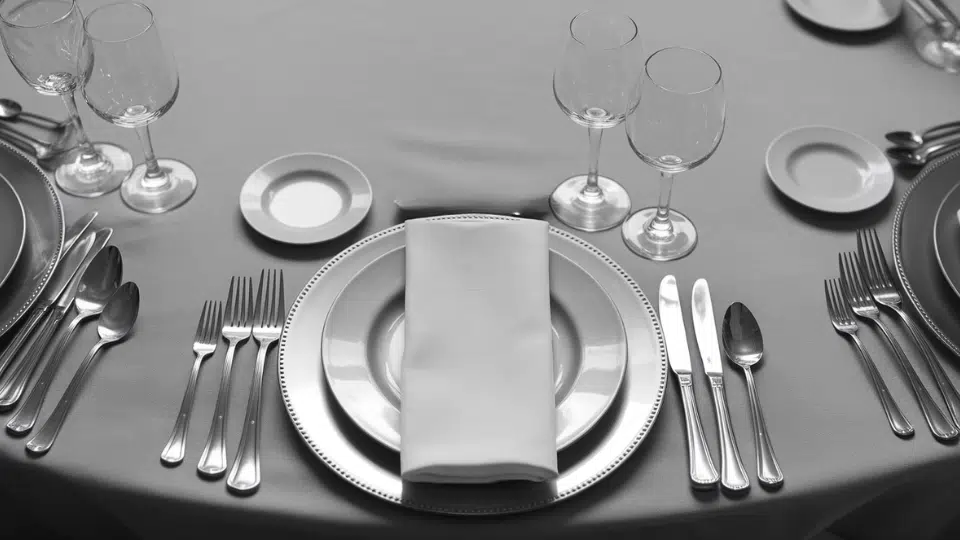
A formal table setting follows stricter placement rules and includes more pieces. This type of setting is typically used for special events, holidays, or multi-course meals.
The dinner plate sits in the center, with a charger plate underneath if used. Multiple forks are placed to the left, and knives and spoons are placed to the right in the order of use. Dessert utensils may be placed horizontally above the plate.
Glassware includes a water glass, a wine glass, and sometimes a second wine glass, all placed above the knives. The napkin is often folded and placed on the plate or beside it.
A formal table setting focuses on balance, symmetry, and ease of use during a longer meal.
Differences Between Casual and Formal Table Settings
While the basic placement rules stay the same, the overall setup changes depending on the type of meal and occasion. The table below shows how casual and formal table settings differ in a clear and practical way.
| Aspect | Casual Table Setting | Formal Table Setting |
|---|---|---|
| Number of items | Uses only essential plates, flatware, and glassware | Includes multiple utensils and glasses for each course |
| Plate setup | Single dinner plate | A dinner plate is often placed on a charger |
| Flatware | One fork and one knife are common | Multiple forks, knives, and spoons arranged by course |
| Glassware | Usually one water glass | Water glass plus one or more wine glasses |
| Napkin placement | On the plate or beside the fork | Folded neatly on the plate or beside it |
| Overall style | Flexible and relaxed | Structured and more formal |
Common Table Setting Mistakes to Avoid
Even when the basics are followed, a few small mistakes can affect how the table looks and functions. Keeping these common issues in mind helps ensure the table feels comfortable and easy to use.
- Overcrowding the table with too many plates, glasses, or decorative items can make dining uncomfortable.
- Placing utensils out of order causes confusion during the meal.
- Positioning glassware too close together increases the risk of spills.
- Using centerpieces that are too large or tall can block conversation across the table.
- Setting plates or flatware too close to the table edge makes items easier to knock over.
Conclusion
Knowing how to set a table helps create a comfortable and organized dining space for any meal.
Proper placement makes it easier for guests to eat without confusion and adds structure to the table.
Whether setting a table for dinner at home or preparing a formal table setting for a special event, the same basic steps apply.
Plates, flatware, and glassware should always feel easy to reach and well spaced.
Small adjustments based on the occasion can make a simple table feel more thoughtful.
With a clear understanding of these steps, setting a table becomes less about rules and more about creating a pleasant dining experience that feels natural and welcoming.

With a Master in Architectural Studies from University of Pennysylvania, Marwa Haydar has pioneered living spaces since 2005. Her expertise, initially honed in a prestigious architectural firm, is evident in her approach to creating environments. Marwa became part of our team in 2019 and has since been a driving force in our home improvement section, known for her practical yet stylish solutions. She’s been spearheading our design workshops since then, infusing her passion for teaching into her work. In her leisure time, Marwa enjoys exploring historic architecture and is an enthusiastic pottery hobbyist, further enriching her understanding of form and texture.